Reviews

Mosasaurs: The Cretaceous Sea Monsters
Mosasaurs were some of the largest and most formidable predators ever to patrol Earth’s oceans. These extinct marine reptiles dominated the seas during the Late Cretaceous Period, roughly 90 to 66 million years ago, at a time when dinosaurs ruled the land and marine ecosystems were filled with equally dramatic giants, including other famous marine reptiles such as plesiosaurs. With some species growing to lengths of more than 50 feet, mosasaurs were the undisputed apex predators of their environment—powerful hunters that sat at the very top of the marine food chain.
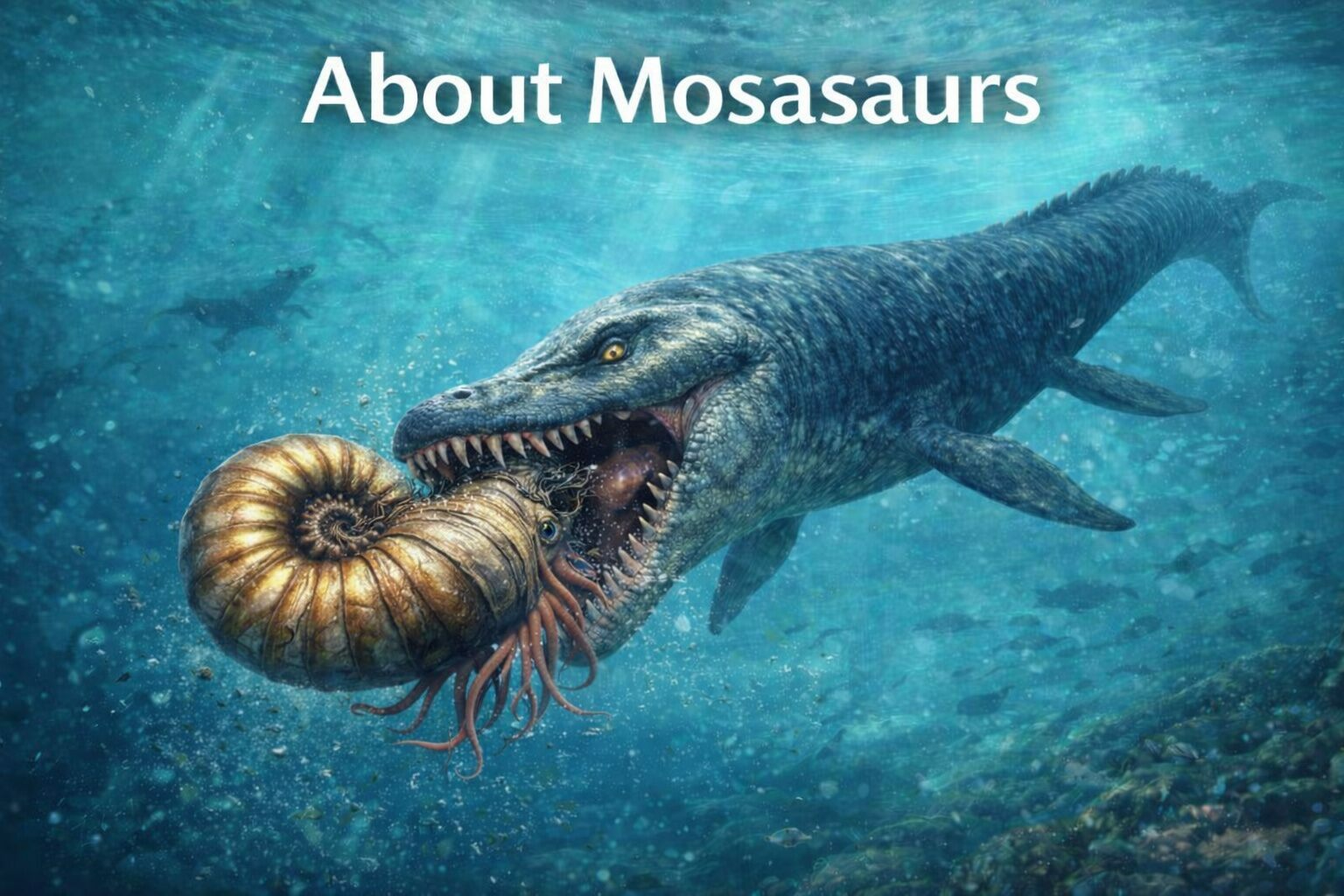
The first mosasaurs appeared about 90 million years ago, evolving from land-dwelling reptiles closely related to modern monitor lizards. In fact, their closest living relatives include animals such as the Komodo dragon. Over time, these reptiles made a remarkable transition from life on land to life in the ocean. Their limbs transformed into paddle-like flippers, perfectly suited for swimming, and their bodies became streamlined for chasing prey through open water.
Mosasaurs rose to dominance during a period of major change in marine ecosystems. Earlier ocean predators such as ichthyosaurs had already gone extinct, and plesiosaurs were declining. This left an opening for mosasaurs to rapidly diversify and take over as the primary large predators in the world’s seas. By the end of the Cretaceous, mosasaurs were widespread, with fossils found on nearly every continent, showing that they inhabited oceans across the globe.
One of the most fascinating discoveries about mosasaurs is how well adapted they became for fast, efficient swimming. Recent fossil evidence suggests that many species evolved shark-like tail fins, with a powerful downward bend at the end of the spine supporting a crescent-shaped fluke. This tail design would have made them far more agile and speedy than early reconstructions once suggested, allowing them to ambush prey or pursue fast-moving fish.
Despite their aquatic lifestyle, mosasaurs remained reptiles and still needed to breathe air. Like whales and dolphins today, they had to surface regularly to take in oxygen. This combination of reptilian ancestry and advanced marine adaptations makes mosasaurs an excellent example of evolutionary transition.
Mosasaurs were also highly diverse. The family Mosasauridae includes several subfamilies and many species with different body shapes, snout lengths, and tooth structures. Some had long, narrow jaws designed for catching fish, while others possessed crushing teeth capable of breaking through the hard shells of ammonites. Their diet was broad and included fish, sharks, squid-like cephalopods, ammonites, seabirds, and even other mosasaurs—evidence of their role as dominant marine hunters.
Size varied greatly among species. While the largest mosasaurs, such as Mosasaurus hoffmannii, may have reached around 57 feet in length, many more common forms were in the 20–30 foot range. Even these “smaller” mosasaurs would have been terrifying predators, comparable in size to modern large sharks.
Ultimately, mosasaurs met the same fate as the non-avian dinosaurs. Around 66 million years ago, the Cretaceous–Paleogene extinction event wiped out many of Earth’s dominant species, including mosasaurs, ending their reign over the oceans. Today, their fossils provide an extraordinary glimpse into a lost world of marine giants and remind us that prehistoric seas were just as dangerous and awe-inspiring as the land ecosystems of the dinosaur age.
Mosasaurs entered the scientific world long before paleontologists fully understood the deep history of life on Earth. Their story begins in 1764, near the Meuse River in the Netherlands—a river that would eventually lend its name to these extraordinary marine reptiles. In a limestone quarry outside the city of Maastricht, workers uncovered a massive fossil skull unlike anything known at the time. With its long jaws and sharp teeth, it hinted at a formidable predator from an ancient sea, but its true identity remained a mystery.
A second important discovery followed sometime between 1770 and 1774, when another partial skull was found in the same region. This specimen came into the possession of a canon named Godding, and its significance quickly drew the attention of scholars across Europe. A surgeon and fossil collector, Johann Leonard Hoffman, recognized the importance of the find and began corresponding with scientists about the strange “Maastricht animal”. Even in its fragmentary state, it was clear this fossil represented something remarkable.
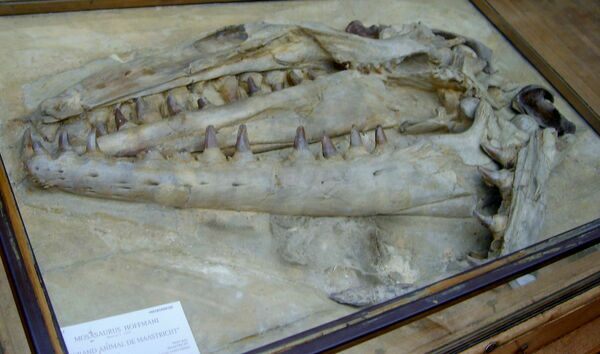
The Mosasaurus hoffmannii skull found near Maastricht around 1770.
The fame of the Maastricht skull grew rapidly, and so did the legends surrounding it. During the French occupation of the Netherlands in 1794, the specimen was supposedly hidden away to prevent it from being seized. According to popular rumor, it was eventually surrendered and taken to Paris in exchange for 600 bottles of wine—an almost mythical detail that underscores how valuable and celebrated the fossil had become.
At first, mosasaurs were difficult to classify. Were they crocodiles? Fish? Some kind of sea monster? The first major breakthrough came from A.G. Camper, who was the earliest scientist to recognize that the creature had strong anatomical ties to lizards. His ideas were published in 1799, though they were not widely confirmed until Georges Cuvier supported Camper’s conclusions in 1808. This confirmation placed mosasaurs among reptiles rather than marine mammals or fish, reshaping scientific understanding of prehistoric life.
By 1822, the name Mosasaurus (“Meuse reptile”) was formally established, anchoring its identity forever to the river valley where it was first unearthed. The full species name, Mosasaurus hoffmanii, was established in 1829, honoring Hoffman’s role in bringing attention to the fossil. Additional fossil pieces were recovered from Maastricht as early as 1790, and some of these historic remains are still preserved today, including specimens displayed at the Teylers Museum in Haarlem.
The earliest discoveries brought international fame not only to mosasaurs, but also to the limestones of Maastricht itself. In fact, the city’s name lives on in geology: the term “Maastrichtian”, derived from this region, refers to the final six million years of the Cretaceous Period.
As mosasaur fossils became better known in Europe, discoveries soon expanded beyond the Netherlands. In the wilderness of the American West—what is now North Dakota—a mosasaur skeleton was recovered and eventually made its way to Germany. There, in 1845, Dr. Goldfuss described the specimen, which remains part of the Goldfuss Collection at a museum in Bonn. This early North American find demonstrated that mosasaurs were not confined to European seas, but were widespread ocean predators across the globe.
Later in the 19th century, spectacular mosasaur skeletons emerged from the Niobrara Chalk of Kansas, deposited in the warm waters of the Western Interior Seaway. These fossils revealed mosasaurs in far greater detail: long, streamlined bodies, paddle-like limbs, and powerful tails built for swift pursuit. Famous genera such as Tylosaurus and Platecarpus showed that mosasaurs were the apex predators of their time, ruling the oceans much as sharks do today.
Other major discoveries—from Texas and Alabama to the phosphate beds of Morocco—have continued to expand the mosasaur fossil record. Some species were specialized hunters with slicing teeth, while others evolved crushing jaws for shellfish. Rare specimens preserving stomach contents and even unborn young have provided extraordinary glimpses into mosasaur diets and reproduction, transforming them from mysterious skulls in quarries into vivid animals of the ancient seas.
At first glance, mosasaurs resemble oversized marine lizards—but a closer look reveals a body plan radically transformed for life in the open ocean. Descended from terrestrial squamates closely related to monitor lizards and snakes, mosasaurs evolved into some of the most specialized marine reptiles of the Late Cretaceous. Their anatomy tells the story of that transition in remarkable detail.
The skull of a mosasaur was long, lightweight, and highly kinetic—meaning the bones were loosely joined and capable of flexing during feeding. This cranial flexibility, inherited from their lizard ancestry, allowed the jaws to open wide and accommodate large prey. The lower jaws were not rigidly fused at the front; instead, they were joined by elastic ligaments, enabling each half to move slightly independently. This feature, similar to modern snakes, allowed mosasaurs to manipulate struggling prey with remarkable control.
Their teeth were typically conical, sharp, and slightly curved backward—ideal for gripping slippery fish and cephalopods. In some genera, such as Tylosaurus, the teeth were robust and widely spaced, built for seizing large prey. Others, like Globidens, evolved rounded, crushing teeth designed to break the shells of ammonites, clams, and turtles. Replacement teeth developed continuously within the jaw, ensuring a functional bite even after teeth were lost.
One of the most extraordinary anatomical features was the presence of a second set of teeth on the palate, known as pterygoid teeth. These inward-pointing teeth helped grip prey inside the mouth, preventing escape once captured. Combined with powerful jaw muscles anchored to a strong temporal region at the back of the skull, mosasaurs possessed a formidable feeding apparatus.
Mosasaurs were equipped with large eye sockets, suggesting acute vision—an important adaptation for a visual predator in well-lit marine environments. Some fossil evidence indicates the presence of a scleral ring (bony supports within the eye), which may have helped maintain eye shape under pressure while diving.
Their nostrils were positioned partway back on the snout rather than at the tip, allowing them to breathe at the surface while keeping most of the head submerged. The inner ear structure suggests sensitivity to low-frequency vibrations, likely aiding in detecting movement in the water.
The backbone of a mosasaur was composed of dozens of vertebrae extending from the neck to the tail, creating a long, flexible body. Early reconstructions depicted mosasaurs as serpentine swimmers, undulating their entire bodies like eels. However, more recent discoveries—particularly fossils preserving soft tissue outlines—have revealed a more refined understanding.
Mosasaurs possessed a powerful, downward-bent tail vertebral column supporting a crescent-shaped (hypocercal) tail fin, similar in profile to that of sharks. This tail structure indicates that propulsion was driven primarily by the tail, rather than by whole-body undulation. The front half of the body was comparatively rigid and streamlined, reducing drag and increasing swimming efficiency.
The ribcage was deep and barrel-shaped, housing large lungs that would have aided buoyancy control. Bone density patterns suggest some species may have had adaptations for neutral buoyancy, allowing them to hover or cruise efficiently in the water column.
One of the most visible transformations from land reptile to marine predator lies in the limbs. Mosasaurs retained four limbs, but these were modified into broad, paddle-like flippers. The bones of the forelimbs and hindlimbs became shortened and flattened, while the number of finger bones (phalanges) increased—a condition known as hyperphalangy. This created stiff, fin-like appendages ideal for steering and stabilization rather than propulsion.
Unlike ichthyosaurs or plesiosaurs, mosasaurs did not use their limbs as primary engines of movement. Instead, their flippers functioned as control surfaces, helping them maneuver with precision while the tail generated thrust.
Though rarely preserved, fossil impressions of mosasaur skin show a covering of small, overlapping scales—similar to those of modern lizards but streamlined for aquatic life. These scales were likely smooth and reduced turbulence during swimming. Soft tissue evidence has also revealed dorsal ridges in some species and confirmed the presence of the tail fin. These discoveries have dramatically altered reconstructions, replacing outdated eel-like models with sleek, shark-like profiles.
Exceptional fossils have provided rare insights into mosasaur reproduction. At least some species gave birth to live young (viviparity), rather than laying eggs on land. Embryonic remains found within adult skeletons indicate that mosasaurs were fully marine throughout their life cycle—a crucial adaptation for large pelagic predators.
Their metabolism remains debated, but bone histology suggests relatively rapid growth rates. Some researchers propose that mosasaurs may have had elevated metabolic rates compared to modern reptiles, supporting active, sustained swimming.
Mosasaur body size varied dramatically across the group, from relatively small shallow-water specialists to gigantic apex predators of the Cretaceous seas.
The smallest known mosasaurs were modest in scale compared to their enormous relatives. Carinodens—often cited as one of the smallest representatives—grew to about 3.0–3.5 meters (≈10–11.5 feet) in length. Its bulbous, rounded teeth suggest a durophagous diet adapted for crushing shelled prey such as clams and sea urchins in nearshore environments.
Another small genus, Clidastes, was likewise more lightly built and agile. Most Clidastes individuals measured around 2–6 meters (≈6.5–20 feet) long, with vertebrae adapted for swift swimming in shallower waters of Late Cretaceous North America.
At the other end of the spectrum, giant mosasaurs dominated open marine ecosystems. For decades, Hainosaurus (now generally considered a species of Mosasaurus) held the record for the longest mosasaur. Exceptional specimens are estimated to have reached up to about 17 meters (≈56 feet) in length, making them among the largest marine reptiles in Earth’s history.
The well-known genus Mosasaurus, especially M. hoffmannii, also included some of the largest individuals. Older estimates suggested lengths near 17–18 meters (≈56–60 feet), but more recent reassessments using better skeletal proportions indicate that extremely large individuals were likely around 12–14 meters (≈39–46 feet), with robust body mass possibly approaching several tons.
Among other large forms, genera such as Tylosaurus and Prognathodon also reached impressive sizes. Tylosaurus specimens from the Western Interior Seaway are commonly reconstructed at 12–14 meters (≈39–46 feet), while Prognathodon—a heavily built mosasaur with stout jaws—likely attained similar large sizes, though the exact maximum length varies by species.
Intermediate-sized genera filled diverse ecological niches. For example,Plioplatecarpus and Platecarpus reached lengths of perhaps 5–8 meters (≈16–26 feet) and were likely fast, agile predators of fish and cephalopods. More basal forms such as Angolasaurus might have measured around 4 meters (≈13 feet), illustrating how early mosasaurs radiated into different size classes.
One unique outlier in ecological settings was Pannoniasaurus, currently the only well-described freshwater mosasaur. This animal from what is now Hungary grew to an estimated ~6 meters (≈20 feet) and had a long, slender snout adapted for catching fish in river systems rather than the open ocean.
Mosasaurs were not simply prehistoric “sea monsters,” but highly successful and adaptable predators whose behavior reflected a long evolutionary transition from land-dwelling lizards to fully marine reptiles. By the Late Cretaceous, they had become some of the most dominant animals in the oceans, filling ecological roles much like modern sharks, orcas, and large marine reptiles. Their behavior—how they hunted, swam, reproduced, and interacted with their environment—can be reconstructed through fossils that preserve bite marks, stomach contents, body shape, and even unborn young.
In the warm seas of the Late Cretaceous, mosasaurs sat near the top of the food chain. Their fossils are frequently found alongside the remains of fish, ammonites, marine birds, and other reptiles, suggesting they were opportunistic predators capable of taking a wide variety of prey. Many species likely hunted much like modern crocodilians or large predatory fish—ambushing prey in shallow waters or pursuing it through open water with sudden bursts of speed.
Direct fossil evidence provides some of the clearest insight into mosasaur diet. Several specimens have been discovered with stomach contents still preserved, including the bones of fish, seabirds, and even smaller mosasaurs. This confirms that cannibalism and predation on other marine reptiles occurred, particularly among the largest genera such as Tylosaurus and Mosasaurus. These animals were capable of attacking almost anything they could catch, including turtles and plesiosaurs.
Mosasaurs also left their mark on the fossil record in another striking way: preserved bite marks on ammonite shells. Some ammonite fossils show punctures, gouges, and crushing damage that match the spacing and shape of mosasaur teeth, offering rare direct evidence of predator-prey interactions. In certain cases, ammonite shells appear to have been bitten, broken, and discarded, suggesting mosasaurs may have targeted these cephalopods not only for their soft bodies but also as part of a broader feeding strategy in marine ecosystems.
Mosasaurs were also remarkably diverse in feeding strategies. While many had sharp, conical teeth suited for gripping slippery prey, others evolved specialized diets. Globidens and Carinodens, for example, had rounded, crushing teeth adapted for breaking open shells, indicating they fed heavily on mollusks, ammonites, and sea urchins in shallow coastal environments. This variety suggests mosasaurs were not all pursuing the same prey, but instead occupied many ecological niches across the oceans, ranging from open-water hunters to nearshore shell-crushers.
Mosasaurs were equipped with a highly effective feeding mechanism. Their jaws were powerful, but also flexible, allowing them to swallow large prey whole. A second set of teeth on the palate—pterygoid teeth—helped drag prey backward into the throat once it was seized. This feature is especially important in marine environments, where prey is slippery and struggling.
Some species likely hunted in open water, using speed and maneuverability to chase fish and squid. Others may have prowled reef systems or shallow seaways, feeding on armored prey or scavenging carcasses. Bite marks found on fossil bones show that mosasaurs sometimes attacked animals nearly their own size, reinforcing their role as aggressive apex predators.
One of the most important behavioral adaptations of mosasaurs was their ability to swim efficiently. Early reconstructions depicted them as eel-like, moving through the water with full-body undulation. However, more recent fossil evidence—especially soft tissue outlines—reveals a different picture.
Mosasaurs were streamlined, with a relatively rigid torso and propulsion driven primarily by the tail. Many species possessed a crescent-shaped tail fin, similar in function to the tail of a shark. This design suggests they were capable of strong, sustained swimming, making them formidable hunters in open marine environments. Their limbs had evolved into paddle-like flippers, which were not used for primary propulsion but rather for steering and stability. This combination of tail-powered thrust and flipper-guided maneuvering made mosasaurs highly agile predators, capable of quick turns and bursts of speed when attacking prey.
Some species were likely fast pursuit hunters, while others may have been slower but more powerful, relying on ambush tactics. The diversity of mosasaur body forms suggests a wide range of swimming behaviors, from coastal cruisers to open-ocean specialists.
One of the most fascinating aspects of mosasaur behavior is that they were fully adapted to life at sea—not only as adults, but throughout their entire life cycle. Fossil evidence strongly indicates that mosasaurs gave birth to live young rather than returning to land to lay eggs. Embryonic remains have been discovered inside adult specimens, suggesting viviparity (live birth). This adaptation would have been essential for large marine reptiles, allowing them to reproduce in open water without the limitations faced by sea turtles or other egg-laying reptiles. Mosasaurs were therefore completely marine animals, likely spending their entire lives in the ocean.
Young mosasaurs probably occupied different ecological roles than adults, feeding on smaller prey and inhabiting safer coastal nurseries until they grew large enough to compete with bigger predators.
While direct evidence of mosasaur social structure remains limited—there are no fossilized “pods” preserved in coordinated formations as sometimes seen in other marine reptiles—the fossil record does preserve compelling clues about how these animals interacted with one another. Much of that evidence comes in the form of trauma: bite marks, healed injuries, and stomach contents that reveal encounters between members of the same species.
Several large mosasaurs, particularly Tylosaurus and Mosasaurus, show clear signs of violent interactions. Fossil skulls have been found bearing deep gouges and puncture wounds that match the tooth spacing and curvature of other mosasaurs. In some cases, these injuries show evidence of healing, meaning the animals survived the encounter. Such healed bite marks suggest aggressive but non-lethal conflicts—possibly territorial disputes, competition over prey, or mating-related combat between rivals.
One famous Tylosaurus specimen from the Niobrara Chalk preserves healed damage to the skull consistent with a powerful bite from another large mosasaur. The placement of the wounds—often on the snout or head—mirrors combat patterns seen in modern reptiles such as crocodilians and monitor lizards, which frequently target the head during dominance battles. These injuries imply that at least some mosasaurs engaged in direct physical confrontations.
Even more dramatic is evidence of cannibalism. Stomach contents from large Tylosaurus specimens have included bones of smaller mosasaurs. In one Kansas fossil, remains of a smaller mosasaur were found inside the ribcage of a larger individual, leaving little doubt that these animals sometimes preyed upon their own kind. Whether this behavior was opportunistic—taking advantage of a weakened or smaller individual—or part of normal predatory hierarchy is uncertain, but it underscores the intense competition within marine ecosystems.
Cannibalism is not uncommon among modern apex predators. Large sharks, crocodilians, and monitor lizards are known to prey upon smaller members of their own species when the opportunity arises. Mosasaurs likely behaved similarly, especially in resource-rich but competitive environments such as the Western Interior Seaway. Juvenile mosasaurs, being smaller and more vulnerable, may have faced predation not only from sharks and other marine reptiles but from larger adults of their own lineage.
Size differences within species may also reflect ecological partitioning that reduced direct competition. Juveniles likely occupied shallower coastal waters or different prey niches before transitioning to open-ocean hunting grounds as they matured. However, overlap would have been inevitable, and fossil evidence suggests those encounters were sometimes violent.
The story of mosasaurs begins not in the ocean, but on land.
Roughly 100 million years ago, during the early Late Cretaceous, small, terrestrial lizards roamed coastal environments along the margins of ancient seas. These reptiles were members of Squamata—the group that today includes lizards and snakes. Among them were agile, semi-aquatic forms that likely hunted along shorelines and estuaries. From these modest ancestors, through gradual adaptation to marine life, mosasaurs would emerge.
Early transitional forms such as Dallasaurus provide a glimpse of this evolutionary shift. Discovered in Texas, Dallasaurus still retained functional, weight-bearing limbs alongside features suited for swimming. It was not yet a fully marine animal, but it clearly represents a stage in which shoreline lizards were spending increasing amounts of time in the water. Over time, natural selection favored traits that enhanced swimming ability—stronger tails, more streamlined bodies, and limbs modified into paddles.
As mosasaurs moved farther from shore, their bodies transformed dramatically. The limbs became flattened flippers with elongated finger bones. The pelvis lost its connection to the vertebral column, freeing the hind limbs from any role in weight support. The spine stiffened through the torso, while the tail developed a downward bend that supported a crescent-shaped fin. These changes signaled a complete commitment to marine life.
Their skulls evolved as well. Like modern monitor lizards and snakes—both close relatives—mosasaurs developed flexible, kinetic skulls that allowed them to swallow large prey. The addition of pterygoid teeth on the roof of the mouth created an efficient prey-gripping mechanism. With these tools, early mosasaurs rapidly diversified.
By the middle of the Late Cretaceous, mosasaurs had spread across the world’s oceans. Continental interiors were flooded by shallow epicontinental seas, such as the Western Interior Seaway of North America, providing vast new habitats. Freed from competition with earlier marine reptile groups—many of which had declined or gone extinct—mosasaurs radiated into a wide array of ecological niches.
Some lineages became swift, mid-sized pursuit hunters like Platecarpus. Others evolved into shell-crushing specialists such as Globidens. Still others grew into enormous apex predators. Giants like Tylosaurus and Mosasaurus stretched over 12 meters in length, dominating marine food webs much like modern orcas or great white sharks.
This evolutionary radiation happened with remarkable speed. In less than 20 million years, mosasaurs evolved from semi-aquatic coastal lizards into the most formidable marine reptiles of their time. Their global fossil record—from Europe and North America to Africa, Antarctica, and Japan—testifies to their success.
Yet their dominance was brief in geological terms.
At the end of the Cretaceous, approximately 66 million years ago, a massive asteroid struck near present-day Chicxulub, Mexico. The impact triggered global wildfires, atmospheric dust clouds, collapsing food chains, and dramatic climate shifts. Marine ecosystems were devastated. Plankton populations crashed, affecting the entire oceanic food web from the bottom up.
As apex predators dependent on complex marine ecosystems, mosasaurs were particularly vulnerable. With prey populations collapsing and environmental conditions rapidly deteriorating, they vanished alongside non-avian dinosaurs, ammonites, and many other marine reptiles in the mass extinction event known as the K–Pg extinction.
Their evolutionary journey—from shoreline lizards to ocean giants—had spanned roughly 30 million years. In that time, they became one of the most successful groups of marine reptiles in Earth’s history. Though their reign ended abruptly, the fossil record preserves the arc of their transformation: a testament to how quickly evolution can reshape life when new ecological opportunities arise—and how suddenly even the mightiest predators can disappear.
The first mosasaurs appeared about 90 million years ago, evolving from land-dwelling reptiles closely related to modern monitor lizards. In fact, their closest living relatives include animals such as the Komodo dragon. Over time, these reptiles made a remarkable transition from life on land to life in the ocean. Their limbs transformed into paddle-like flippers, perfectly suited for swimming, and their bodies became streamlined for chasing prey through open water.
Mosasaurs rose to dominance during a period of major change in marine ecosystems. Earlier ocean predators such as ichthyosaurs had already gone extinct, and plesiosaurs were declining. This left an opening for mosasaurs to rapidly diversify and take over as the primary large predators in the world’s seas. By the end of the Cretaceous, mosasaurs were widespread, with fossils found on nearly every continent, showing that they inhabited oceans across the globe.
One of the most fascinating discoveries about mosasaurs is how well adapted they became for fast, efficient swimming. Recent fossil evidence suggests that many species evolved shark-like tail fins, with a powerful downward bend at the end of the spine supporting a crescent-shaped fluke. This tail design would have made them far more agile and speedy than early reconstructions once suggested, allowing them to ambush prey or pursue fast-moving fish.
Despite their aquatic lifestyle, mosasaurs remained reptiles and still needed to breathe air. Like whales and dolphins today, they had to surface regularly to take in oxygen. This combination of reptilian ancestry and advanced marine adaptations makes mosasaurs an excellent example of evolutionary transition.
Mosasaurs were also highly diverse. The family Mosasauridae includes several subfamilies and many species with different body shapes, snout lengths, and tooth structures. Some had long, narrow jaws designed for catching fish, while others possessed crushing teeth capable of breaking through the hard shells of ammonites. Their diet was broad and included fish, sharks, squid-like cephalopods, ammonites, seabirds, and even other mosasaurs—evidence of their role as dominant marine hunters.
Size varied greatly among species. While the largest mosasaurs, such as Mosasaurus hoffmannii, may have reached around 57 feet in length, many more common forms were in the 20–30 foot range. Even these “smaller” mosasaurs would have been terrifying predators, comparable in size to modern large sharks.
Ultimately, mosasaurs met the same fate as the non-avian dinosaurs. Around 66 million years ago, the Cretaceous–Paleogene extinction event wiped out many of Earth’s dominant species, including mosasaurs, ending their reign over the oceans. Today, their fossils provide an extraordinary glimpse into a lost world of marine giants and remind us that prehistoric seas were just as dangerous and awe-inspiring as the land ecosystems of the dinosaur age.
Discovery & Fossil Record
Mosasaurs entered the scientific world long before paleontologists fully understood the deep history of life on Earth. Their story begins in 1764, near the Meuse River in the Netherlands—a river that would eventually lend its name to these extraordinary marine reptiles. In a limestone quarry outside the city of Maastricht, workers uncovered a massive fossil skull unlike anything known at the time. With its long jaws and sharp teeth, it hinted at a formidable predator from an ancient sea, but its true identity remained a mystery.
A second important discovery followed sometime between 1770 and 1774, when another partial skull was found in the same region. This specimen came into the possession of a canon named Godding, and its significance quickly drew the attention of scholars across Europe. A surgeon and fossil collector, Johann Leonard Hoffman, recognized the importance of the find and began corresponding with scientists about the strange “Maastricht animal”. Even in its fragmentary state, it was clear this fossil represented something remarkable.
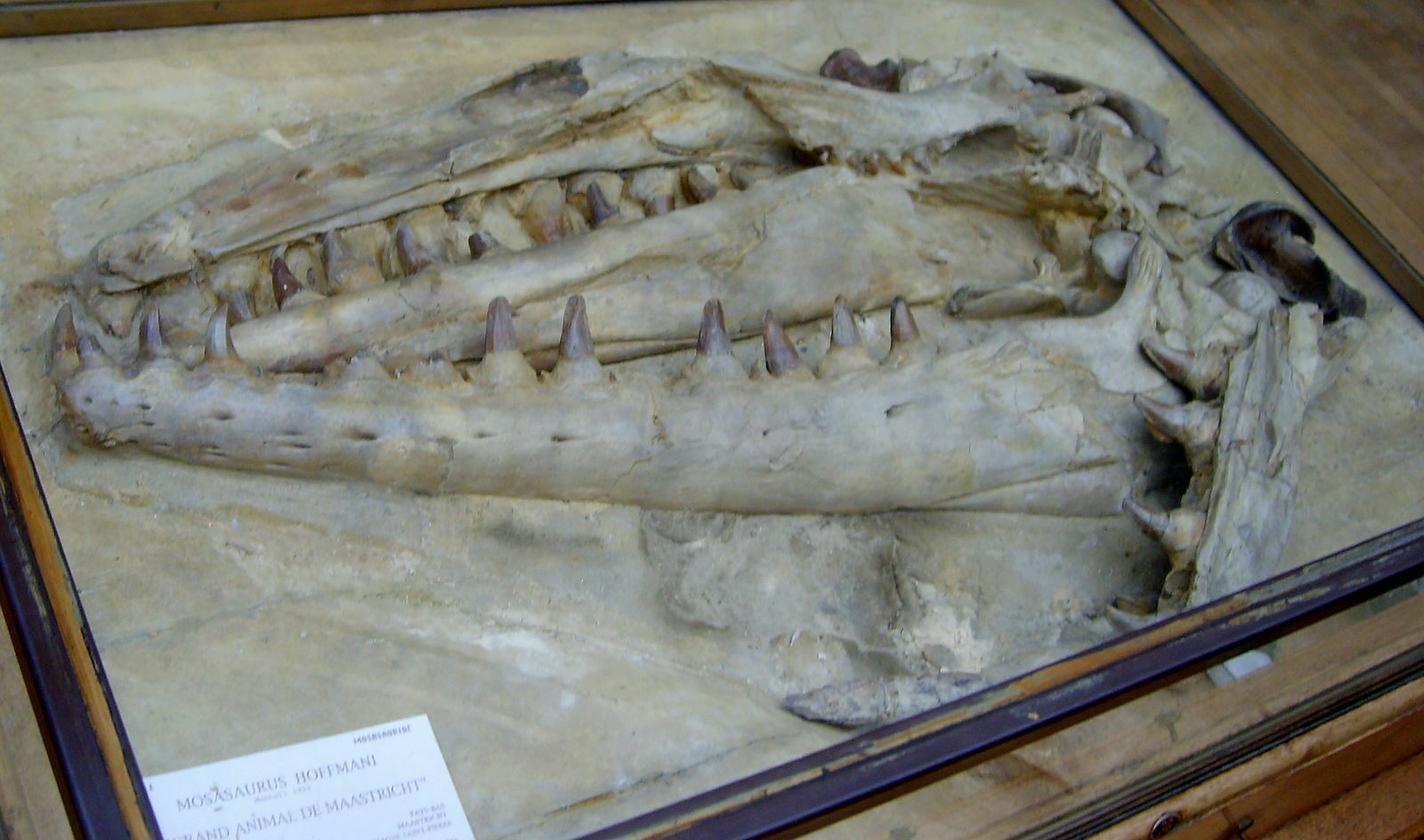
The Mosasaurus hoffmannii skull found near Maastricht around 1770.
The fame of the Maastricht skull grew rapidly, and so did the legends surrounding it. During the French occupation of the Netherlands in 1794, the specimen was supposedly hidden away to prevent it from being seized. According to popular rumor, it was eventually surrendered and taken to Paris in exchange for 600 bottles of wine—an almost mythical detail that underscores how valuable and celebrated the fossil had become.
At first, mosasaurs were difficult to classify. Were they crocodiles? Fish? Some kind of sea monster? The first major breakthrough came from A.G. Camper, who was the earliest scientist to recognize that the creature had strong anatomical ties to lizards. His ideas were published in 1799, though they were not widely confirmed until Georges Cuvier supported Camper’s conclusions in 1808. This confirmation placed mosasaurs among reptiles rather than marine mammals or fish, reshaping scientific understanding of prehistoric life.
By 1822, the name Mosasaurus (“Meuse reptile”) was formally established, anchoring its identity forever to the river valley where it was first unearthed. The full species name, Mosasaurus hoffmanii, was established in 1829, honoring Hoffman’s role in bringing attention to the fossil. Additional fossil pieces were recovered from Maastricht as early as 1790, and some of these historic remains are still preserved today, including specimens displayed at the Teylers Museum in Haarlem.
The earliest discoveries brought international fame not only to mosasaurs, but also to the limestones of Maastricht itself. In fact, the city’s name lives on in geology: the term “Maastrichtian”, derived from this region, refers to the final six million years of the Cretaceous Period.
As mosasaur fossils became better known in Europe, discoveries soon expanded beyond the Netherlands. In the wilderness of the American West—what is now North Dakota—a mosasaur skeleton was recovered and eventually made its way to Germany. There, in 1845, Dr. Goldfuss described the specimen, which remains part of the Goldfuss Collection at a museum in Bonn. This early North American find demonstrated that mosasaurs were not confined to European seas, but were widespread ocean predators across the globe.
Later in the 19th century, spectacular mosasaur skeletons emerged from the Niobrara Chalk of Kansas, deposited in the warm waters of the Western Interior Seaway. These fossils revealed mosasaurs in far greater detail: long, streamlined bodies, paddle-like limbs, and powerful tails built for swift pursuit. Famous genera such as Tylosaurus and Platecarpus showed that mosasaurs were the apex predators of their time, ruling the oceans much as sharks do today.
Other major discoveries—from Texas and Alabama to the phosphate beds of Morocco—have continued to expand the mosasaur fossil record. Some species were specialized hunters with slicing teeth, while others evolved crushing jaws for shellfish. Rare specimens preserving stomach contents and even unborn young have provided extraordinary glimpses into mosasaur diets and reproduction, transforming them from mysterious skulls in quarries into vivid animals of the ancient seas.
Mosasaur Anatomy
At first glance, mosasaurs resemble oversized marine lizards—but a closer look reveals a body plan radically transformed for life in the open ocean. Descended from terrestrial squamates closely related to monitor lizards and snakes, mosasaurs evolved into some of the most specialized marine reptiles of the Late Cretaceous. Their anatomy tells the story of that transition in remarkable detail.
Skull and Jaws
The skull of a mosasaur was long, lightweight, and highly kinetic—meaning the bones were loosely joined and capable of flexing during feeding. This cranial flexibility, inherited from their lizard ancestry, allowed the jaws to open wide and accommodate large prey. The lower jaws were not rigidly fused at the front; instead, they were joined by elastic ligaments, enabling each half to move slightly independently. This feature, similar to modern snakes, allowed mosasaurs to manipulate struggling prey with remarkable control.
Their teeth were typically conical, sharp, and slightly curved backward—ideal for gripping slippery fish and cephalopods. In some genera, such as Tylosaurus, the teeth were robust and widely spaced, built for seizing large prey. Others, like Globidens, evolved rounded, crushing teeth designed to break the shells of ammonites, clams, and turtles. Replacement teeth developed continuously within the jaw, ensuring a functional bite even after teeth were lost.
One of the most extraordinary anatomical features was the presence of a second set of teeth on the palate, known as pterygoid teeth. These inward-pointing teeth helped grip prey inside the mouth, preventing escape once captured. Combined with powerful jaw muscles anchored to a strong temporal region at the back of the skull, mosasaurs possessed a formidable feeding apparatus.
Sensory Systems
Mosasaurs were equipped with large eye sockets, suggesting acute vision—an important adaptation for a visual predator in well-lit marine environments. Some fossil evidence indicates the presence of a scleral ring (bony supports within the eye), which may have helped maintain eye shape under pressure while diving.
Their nostrils were positioned partway back on the snout rather than at the tip, allowing them to breathe at the surface while keeping most of the head submerged. The inner ear structure suggests sensitivity to low-frequency vibrations, likely aiding in detecting movement in the water.
Vertebral Column and Body Shape
The backbone of a mosasaur was composed of dozens of vertebrae extending from the neck to the tail, creating a long, flexible body. Early reconstructions depicted mosasaurs as serpentine swimmers, undulating their entire bodies like eels. However, more recent discoveries—particularly fossils preserving soft tissue outlines—have revealed a more refined understanding.
Mosasaurs possessed a powerful, downward-bent tail vertebral column supporting a crescent-shaped (hypocercal) tail fin, similar in profile to that of sharks. This tail structure indicates that propulsion was driven primarily by the tail, rather than by whole-body undulation. The front half of the body was comparatively rigid and streamlined, reducing drag and increasing swimming efficiency.
The ribcage was deep and barrel-shaped, housing large lungs that would have aided buoyancy control. Bone density patterns suggest some species may have had adaptations for neutral buoyancy, allowing them to hover or cruise efficiently in the water column.
Limbs and Locomotion
One of the most visible transformations from land reptile to marine predator lies in the limbs. Mosasaurs retained four limbs, but these were modified into broad, paddle-like flippers. The bones of the forelimbs and hindlimbs became shortened and flattened, while the number of finger bones (phalanges) increased—a condition known as hyperphalangy. This created stiff, fin-like appendages ideal for steering and stabilization rather than propulsion.
Unlike ichthyosaurs or plesiosaurs, mosasaurs did not use their limbs as primary engines of movement. Instead, their flippers functioned as control surfaces, helping them maneuver with precision while the tail generated thrust.
Skin, Scales and Soft Tissue
Though rarely preserved, fossil impressions of mosasaur skin show a covering of small, overlapping scales—similar to those of modern lizards but streamlined for aquatic life. These scales were likely smooth and reduced turbulence during swimming. Soft tissue evidence has also revealed dorsal ridges in some species and confirmed the presence of the tail fin. These discoveries have dramatically altered reconstructions, replacing outdated eel-like models with sleek, shark-like profiles.
Internal Anatomy and Reproduction
Exceptional fossils have provided rare insights into mosasaur reproduction. At least some species gave birth to live young (viviparity), rather than laying eggs on land. Embryonic remains found within adult skeletons indicate that mosasaurs were fully marine throughout their life cycle—a crucial adaptation for large pelagic predators.
Their metabolism remains debated, but bone histology suggests relatively rapid growth rates. Some researchers propose that mosasaurs may have had elevated metabolic rates compared to modern reptiles, supporting active, sustained swimming.
Mosasaur Size and Diversity
Mosasaur body size varied dramatically across the group, from relatively small shallow-water specialists to gigantic apex predators of the Cretaceous seas.
The smallest known mosasaurs were modest in scale compared to their enormous relatives. Carinodens—often cited as one of the smallest representatives—grew to about 3.0–3.5 meters (≈10–11.5 feet) in length. Its bulbous, rounded teeth suggest a durophagous diet adapted for crushing shelled prey such as clams and sea urchins in nearshore environments.
Another small genus, Clidastes, was likewise more lightly built and agile. Most Clidastes individuals measured around 2–6 meters (≈6.5–20 feet) long, with vertebrae adapted for swift swimming in shallower waters of Late Cretaceous North America.
At the other end of the spectrum, giant mosasaurs dominated open marine ecosystems. For decades, Hainosaurus (now generally considered a species of Mosasaurus) held the record for the longest mosasaur. Exceptional specimens are estimated to have reached up to about 17 meters (≈56 feet) in length, making them among the largest marine reptiles in Earth’s history.
The well-known genus Mosasaurus, especially M. hoffmannii, also included some of the largest individuals. Older estimates suggested lengths near 17–18 meters (≈56–60 feet), but more recent reassessments using better skeletal proportions indicate that extremely large individuals were likely around 12–14 meters (≈39–46 feet), with robust body mass possibly approaching several tons.
Among other large forms, genera such as Tylosaurus and Prognathodon also reached impressive sizes. Tylosaurus specimens from the Western Interior Seaway are commonly reconstructed at 12–14 meters (≈39–46 feet), while Prognathodon—a heavily built mosasaur with stout jaws—likely attained similar large sizes, though the exact maximum length varies by species.
Intermediate-sized genera filled diverse ecological niches. For example,
One unique outlier in ecological settings was Pannoniasaurus, currently the only well-described freshwater mosasaur. This animal from what is now Hungary grew to an estimated ~6 meters (≈20 feet) and had a long, slender snout adapted for catching fish in river systems rather than the open ocean.
Mosasaur Behavior
Mosasaurs were not simply prehistoric “sea monsters,” but highly successful and adaptable predators whose behavior reflected a long evolutionary transition from land-dwelling lizards to fully marine reptiles. By the Late Cretaceous, they had become some of the most dominant animals in the oceans, filling ecological roles much like modern sharks, orcas, and large marine reptiles. Their behavior—how they hunted, swam, reproduced, and interacted with their environment—can be reconstructed through fossils that preserve bite marks, stomach contents, body shape, and even unborn young.
In the warm seas of the Late Cretaceous, mosasaurs sat near the top of the food chain. Their fossils are frequently found alongside the remains of fish, ammonites, marine birds, and other reptiles, suggesting they were opportunistic predators capable of taking a wide variety of prey. Many species likely hunted much like modern crocodilians or large predatory fish—ambushing prey in shallow waters or pursuing it through open water with sudden bursts of speed.
Direct fossil evidence provides some of the clearest insight into mosasaur diet. Several specimens have been discovered with stomach contents still preserved, including the bones of fish, seabirds, and even smaller mosasaurs. This confirms that cannibalism and predation on other marine reptiles occurred, particularly among the largest genera such as Tylosaurus and Mosasaurus. These animals were capable of attacking almost anything they could catch, including turtles and plesiosaurs.
Mosasaurs also left their mark on the fossil record in another striking way: preserved bite marks on ammonite shells. Some ammonite fossils show punctures, gouges, and crushing damage that match the spacing and shape of mosasaur teeth, offering rare direct evidence of predator-prey interactions. In certain cases, ammonite shells appear to have been bitten, broken, and discarded, suggesting mosasaurs may have targeted these cephalopods not only for their soft bodies but also as part of a broader feeding strategy in marine ecosystems.
Mosasaurs were also remarkably diverse in feeding strategies. While many had sharp, conical teeth suited for gripping slippery prey, others evolved specialized diets. Globidens and Carinodens, for example, had rounded, crushing teeth adapted for breaking open shells, indicating they fed heavily on mollusks, ammonites, and sea urchins in shallow coastal environments. This variety suggests mosasaurs were not all pursuing the same prey, but instead occupied many ecological niches across the oceans, ranging from open-water hunters to nearshore shell-crushers.
Hunting and Feeding Behavior
Mosasaurs were equipped with a highly effective feeding mechanism. Their jaws were powerful, but also flexible, allowing them to swallow large prey whole. A second set of teeth on the palate—pterygoid teeth—helped drag prey backward into the throat once it was seized. This feature is especially important in marine environments, where prey is slippery and struggling.
Some species likely hunted in open water, using speed and maneuverability to chase fish and squid. Others may have prowled reef systems or shallow seaways, feeding on armored prey or scavenging carcasses. Bite marks found on fossil bones show that mosasaurs sometimes attacked animals nearly their own size, reinforcing their role as aggressive apex predators.
Swimming and Movement
One of the most important behavioral adaptations of mosasaurs was their ability to swim efficiently. Early reconstructions depicted them as eel-like, moving through the water with full-body undulation. However, more recent fossil evidence—especially soft tissue outlines—reveals a different picture.
Mosasaurs were streamlined, with a relatively rigid torso and propulsion driven primarily by the tail. Many species possessed a crescent-shaped tail fin, similar in function to the tail of a shark. This design suggests they were capable of strong, sustained swimming, making them formidable hunters in open marine environments. Their limbs had evolved into paddle-like flippers, which were not used for primary propulsion but rather for steering and stability. This combination of tail-powered thrust and flipper-guided maneuvering made mosasaurs highly agile predators, capable of quick turns and bursts of speed when attacking prey.
Some species were likely fast pursuit hunters, while others may have been slower but more powerful, relying on ambush tactics. The diversity of mosasaur body forms suggests a wide range of swimming behaviors, from coastal cruisers to open-ocean specialists.
Reproduction and Life History
One of the most fascinating aspects of mosasaur behavior is that they were fully adapted to life at sea—not only as adults, but throughout their entire life cycle. Fossil evidence strongly indicates that mosasaurs gave birth to live young rather than returning to land to lay eggs. Embryonic remains have been discovered inside adult specimens, suggesting viviparity (live birth). This adaptation would have been essential for large marine reptiles, allowing them to reproduce in open water without the limitations faced by sea turtles or other egg-laying reptiles. Mosasaurs were therefore completely marine animals, likely spending their entire lives in the ocean.
Young mosasaurs probably occupied different ecological roles than adults, feeding on smaller prey and inhabiting safer coastal nurseries until they grew large enough to compete with bigger predators.
Social and Ecological Behavior
While direct evidence of mosasaur social structure remains limited—there are no fossilized “pods” preserved in coordinated formations as sometimes seen in other marine reptiles—the fossil record does preserve compelling clues about how these animals interacted with one another. Much of that evidence comes in the form of trauma: bite marks, healed injuries, and stomach contents that reveal encounters between members of the same species.
Several large mosasaurs, particularly Tylosaurus and Mosasaurus, show clear signs of violent interactions. Fossil skulls have been found bearing deep gouges and puncture wounds that match the tooth spacing and curvature of other mosasaurs. In some cases, these injuries show evidence of healing, meaning the animals survived the encounter. Such healed bite marks suggest aggressive but non-lethal conflicts—possibly territorial disputes, competition over prey, or mating-related combat between rivals.
One famous Tylosaurus specimen from the Niobrara Chalk preserves healed damage to the skull consistent with a powerful bite from another large mosasaur. The placement of the wounds—often on the snout or head—mirrors combat patterns seen in modern reptiles such as crocodilians and monitor lizards, which frequently target the head during dominance battles. These injuries imply that at least some mosasaurs engaged in direct physical confrontations.
Even more dramatic is evidence of cannibalism. Stomach contents from large Tylosaurus specimens have included bones of smaller mosasaurs. In one Kansas fossil, remains of a smaller mosasaur were found inside the ribcage of a larger individual, leaving little doubt that these animals sometimes preyed upon their own kind. Whether this behavior was opportunistic—taking advantage of a weakened or smaller individual—or part of normal predatory hierarchy is uncertain, but it underscores the intense competition within marine ecosystems.
Cannibalism is not uncommon among modern apex predators. Large sharks, crocodilians, and monitor lizards are known to prey upon smaller members of their own species when the opportunity arises. Mosasaurs likely behaved similarly, especially in resource-rich but competitive environments such as the Western Interior Seaway. Juvenile mosasaurs, being smaller and more vulnerable, may have faced predation not only from sharks and other marine reptiles but from larger adults of their own lineage.
Size differences within species may also reflect ecological partitioning that reduced direct competition. Juveniles likely occupied shallower coastal waters or different prey niches before transitioning to open-ocean hunting grounds as they matured. However, overlap would have been inevitable, and fossil evidence suggests those encounters were sometimes violent.
The Evolution of Mosasaurs
The story of mosasaurs begins not in the ocean, but on land.
Roughly 100 million years ago, during the early Late Cretaceous, small, terrestrial lizards roamed coastal environments along the margins of ancient seas. These reptiles were members of Squamata—the group that today includes lizards and snakes. Among them were agile, semi-aquatic forms that likely hunted along shorelines and estuaries. From these modest ancestors, through gradual adaptation to marine life, mosasaurs would emerge.
Early transitional forms such as Dallasaurus provide a glimpse of this evolutionary shift. Discovered in Texas, Dallasaurus still retained functional, weight-bearing limbs alongside features suited for swimming. It was not yet a fully marine animal, but it clearly represents a stage in which shoreline lizards were spending increasing amounts of time in the water. Over time, natural selection favored traits that enhanced swimming ability—stronger tails, more streamlined bodies, and limbs modified into paddles.
As mosasaurs moved farther from shore, their bodies transformed dramatically. The limbs became flattened flippers with elongated finger bones. The pelvis lost its connection to the vertebral column, freeing the hind limbs from any role in weight support. The spine stiffened through the torso, while the tail developed a downward bend that supported a crescent-shaped fin. These changes signaled a complete commitment to marine life.
Their skulls evolved as well. Like modern monitor lizards and snakes—both close relatives—mosasaurs developed flexible, kinetic skulls that allowed them to swallow large prey. The addition of pterygoid teeth on the roof of the mouth created an efficient prey-gripping mechanism. With these tools, early mosasaurs rapidly diversified.
By the middle of the Late Cretaceous, mosasaurs had spread across the world’s oceans. Continental interiors were flooded by shallow epicontinental seas, such as the Western Interior Seaway of North America, providing vast new habitats. Freed from competition with earlier marine reptile groups—many of which had declined or gone extinct—mosasaurs radiated into a wide array of ecological niches.
Some lineages became swift, mid-sized pursuit hunters like Platecarpus. Others evolved into shell-crushing specialists such as Globidens. Still others grew into enormous apex predators. Giants like Tylosaurus and Mosasaurus stretched over 12 meters in length, dominating marine food webs much like modern orcas or great white sharks.
This evolutionary radiation happened with remarkable speed. In less than 20 million years, mosasaurs evolved from semi-aquatic coastal lizards into the most formidable marine reptiles of their time. Their global fossil record—from Europe and North America to Africa, Antarctica, and Japan—testifies to their success.
Yet their dominance was brief in geological terms.
At the end of the Cretaceous, approximately 66 million years ago, a massive asteroid struck near present-day Chicxulub, Mexico. The impact triggered global wildfires, atmospheric dust clouds, collapsing food chains, and dramatic climate shifts. Marine ecosystems were devastated. Plankton populations crashed, affecting the entire oceanic food web from the bottom up.
As apex predators dependent on complex marine ecosystems, mosasaurs were particularly vulnerable. With prey populations collapsing and environmental conditions rapidly deteriorating, they vanished alongside non-avian dinosaurs, ammonites, and many other marine reptiles in the mass extinction event known as the K–Pg extinction.
Their evolutionary journey—from shoreline lizards to ocean giants—had spanned roughly 30 million years. In that time, they became one of the most successful groups of marine reptiles in Earth’s history. Though their reign ended abruptly, the fossil record preserves the arc of their transformation: a testament to how quickly evolution can reshape life when new ecological opportunities arise—and how suddenly even the mightiest predators can disappear.