 Reviews

This Specimen has been sold.


1.8" Dioptase, Quartz and Fibrous Shattuckite Association
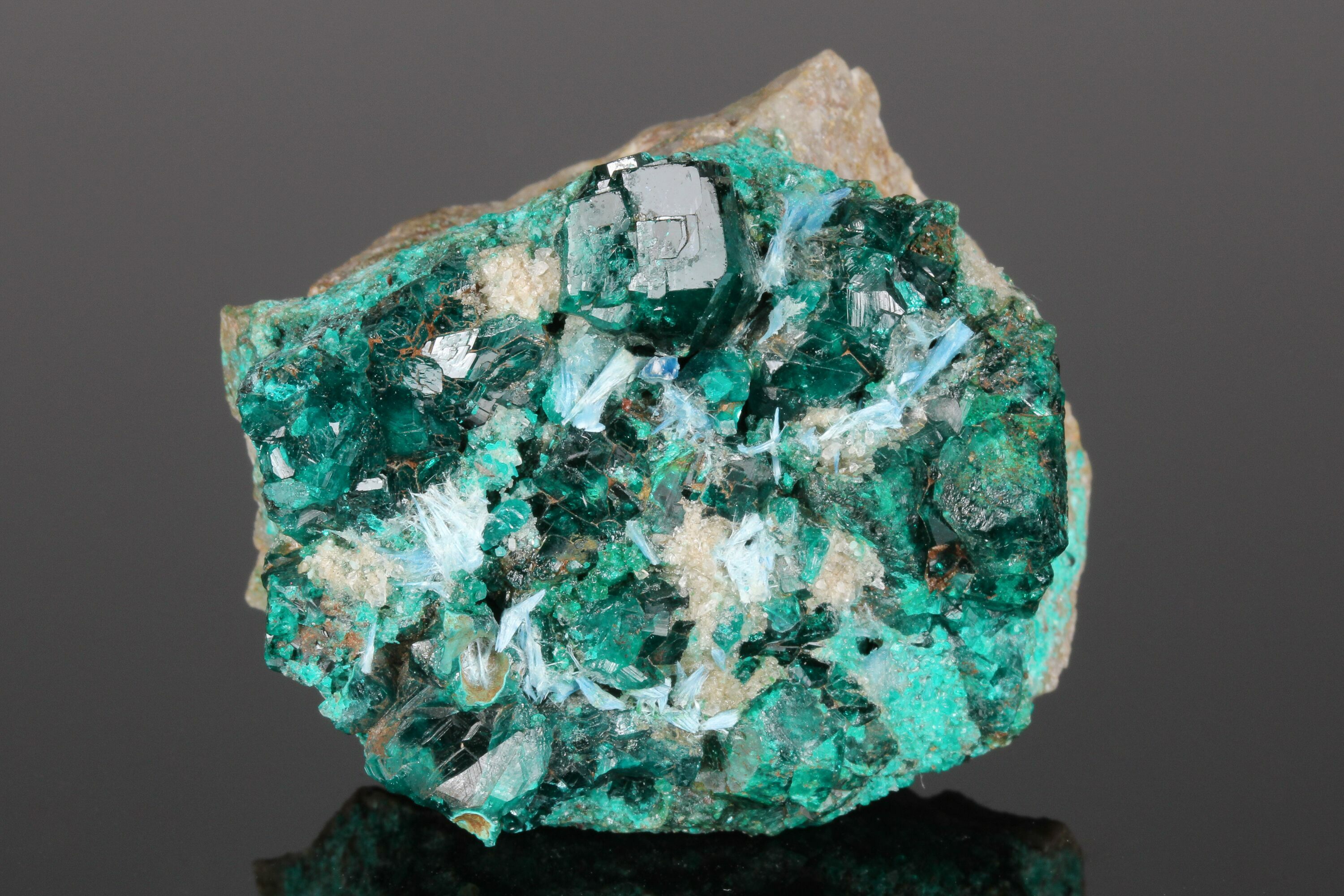
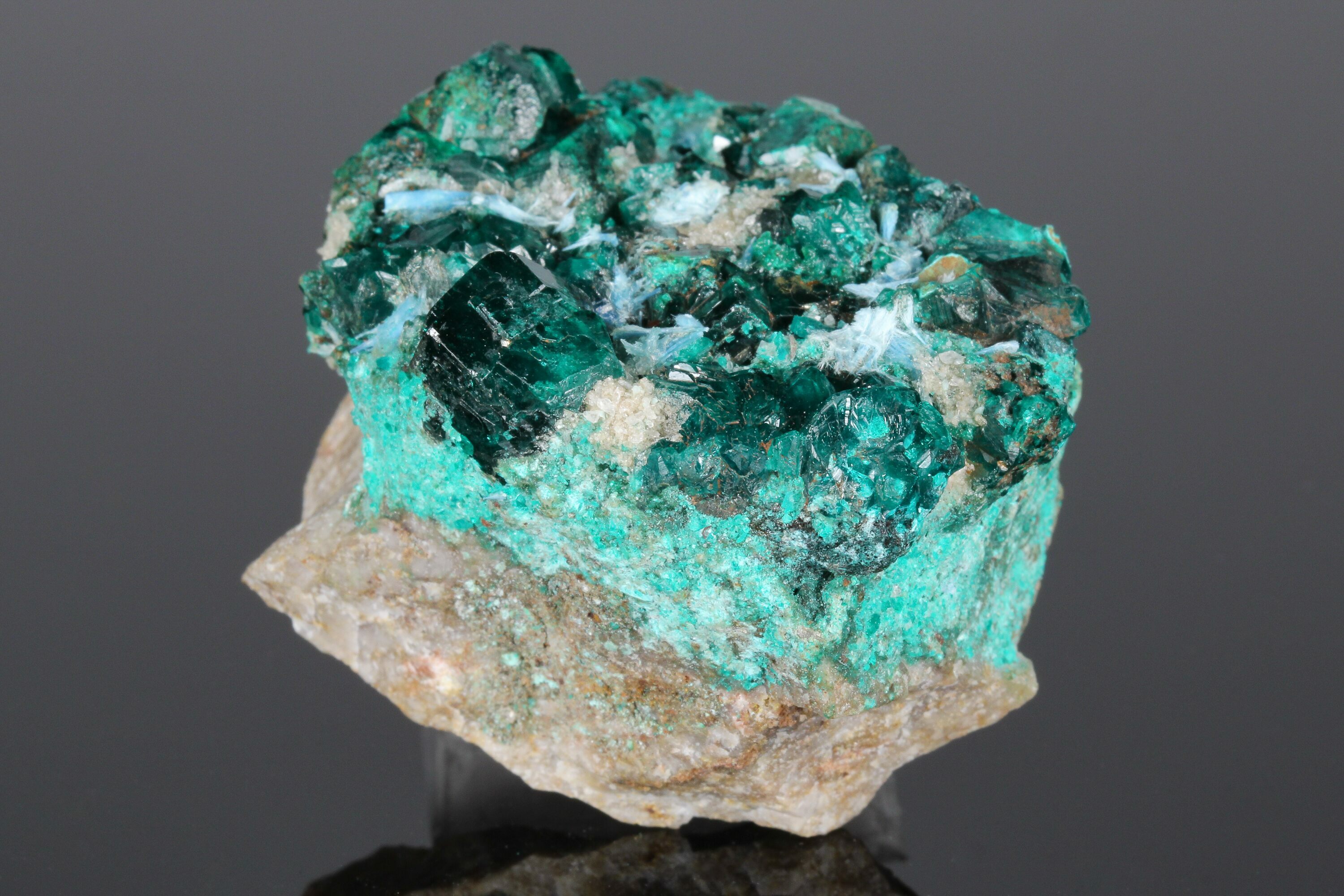
This is a colorful association of dioptase, quartz and fibrous shattuckite that was collected from Southern Africa. Some of the dioptase crystals are quite large and small pockets of quartz crystals can be found along the side of the specimen.
About Dioptase
Dioptase is a showstopper in the mineral world—an electrifying copper silicate known for its mesmerizing, emerald-green color that seems to glow from within. Its vivid hues rival even the finest emeralds, but it’s the crystal clarity and intense brilliance that make collectors’ hearts race. Found in arid, copper-rich environments like the deserts of Namibia and Kazakhstan, dioptase forms stunning prismatic crystals that sparkle like tiny green beacons against contrasting matrix rock. While too soft for most jewelry, it’s a favorite among mineral collectors and museums for its sheer visual impact. Dioptase isn’t just a mineral—it’s nature’s answer to green fire in crystal form.
Dioptase is a showstopper in the mineral world—an electrifying copper silicate known for its mesmerizing, emerald-green color that seems to glow from within. Its vivid hues rival even the finest emeralds, but it’s the crystal clarity and intense brilliance that make collectors’ hearts race. Found in arid, copper-rich environments like the deserts of Namibia and Kazakhstan, dioptase forms stunning prismatic crystals that sparkle like tiny green beacons against contrasting matrix rock. While too soft for most jewelry, it’s a favorite among mineral collectors and museums for its sheer visual impact. Dioptase isn’t just a mineral—it’s nature’s answer to green fire in crystal form.
About Shattuckite
Shattuckite is a scarce copper mineral highly regarded for its vivid blue color. It is named after the Shattuck Mine in Bisbee, Arizona, where this mineral was first discovered. It crystallizes in the orthorhombic–dipyramidal crystal system and usually occurs in a granular massive form or as fibrous acicular crystals.
Shattuckite is a scarce copper mineral highly regarded for its vivid blue color. It is named after the Shattuck Mine in Bisbee, Arizona, where this mineral was first discovered. It crystallizes in the orthorhombic–dipyramidal crystal system and usually occurs in a granular massive form or as fibrous acicular crystals.
About Quartz
Quartz is the name given to silicon dioxide (SiO2) and is the second most abundant mineral in the Earth's crust. Quartz crystals generally grow in silica-rich environments--usually igneous rocks or hydrothermal environments like geothermal waters--at temperatures between 100°C and 450°C, and usually under very high pressure. In either case, crystals will precipitate as temperatures cool, just as ice gradually forms when water freezes. Quartz veins are formed when open fissures are filled with hot water during the closing stages of mountain formation: these veins can be hundreds of millions of years old.
Quartz is the name given to silicon dioxide (SiO2) and is the second most abundant mineral in the Earth's crust. Quartz crystals generally grow in silica-rich environments--usually igneous rocks or hydrothermal environments like geothermal waters--at temperatures between 100°C and 450°C, and usually under very high pressure. In either case, crystals will precipitate as temperatures cool, just as ice gradually forms when water freezes. Quartz veins are formed when open fissures are filled with hot water during the closing stages of mountain formation: these veins can be hundreds of millions of years old.
SPECIES
Dioptase, Quartz & Shattuckite
LOCATION
Southern Africa
SIZE
1.8 x 1.5"
CATEGORY
ITEM
#175950