 Reviews

This Specimen has been sold.


2" Hematite Crystals in Lizardite & Hydrotalcite - Norway


This is a 2" wide specimen that contains hematite crystals (pseudomorph after Ilmenite) that are partially encased by a lizardite (yellow-green) and hydrotalcite (white) matrix. This beautiful specimen was collected from the Øvre Dypingdal Mine (Dypingdal Serpentine-magnesite deposit) of Buskerud, Norway.
About Lizardite
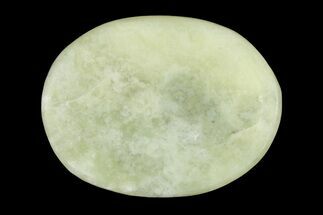
Lizardite is a member of the serpentine mineral group, forming as a soft, fine-grained, sheetlike silicate in low-grade metamorphic environments. It typically develops when ultramafic rocks such as peridotite undergo hydrothermal alteration, creating its signature waxy luster and soothing green to yellow-green coloration. The mineral’s name comes from the Lizard Peninsula in Cornwall, England, where it was first described. Lizardite often occurs in massive, fibrous, or platy aggregates and may display attractive veining or mottling caused by associated minerals like magnetite or brucite.
In hand specimens, lizardite is prized for its silky texture, pastel hues, and ease of carving and polishing. Its compact, fine-grained structure makes it a popular choice for cabochons, carvings, and metaphysical décor items commonly marketed under the broader “serpentine” label. While relatively soft (around 2.5–3.5 on the Mohs scale), lizardite’s warm coloration and natural patterns give it strong visual appeal, especially when polished to a glossy finish.
Lizardite is a member of the serpentine mineral group, forming as a soft, fine-grained, sheetlike silicate in low-grade metamorphic environments. It typically develops when ultramafic rocks such as peridotite undergo hydrothermal alteration, creating its signature waxy luster and soothing green to yellow-green coloration. The mineral’s name comes from the Lizard Peninsula in Cornwall, England, where it was first described. Lizardite often occurs in massive, fibrous, or platy aggregates and may display attractive veining or mottling caused by associated minerals like magnetite or brucite.
In hand specimens, lizardite is prized for its silky texture, pastel hues, and ease of carving and polishing. Its compact, fine-grained structure makes it a popular choice for cabochons, carvings, and metaphysical décor items commonly marketed under the broader “serpentine” label. While relatively soft (around 2.5–3.5 on the Mohs scale), lizardite’s warm coloration and natural patterns give it strong visual appeal, especially when polished to a glossy finish.
SPECIES
Hematite, Lizardite & Hydrotalcite
LOCATION
Øvre Dypingdal Mine, Snarum, Modum, Buskerud, Norway
SIZE
2" Wide, largest hematite crystal .6" (longest measurment)
CATEGORY
SUB CATEGORY
ITEM
#133997


