 Reviews

Serpentine: Mineral & Crystal Guide
Serpentine is one of Earth’s most fascinating and misunderstood mineral groups—a family of green metamorphic minerals that forms deep within the planet and emerges at the surface only through dramatic geological processes. Its name comes from the Latin serpens, meaning “snake,” inspired by its green, mottled, scale-like patterns that can resemble reptile skin. But beyond its appearance, serpentine tells an extraordinary story of Earth’s interior: it is literally born when oceanic crust and mantle rocks chemically react with water, releasing heat, hydrogen, and even providing conditions that some scientists believe may have helped spark the earliest life on our planet. Few minerals are tied so closely to the deep history of Earth’s evolution.
One of the most captivating facts about serpentine is its connection to plate tectonics and ancient seafloors. Major serpentine deposits form in regions called ophiolites—fragments of Earth’s mantle that were thrust onto continents during tectonic collisions. This makes serpentine one of the only minerals that regularly delivers pieces of the mantle to the surface, giving geologists a rare window into the inaccessible interior of our world. Serpentinite, the rock composed primarily of serpentine minerals, can be so structurally weak and slippery that major fault zones—including sections of California’s San Andreas Fault—are lubricated by it, influencing the behavior of earthquakes.
Culturally, serpentine carries a history as rich as its geology. For thousands of years it has been carved into tools, ceremonial objects, and jewelry. Ancient Chinese artisans shaped it into protective amulets; Indigenous cultures of the Americas used it in ritual items; and in the Victorian era, “noble serpentine” from the Lizard Peninsula in Cornwall became highly fashionable as a decorative stone. Today, serpentine remains both scientifically important and artistically treasured.
Properties of Serpentine
Chemical formula: Mg₃Si₂O₅(OH)₄ (often contains iron, nickel, or chromium)
Color: Green, yellow-green, olive green, brown, gray, rarely black
Crystal habit: Massive, fibrous, platy, foliated, or compact
Luster: Greasy to waxy; silky in fibrous varieties
Transparency: Opaque to translucent
Mohs hardness: 2.5–5.5 (varies by serpentine variety)
Cleavage: Poor or indistinct
Streak: White to pale green
Density: Approximately 2.5–2.6 g/cm³
Geologic environment: Ophiolites, subduction zones, altered mantle rocks, and metamorphic terrains
Common uses: Decorative stone, carvings, cabochons, architectural stone; historically asbestos (regulated)
Frequently associated minerals: Magnetite, chromite, talc, brucite, calcite, dolomite, garnet, tremolite, diopside, relict olivine, relict pyroxene
Serpentine is not a single mineral but a group of hydrated magnesium silicates formed from the alteration of ultramafic rocks. The three primary serpentine minerals are:
Antigorite - The most stable variety at higher temperatures and pressures. Antigorite forms platy or lamellar structures and is the main component of most massive decorative serpentines used for carving.
Lizardite - Typically fine-grained, soft, and often displaying beautiful mottled or veined patterns. Many gem-quality and ornamental serpentines are lizardite-rich.
Chrysotile - The fibrous form of serpentine, famous—and controversial—as the primary mineralogical species of asbestos. While industrial chrysotile fibers pose health hazards when inhaled, massive ornamental serpentines do not contain the hazardous fibrous structure.
These three species share the same basic chemistry but differ in structure, producing an astonishing range of textures and appearances.
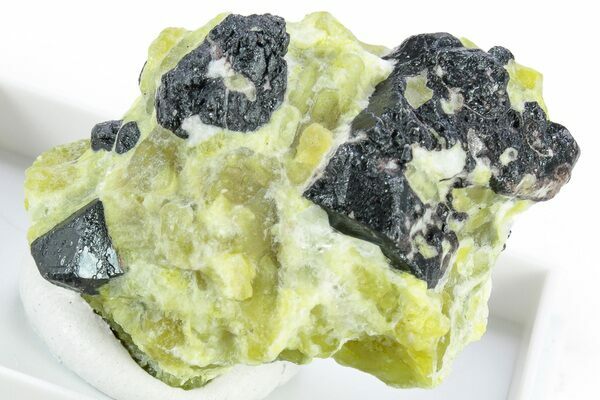
A specimen of Lizardite, a form of Serpentine with Hematite.
Serpentine forms through a process known as serpentinization, in which ultramafic rocks like peridotite and dunite chemically alter when they interact with water. This transformation commonly takes place at mid-ocean ridges, subduction zones, and within the upper mantle, generating heat, hydrogen, and magnetite as it progresses. The reaction can even cause the surrounding rock to expand in volume, contributing to tectonic uplift, and it is believed to fuel hydrothermal systems capable of sustaining microbial life.
When sections of oceanic lithosphere are pushed beneath a continent, portions of this serpentinized mantle may be scraped off and welded onto the continental margin, creating major serpentinite belts found in regions such as California, New Zealand, Italy, Greece, and Canada. Serpentine’s distinctive green hues—ranging from soft yellow-green to rich emerald and even nearly black—stem from minor iron content that oxidizes during formation, with the most translucent apple-green varieties often prized as gemstone material.
Major serpentine deposits occur worldwide, especially in areas where ancient oceanic crust has been uplifted. Key localities include:
The Lizard Peninsula, Cornwall, England – historically famous for ornamental “noble serpentine.”
The Italian Alps – producing high-quality antigorite.
Quebec and British Columbia, Canada – massive chrysotile deposits (historic for industrial asbestos mining).
New Zealand’s South Island – home to distinctive bowenite serpentinite.
California and Oregon, USA – large serpentinite and ophiolite complexes.
Afghanistan, Pakistan, China, Russia, India – abundant carving-grade varieties.
Serpentine can be found in shades of green, yellow, brown, or black, sometimes with beautiful swirling, brecciated, or veined patterns ideal for lapidary use.
Serpentine is frequently confused with jade, particularly nephrite, because some varieties share a similar green coloration and are used in similar decorative applications. Despite this visual overlap, the two materials are mineralogically distinct: serpentine is a group of magnesium silicates known for its softer, waxier luster, while nephrite—one of the true jades—is a tougher amphibole mineral with a densely interlocked fibrous structure. Bowenite, a gem-quality serpentine, has often been marketed as “false jade,” though it carries its own rich cultural and artistic heritage.
Human interaction with serpentine stretches back thousands of years, with early Neolithic cultures carving it into tools, beads, and ceremonial objects. In China, artisans have shaped serpentine for more than 3,000 years, and certain rich green varieties were once mistaken for—and even revered as—jade. The Māori of New Zealand crafted the dense, gem-like form known as bowenite (tangiwai) into pendants and heirlooms believed to offer spiritual protection, while Victorian Britain saw a surge in serpentine décor, producing ornate fireplace surrounds, vases, columns, and decorative boxes from the colorful serpentinite of Cornwall. Across North America, Indigenous peoples carved serpentine into pipes, amulets, and ritual items. This widespread cultural use stems from serpentine’s beauty, abundance, and ease of working, giving it a long and meaningful presence across many civilizations.
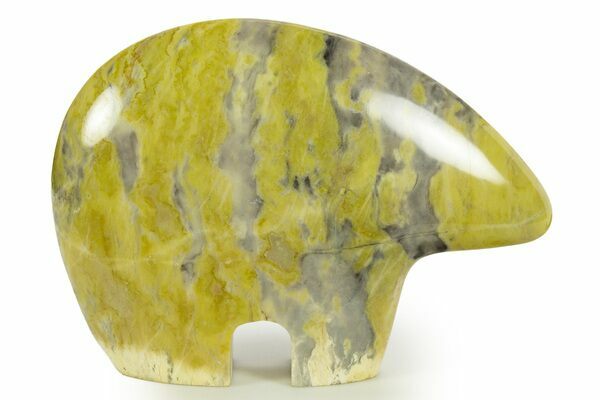
A zuni bear carving made from serpentine.
Serpentine has long been valued in the lapidary arts for its rich green hues, soft polish, and varied textures, making it a favored material for sculptures, figurines, animal carvings, bowls, vases, jewelry cabochons, beads, pendants, and even architectural stone or inlay work. Certain varieties, such as bowenite and noble serpentine, are especially prized by artisans for their fine grain and durability. Historically, the fibrous serpentine mineral chrysotile served as the world’s primary source of asbestos, used in insulation, brake linings, and fire-resistant materials before its health hazards were fully recognized, leading to a dramatic decline in industrial use.
Scientifically, serpentine is of major significance because its formation produces hydrogen, which may have supported some of Earth’s earliest microbial life. Serpentine-rich rocks can also influence earthquake mechanics by lubricating major fault systems, and serpentinites preserve geochemical signatures that help scientists reconstruct ancient mantle processes and tectonic environments.
One of the most captivating facts about serpentine is its connection to plate tectonics and ancient seafloors. Major serpentine deposits form in regions called ophiolites—fragments of Earth’s mantle that were thrust onto continents during tectonic collisions. This makes serpentine one of the only minerals that regularly delivers pieces of the mantle to the surface, giving geologists a rare window into the inaccessible interior of our world. Serpentinite, the rock composed primarily of serpentine minerals, can be so structurally weak and slippery that major fault zones—including sections of California’s San Andreas Fault—are lubricated by it, influencing the behavior of earthquakes.

Culturally, serpentine carries a history as rich as its geology. For thousands of years it has been carved into tools, ceremonial objects, and jewelry. Ancient Chinese artisans shaped it into protective amulets; Indigenous cultures of the Americas used it in ritual items; and in the Victorian era, “noble serpentine” from the Lizard Peninsula in Cornwall became highly fashionable as a decorative stone. Today, serpentine remains both scientifically important and artistically treasured.
Properties of Serpentine
Chemical formula: Mg₃Si₂O₅(OH)₄ (often contains iron, nickel, or chromium)
Color: Green, yellow-green, olive green, brown, gray, rarely black
Crystal habit: Massive, fibrous, platy, foliated, or compact
Luster: Greasy to waxy; silky in fibrous varieties
Transparency: Opaque to translucent
Mohs hardness: 2.5–5.5 (varies by serpentine variety)
Cleavage: Poor or indistinct
Streak: White to pale green
Density: Approximately 2.5–2.6 g/cm³
Geologic environment: Ophiolites, subduction zones, altered mantle rocks, and metamorphic terrains
Common uses: Decorative stone, carvings, cabochons, architectural stone; historically asbestos (regulated)
Frequently associated minerals: Magnetite, chromite, talc, brucite, calcite, dolomite, garnet, tremolite, diopside, relict olivine, relict pyroxene
What Is Serpentine? The Mineral Group Explained
Serpentine is not a single mineral but a group of hydrated magnesium silicates formed from the alteration of ultramafic rocks. The three primary serpentine minerals are:
Antigorite - The most stable variety at higher temperatures and pressures. Antigorite forms platy or lamellar structures and is the main component of most massive decorative serpentines used for carving.
Lizardite - Typically fine-grained, soft, and often displaying beautiful mottled or veined patterns. Many gem-quality and ornamental serpentines are lizardite-rich.
Chrysotile - The fibrous form of serpentine, famous—and controversial—as the primary mineralogical species of asbestos. While industrial chrysotile fibers pose health hazards when inhaled, massive ornamental serpentines do not contain the hazardous fibrous structure.
These three species share the same basic chemistry but differ in structure, producing an astonishing range of textures and appearances.
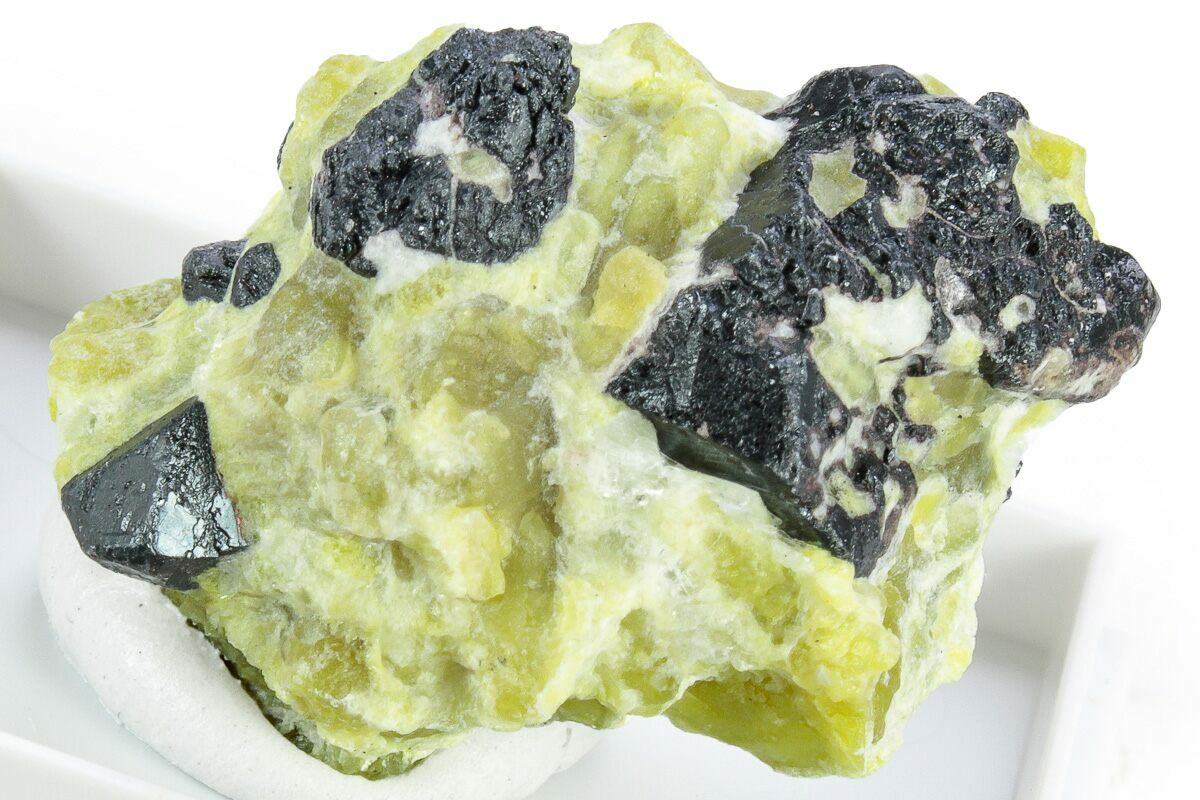
A specimen of Lizardite, a form of Serpentine with Hematite.
How Serpentine Forms: A Deep-Earth Transformation
Serpentine forms through a process known as serpentinization, in which ultramafic rocks like peridotite and dunite chemically alter when they interact with water. This transformation commonly takes place at mid-ocean ridges, subduction zones, and within the upper mantle, generating heat, hydrogen, and magnetite as it progresses. The reaction can even cause the surrounding rock to expand in volume, contributing to tectonic uplift, and it is believed to fuel hydrothermal systems capable of sustaining microbial life.
When sections of oceanic lithosphere are pushed beneath a continent, portions of this serpentinized mantle may be scraped off and welded onto the continental margin, creating major serpentinite belts found in regions such as California, New Zealand, Italy, Greece, and Canada. Serpentine’s distinctive green hues—ranging from soft yellow-green to rich emerald and even nearly black—stem from minor iron content that oxidizes during formation, with the most translucent apple-green varieties often prized as gemstone material.
Geological and Global Occurrence
Major serpentine deposits occur worldwide, especially in areas where ancient oceanic crust has been uplifted. Key localities include:
Serpentine can be found in shades of green, yellow, brown, or black, sometimes with beautiful swirling, brecciated, or veined patterns ideal for lapidary use.
Serpentine vs. Jade: The Longstanding Confusion
Serpentine is frequently confused with jade, particularly nephrite, because some varieties share a similar green coloration and are used in similar decorative applications. Despite this visual overlap, the two materials are mineralogically distinct: serpentine is a group of magnesium silicates known for its softer, waxier luster, while nephrite—one of the true jades—is a tougher amphibole mineral with a densely interlocked fibrous structure. Bowenite, a gem-quality serpentine, has often been marketed as “false jade,” though it carries its own rich cultural and artistic heritage.
Historical and Cultural Significance
Human interaction with serpentine stretches back thousands of years, with early Neolithic cultures carving it into tools, beads, and ceremonial objects. In China, artisans have shaped serpentine for more than 3,000 years, and certain rich green varieties were once mistaken for—and even revered as—jade. The Māori of New Zealand crafted the dense, gem-like form known as bowenite (tangiwai) into pendants and heirlooms believed to offer spiritual protection, while Victorian Britain saw a surge in serpentine décor, producing ornate fireplace surrounds, vases, columns, and decorative boxes from the colorful serpentinite of Cornwall. Across North America, Indigenous peoples carved serpentine into pipes, amulets, and ritual items. This widespread cultural use stems from serpentine’s beauty, abundance, and ease of working, giving it a long and meaningful presence across many civilizations.
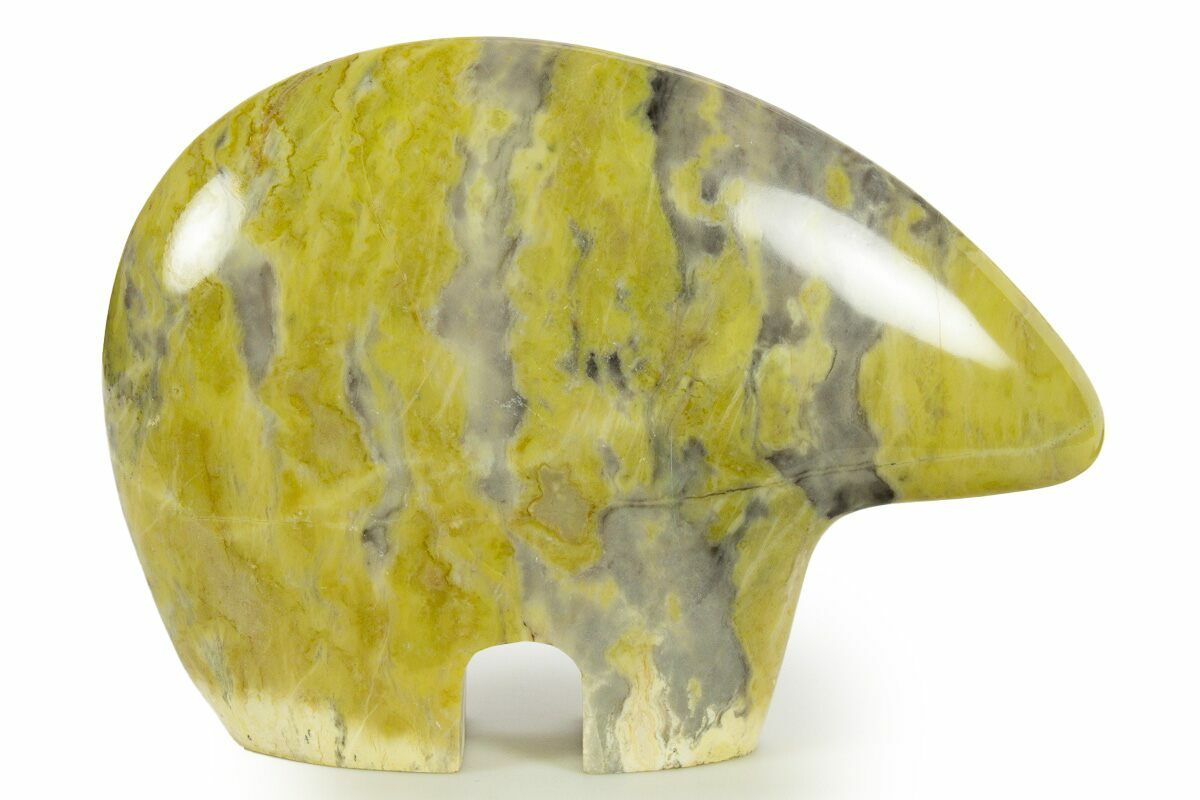
A zuni bear carving made from serpentine.
Serpentine has long been valued in the lapidary arts for its rich green hues, soft polish, and varied textures, making it a favored material for sculptures, figurines, animal carvings, bowls, vases, jewelry cabochons, beads, pendants, and even architectural stone or inlay work. Certain varieties, such as bowenite and noble serpentine, are especially prized by artisans for their fine grain and durability. Historically, the fibrous serpentine mineral chrysotile served as the world’s primary source of asbestos, used in insulation, brake linings, and fire-resistant materials before its health hazards were fully recognized, leading to a dramatic decline in industrial use.
Scientifically, serpentine is of major significance because its formation produces hydrogen, which may have supported some of Earth’s earliest microbial life. Serpentine-rich rocks can also influence earthquake mechanics by lubricating major fault systems, and serpentinites preserve geochemical signatures that help scientists reconstruct ancient mantle processes and tectonic environments.


