 Reviews

Lizardite: The Serpentine Mineral with Scaly Secrets
Lizardite is one of those minerals that quietly shows up all over Earth’s most dramatic geology—ancient ocean floors, mountain-building collision zones, and rocks that have literally been transformed by water. It’s a member of the serpentine group, best known for its green colors and waxy, smooth feel, but lizardite has its own signature: it commonly forms platy, sheet-like crystals that can stack like microscopic scales. That “scaly” texture is so characteristic that it influenced the mineral’s name—lizardite was first described from the Lizard Peninsula in Cornwall, England, an area famous for serpentinite rocks.
Here’s the fun part: serpentine minerals are often the product of a chemical makeover called serpentinization, where water reacts with iron- and magnesium-rich rocks from Earth’s mantle (especially peridotite). This is not a small, quiet reaction—it can change rock density, create new minerals, and even generate hydrogen gas, a key ingredient in some deep-ocean ecosystems and a topic of real interest in astrobiology and “life’s origins” research. Lizardite is one of the most common end-products of that transformation, meaning it’s part of a mineral story that connects plate tectonics, ocean chemistry, and potentially biology.
Although people often talk about “serpentine” like it’s a single mineral, it’s actually a mineral group (mainly lizardite, antigorite, and chrysotile) that share a similar chemistry but differ in crystal structure and habit. Lizardite is the “sheetiest” of the trio—often forming fine-grained masses, foliated or platy aggregates, and sometimes attractive green material that can take a polish. It’s widespread, geologically important, and a great example of how small atomic-level differences can produce very different mineral behaviors.
Lizardite is a magnesium-rich phyllosilicate (a sheet silicate) in the serpentine group. In the real world, lizardite commonly contains small substitutions—especially iron (Fe) replacing some magnesium, which can influence color (often deepening greens or adding grayish tones). Lizardite usually occurs as part of serpentinite, a rock composed dominantly of serpentine minerals formed by alteration of ultramafic rocks.
Mineral Properties:
Color: usually green; can be pale minty green, olive, yellow-green, gray-green, or even nearly white
Luster: waxy to greasy; can appear silky if very fine textured
Streak: white
Hardness: ~2.5–3.5 (soft—will scratch easily compared to quartz)
Specific gravity: often around ~2.5–2.6 (varies with iron content and mixtures)
Cleavage: generally poor in massive material; platy textures may show parting
If you’ve seen “serpentine” sold as a stone or mentioned in a geology context, it might be lizardite—but it also might not. Here’s what makes lizardite distinct compared to the other major serpentine minerals:
1) Lizardite is the “platy / scaly” serpentine
Lizardite tends to form flat, plate-like crystals (often microscopic) that can create a scaly, foliated appearance in hand sample. This is different from:
Chrysotile, which is fibrous and commonly forms silky veins (“asbestos” habit).
Antigorite, which often forms more bladed, splintery, or massive textures and is stable at higher metamorphic conditions.
That platy habit matters because it influences texture, polish, and how serpentinite breaks and weathers.
2) Lizardite is common at relatively lower-temperature alteration
Lizardite is especially abundant in serpentinites formed under low- to moderate-temperature serpentinization conditions. Antigorite, by contrast, becomes more important at higher temperatures and pressures (often in subduction-related metamorphism). In many settings, lizardite can be thought of as an alteration “workhorse”—an extremely common product of seawater/groundwater reacting with mantle rocks.
3) It strongly reflects the chemistry of mantle-water reactions
Lizardite forms hand-in-hand with serpentinization, making it an excellent mineral record of how water alters Earth’s mantle rocks. Its presence indicates that ultramafic rocks were hydrated and chemically transformed as fluids moved through them, triggering complex reactions between rock, water, and dissolved elements. These reactions often involve changes in oxidation state, sometimes generating hydrogen and reshaping the surrounding mineral assemblage. As a result, lizardite commonly occurs alongside minerals such as magnetite, brucite, talc, and various carbonates, each reflecting subtle differences in fluid chemistry and temperature. Far from being just another green stone, lizardite serves as a geological tracer for some of the most important chemical and tectonic processes shaping oceanic crust and upper mantle environments.
4) Collectors and lapidary folks often encounter it as “serpentine”
When serpentine is cut and polished, much of that material is lizardite-rich (though antigorite-rich decorative stone is also common). Lizardite can show:
Mottled greens, sometimes with white veining
A smooth, waxy polish
Attractive patterns when mixed with magnetite, carbonate, or other alteration minerals
Lizardite most commonly forms through the alteration of ultramafic rocks such as peridotite, which are rich in olivine and pyroxene and originate deep within Earth’s mantle. When these rocks come into contact with water, a powerful set of chemical reactions begins—collectively known as serpentinization. In simplified terms, olivine reacts with water to form serpentine minerals (including lizardite), along with byproducts such as brucite and magnetite. Under certain conditions, these reactions also release hydrogen gas, making serpentinization one of the few natural geological processes capable of generating free hydrogen.
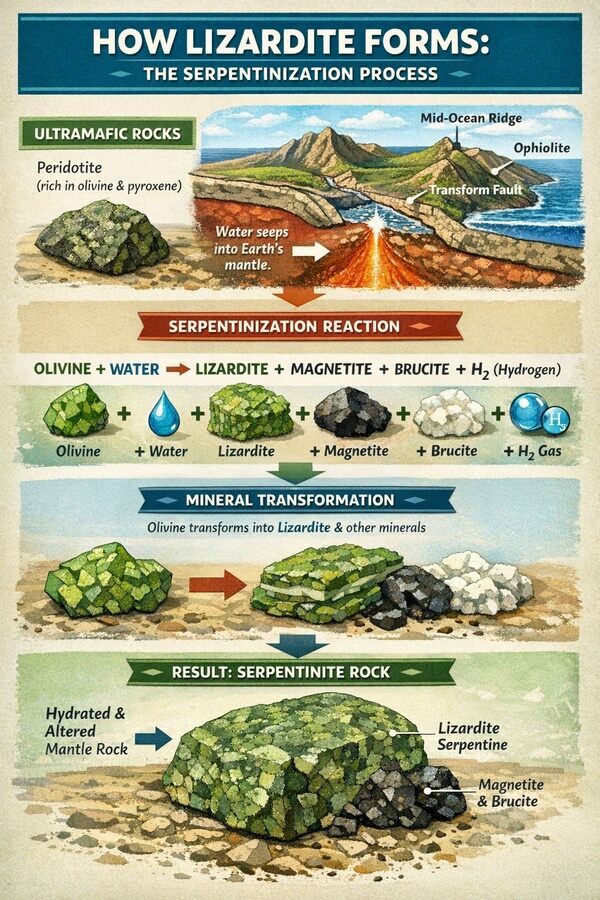
The Serpentinization process that forms Lizardite.
The exact mineral assemblage produced during serpentinization depends on factors such as temperature, pressure, fluid chemistry, and the original composition of the rock. Despite this variability, the overall outcome is consistent: dense mantle rock is transformed into serpentinite, a hydrated, chemically altered rock with very different physical and geochemical properties. This process most commonly occurs where seawater can penetrate deep into the crust and upper mantle, such as along mid-ocean ridges, major transform faults, and in obducted ophiolites where slices of oceanic mantle have been thrust onto continental crust.
As serpentinization progresses, iron within the original ultramafic minerals can oxidize, leading to the formation of magnetite. This oxidation process is closely tied to the generation of hydrogen gas, which has attracted significant scientific interest for its role in fueling deep-subsurface microbial ecosystems and driving secondary reactions, including methane formation in certain environments.
In some settings, serpentinized rocks undergo further transformation when carbon dioxide–rich fluids enter the system. These fluids can partially replace lizardite and other serpentine minerals with magnesium-rich carbonates such as magnesite or dolomite, producing distinctive carbonate-altered rocks sometimes referred to as listwanite. This overprinting adds yet another layer of complexity, contributing to the chemical diversity, mineral associations, and visual variety commonly seen in serpentinite terrains.
Lizardite rarely occurs alone. In serpentinite and altered ultramafic rocks, it commonly occurs with:
Magnetite – often responsible for mild magnetism in serpentinite
Brucite – indicates certain fluid/rock chemistry
Talc – forms with silica addition or later alteration
Carbonates (magnesite, dolomite, calcite) – CO₂-rich alteration
Chromite – a relict mineral from the original mantle rock
Chrysotile / Antigorite – other serpentine-group members, depending on conditions
These associations can tell a geologist a lot about fluid pathways, temperature history, and tectonic setting.
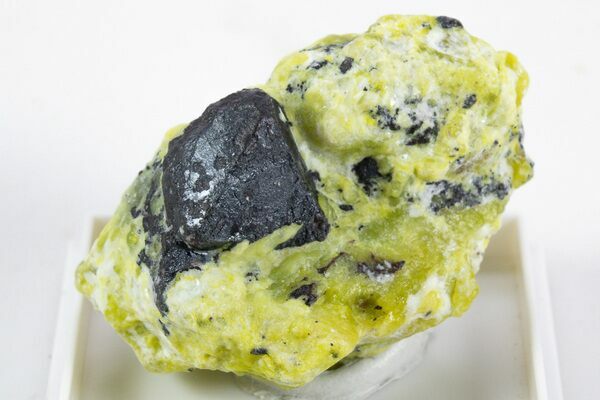
Lizardite with hematite crystals and hydrotalcite from Norway
Lizardite-rich serpentine is commonly confused with:
Jade (nephrite or jadeite): much tougher, typically harder, and more “waxy-translucent” with different texture; jade is famous for toughness rather than softness.
Chlorite: can be green and flaky but often occurs in different host rocks and has different feel/cleavage behavior.
Epidote / prehnite: often harder and more crystalline-looking.
Soapstone (talc-rich): softer (talc is Mohs 1), more soapy feel.
A key practical tip: serpentine is relatively soft compared to many “jade-like” green stones—if a piece scratches easily, it’s a hint you’re not dealing with true jade.
Lizardite is most commonly encountered as part of serpentinite used for decorative and educational purposes. Its attractive green hues and smooth, waxy polish make it well suited for display specimens, carvings, and ornamental objects. However, because it is relatively soft compared to many gem materials, lizardite-rich serpentine is best reserved for items that will not experience heavy wear. It is generally unsuitable for applications such as daily-wear rings, where durability is essential, but it excels as a material for collectors, study pieces, and sculptural work.
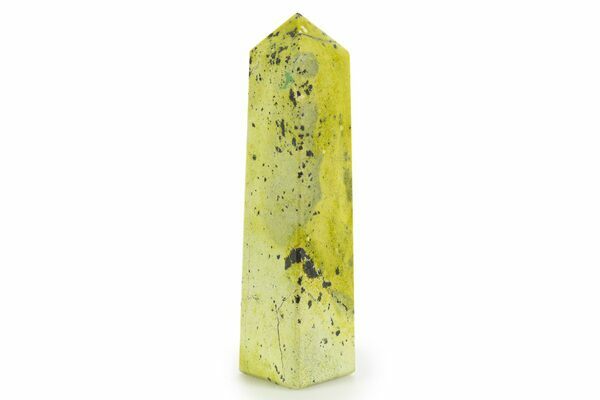
A tower of polished lizardite with hematite inclusions.
Beyond its visual appeal, lizardite plays an important role in scientific research. It is a key mineral for understanding how Earth’s mantle becomes hydrated through fluid–rock interaction, a process that influences the chemistry and physical behavior of large sections of the planet’s crust and upper mantle. Serpentinite bodies rich in lizardite are also studied for their effects on fault mechanics, as their presence can weaken rocks and influence how earthquakes initiate and propagate. In addition, the formation of lizardite during serpentinization is closely linked to hydrogen production, making it central to research on deep subsurface energy sources and microbial ecosystems. Its mineral associations further help geologists trace fluid pathways and reconstruct tectonic histories in complex geological environments.
When handling or working lizardite and other serpentine materials, basic precautions are recommended. The serpentine group includes chrysotile, which can form fibrous varieties under certain conditions. While massive, non-fibrous lizardite specimens are commonly handled safely, cutting, grinding, or sanding any serpentine material should be done with care. Minimizing dust and using wet cutting or polishing methods helps reduce potential exposure and is considered best practice in both lapidary and research settings.

Here’s the fun part: serpentine minerals are often the product of a chemical makeover called serpentinization, where water reacts with iron- and magnesium-rich rocks from Earth’s mantle (especially peridotite). This is not a small, quiet reaction—it can change rock density, create new minerals, and even generate hydrogen gas, a key ingredient in some deep-ocean ecosystems and a topic of real interest in astrobiology and “life’s origins” research. Lizardite is one of the most common end-products of that transformation, meaning it’s part of a mineral story that connects plate tectonics, ocean chemistry, and potentially biology.
Although people often talk about “serpentine” like it’s a single mineral, it’s actually a mineral group (mainly lizardite, antigorite, and chrysotile) that share a similar chemistry but differ in crystal structure and habit. Lizardite is the “sheetiest” of the trio—often forming fine-grained masses, foliated or platy aggregates, and sometimes attractive green material that can take a polish. It’s widespread, geologically important, and a great example of how small atomic-level differences can produce very different mineral behaviors.
What Is Lizardite?
Lizardite is a magnesium-rich phyllosilicate (a sheet silicate) in the serpentine group. In the real world, lizardite commonly contains small substitutions—especially iron (Fe) replacing some magnesium, which can influence color (often deepening greens or adding grayish tones). Lizardite usually occurs as part of serpentinite, a rock composed dominantly of serpentine minerals formed by alteration of ultramafic rocks.
Mineral Properties:
Why Lizardite Is Special Among Serpentine Minerals
If you’ve seen “serpentine” sold as a stone or mentioned in a geology context, it might be lizardite—but it also might not. Here’s what makes lizardite distinct compared to the other major serpentine minerals:
1) Lizardite is the “platy / scaly” serpentine
That platy habit matters because it influences texture, polish, and how serpentinite breaks and weathers.
2) Lizardite is common at relatively lower-temperature alteration
Lizardite is especially abundant in serpentinites formed under low- to moderate-temperature serpentinization conditions. Antigorite, by contrast, becomes more important at higher temperatures and pressures (often in subduction-related metamorphism). In many settings, lizardite can be thought of as an alteration “workhorse”—an extremely common product of seawater/groundwater reacting with mantle rocks.
3) It strongly reflects the chemistry of mantle-water reactions
Lizardite forms hand-in-hand with serpentinization, making it an excellent mineral record of how water alters Earth’s mantle rocks. Its presence indicates that ultramafic rocks were hydrated and chemically transformed as fluids moved through them, triggering complex reactions between rock, water, and dissolved elements. These reactions often involve changes in oxidation state, sometimes generating hydrogen and reshaping the surrounding mineral assemblage. As a result, lizardite commonly occurs alongside minerals such as magnetite, brucite, talc, and various carbonates, each reflecting subtle differences in fluid chemistry and temperature. Far from being just another green stone, lizardite serves as a geological tracer for some of the most important chemical and tectonic processes shaping oceanic crust and upper mantle environments.
4) Collectors and lapidary folks often encounter it as “serpentine”
When serpentine is cut and polished, much of that material is lizardite-rich (though antigorite-rich decorative stone is also common). Lizardite can show:
How Lizardite Forms: Serpentinization in Action
Lizardite most commonly forms through the alteration of ultramafic rocks such as peridotite, which are rich in olivine and pyroxene and originate deep within Earth’s mantle. When these rocks come into contact with water, a powerful set of chemical reactions begins—collectively known as serpentinization. In simplified terms, olivine reacts with water to form serpentine minerals (including lizardite), along with byproducts such as brucite and magnetite. Under certain conditions, these reactions also release hydrogen gas, making serpentinization one of the few natural geological processes capable of generating free hydrogen.
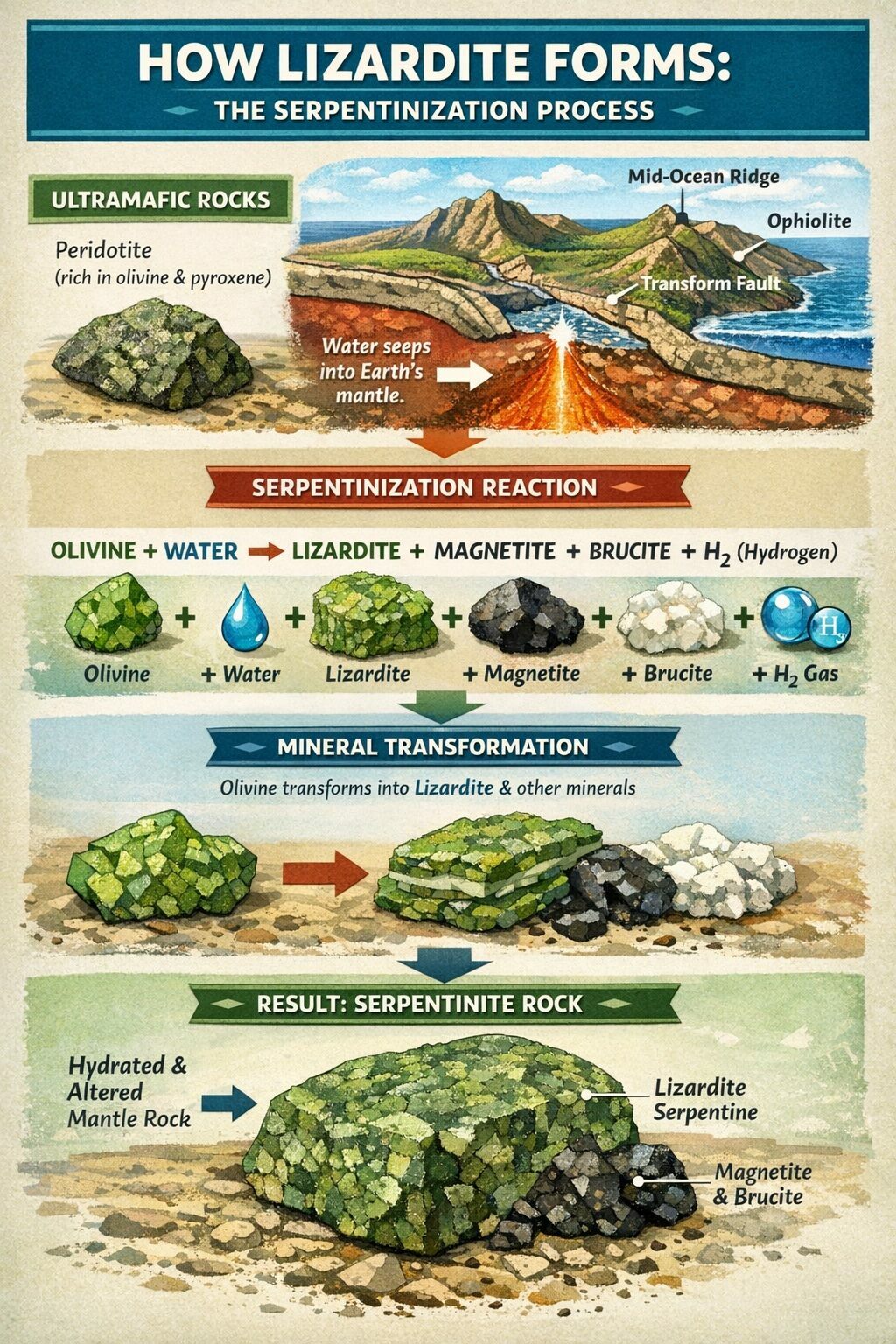
The Serpentinization process that forms Lizardite.
The exact mineral assemblage produced during serpentinization depends on factors such as temperature, pressure, fluid chemistry, and the original composition of the rock. Despite this variability, the overall outcome is consistent: dense mantle rock is transformed into serpentinite, a hydrated, chemically altered rock with very different physical and geochemical properties. This process most commonly occurs where seawater can penetrate deep into the crust and upper mantle, such as along mid-ocean ridges, major transform faults, and in obducted ophiolites where slices of oceanic mantle have been thrust onto continental crust.
As serpentinization progresses, iron within the original ultramafic minerals can oxidize, leading to the formation of magnetite. This oxidation process is closely tied to the generation of hydrogen gas, which has attracted significant scientific interest for its role in fueling deep-subsurface microbial ecosystems and driving secondary reactions, including methane formation in certain environments.
In some settings, serpentinized rocks undergo further transformation when carbon dioxide–rich fluids enter the system. These fluids can partially replace lizardite and other serpentine minerals with magnesium-rich carbonates such as magnesite or dolomite, producing distinctive carbonate-altered rocks sometimes referred to as listwanite. This overprinting adds yet another layer of complexity, contributing to the chemical diversity, mineral associations, and visual variety commonly seen in serpentinite terrains.
Common Mineral Associations and What They Mean
Lizardite rarely occurs alone. In serpentinite and altered ultramafic rocks, it commonly occurs with:
These associations can tell a geologist a lot about fluid pathways, temperature history, and tectonic setting.
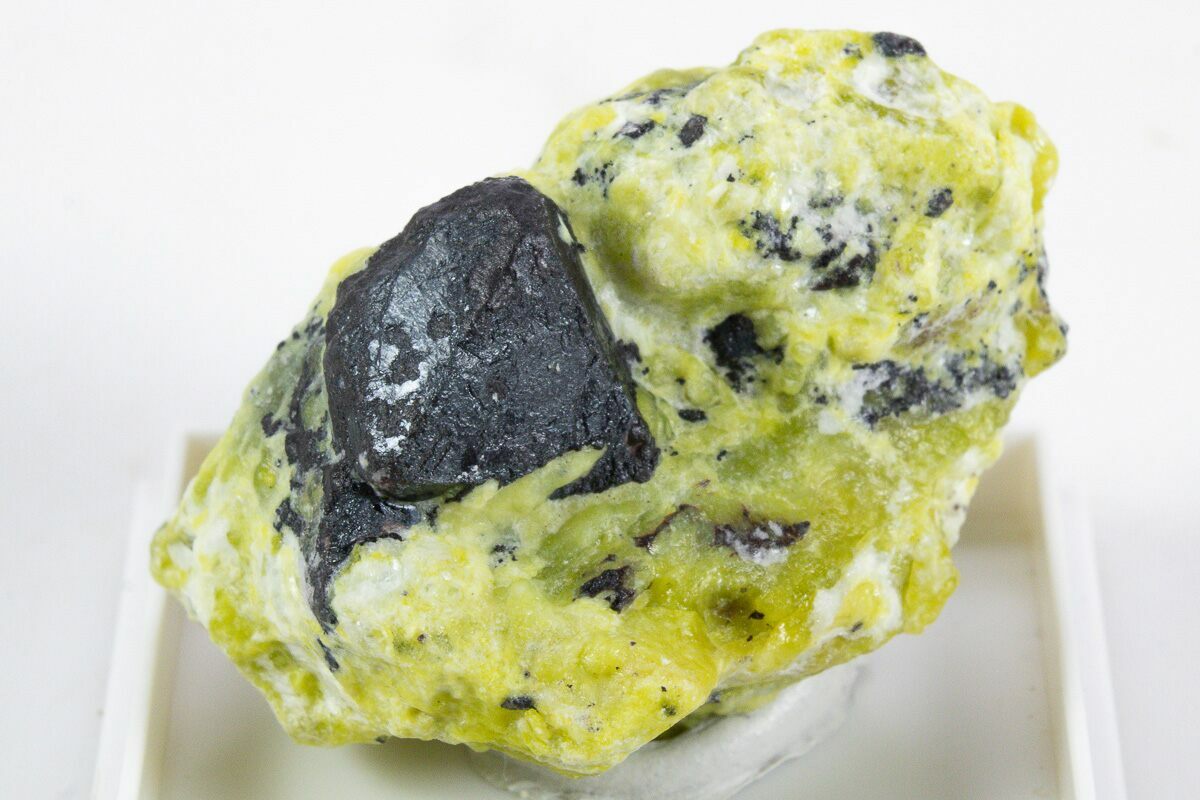
Lizardite with hematite crystals and hydrotalcite from Norway
Distinguishing from other “green stones”
Lizardite-rich serpentine is commonly confused with:
A key practical tip: serpentine is relatively soft compared to many “jade-like” green stones—if a piece scratches easily, it’s a hint you’re not dealing with true jade.
Uses, Scientific Importance, and Safe Handling
Lizardite is most commonly encountered as part of serpentinite used for decorative and educational purposes. Its attractive green hues and smooth, waxy polish make it well suited for display specimens, carvings, and ornamental objects. However, because it is relatively soft compared to many gem materials, lizardite-rich serpentine is best reserved for items that will not experience heavy wear. It is generally unsuitable for applications such as daily-wear rings, where durability is essential, but it excels as a material for collectors, study pieces, and sculptural work.
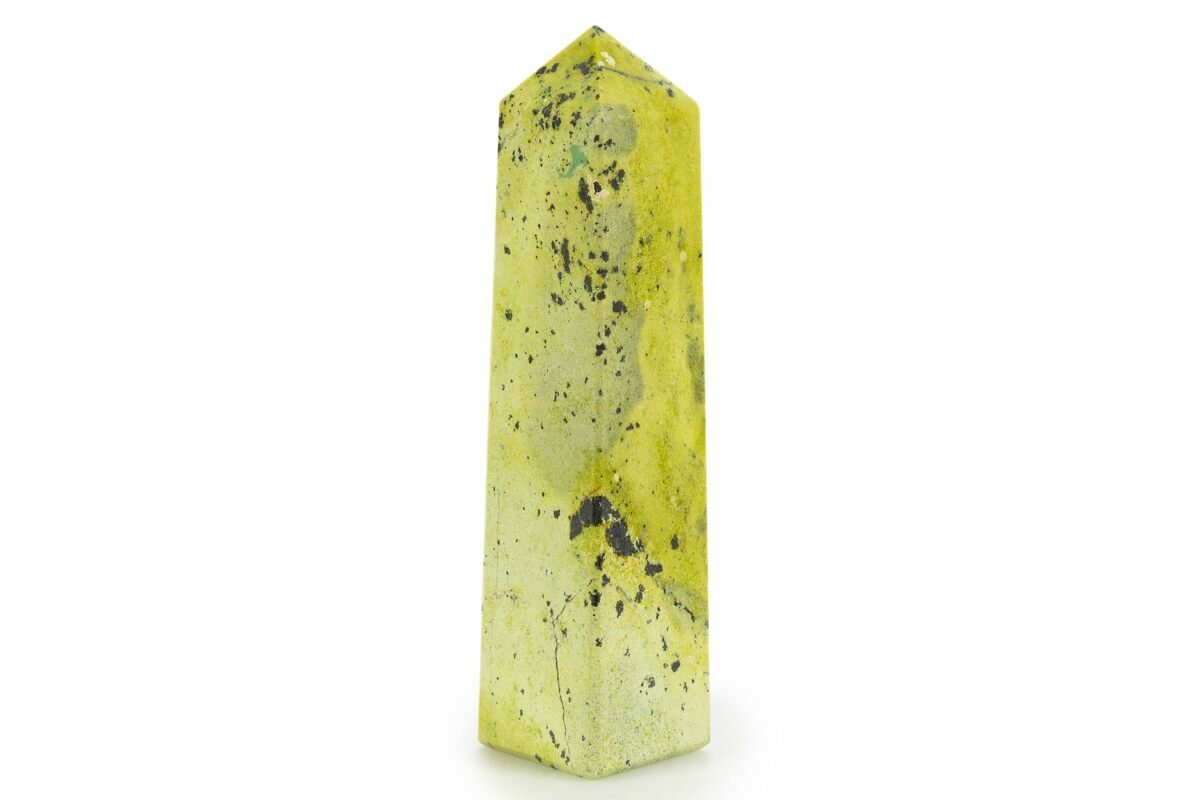
A tower of polished lizardite with hematite inclusions.
Beyond its visual appeal, lizardite plays an important role in scientific research. It is a key mineral for understanding how Earth’s mantle becomes hydrated through fluid–rock interaction, a process that influences the chemistry and physical behavior of large sections of the planet’s crust and upper mantle. Serpentinite bodies rich in lizardite are also studied for their effects on fault mechanics, as their presence can weaken rocks and influence how earthquakes initiate and propagate. In addition, the formation of lizardite during serpentinization is closely linked to hydrogen production, making it central to research on deep subsurface energy sources and microbial ecosystems. Its mineral associations further help geologists trace fluid pathways and reconstruct tectonic histories in complex geological environments.
When handling or working lizardite and other serpentine materials, basic precautions are recommended. The serpentine group includes chrysotile, which can form fibrous varieties under certain conditions. While massive, non-fibrous lizardite specimens are commonly handled safely, cutting, grinding, or sanding any serpentine material should be done with care. Minimizing dust and using wet cutting or polishing methods helps reduce potential exposure and is considered best practice in both lapidary and research settings.


