 Reviews

This Specimen has been sold.
5.4" Sphalerite Cluster on Sparkling Dolomite - Elmwood Mine
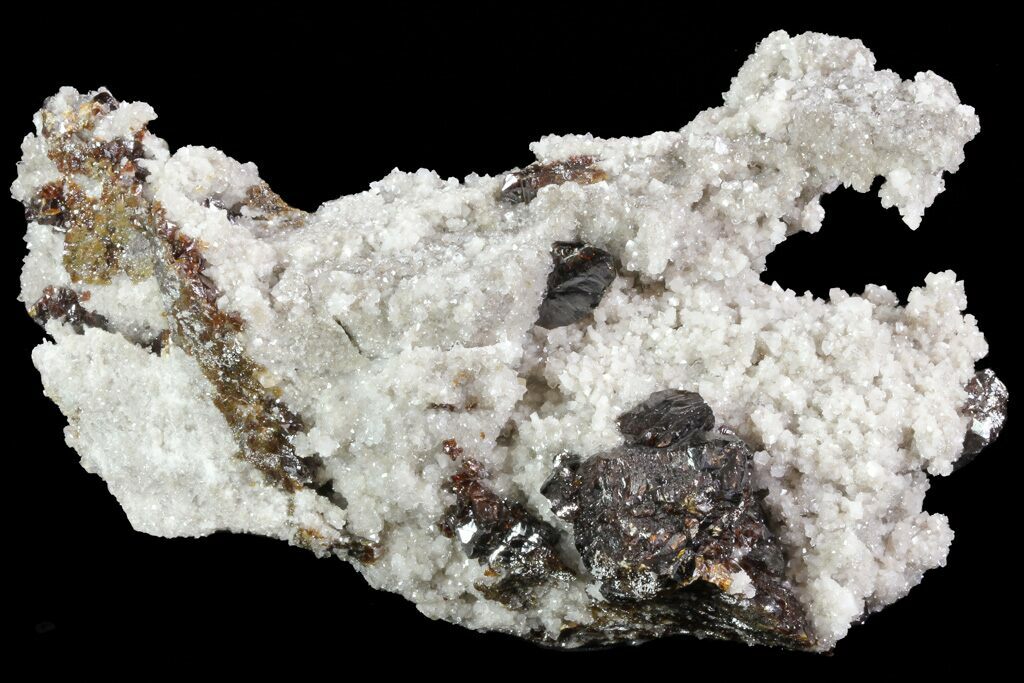
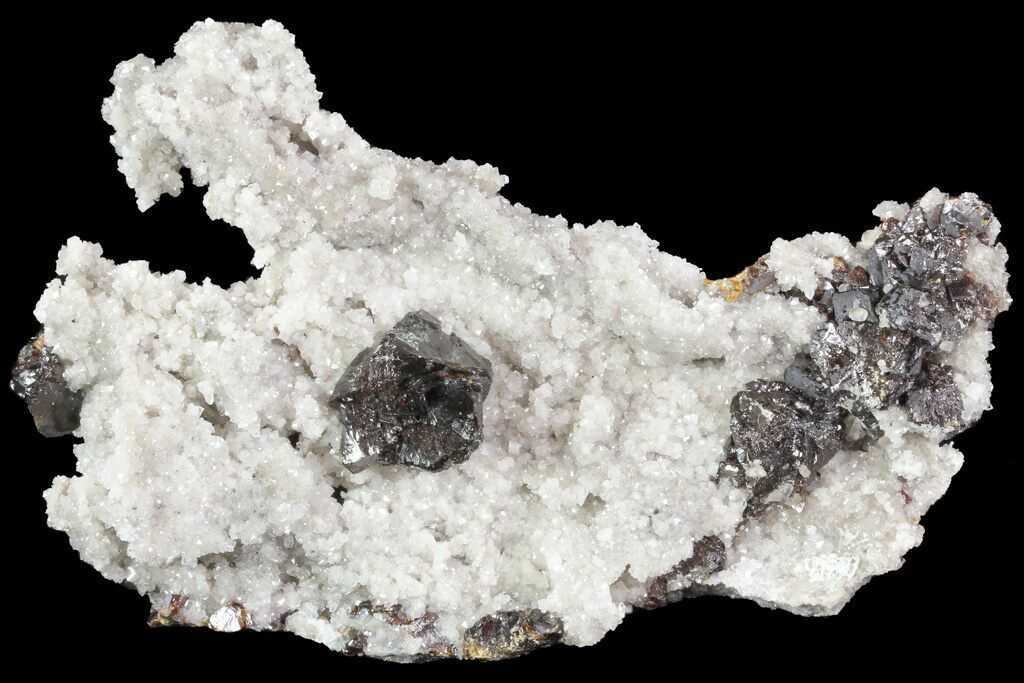
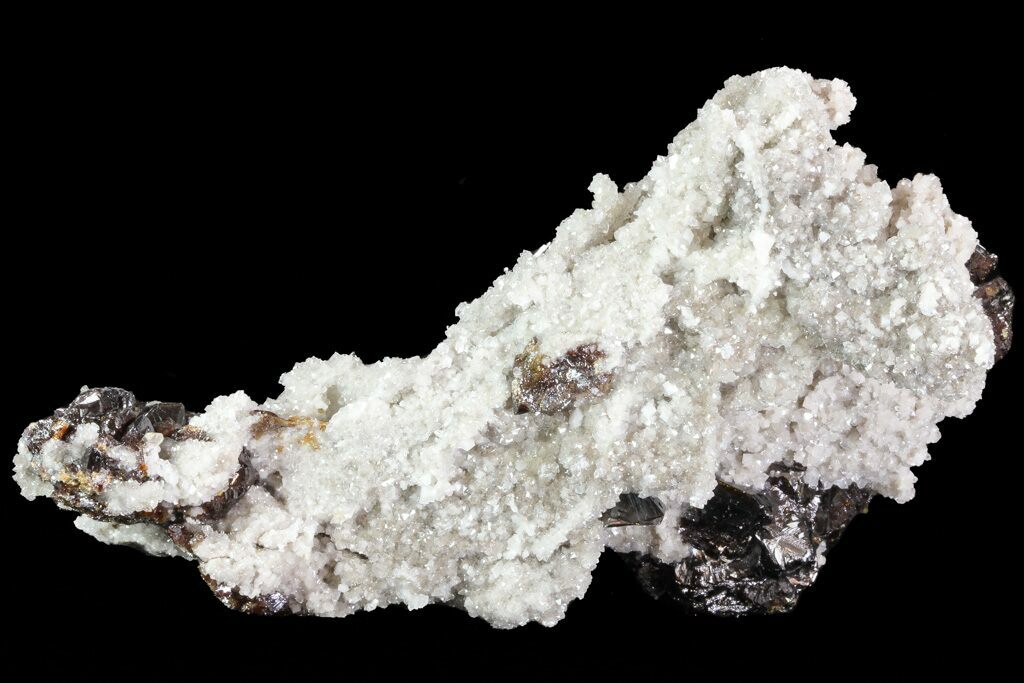
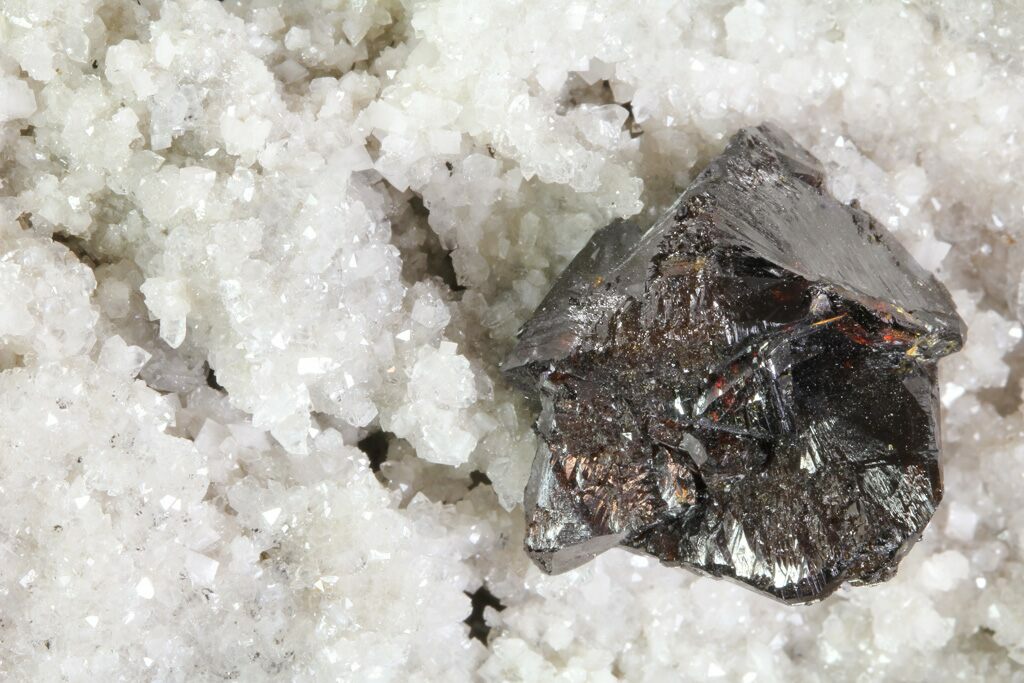
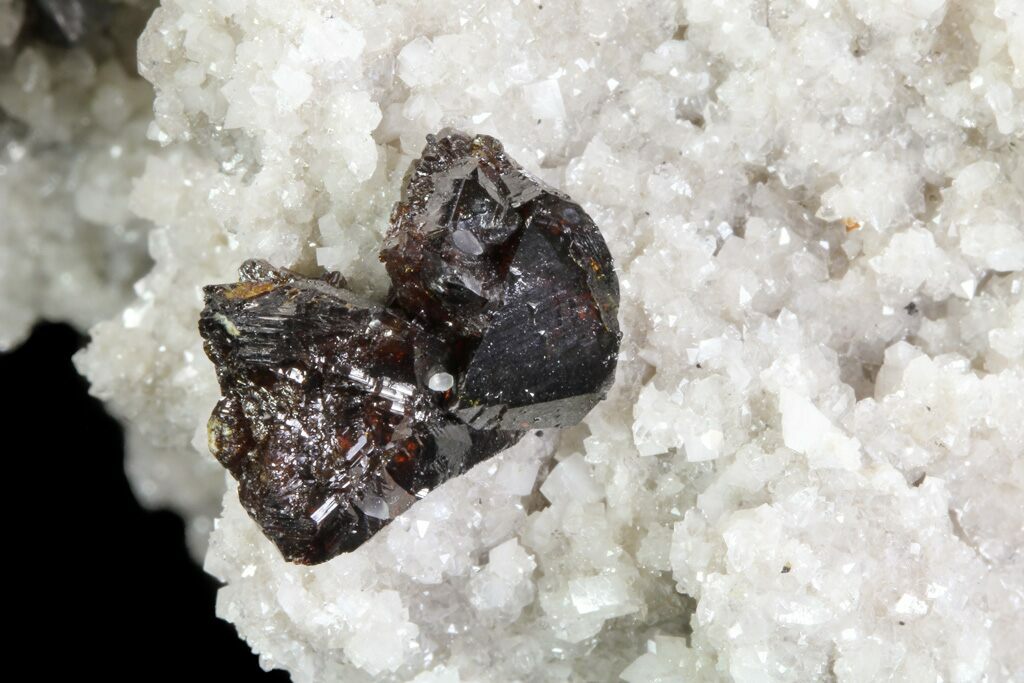
This is a 5.4" wide association of sphalerite crystals on a sparkling dolomite crystal encrusted matrix, collected from the famous Elmwood mine in Tennessee.
The Elmwood Mine
The Elmwood Mine in central Tennessee is one of the world’s premier localities for fluorite, barite, and sphalerite, producing specimens renowned for their size, color, and exceptional crystal quality. Forming within Mississippi Valley–Type (MVT) deposits, Elmwood fluorite is famous for its rich grape-purple cubes—often water-clear and stepped—with barite perched elegantly on top in creamy clusters or golden blades. The mine’s sphalerite is equally celebrated, yielding lustrous, gemmy crystals ranging from fiery orange to deep red-black. Together, these species make Elmwood one of the most iconic and collectible mineral localities on the planet, known for generating museum-grade combinations unmatched in aesthetics and mineralogical significance.
Commercial mining at Elmwood began in the late 1960s, when the site was developed as part of the larger Central Tennessee zinc district. For decades, the mine operated primarily as a major source of high-grade zinc ore for industrial use, with fluorite, barite, and collector-quality sphalerite crystals forming as spectacular but incidental byproducts of the ore-extraction process. Periodic closures and reopenings—driven by fluctuating zinc prices and ownership changes—have made fine Elmwood specimens increasingly coveted over time. Although the mine’s primary purpose was always zinc production, its unexpected yield of world-class mineral specimens has cemented Elmwood’s place as one of the most important and beloved mineral localities in North America.
The Elmwood Mine in central Tennessee is one of the world’s premier localities for fluorite, barite, and sphalerite, producing specimens renowned for their size, color, and exceptional crystal quality. Forming within Mississippi Valley–Type (MVT) deposits, Elmwood fluorite is famous for its rich grape-purple cubes—often water-clear and stepped—with barite perched elegantly on top in creamy clusters or golden blades. The mine’s sphalerite is equally celebrated, yielding lustrous, gemmy crystals ranging from fiery orange to deep red-black. Together, these species make Elmwood one of the most iconic and collectible mineral localities on the planet, known for generating museum-grade combinations unmatched in aesthetics and mineralogical significance.
Commercial mining at Elmwood began in the late 1960s, when the site was developed as part of the larger Central Tennessee zinc district. For decades, the mine operated primarily as a major source of high-grade zinc ore for industrial use, with fluorite, barite, and collector-quality sphalerite crystals forming as spectacular but incidental byproducts of the ore-extraction process. Periodic closures and reopenings—driven by fluctuating zinc prices and ownership changes—have made fine Elmwood specimens increasingly coveted over time. Although the mine’s primary purpose was always zinc production, its unexpected yield of world-class mineral specimens has cemented Elmwood’s place as one of the most important and beloved mineral localities in North America.
About Sphalerite
Sphalerite is the most important ore of zinc and a striking mineral prized for its brilliant luster and wide range of colors. Composed of zinc sulfide (ZnS), it commonly forms in cubic or tetrahedral crystals and is found in hydrothermal veins, sedimentary deposits, and metamorphic environments around the world.
Although often brown to black, sphalerite can also occur in shades of honey-yellow, red, orange, and even green. Lighter-colored varieties are sometimes transparent to translucent and can display exceptional dispersion—meaning they separate light into spectral colors more intensely than diamond—giving well-cut specimens a fiery, eye-catching sparkle. Darker specimens are typically opaque with a resinous to submetallic luster.
Sphalerite is the most important ore of zinc and a striking mineral prized for its brilliant luster and wide range of colors. Composed of zinc sulfide (ZnS), it commonly forms in cubic or tetrahedral crystals and is found in hydrothermal veins, sedimentary deposits, and metamorphic environments around the world.
Although often brown to black, sphalerite can also occur in shades of honey-yellow, red, orange, and even green. Lighter-colored varieties are sometimes transparent to translucent and can display exceptional dispersion—meaning they separate light into spectral colors more intensely than diamond—giving well-cut specimens a fiery, eye-catching sparkle. Darker specimens are typically opaque with a resinous to submetallic luster.
Dolomite is an anhydrous carbonate mineral composed of calcium magnesium carbonate (CaMg(CO3)2).
The mineral dolomite crystallizes in the trigonal-rhombohedral system. It forms white, tan, gray, or pink crystals. Dolomite is a double carbonate, having an alternating structural arrangement of calcium and magnesium ions. It does not rapidly dissolve in dilute hydrochloric acid as calcite does. Crystal twinning is common.
Dolomite was first described by Carl Linnaeus in 1768, and in 1791 it was described as a rock by the French naturalist and geologist Déodat Gratet de Dolomieu. He first recognized the material in buildings of the old city of Rome, and later as samples collected in the mountains known as the Dolomite Alps of northern Italy.
The mineral dolomite crystallizes in the trigonal-rhombohedral system. It forms white, tan, gray, or pink crystals. Dolomite is a double carbonate, having an alternating structural arrangement of calcium and magnesium ions. It does not rapidly dissolve in dilute hydrochloric acid as calcite does. Crystal twinning is common.
Dolomite was first described by Carl Linnaeus in 1768, and in 1791 it was described as a rock by the French naturalist and geologist Déodat Gratet de Dolomieu. He first recognized the material in buildings of the old city of Rome, and later as samples collected in the mountains known as the Dolomite Alps of northern Italy.
SPECIES
Sphalerite and Dolomite
LOCATION
Elmwood Mine, Carthage, Tennessee
SIZE
5.4" wide, 3.6" tall
CATEGORY
ITEM
#71927