 Reviews

This Specimen has been sold.


6.1" Fluorescent Calcite Crystal Cluster on Barite - Morocco
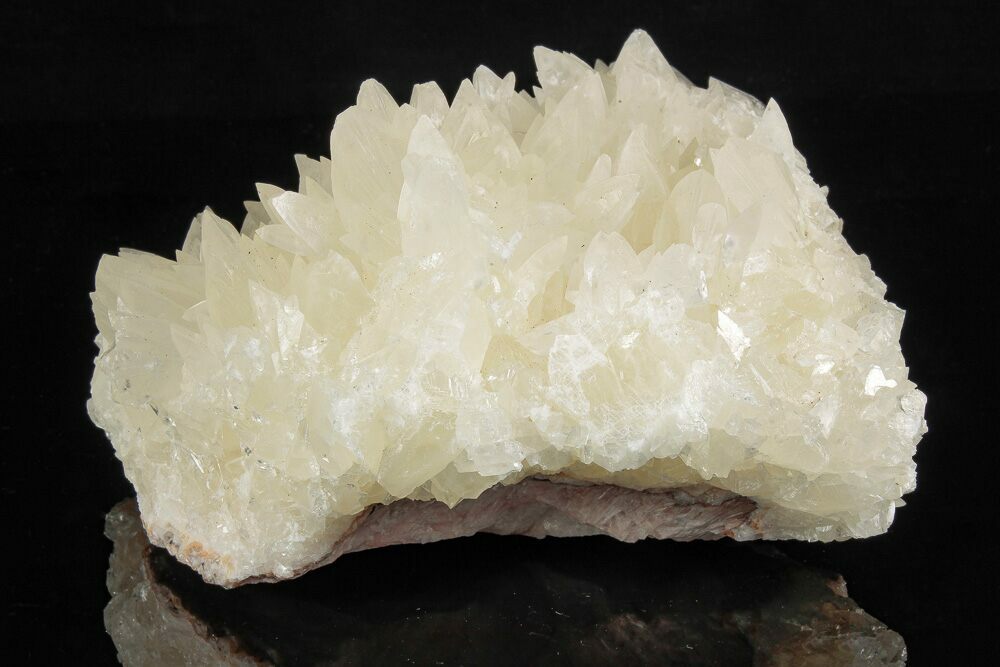
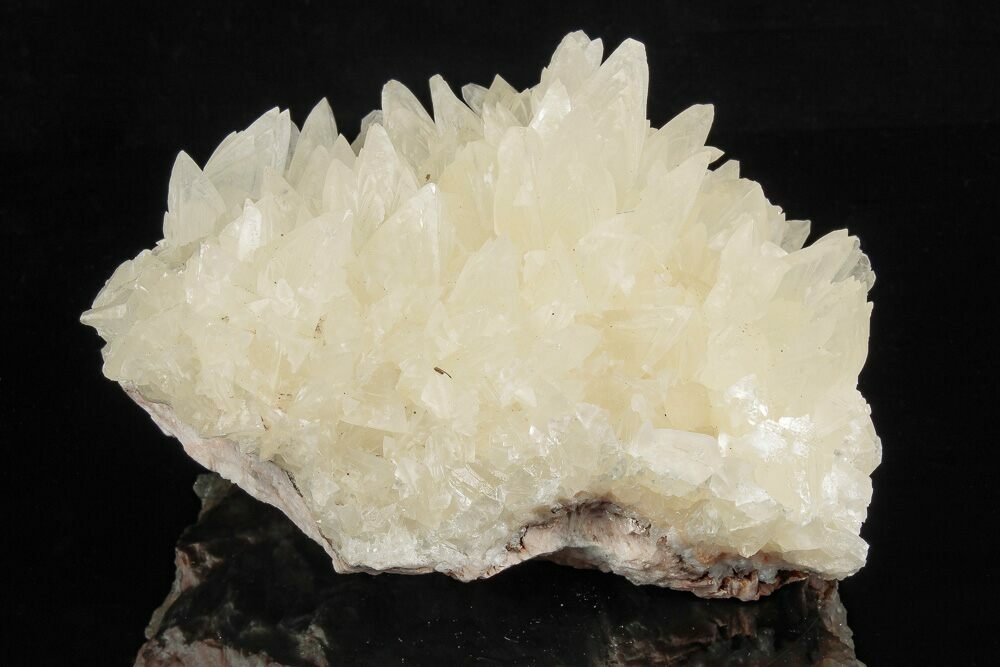
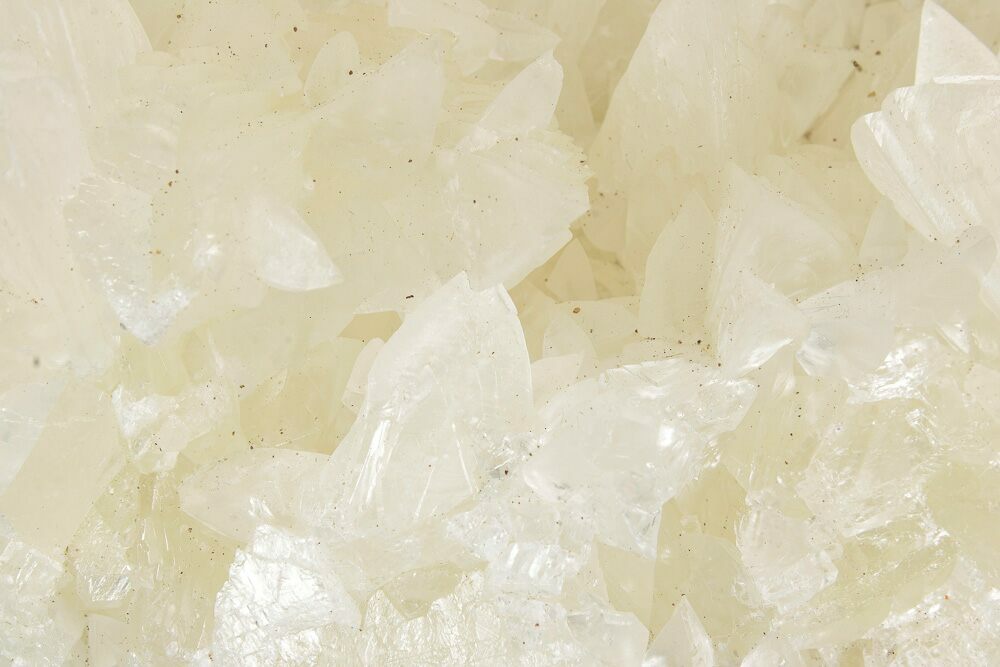
This is a fluorescent calcite crystal cluster that formed upon a matrix of pink-orange bladed barite, collected from Morocco. This cluster is 6.1" wide and under short wave and long wave UV, this specimen fluoresces white.
About Calcite Crystals
Calcite crystals are a form of calcium carbonate (CaCO₃) known for their diverse shapes, transparency, and vibrant range of colors. They typically form in rhombohedral, scalenohedral, or prismatic shapes, often with well-defined, sharp edges and glossy surfaces. Calcite crystals are often translucent or transparent, sometimes displaying a double refraction effect where objects viewed through the crystal appear doubled. They can appear in various colors—white, clear, yellow, pink, blue, green, and orange—depending on impurities or trace minerals.
A notable characteristic of calcite is its reaction with weak acids like vinegar, which causes it to effervesce, or fizz, as it releases carbon dioxide. This property makes calcite crystals a key tool in geological identification and studies. Calcite forms in many environments, from sedimentary rocks like limestone and marble to hydrothermal veins.
Calcite crystals are a form of calcium carbonate (CaCO₃) known for their diverse shapes, transparency, and vibrant range of colors. They typically form in rhombohedral, scalenohedral, or prismatic shapes, often with well-defined, sharp edges and glossy surfaces. Calcite crystals are often translucent or transparent, sometimes displaying a double refraction effect where objects viewed through the crystal appear doubled. They can appear in various colors—white, clear, yellow, pink, blue, green, and orange—depending on impurities or trace minerals.
A notable characteristic of calcite is its reaction with weak acids like vinegar, which causes it to effervesce, or fizz, as it releases carbon dioxide. This property makes calcite crystals a key tool in geological identification and studies. Calcite forms in many environments, from sedimentary rocks like limestone and marble to hydrothermal veins.
About Barite (Baryte)
Barite is a barium sulfate mineral (BaSO₄) known for its high specific gravity, which makes it unusually heavy for a non-metallic mineral. Typically forming in tabular or bladed crystals, barite can also appear in massive, fibrous, or nodular habits. Its colors range from colorless and white to shades of blue, yellow, gray, or brown, often influenced by trace impurities. Barite commonly forms in hydrothermal veins, sedimentary rocks, and as a gangue mineral in lead-zinc ore deposits. It is widely used in industrial applications, especially as a weighting agent in drilling muds for oil and gas exploration. Its striking crystal formations and vivid hues also make it a popular mineral for collectors.
Barite is a barium sulfate mineral (BaSO₄) known for its high specific gravity, which makes it unusually heavy for a non-metallic mineral. Typically forming in tabular or bladed crystals, barite can also appear in massive, fibrous, or nodular habits. Its colors range from colorless and white to shades of blue, yellow, gray, or brown, often influenced by trace impurities. Barite commonly forms in hydrothermal veins, sedimentary rocks, and as a gangue mineral in lead-zinc ore deposits. It is widely used in industrial applications, especially as a weighting agent in drilling muds for oil and gas exploration. Its striking crystal formations and vivid hues also make it a popular mineral for collectors.