 Reviews

What Is The Largest Trilobite?
When most people picture trilobites, they imagine small fossils only an inch or so long — and that image is largely correct. The vast majority of trilobite species were quite small, many no bigger than a thumbnail or a matchbox. These modest arthropods crawled across ancient seafloors by the billions, leaving behind the familiar fossils found in classrooms, museums, and fossil collections around the world.
But every so often, evolution pushed far beyond the norm. In a few rare places and moments in Earth’s distant past, trilobites grew not just large, but gigantic — stretching the limits of what an armored arthropod could become.
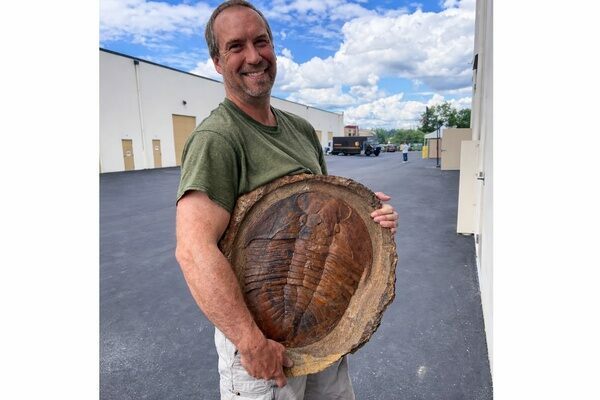
Among all known examples, one trilobite stands above the rest: Isotelus rex, widely regarded as the largest trilobite ever discovered. This enormous asaphid lived during the Late Ordovician, around 445 million years ago, and reached lengths of roughly 72 centimeters (nearly 2.5 feet). What truly sets I. rex apart, however, is not just its size, but the remarkable story of its discovery.
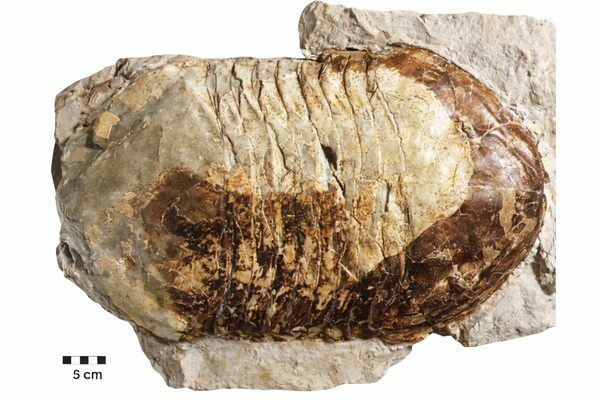
The largest known complete trilobite of the species Isotelus rex which measures nearly 2 1/2 feet long.
The most famous specimen of Isotelus rex was discovered in 1998 near the shores of Hudson Bay in northern Manitoba, Canada. It was found by local fossil hunters exploring Ordovician limestone exposures — an area known for yielding large but often fragmentary trilobite remains. Unlike most giant trilobites, which are known only from partial pieces, this specimen was found nearly complete and articulated, with its head, thorax, and tail preserved together. This level of preservation is extraordinarily rare in trilobites of any size, and almost unheard of for one so large.
The fossil was later studied and formally described in 2003, when it was named Isotelus rex — “king Isotelus” — in recognition of its unprecedented size. Today, the specimen is housed at the Manitoba Museum in Winnipeg, where it remains one of the largest and most impressive arthropod fossils ever displayed.
Closely related giants of the genus Isotelus are also known from the American Midwest, particularly Indiana and Ohio, where Ordovician limestones have produced some impressively large specimens. While these Midwestern Isotelus do not quite match I. rex in absolute size, individuals exceeding 50–60 centimeters are known, making them giants in their own right. These fossils offer a vivid glimpse of what North America’s shallow epicontinental seas once supported — broad, flat trilobites cruising quietly across carbonate seafloors.
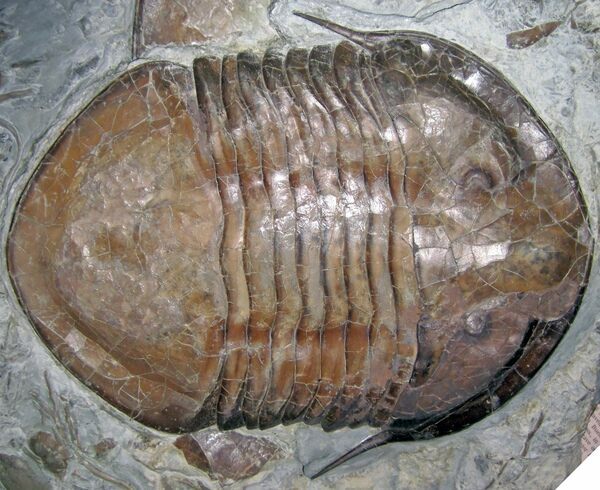
Isotelus maximus and Isotelus brachycephalus found in Ohio & Indiana could reach impressive sizes.
Another giant from the Early Devonian seas of what are now New York State and Ontario is Terataspis grandis, one of the largest and most heavily armored trilobites ever to exist. Known primarily from disarticulated but massive fossil remains, Terataspis is estimated to have reached lengths of around 600 millimeters (about 2 feet) when fully grown. Even in fragmentary form, its fossils convey a sense of scale that immediately sets it apart from most trilobites.
Unlike the broad, smooth-bodied giants such as Isotelus, Terataspis belonged to the lichid trilobites, a group known for extreme defensive adaptations. Its exoskeleton was thick and rugged, covered in pronounced spines, knobs, and tubercles, giving it a bristling, almost fortress-like appearance. This heavy armor suggests a slow-moving animal built for survival in a changing Devonian world, where predators were becoming larger, faster, and more specialized.
In life, Terataspis grandis would have been an imposing presence on the seafloor—too large and too well-defended for most predators to attack. Its combination of sheer size and elaborate armor makes it one of the most formidable trilobites ever known, and a striking example of how trilobites continued to experiment with gigantism long after the Ordovician giants had disappeared.
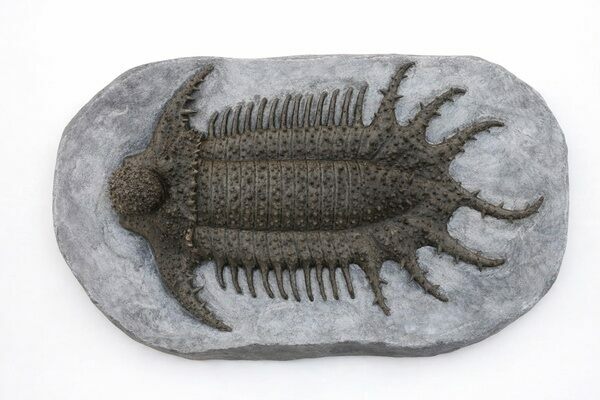
A reconstruction of the giant Lichid trilobite Terataspis. It's primarily known from fragments.
In Portugal, especially within the Ordovician deposits of the Arouca Geopark, paleontologists have uncovered extraordinary oversized trilobites that rival the largest asaphids anywhere in the world. Species such as Ogyginus and related forms are known from both articulated specimens and massive fragments. Some near-complete fossils approach 70 centimeters, and reconstructions based on partial remains suggest that a few Portuguese trilobites may have grown even larger. These animals lived near the ancient South Pole, and many researchers believe their size may reflect a form of polar gigantism, where cold, nutrient-rich waters and relatively low predation pressure favored larger body sizes.
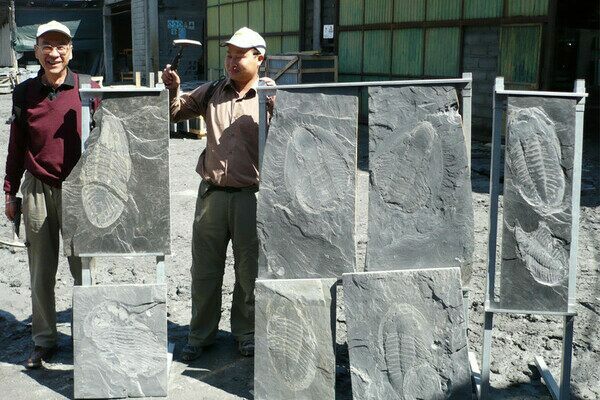
Giant Ordovician trilobites from the Canelas quarry in Portugal.
Equally impressive are the giant asaphid trilobites of Morocco’s Fezouata Formation, one of the most important fossil sites of the Early Ordovician. The Fezouata seas preserved large species such as Basilicus and other asaphids that regularly reached 40–50 centimeters in length. These trilobites inhabited cool, oxygenated waters and are often found alongside exceptionally preserved soft-bodied animals, suggesting an ecosystem that was both productive and unusually stable.
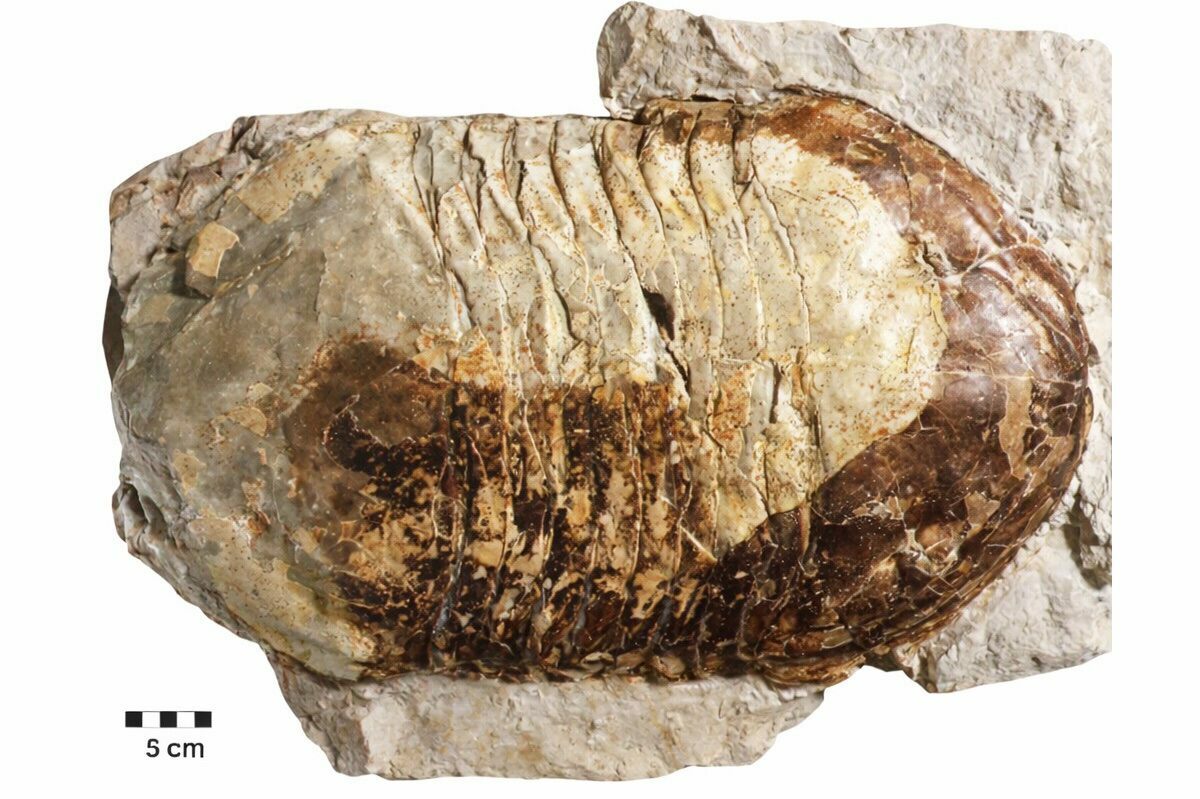
A giant Asaphid trilobite from the Fezouata Formation in Morocco.
Several factors likely worked together. Ordovician seas were among the most biologically productive in Earth’s history, providing abundant food for bottom-dwelling animals. In regions with fewer large predators, growing bigger could offer protection as well as access to more diverse food sources. Trilobites also grew by molting, and in favorable environments, repeated molts over a long lifespan could result in extraordinary size. Cold or deeper-water conditions, such as those seen in Portugal and Morocco, may have further encouraged gigantism, much like modern giant crustaceans in polar oceans.
In the end, while Isotelus rex still wears the crown as the largest trilobite ever found, it was far from alone. From the broad-bodied Isotelus of Indiana and Ohio, to the polar giants of Portugal and the massive asaphids of Morocco, these fossils remind us that trilobites were not merely small, collectible curiosities. At their peak, some were true titans of the Paleozoic seas — silent, armored giants whose size still astonishes us hundreds of millions of years later.
But every so often, evolution pushed far beyond the norm. In a few rare places and moments in Earth’s distant past, trilobites grew not just large, but gigantic — stretching the limits of what an armored arthropod could become.
Among all known examples, one trilobite stands above the rest: Isotelus rex, widely regarded as the largest trilobite ever discovered. This enormous asaphid lived during the Late Ordovician, around 445 million years ago, and reached lengths of roughly 72 centimeters (nearly 2.5 feet). What truly sets I. rex apart, however, is not just its size, but the remarkable story of its discovery.
The largest known complete trilobite of the species Isotelus rex which measures nearly 2 1/2 feet long.
The most famous specimen of Isotelus rex was discovered in 1998 near the shores of Hudson Bay in northern Manitoba, Canada. It was found by local fossil hunters exploring Ordovician limestone exposures — an area known for yielding large but often fragmentary trilobite remains. Unlike most giant trilobites, which are known only from partial pieces, this specimen was found nearly complete and articulated, with its head, thorax, and tail preserved together. This level of preservation is extraordinarily rare in trilobites of any size, and almost unheard of for one so large.
The fossil was later studied and formally described in 2003, when it was named Isotelus rex — “king Isotelus” — in recognition of its unprecedented size. Today, the specimen is housed at the Manitoba Museum in Winnipeg, where it remains one of the largest and most impressive arthropod fossils ever displayed.
Closely related giants of the genus Isotelus are also known from the American Midwest, particularly Indiana and Ohio, where Ordovician limestones have produced some impressively large specimens. While these Midwestern Isotelus do not quite match I. rex in absolute size, individuals exceeding 50–60 centimeters are known, making them giants in their own right. These fossils offer a vivid glimpse of what North America’s shallow epicontinental seas once supported — broad, flat trilobites cruising quietly across carbonate seafloors.
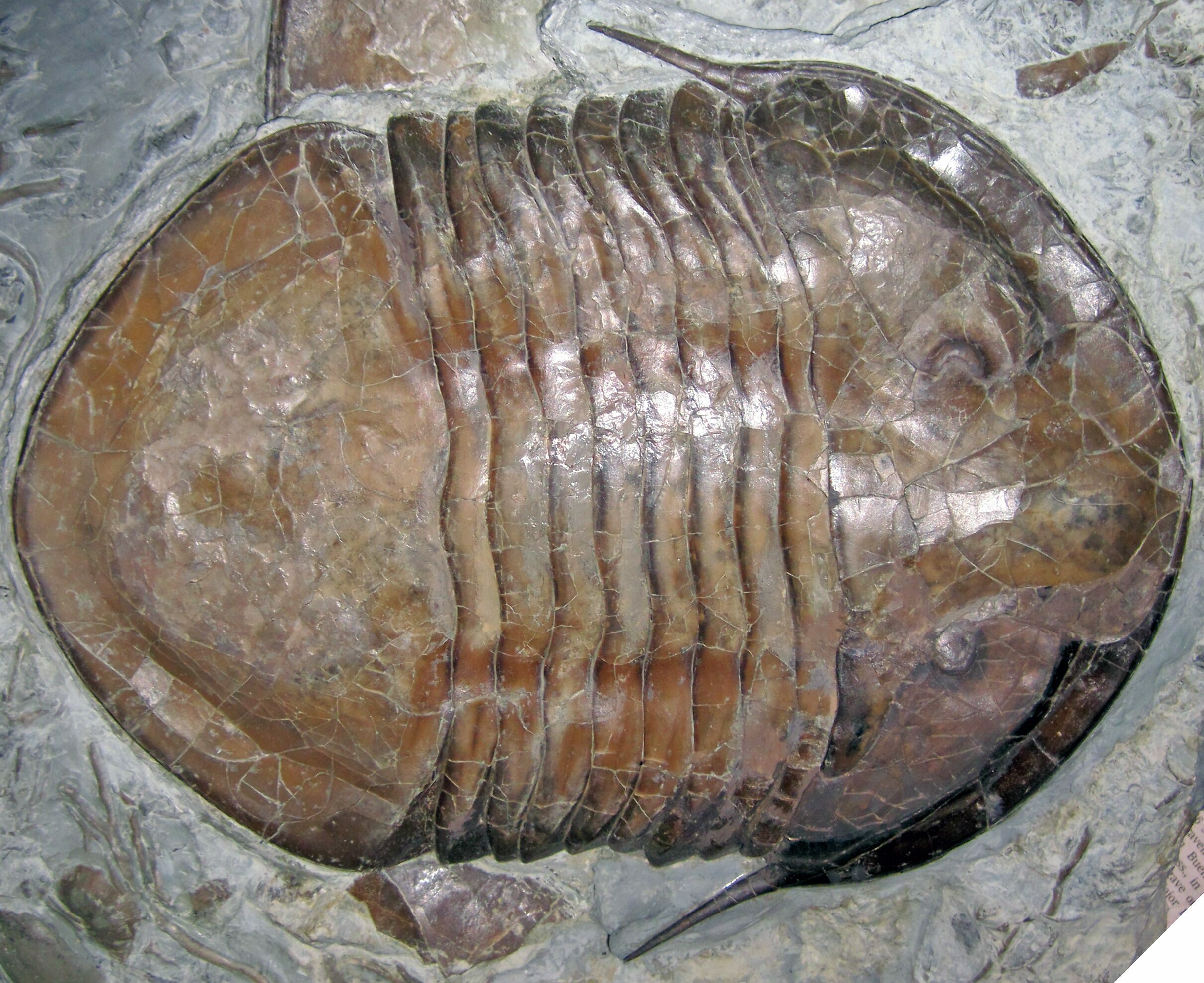
Isotelus maximus and Isotelus brachycephalus found in Ohio & Indiana could reach impressive sizes.
Another giant from the Early Devonian seas of what are now New York State and Ontario is Terataspis grandis, one of the largest and most heavily armored trilobites ever to exist. Known primarily from disarticulated but massive fossil remains, Terataspis is estimated to have reached lengths of around 600 millimeters (about 2 feet) when fully grown. Even in fragmentary form, its fossils convey a sense of scale that immediately sets it apart from most trilobites.
Unlike the broad, smooth-bodied giants such as Isotelus, Terataspis belonged to the lichid trilobites, a group known for extreme defensive adaptations. Its exoskeleton was thick and rugged, covered in pronounced spines, knobs, and tubercles, giving it a bristling, almost fortress-like appearance. This heavy armor suggests a slow-moving animal built for survival in a changing Devonian world, where predators were becoming larger, faster, and more specialized.
In life, Terataspis grandis would have been an imposing presence on the seafloor—too large and too well-defended for most predators to attack. Its combination of sheer size and elaborate armor makes it one of the most formidable trilobites ever known, and a striking example of how trilobites continued to experiment with gigantism long after the Ordovician giants had disappeared.
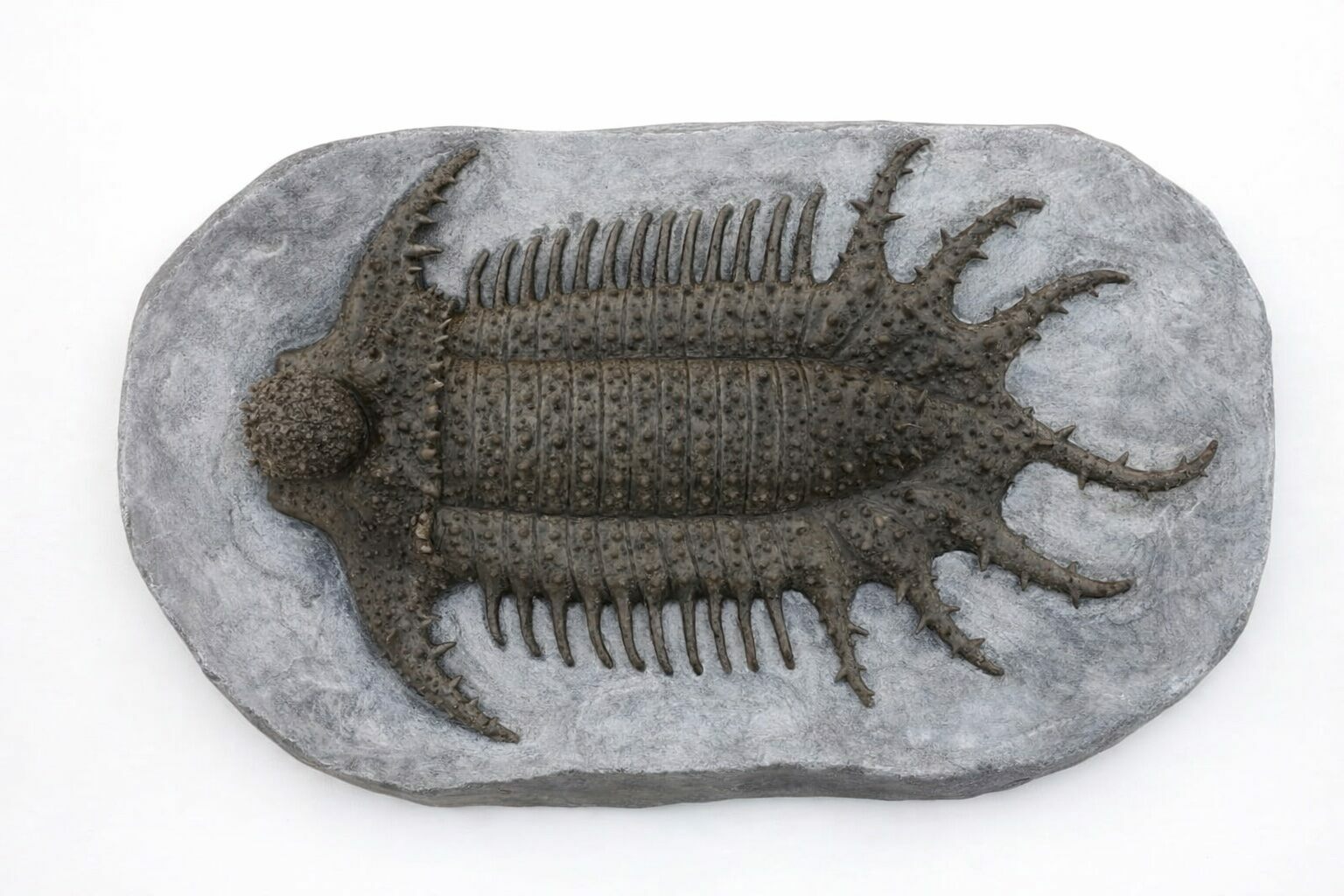
A reconstruction of the giant Lichid trilobite Terataspis. It's primarily known from fragments.
But North America does not hold a monopoly on giant trilobites.
In Portugal, especially within the Ordovician deposits of the Arouca Geopark, paleontologists have uncovered extraordinary oversized trilobites that rival the largest asaphids anywhere in the world. Species such as Ogyginus and related forms are known from both articulated specimens and massive fragments. Some near-complete fossils approach 70 centimeters, and reconstructions based on partial remains suggest that a few Portuguese trilobites may have grown even larger. These animals lived near the ancient South Pole, and many researchers believe their size may reflect a form of polar gigantism, where cold, nutrient-rich waters and relatively low predation pressure favored larger body sizes.
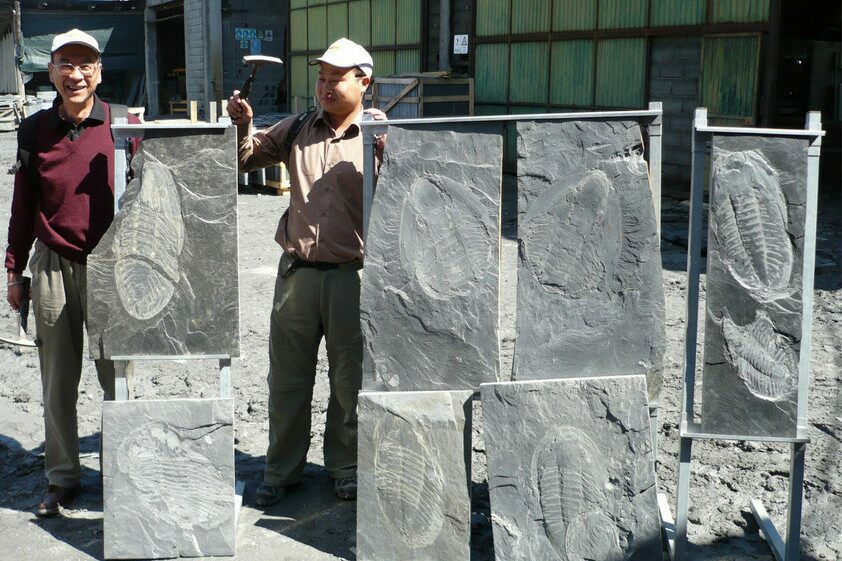
Giant Ordovician trilobites from the Canelas quarry in Portugal.
Equally impressive are the giant asaphid trilobites of Morocco’s Fezouata Formation, one of the most important fossil sites of the Early Ordovician. The Fezouata seas preserved large species such as Basilicus and other asaphids that regularly reached 40–50 centimeters in length. These trilobites inhabited cool, oxygenated waters and are often found alongside exceptionally preserved soft-bodied animals, suggesting an ecosystem that was both productive and unusually stable.
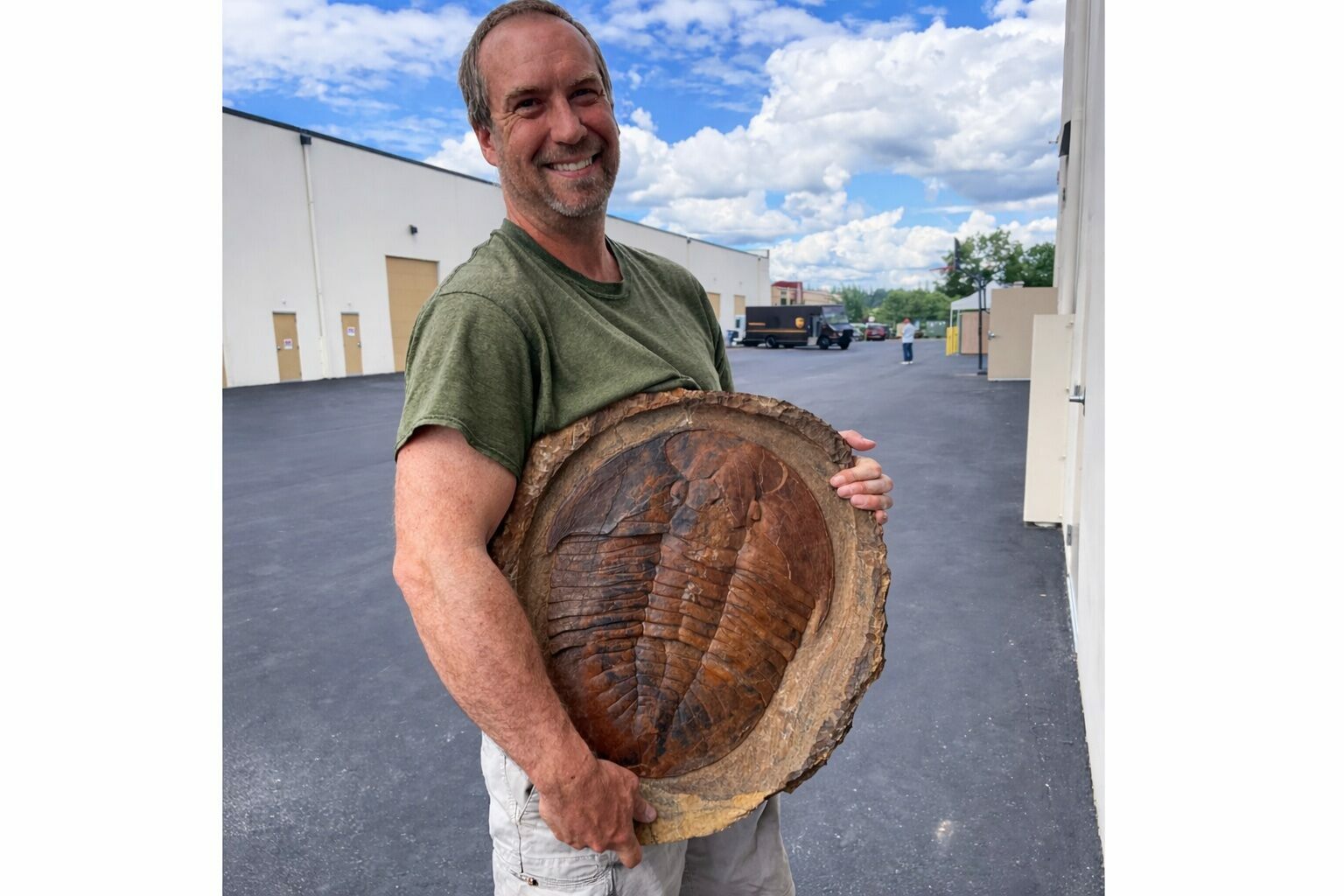
A giant Asaphid trilobite from the Fezouata Formation in Morocco.
So what allowed some trilobites to grow so large when most remained small?
Several factors likely worked together. Ordovician seas were among the most biologically productive in Earth’s history, providing abundant food for bottom-dwelling animals. In regions with fewer large predators, growing bigger could offer protection as well as access to more diverse food sources. Trilobites also grew by molting, and in favorable environments, repeated molts over a long lifespan could result in extraordinary size. Cold or deeper-water conditions, such as those seen in Portugal and Morocco, may have further encouraged gigantism, much like modern giant crustaceans in polar oceans.
In the end, while Isotelus rex still wears the crown as the largest trilobite ever found, it was far from alone. From the broad-bodied Isotelus of Indiana and Ohio, to the polar giants of Portugal and the massive asaphids of Morocco, these fossils remind us that trilobites were not merely small, collectible curiosities. At their peak, some were true titans of the Paleozoic seas — silent, armored giants whose size still astonishes us hundreds of millions of years later.


