 Reviews

Eurypterids: Rise Of The Sea Scorpions
Nearly half a billion years ago, long before dinosaurs, mammals, or even trees, Earth’s waters were ruled by predators that would seem more at home in science fiction than natural history. These creatures—eurypterids, commonly known as sea scorpions—were the largest arthropods ever to live, and among the first animals to truly dominate complex ecosystems. At their peak, some species stretched over eight feet long, dwarfing every other invertebrate of their time and rivaling the size of early vertebrate predators.
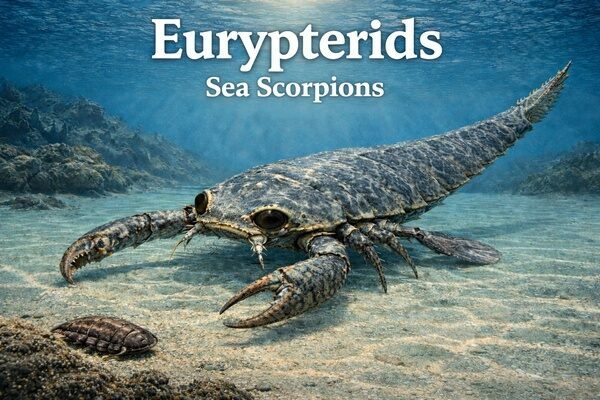
A massive eurypterid prowls the shallow Paleozoic seafloor, its spined tail and powerful claws marking it as an apex predator, while a trilobite crawls across the sediment below.
Eurypterids were not rare oddities or evolutionary dead ends. They were astonishingly successful, thriving for more than 200 million years, a span of time longer than the age of dinosaurs. During that immense stretch of Earth history, eurypterids survived multiple extinction events, adapted to radically changing climates, and spread across nearly every continent. Fossils show them prowling ancient tropical seas, cruising murky estuaries, and even inhabiting freshwater rivers and lakes—an extraordinary range for early arthropods.
One of the most remarkable facts about eurypterids is how diverse they were. Paleontologists have identified over 250 species, ranging from small, shrimp-sized forms to massive apex predators armed with spined limbs and crushing claws. Some were fast swimmers built for pursuit, while others were heavily armored bottom-walkers, creeping across the seafloor in search of prey. A few species may even have been capable of brief excursions onto land, making eurypterids among the earliest large animals to test the boundary between water and air.
Their appearance alone would have inspired fear. With broad, shielded heads, compound eyes that bulged from their carapaces, and long segmented bodies ending in blade-like tails, eurypterids looked like living weapons. Unlike modern arthropods, many had limbs lined with sharp spines, perfectly positioned to trap struggling prey. In some species, these limbs grew so large and powerful that they functioned like grappling hooks, capable of subduing armored animals such as trilobites and early fish.
Perhaps most surprising of all, eurypterids were close relatives of spiders and scorpions, not crustaceans. This means that the ancestors of today’s tiny arachnids once produced giants capable of ruling entire ecosystems. When oxygen levels were high and competition from vertebrates was low, arthropods briefly reached sizes that seem impossible by modern standards.
Eurypterids were not merely monsters of their age—they were innovators. They helped pioneer new modes of predation, exploited untapped freshwater environments, and may have influenced the evolutionary arms race that drove early fish to develop stronger armor and jaws. In many ways, the story of eurypterids is the story of how complex ecosystems began to take shape in the Paleozoic world.
Eurypterids, often called sea scorpions, were an extinct group of arthropods related to modern spiders and scorpions that lived from about 470 to 252 million years ago. They ranged from small aquatic hunters to giants over eight feet long and were among the dominant predators of Paleozoic seas and freshwater environments.
At first glance, eurypterids look like a cross between a lobster and a scorpion—and that’s not far from the truth. Their bodies were divided into three main sections: the prosoma (head), opisthosoma (abdomen), and telson (tail).
The prosoma was covered by a broad, shield-like carapace that protected the brain, eyes, and feeding appendages. Most eurypterids had compound eyes, often positioned on raised nodes, giving them excellent vision for detecting prey or rivals in murky waters.
Attached to the prosoma were six pairs of appendages:
Chelicerae: Small claw-like mouthparts used to grasp or tear food
Pedipalps: Often enlarged into spiny claws for capturing prey
Walking legs: Used for crawling along the seafloor
Swimming paddles: Modified rear legs flattened for propulsion
The opisthosoma consisted of multiple armored segments, providing both flexibility and protection. In some species, the abdomen was broad and flattened for swimming, while others had narrow, streamlined bodies suited for active pursuit.
The telson of eurypterids varied widely in form and function. In some species it developed into a long, spike-like tail that may have been used for steering, defense, or even mating displays, while in others it was flattened into a paddle-shaped structure that enhanced swimming and maneuverability. Unlike true scorpions, eurypterids almost certainly lacked venomous stingers, but their powerful claws and spined limbs would have been more than sufficient to capture and subdue prey.
Eurypterids displayed one of the most dramatic size ranges of any arthropod group in Earth’s history, spanning from animals no larger than a human finger to true giants that rivaled modern humans in length. The smallest well-known eurypterids, such as Eurypterus, typically measured just 10–25 centimeters (4–10 inches) long. Fossils of Eurypterus are especially abundant in the Silurian waterlime deposits of New York State, as well as in parts of Ontario and Europe, where exceptional preservation has revealed fine details of their limbs and carapaces. These smaller species were agile swimmers and bottom-walkers that thrived in shallow coastal waters and freshwater environments.
At the opposite extreme were the giants. The largest eurypterid known to science, Jaekelopterus rhenaniae, is estimated to have reached 2.3–2.6 meters (7.5–8.5 feet) in length based on massive fossilized claws. These remains come primarily from Early Devonian deposits in Germany, with additional material known from nearby regions of Central Europe. Another enormous genus, Pterygotus, commonly exceeded 1.5 meters (5 feet) and is known from a wide geographic range, including Scotland, eastern North America, and Scandinavia. Fossils of Pterygotus often occur in estuarine and nearshore sediments, suggesting these predators patrolled shallow waters where early fish were abundant.
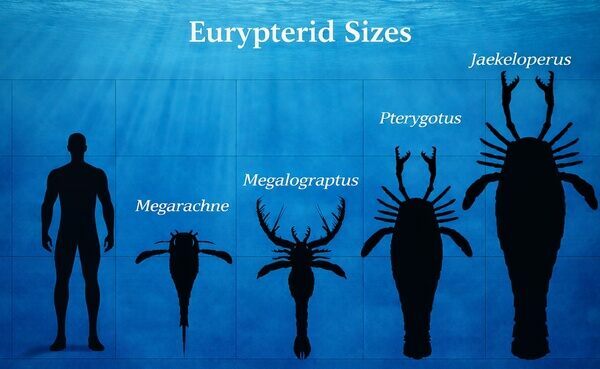
Size comparisons of some of the largest types of Eurypterids.
Eurypterid size increased gradually through time. Early Ordovician forms were relatively small and generalized, known from scattered marine deposits across North America and Europe. During the Silurian and Devonian, eurypterids diversified rapidly, and several lineages evolved toward gigantism. This trend coincided with high atmospheric oxygen levels and the widespread development of marginal marine and freshwater habitats, conditions well documented in fossil-bearing strata from New York, Scotland, and the Baltic region. As jawed fish became more dominant in marine environments, many large eurypterids appear to have shifted into rivers and lagoons, where they continued to thrive. By the late Paleozoic, however, climatic instability and ecological competition reduced eurypterid diversity and size, and the group ultimately vanished during the end-Permian mass extinction, leaving behind a fossil record that captures one of the most extraordinary episodes of arthropod gigantism in Earth’s history.
Eurypterid behavior can be reconstructed only indirectly, but the available evidence paints a remarkably detailed picture of active, adaptable animals that occupied a wide range of ecological roles in Paleozoic ecosystems. Most eurypterids were carnivorous, and many were apex predators, filling niches comparable to those of modern sharks or crocodilians. Their feeding habits are revealed through multiple lines of evidence, including anatomy, fossilized gut contents, and damaged prey fossils. Some specimens preserve the remains of trilobites and early fish within their bodies, while others are associated with shells bearing punctures, fractures, and scrape marks that closely match the shape and spacing of eurypterid claws. The diversity of limb structures also reflects different feeding strategies: species with broad, robust appendages were capable of crushing hard shells, whereas forms with long, spined limbs were better suited for grasping and restraining soft-bodied or fast-moving prey.
In life, eurypterids likely spent much of their time moving along the bottoms of shallow seas, coastal lagoons, estuaries, and freshwater rivers. Their walking legs allowed them to crawl deliberately across soft sediment, while their paddle-like rear appendages provided bursts of speed for swimming or lunging at prey. Larger species probably relied on ambush tactics, remaining partially concealed in murky water or sediment before striking suddenly, while smaller eurypterids were more agile and opportunistic, feeding on a wider variety of organisms and scavenging when the opportunity arose. This flexibility may help explain their long evolutionary success across changing environments.
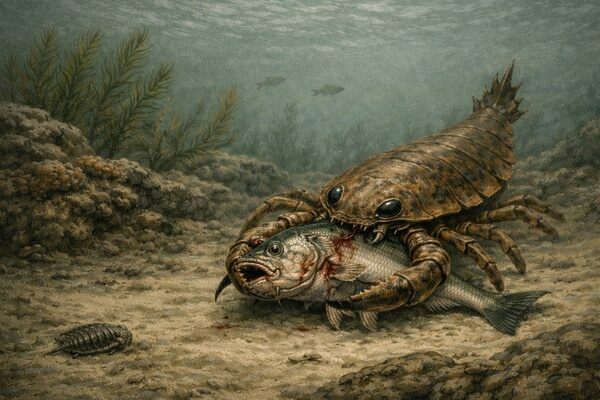
Silurian ambush: A eurypterid pins a prehistoric fish against the seafloor.
Evidence also suggests that eurypterids were behaviorally complex in ways that went beyond feeding. Several species show clear signs of sexual dimorphism, particularly in the structure of the genital operculum, indicating specialized reproductive behaviors. Like modern arthropods, eurypterids likely reproduced through mating followed by the release or attachment of eggs in protected environments, possibly in shallow water or near shorelines where juveniles could develop with reduced predation risk. Many fossil assemblages are dominated by individuals of similar size, which may represent breeding grounds or seasonal gatherings linked to reproduction or molting.
Perhaps most intriguing is the growing evidence that some eurypterids were capable of briefly venturing out of the water. Fossil trackways preserved in fine-grained sediments show patterns consistent with eurypterids walking on land or in very shallow water, using their legs to support their weight while dragging the tail behind them. Many eurypterid fossils are also found in non-marine or marginal marine deposits, strongly suggesting that freshwater rivers, lakes, and floodplains were important habitats for at least part of their life cycle. These excursions onto land may have been short-lived and purposeful, allowing eurypterids to migrate between water bodies, escape predators, seek mates, or molt their exoskeletons in safer environments.
Together, these lines of evidence reveal eurypterids not as simple, single-minded monsters, but as highly adaptable, behaviorally flexible animals capable of exploiting a wide range of habitats. Their success for over 200 million years reflects an evolutionary strategy built on versatility—an ability to hunt effectively, reproduce successfully, and even test the boundaries between water and land in a world still learning what complex ecosystems could be.
The fossil record of eurypterids is one of the richest and most informative among Paleozoic arthropods, offering rare insights into both their anatomy and their environments. Their exoskeletons were thick and mineralized enough to fossilize readily, and because eurypterids often lived in shallow, low-energy waters, their remains were frequently buried rapidly by fine sediments. Many fossils represent molted exoskeletons rather than dead animals, a clue supported by the repeated preservation of disarticulated but otherwise pristine specimens. These mass molting events sometimes produced dense accumulations of eurypterid remains, creating entire fossil beds dominated by a single species.
Some of the most important eurypterid fossil sites in the world are located in New York State, which preserves an exceptional record of Silurian and Devonian life. The Bertie Group, particularly the famous waterlime deposits of western and central New York, has yielded thousands of eurypterid specimens, including iconic genera such as Eurypterus, Dolichopterus, and Pterygotus. These fine-grained, chemically unique sediments allowed for extraordinary preservation, capturing delicate limb spines, eye structures, and even soft-tissue impressions in some cases. The abundance and quality of these fossils are so significant that New York designated Eurypterus remipes as the official state fossil.
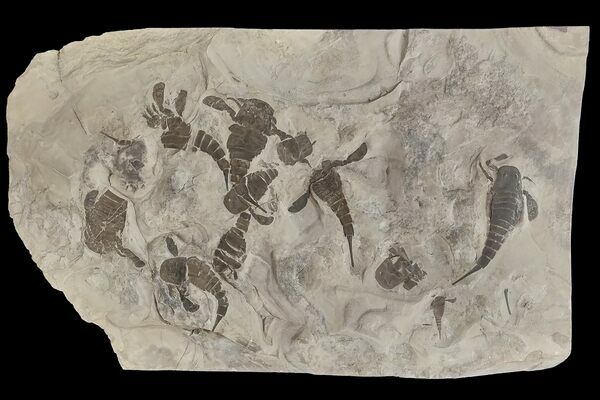
A fossil mortality plate of Eurypterids from Langs Quarry in New York.
Beyond New York, eurypterid fossils are found across Europe, especially in Scotland, where Silurian deposits preserve large predatory species in ancient coastal lagoons. Australian and Baltic deposits further demonstrate the global distribution of eurypterids, showing that they thrived in both tropical and temperate regions. Many fossil sites reveal a strong association between eurypterids and non-marine or marginal marine environments, such as estuaries, tidal flats, and freshwater basins. This pattern supports the idea that eurypterids were among the earliest large animals to successfully colonize freshwater ecosystems.
In some localities, eurypterid fossils are preserved alongside trackways—parallel rows of imprints left by their walking legs—which provide rare behavioral evidence. These trackways suggest slow, deliberate movement across soft substrates and, in a few cases, brief excursions onto land. Taken together, the eurypterid fossil record does more than document an extinct group of animals; it preserves snapshots of ancient ecosystems in transition, capturing a time when arthropods were experimenting with size, habitat, and dominance on a scale never seen again.
The evolutionary story of eurypterids spans more than 200 million years and reflects one of the most ambitious experiments in arthropod history. Their origins lie deep in the early Paleozoic, among primitive chelicerates, the broader arthropod group that would eventually give rise to horseshoe crabs, spiders, scorpions, and mites. Although the exact ancestral form remains debated, most paleontologists agree that eurypterids evolved from small, marine chelicerate ancestors during the Early Ordovician, when complex marine ecosystems were just beginning to take shape.
Eurypterids are closely related to horseshoe crabs (Xiphosura), and both groups share key features such as a prosoma covered by a broad carapace, chelicerae used for feeding, and segmented bodies ending in a telson. Some researchers propose that eurypterids and horseshoe crabs diverged from a common ancestor resembling early xiphosurans or even more primitive chelicerates such as synziphosurines, an extinct group with a mix of ancestral and derived traits. These animals were small, bottom-dwelling marine arthropods that likely scavenged or preyed on soft-bodied organisms in shallow seas.
Another potential ancestral group includesearly stem-chelicerates such as Offacolus and Dibasterium, which display transitional features between more generalized arthropods and true chelicerates. While not direct ancestors, these forms illustrate the anatomical experimentation occurring during the Cambrian and Ordovician that ultimately produced eurypterids. By the time the earliest eurypterids appear in the fossil record, they already show specialized limbs and body plans adapted for active predation.
The earliest confirmed eurypterids appear in the Middle to Late Ordovician, and these species were relatively small, typically less than 30 centimeters long. Early genera such as Bromideops and Pentecopterus show a mix of primitive and derived traits, including elongated bodies and grasping appendages. Pentecopterus, discovered in Ordovician rocks of Iowa, is particularly important, as it represents one of the oldest and largest early eurypterids, already approaching lengths of over a meter. This suggests that the trend toward larger body sizes began surprisingly early in eurypterid evolution.
During the Ordovician, eurypterids were primarily marine animals, inhabiting shallow continental shelves and nearshore environments. Their early success coincided with increasing ecological complexity, including the diversification of trilobites, mollusks, and early vertebrates, which provided abundant prey.
The Silurian Period marks the golden age of eurypterid diversity. During this time, eurypterids radiated into dozens of families and hundreds of species, occupying an extraordinary range of ecological niches. Fossil deposits from New York, Scotland, and the Baltic region preserve some of the most iconic eurypterids, including the well-known genus Eurypterus. These forms were relatively small and streamlined, well adapted for swimming and life in shallow water.
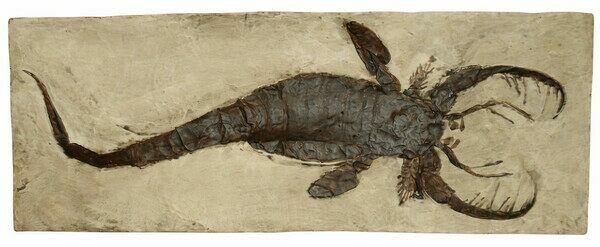
A cast of the Silurian giant Eurypterid Mixopterus.
Other Silurian eurypterids evolved specialized morphologies. Some, like Dolichopterus, developed elongated limbs and broad paddles suited for active swimming, while others became heavily armored bottom-walkers. The Silurian also saw the rise of early freshwater eurypterids, marking one of the earliest large-scale invasions of non-marine environments by arthropods. This ecological flexibility may have insulated eurypterids from competition and environmental instability.
The Devonian Period witnessed both the peak of eurypterid gigantism and the beginning of their decline. It was during this time that enormous predatory forms such as Pterygotus, Megalograptus, and Jaekelopterus evolved. These eurypterids possessed elongated bodies, massive claws, and highly developed sensory organs, making them formidable hunters capable of tackling large prey, including armored fish.
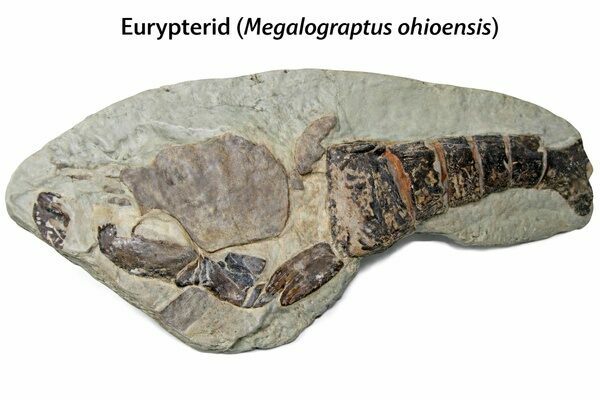
A fossil of Megalograptus from Ohio.
Jaekelopterus rhenaniae, known from Early Devonian deposits in Germany, represents the extreme of eurypterid evolution, reaching lengths exceeding eight feet. Its size rivals that of early vertebrate predators and reflects a period when high oxygen levels and abundant prey allowed arthropods to achieve unprecedented dimensions.
At the same time, competition from increasingly diverse and aggressive jawed fish (gnathostomes) intensified. As fish evolved stronger jaws, armor, and swimming abilities, eurypterids may have been pushed out of open marine environments. Many Devonian eurypterids appear to have shifted toward estuaries, rivers, and lakes, where fish diversity was lower and eurypterids could maintain dominance.
By the Carboniferous Period, eurypterid diversity had begun to decline. Large marine forms became rare, and most surviving lineages were restricted to freshwater or marginal environments. Carboniferous eurypterids tended to be smaller and more specialized, adapted to stable but increasingly fragmented habitats. Fossils from this period are often found in association with coal-forming wetlands, suggesting that eurypterids coexisted with early amphibians and vast swamp forests.
Although no longer the dominant predators of their ecosystems, eurypterids persisted by exploiting ecological niches less accessible to vertebrates. Their continued survival into the Carboniferous demonstrates their resilience in the face of changing climates and rising competition.
The final chapter of eurypterid evolution unfolded during the Permian Period, when only a handful of specialized lineages remained. These late eurypterids were generally modest in size and restricted to freshwater environments. Global climate instability, fluctuating sea levels, and the gradual restructuring of ecosystems placed increasing pressure on their already diminished populations.
The end came with the end-Permian mass extinction, the most catastrophic extinction event in Earth’s history. Rapid climate change, widespread anoxia, and ecosystem collapse eliminated the remaining eurypterids along with over 90 percent of marine species. Unlike horseshoe crabs, which survived and persist today, eurypterids left no direct descendants.
Though long extinct, eurypterids left a lasting legacy in the history of life on Earth. They were among the first animals to reach truly gigantic sizes, to dominate complex food webs as apex predators, and to experiment with life at the boundary between water and land. Their close relatives still thrive today in the form of spiders, scorpions, and horseshoe crabs—quiet reminders of a time when arthropods ruled the planet’s waters. In the broader story of evolution, eurypterids stand as powerful evidence that some of nature’s most spectacular and ambitious experiments unfolded long before the world we recognize today.
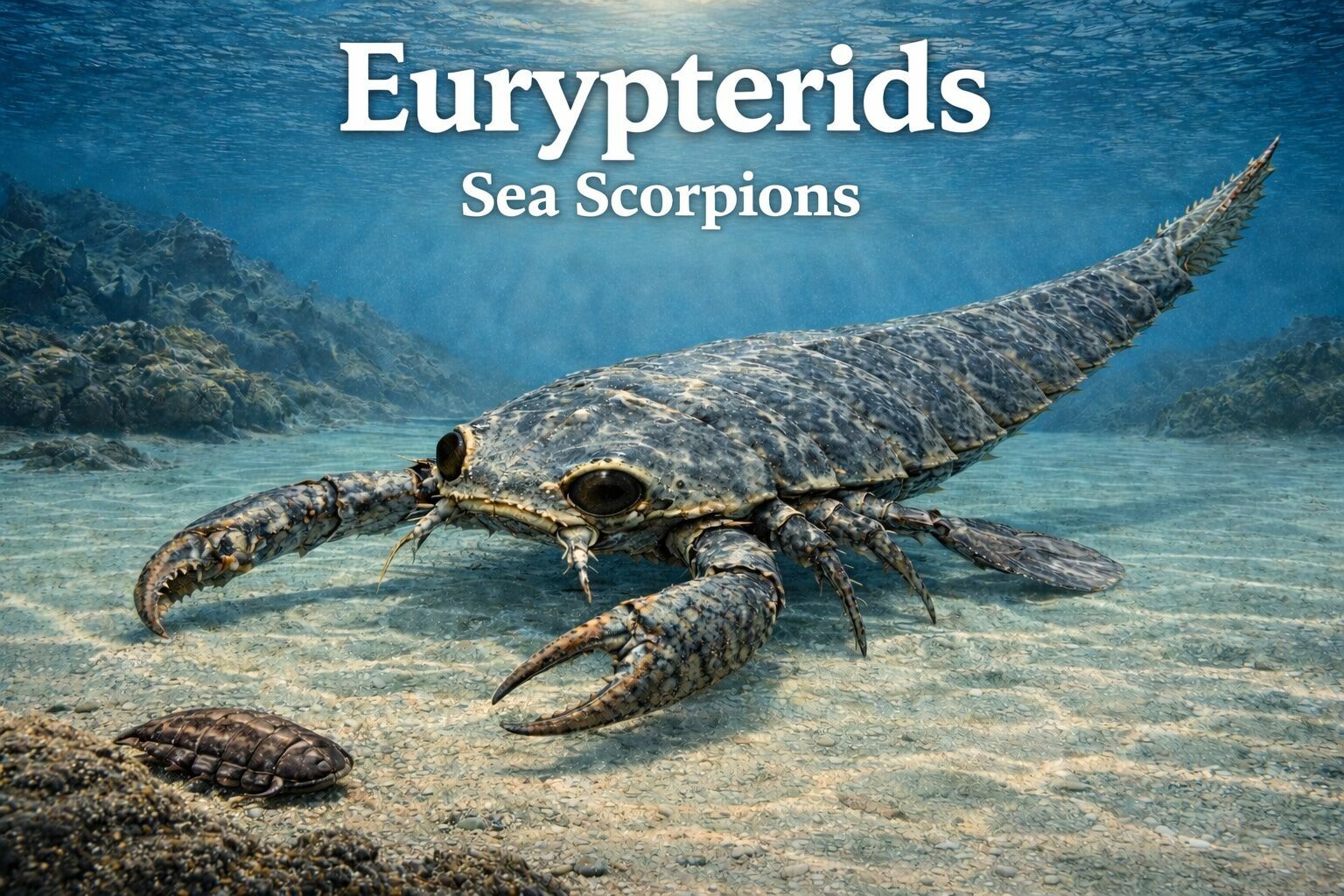
A massive eurypterid prowls the shallow Paleozoic seafloor, its spined tail and powerful claws marking it as an apex predator, while a trilobite crawls across the sediment below.
Eurypterids were not rare oddities or evolutionary dead ends. They were astonishingly successful, thriving for more than 200 million years, a span of time longer than the age of dinosaurs. During that immense stretch of Earth history, eurypterids survived multiple extinction events, adapted to radically changing climates, and spread across nearly every continent. Fossils show them prowling ancient tropical seas, cruising murky estuaries, and even inhabiting freshwater rivers and lakes—an extraordinary range for early arthropods.
One of the most remarkable facts about eurypterids is how diverse they were. Paleontologists have identified over 250 species, ranging from small, shrimp-sized forms to massive apex predators armed with spined limbs and crushing claws. Some were fast swimmers built for pursuit, while others were heavily armored bottom-walkers, creeping across the seafloor in search of prey. A few species may even have been capable of brief excursions onto land, making eurypterids among the earliest large animals to test the boundary between water and air.
Their appearance alone would have inspired fear. With broad, shielded heads, compound eyes that bulged from their carapaces, and long segmented bodies ending in blade-like tails, eurypterids looked like living weapons. Unlike modern arthropods, many had limbs lined with sharp spines, perfectly positioned to trap struggling prey. In some species, these limbs grew so large and powerful that they functioned like grappling hooks, capable of subduing armored animals such as trilobites and early fish.

Perhaps most surprising of all, eurypterids were close relatives of spiders and scorpions, not crustaceans. This means that the ancestors of today’s tiny arachnids once produced giants capable of ruling entire ecosystems. When oxygen levels were high and competition from vertebrates was low, arthropods briefly reached sizes that seem impossible by modern standards.
Eurypterids were not merely monsters of their age—they were innovators. They helped pioneer new modes of predation, exploited untapped freshwater environments, and may have influenced the evolutionary arms race that drove early fish to develop stronger armor and jaws. In many ways, the story of eurypterids is the story of how complex ecosystems began to take shape in the Paleozoic world.
What Is A Eurypterid?
Eurypterids, often called sea scorpions, were an extinct group of arthropods related to modern spiders and scorpions that lived from about 470 to 252 million years ago. They ranged from small aquatic hunters to giants over eight feet long and were among the dominant predators of Paleozoic seas and freshwater environments.
Anatomy: Built for Dominance
At first glance, eurypterids look like a cross between a lobster and a scorpion—and that’s not far from the truth. Their bodies were divided into three main sections: the prosoma (head), opisthosoma (abdomen), and telson (tail).
The Head (Prosoma)
The prosoma was covered by a broad, shield-like carapace that protected the brain, eyes, and feeding appendages. Most eurypterids had compound eyes, often positioned on raised nodes, giving them excellent vision for detecting prey or rivals in murky waters.
Attached to the prosoma were six pairs of appendages:
The Abdomen (Opisthosoma)
The opisthosoma consisted of multiple armored segments, providing both flexibility and protection. In some species, the abdomen was broad and flattened for swimming, while others had narrow, streamlined bodies suited for active pursuit.
The Tail (Telson)
The telson of eurypterids varied widely in form and function. In some species it developed into a long, spike-like tail that may have been used for steering, defense, or even mating displays, while in others it was flattened into a paddle-shaped structure that enhanced swimming and maneuverability. Unlike true scorpions, eurypterids almost certainly lacked venomous stingers, but their powerful claws and spined limbs would have been more than sufficient to capture and subdue prey.
Size: From Small Swimmers to Arthropod Giants
Eurypterids displayed one of the most dramatic size ranges of any arthropod group in Earth’s history, spanning from animals no larger than a human finger to true giants that rivaled modern humans in length. The smallest well-known eurypterids, such as Eurypterus, typically measured just 10–25 centimeters (4–10 inches) long. Fossils of Eurypterus are especially abundant in the Silurian waterlime deposits of New York State, as well as in parts of Ontario and Europe, where exceptional preservation has revealed fine details of their limbs and carapaces. These smaller species were agile swimmers and bottom-walkers that thrived in shallow coastal waters and freshwater environments.
At the opposite extreme were the giants. The largest eurypterid known to science, Jaekelopterus rhenaniae, is estimated to have reached 2.3–2.6 meters (7.5–8.5 feet) in length based on massive fossilized claws. These remains come primarily from Early Devonian deposits in Germany, with additional material known from nearby regions of Central Europe. Another enormous genus, Pterygotus, commonly exceeded 1.5 meters (5 feet) and is known from a wide geographic range, including Scotland, eastern North America, and Scandinavia. Fossils of Pterygotus often occur in estuarine and nearshore sediments, suggesting these predators patrolled shallow waters where early fish were abundant.
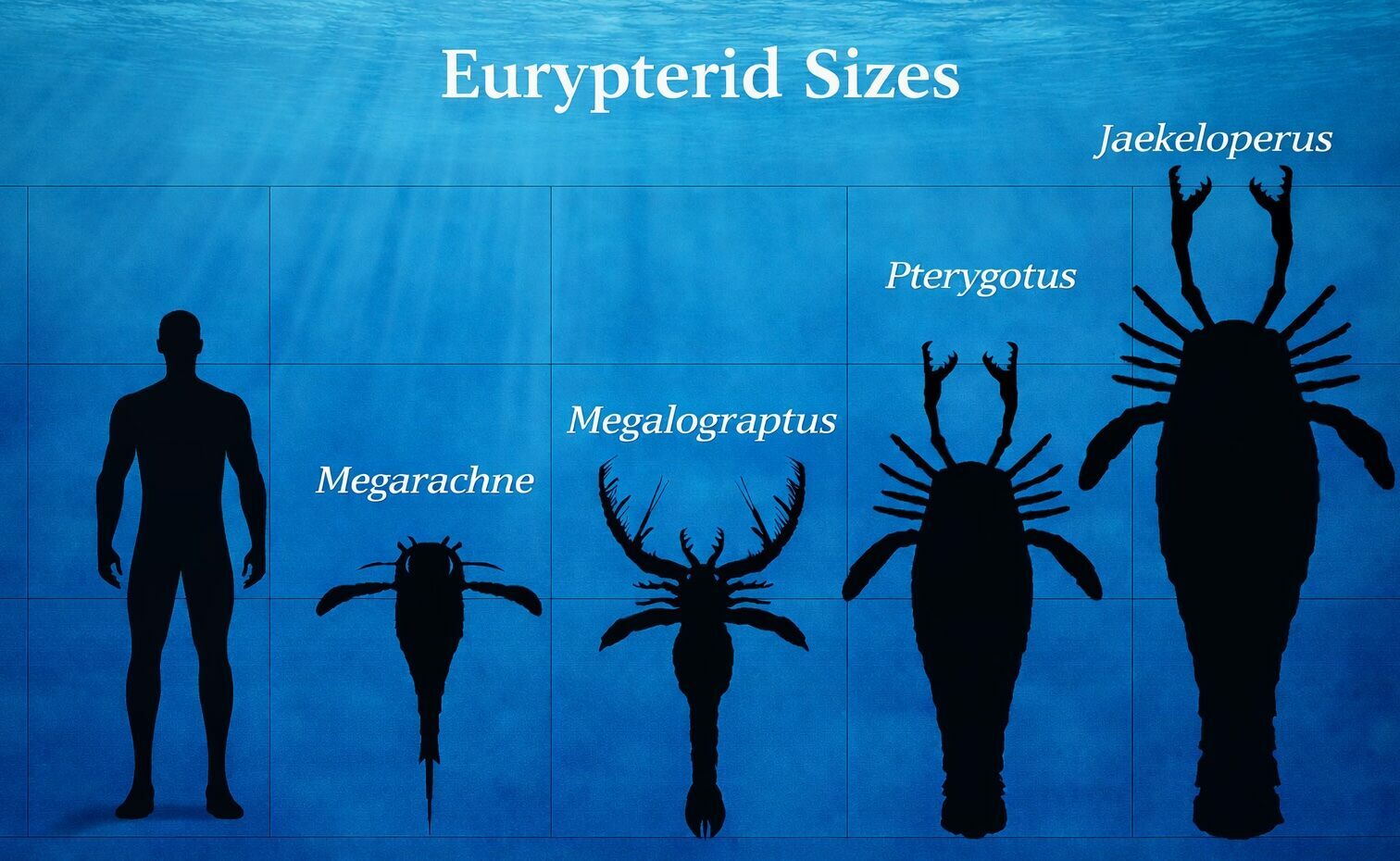
Size comparisons of some of the largest types of Eurypterids.
Eurypterid size increased gradually through time. Early Ordovician forms were relatively small and generalized, known from scattered marine deposits across North America and Europe. During the Silurian and Devonian, eurypterids diversified rapidly, and several lineages evolved toward gigantism. This trend coincided with high atmospheric oxygen levels and the widespread development of marginal marine and freshwater habitats, conditions well documented in fossil-bearing strata from New York, Scotland, and the Baltic region. As jawed fish became more dominant in marine environments, many large eurypterids appear to have shifted into rivers and lagoons, where they continued to thrive. By the late Paleozoic, however, climatic instability and ecological competition reduced eurypterid diversity and size, and the group ultimately vanished during the end-Permian mass extinction, leaving behind a fossil record that captures one of the most extraordinary episodes of arthropod gigantism in Earth’s history.
Behavior: Predators of Paleozoic Waters
Eurypterid behavior can be reconstructed only indirectly, but the available evidence paints a remarkably detailed picture of active, adaptable animals that occupied a wide range of ecological roles in Paleozoic ecosystems. Most eurypterids were carnivorous, and many were apex predators, filling niches comparable to those of modern sharks or crocodilians. Their feeding habits are revealed through multiple lines of evidence, including anatomy, fossilized gut contents, and damaged prey fossils. Some specimens preserve the remains of trilobites and early fish within their bodies, while others are associated with shells bearing punctures, fractures, and scrape marks that closely match the shape and spacing of eurypterid claws. The diversity of limb structures also reflects different feeding strategies: species with broad, robust appendages were capable of crushing hard shells, whereas forms with long, spined limbs were better suited for grasping and restraining soft-bodied or fast-moving prey.
In life, eurypterids likely spent much of their time moving along the bottoms of shallow seas, coastal lagoons, estuaries, and freshwater rivers. Their walking legs allowed them to crawl deliberately across soft sediment, while their paddle-like rear appendages provided bursts of speed for swimming or lunging at prey. Larger species probably relied on ambush tactics, remaining partially concealed in murky water or sediment before striking suddenly, while smaller eurypterids were more agile and opportunistic, feeding on a wider variety of organisms and scavenging when the opportunity arose. This flexibility may help explain their long evolutionary success across changing environments.
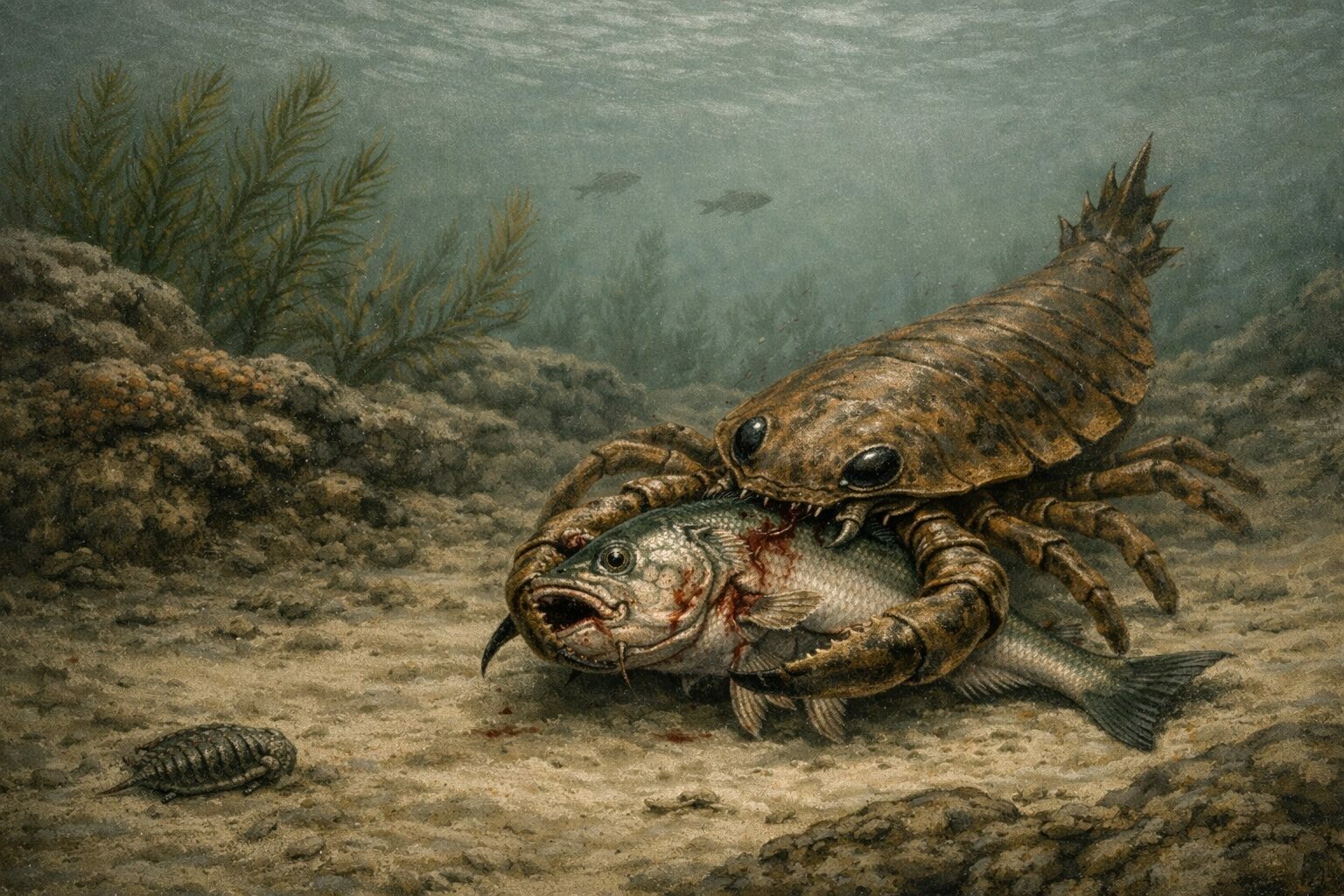
Silurian ambush: A eurypterid pins a prehistoric fish against the seafloor.
Evidence also suggests that eurypterids were behaviorally complex in ways that went beyond feeding. Several species show clear signs of sexual dimorphism, particularly in the structure of the genital operculum, indicating specialized reproductive behaviors. Like modern arthropods, eurypterids likely reproduced through mating followed by the release or attachment of eggs in protected environments, possibly in shallow water or near shorelines where juveniles could develop with reduced predation risk. Many fossil assemblages are dominated by individuals of similar size, which may represent breeding grounds or seasonal gatherings linked to reproduction or molting.
Perhaps most intriguing is the growing evidence that some eurypterids were capable of briefly venturing out of the water. Fossil trackways preserved in fine-grained sediments show patterns consistent with eurypterids walking on land or in very shallow water, using their legs to support their weight while dragging the tail behind them. Many eurypterid fossils are also found in non-marine or marginal marine deposits, strongly suggesting that freshwater rivers, lakes, and floodplains were important habitats for at least part of their life cycle. These excursions onto land may have been short-lived and purposeful, allowing eurypterids to migrate between water bodies, escape predators, seek mates, or molt their exoskeletons in safer environments.
Together, these lines of evidence reveal eurypterids not as simple, single-minded monsters, but as highly adaptable, behaviorally flexible animals capable of exploiting a wide range of habitats. Their success for over 200 million years reflects an evolutionary strategy built on versatility—an ability to hunt effectively, reproduce successfully, and even test the boundaries between water and land in a world still learning what complex ecosystems could be.
Eurypterid Fossil Record
The fossil record of eurypterids is one of the richest and most informative among Paleozoic arthropods, offering rare insights into both their anatomy and their environments. Their exoskeletons were thick and mineralized enough to fossilize readily, and because eurypterids often lived in shallow, low-energy waters, their remains were frequently buried rapidly by fine sediments. Many fossils represent molted exoskeletons rather than dead animals, a clue supported by the repeated preservation of disarticulated but otherwise pristine specimens. These mass molting events sometimes produced dense accumulations of eurypterid remains, creating entire fossil beds dominated by a single species.
Some of the most important eurypterid fossil sites in the world are located in New York State, which preserves an exceptional record of Silurian and Devonian life. The Bertie Group, particularly the famous waterlime deposits of western and central New York, has yielded thousands of eurypterid specimens, including iconic genera such as Eurypterus, Dolichopterus, and Pterygotus. These fine-grained, chemically unique sediments allowed for extraordinary preservation, capturing delicate limb spines, eye structures, and even soft-tissue impressions in some cases. The abundance and quality of these fossils are so significant that New York designated Eurypterus remipes as the official state fossil.
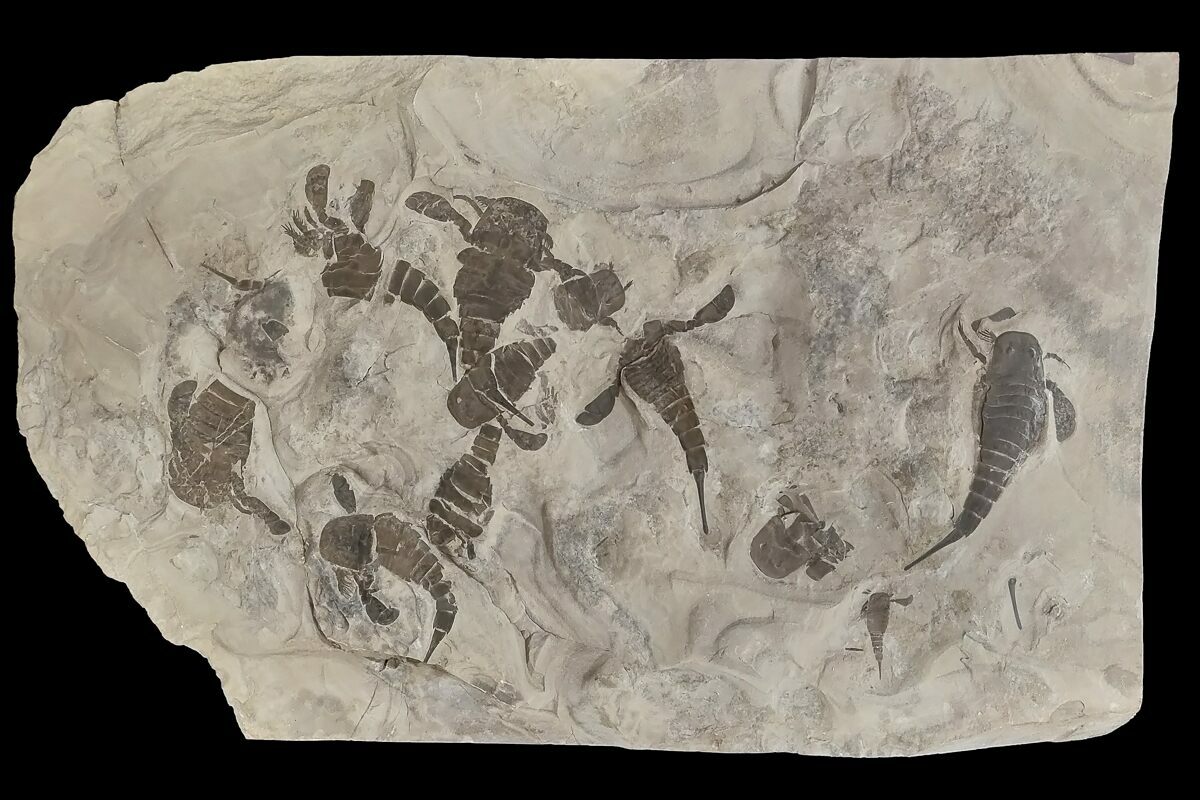
A fossil mortality plate of Eurypterids from Langs Quarry in New York.
Beyond New York, eurypterid fossils are found across Europe, especially in Scotland, where Silurian deposits preserve large predatory species in ancient coastal lagoons. Australian and Baltic deposits further demonstrate the global distribution of eurypterids, showing that they thrived in both tropical and temperate regions. Many fossil sites reveal a strong association between eurypterids and non-marine or marginal marine environments, such as estuaries, tidal flats, and freshwater basins. This pattern supports the idea that eurypterids were among the earliest large animals to successfully colonize freshwater ecosystems.
In some localities, eurypterid fossils are preserved alongside trackways—parallel rows of imprints left by their walking legs—which provide rare behavioral evidence. These trackways suggest slow, deliberate movement across soft substrates and, in a few cases, brief excursions onto land. Taken together, the eurypterid fossil record does more than document an extinct group of animals; it preserves snapshots of ancient ecosystems in transition, capturing a time when arthropods were experimenting with size, habitat, and dominance on a scale never seen again.
Evolution: From Early Chelicerates to the Giants of the Paleozoic
The evolutionary story of eurypterids spans more than 200 million years and reflects one of the most ambitious experiments in arthropod history. Their origins lie deep in the early Paleozoic, among primitive chelicerates, the broader arthropod group that would eventually give rise to horseshoe crabs, spiders, scorpions, and mites. Although the exact ancestral form remains debated, most paleontologists agree that eurypterids evolved from small, marine chelicerate ancestors during the Early Ordovician, when complex marine ecosystems were just beginning to take shape.
Possible Ancestors and Early Relatives
Eurypterids are closely related to horseshoe crabs (Xiphosura), and both groups share key features such as a prosoma covered by a broad carapace, chelicerae used for feeding, and segmented bodies ending in a telson. Some researchers propose that eurypterids and horseshoe crabs diverged from a common ancestor resembling early xiphosurans or even more primitive chelicerates such as synziphosurines, an extinct group with a mix of ancestral and derived traits. These animals were small, bottom-dwelling marine arthropods that likely scavenged or preyed on soft-bodied organisms in shallow seas.
Another potential ancestral group includes
Ordovician: The First Eurypterids
The earliest confirmed eurypterids appear in the Middle to Late Ordovician, and these species were relatively small, typically less than 30 centimeters long. Early genera such as Bromideops and Pentecopterus show a mix of primitive and derived traits, including elongated bodies and grasping appendages. Pentecopterus, discovered in Ordovician rocks of Iowa, is particularly important, as it represents one of the oldest and largest early eurypterids, already approaching lengths of over a meter. This suggests that the trend toward larger body sizes began surprisingly early in eurypterid evolution.
During the Ordovician, eurypterids were primarily marine animals, inhabiting shallow continental shelves and nearshore environments. Their early success coincided with increasing ecological complexity, including the diversification of trilobites, mollusks, and early vertebrates, which provided abundant prey.
Silurian: Diversification and Ecological Expansion
The Silurian Period marks the golden age of eurypterid diversity. During this time, eurypterids radiated into dozens of families and hundreds of species, occupying an extraordinary range of ecological niches. Fossil deposits from New York, Scotland, and the Baltic region preserve some of the most iconic eurypterids, including the well-known genus Eurypterus. These forms were relatively small and streamlined, well adapted for swimming and life in shallow water.
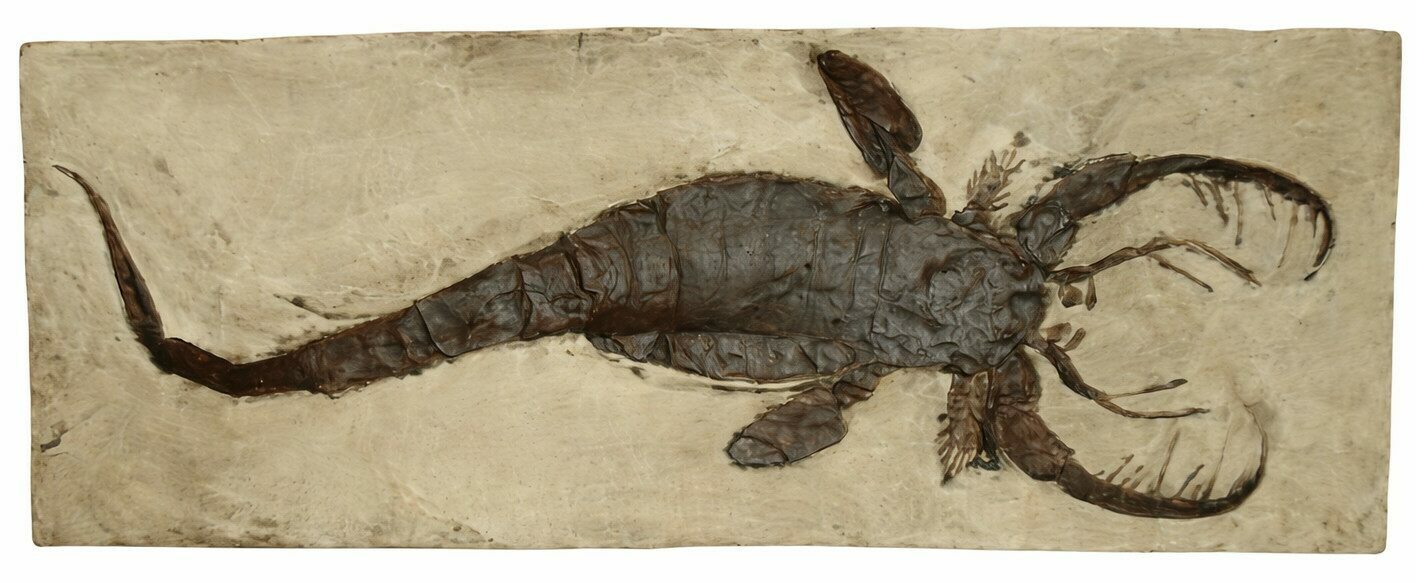
A cast of the Silurian giant Eurypterid Mixopterus.
Other Silurian eurypterids evolved specialized morphologies. Some, like Dolichopterus, developed elongated limbs and broad paddles suited for active swimming, while others became heavily armored bottom-walkers. The Silurian also saw the rise of early freshwater eurypterids, marking one of the earliest large-scale invasions of non-marine environments by arthropods. This ecological flexibility may have insulated eurypterids from competition and environmental instability.
Devonian: The Rise of Giants
The Devonian Period witnessed both the peak of eurypterid gigantism and the beginning of their decline. It was during this time that enormous predatory forms such as Pterygotus, Megalograptus, and Jaekelopterus evolved. These eurypterids possessed elongated bodies, massive claws, and highly developed sensory organs, making them formidable hunters capable of tackling large prey, including armored fish.
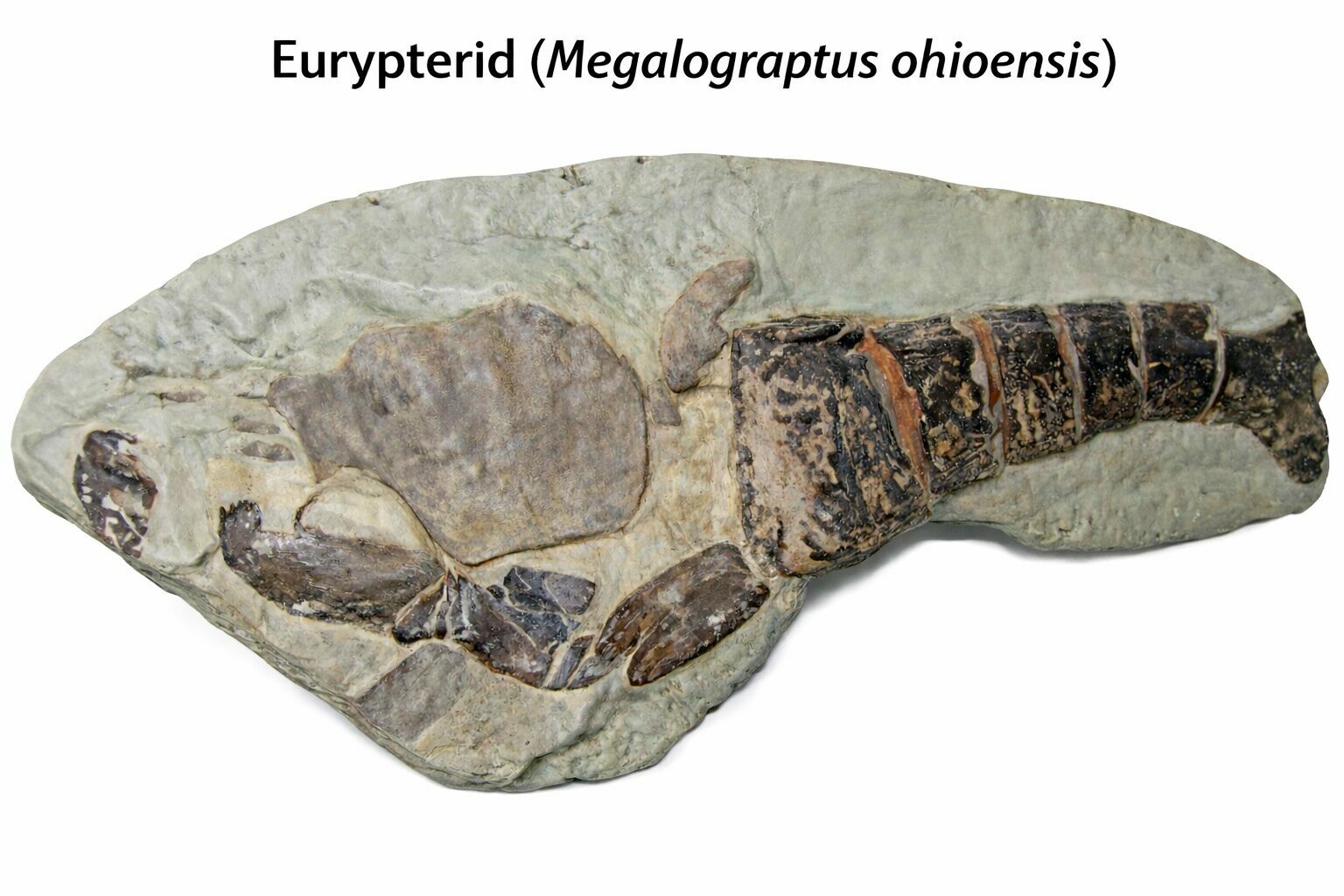
A fossil of Megalograptus from Ohio.
Jaekelopterus rhenaniae, known from Early Devonian deposits in Germany, represents the extreme of eurypterid evolution, reaching lengths exceeding eight feet. Its size rivals that of early vertebrate predators and reflects a period when high oxygen levels and abundant prey allowed arthropods to achieve unprecedented dimensions.
At the same time, competition from increasingly diverse and aggressive jawed fish (gnathostomes) intensified. As fish evolved stronger jaws, armor, and swimming abilities, eurypterids may have been pushed out of open marine environments. Many Devonian eurypterids appear to have shifted toward estuaries, rivers, and lakes, where fish diversity was lower and eurypterids could maintain dominance.
Carboniferous: Decline and Specialization
By the Carboniferous Period, eurypterid diversity had begun to decline. Large marine forms became rare, and most surviving lineages were restricted to freshwater or marginal environments. Carboniferous eurypterids tended to be smaller and more specialized, adapted to stable but increasingly fragmented habitats. Fossils from this period are often found in association with coal-forming wetlands, suggesting that eurypterids coexisted with early amphibians and vast swamp forests.
Although no longer the dominant predators of their ecosystems, eurypterids persisted by exploiting ecological niches less accessible to vertebrates. Their continued survival into the Carboniferous demonstrates their resilience in the face of changing climates and rising competition.
Permian: The End of the Line
The final chapter of eurypterid evolution unfolded during the Permian Period, when only a handful of specialized lineages remained. These late eurypterids were generally modest in size and restricted to freshwater environments. Global climate instability, fluctuating sea levels, and the gradual restructuring of ecosystems placed increasing pressure on their already diminished populations.
The end came with the end-Permian mass extinction, the most catastrophic extinction event in Earth’s history. Rapid climate change, widespread anoxia, and ecosystem collapse eliminated the remaining eurypterids along with over 90 percent of marine species. Unlike horseshoe crabs, which survived and persist today, eurypterids left no direct descendants.
Legacy of the Sea Scorpions
Though long extinct, eurypterids left a lasting legacy in the history of life on Earth. They were among the first animals to reach truly gigantic sizes, to dominate complex food webs as apex predators, and to experiment with life at the boundary between water and land. Their close relatives still thrive today in the form of spiders, scorpions, and horseshoe crabs—quiet reminders of a time when arthropods ruled the planet’s waters. In the broader story of evolution, eurypterids stand as powerful evidence that some of nature’s most spectacular and ambitious experiments unfolded long before the world we recognize today.


