 Reviews

Ohio’s State Fossil - Isotelus, A Giant Among Trilobites
Ohio’s state fossil, Isotelus, represents one of the most remarkable chapters in the state’s deep geological past. This extinct marine arthropod lived more than 440 million years ago during the Ordovician Period, when Ohio lay beneath a warm, shallow sea teeming with life. Chosen as Ohio’s official state fossil in 1985, Isotelus maximus is celebrated not only for its abundance in the region, but also for its impressive size—making it the largest trilobite species ever discovered.
Isotelus is a genus of trilobites, an extinct group of arthropods that dominated Paleozoic seas for over 270 million years. Trilobites are named for their distinctive three-lobed body plan, consisting of a central axial lobe flanked by two pleural lobes. Like all trilobites, Isotelus had a segmented exoskeleton, compound eyes, and jointed appendages adapted for life on the seafloor.
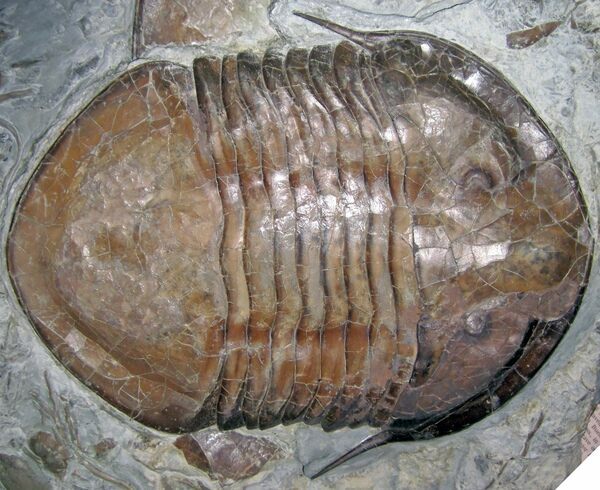
A fossil of the trilobite Isotelus, the state fossil of Ohio.
What sets Isotelus apart is its smooth, streamlined body and unusual proportions. Unlike many trilobites that have spines or highly segmented thoraxes, Isotelus has broad, flat features and a relatively simple outline. Its head (cephalon), thorax, and tail (pygidium) are similar in size—reflected in the name Isotelus, meaning “equal end.”
The species most closely associated with Ohio is Isotelus maximus, which could reach lengths of up to 16 inches (40 cm)—enormous by trilobite standards. For comparison, most trilobites were only a few inches long. This impressive size has earned Isotelus a reputation as the giant of its kind and a favorite among fossil collectors and paleontologists alike.
It’s worth noting that while other species such as Isotelus rex (from Canada) may rival or exceed it slightly, Isotelus maximus remains the largest trilobite species known from the United States and the one most iconic to Ohio.
During the Late Ordovician, Ohio was located near the equator and covered by a shallow inland sea. These warm waters supported a diverse marine ecosystem that included brachiopods, bryozoans, crinoids, cephalopods, and numerous trilobite species. Isotelus lived primarily on or just above the seafloor, likely as a detritivore or scavenger, feeding on organic material in the sediment. Its broad, flat body may have helped distribute its weight on soft substrates, while its size likely deterred many predators.
The fossil-rich rocks of southwestern Ohio—particularly those around the Cincinnati Arch—are among the most studied Ordovician deposits in the world. Isotelus fossils are most commonly found in these layers, preserved in limestone and shale.
Isotelus was first described scientifically in the 19th century, during a period when Ohio was becoming a center of American paleontology. The state’s well-exposed fossil beds made it possible for scientists to study Ordovician life in extraordinary detail.
Because of its size, abundance, and excellent preservation, Isotelus has played an important role in understanding trilobite growth, molting, and evolution. Complete specimens—rather than isolated fragments—are relatively common, providing valuable insight into trilobite anatomy. Many notable specimens of Isotelus are housed in museums, including the Cleveland Museum of Natural History and the Orton Geological Museum at The Ohio State University.
In 1985, following advocacy by students and educators, Isotelus maximus was officially designated the state fossil of Ohio. The choice reflects both its scientific importance and its strong connection to the state’s natural heritage. Today, Isotelus serves as a symbol of Ohio’s ancient past and a gateway fossil that introduces students and the public to paleontology, deep time, and the idea that the land we know today once existed beneath an ancient sea.
What Is Isotelus?
Isotelus is a genus of trilobites, an extinct group of arthropods that dominated Paleozoic seas for over 270 million years. Trilobites are named for their distinctive three-lobed body plan, consisting of a central axial lobe flanked by two pleural lobes. Like all trilobites, Isotelus had a segmented exoskeleton, compound eyes, and jointed appendages adapted for life on the seafloor.
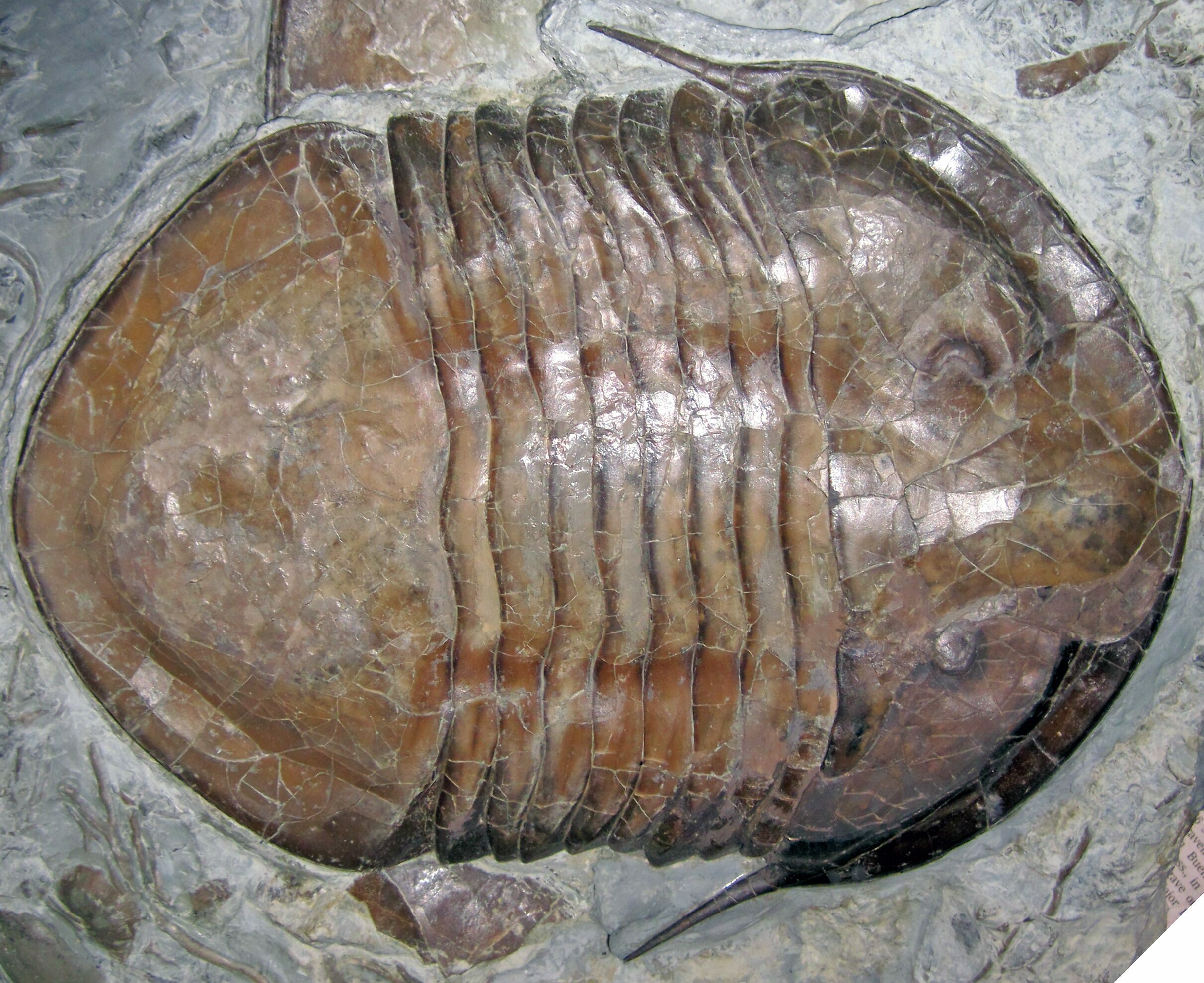
A fossil of the trilobite Isotelus, the state fossil of Ohio.
What sets Isotelus apart is its smooth, streamlined body and unusual proportions. Unlike many trilobites that have spines or highly segmented thoraxes, Isotelus has broad, flat features and a relatively simple outline. Its head (cephalon), thorax, and tail (pygidium) are similar in size—reflected in the name Isotelus, meaning “equal end.”
A Giant Among Trilobites
The species most closely associated with Ohio is Isotelus maximus, which could reach lengths of up to 16 inches (40 cm)—enormous by trilobite standards. For comparison, most trilobites were only a few inches long. This impressive size has earned Isotelus a reputation as the giant of its kind and a favorite among fossil collectors and paleontologists alike.
It’s worth noting that while other species such as Isotelus rex (from Canada) may rival or exceed it slightly, Isotelus maximus remains the largest trilobite species known from the United States and the one most iconic to Ohio.

Ohio’s Ordovician Seas
During the Late Ordovician, Ohio was located near the equator and covered by a shallow inland sea. These warm waters supported a diverse marine ecosystem that included brachiopods, bryozoans, crinoids, cephalopods, and numerous trilobite species. Isotelus lived primarily on or just above the seafloor, likely as a detritivore or scavenger, feeding on organic material in the sediment. Its broad, flat body may have helped distribute its weight on soft substrates, while its size likely deterred many predators.
The fossil-rich rocks of southwestern Ohio—particularly those around the Cincinnati Arch—are among the most studied Ordovician deposits in the world. Isotelus fossils are most commonly found in these layers, preserved in limestone and shale.
Discovery and Scientific Importance
Isotelus was first described scientifically in the 19th century, during a period when Ohio was becoming a center of American paleontology. The state’s well-exposed fossil beds made it possible for scientists to study Ordovician life in extraordinary detail.
Because of its size, abundance, and excellent preservation, Isotelus has played an important role in understanding trilobite growth, molting, and evolution. Complete specimens—rather than isolated fragments—are relatively common, providing valuable insight into trilobite anatomy. Many notable specimens of Isotelus are housed in museums, including the Cleveland Museum of Natural History and the Orton Geological Museum at The Ohio State University.
Becoming Ohio’s State Fossil
In 1985, following advocacy by students and educators, Isotelus maximus was officially designated the state fossil of Ohio. The choice reflects both its scientific importance and its strong connection to the state’s natural heritage. Today, Isotelus serves as a symbol of Ohio’s ancient past and a gateway fossil that introduces students and the public to paleontology, deep time, and the idea that the land we know today once existed beneath an ancient sea.