 Reviews


17" Giant Asaphid Trilobite (Basilicus) - Fezouata Formation


This is an absolutely massive 17" long asaphid (Basilicus sp) trilobite fossil from the Fezouata Formation of Morocco. These giant Asaphids are quite rare to find complete now; they are found in limestone lenses within the massive shale unit of the formation. These limestone lenses are only exposed through erosion, a rather slow process in the desert. Over the decades the sites have been scoured by diggers who have broken down all of the exposed lenses.
This one is near maximum size and is well preserved. Unlike most specimens it has some inflation. Total shell restoration appears to be about 15%, primarily on it's glabella and the edges of its tail.
This one is near maximum size and is well preserved. Unlike most specimens it has some inflation. Total shell restoration appears to be about 15%, primarily on it's glabella and the edges of its tail.
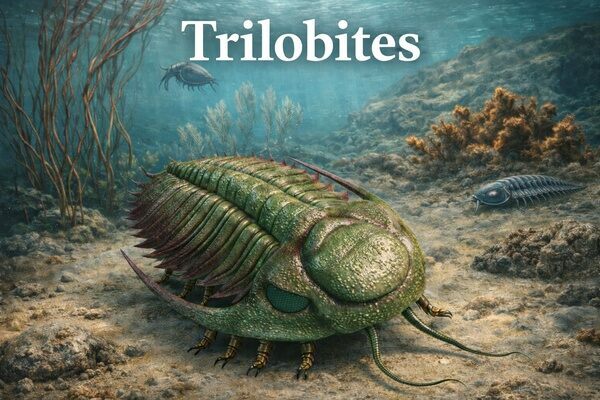
About Trilobites
Trilobites were a very diverse group of extinct marine arthropods. They first appeared in the fossil record in the Early Cambrian (521 million years ago) and went extinct during the Permian mass extinction (250 million years ago). They were one of the most successful of the early animals on our planet: over 25,000 species have been described, filling nearly every evolutionary niche. Due in large part to their hard exoskeletons (shells), they left an excellent fossil record.
Trilobites were a very diverse group of extinct marine arthropods. They first appeared in the fossil record in the Early Cambrian (521 million years ago) and went extinct during the Permian mass extinction (250 million years ago). They were one of the most successful of the early animals on our planet: over 25,000 species have been described, filling nearly every evolutionary niche. Due in large part to their hard exoskeletons (shells), they left an excellent fossil record.
$4,950
SPECIES
Basilicus sp.

LOCATION
Zagora Area, Morocco
FORMATION
Fezouata Formation
SIZE
17" long
CATEGORY
SUB CATEGORY
ITEM
#381212
We guarantee the authenticity of all of our specimens.