 Reviews


60" Museum-Quality Pyrite-Replaced Crinoid Plate - Germany


Note: Because of its size and weight, this piece will ship via freight on a pallet or in a crate. Our website can’t automatically calculate freight charges, so shipping costs will be determined and billed after purchase. If you’d like a quote beforehand, please contact us prior to ordering.
This museum-quality fossil display features a beautifully preserved pair of *Seirocrinus subangularis* crinoids anchored to a piece of fossilized driftwood, collected from the renowned Jurassic-aged Posidonia Shale of Holzmaden, Germany. The fossils form a striking, almost sculptural composition across an imposing slab of dark shale.
The intricately preserved crowns display remarkable detail, with delicate, feather-like arms radiating outward in graceful fans. Their exceptionally long, sinuous stems intertwine as they sweep across the plate before converging at their attachment point on the fossilized driftwood. This fascinating association captures a glimpse of an ancient marine ecosystem in which crinoids attached themselves to floating logs, using them as natural rafts to drift through Jurassic seas while filtering food from the surrounding water.
The primary stem extends approximately **46"** from its lowest point to the uppermost crown, while the two crowns measure 10" and 7.3" wide, respectively. Measuring just over **60" tall by 35" wide**, the substantial plate has an impressive presence. Its combination of intricate preservation, graceful composition, and fossilized driftwood association makes it a particularly compelling display specimen for a serious collector or museum.
The fossils have been meticulously prepared and expertly inlaid into a repair-free slab of original Posidonia Shale. The reverse has been reinforced with resin for additional structural stability. Custom metal wall-mounting hardware is included, allowing the specimen to be displayed as a large-format wall centerpiece.
About Crinoids
Crinoids, sometimes commonly referred to as sea lilies, are animals, not plants. They are echinoderms related to starfish, sea urchins, and brittle stars. Many crinoid traits are like other members of their phylum; such traits include tube feet, radial symmetry, a water vascular system, and appendages in multiples of five (pentameral). They first appeared in the Ordovician (488 million years ago) and some species are still alive today.
Crinoids, sometimes commonly referred to as sea lilies, are animals, not plants. They are echinoderms related to starfish, sea urchins, and brittle stars. Many crinoid traits are like other members of their phylum; such traits include tube feet, radial symmetry, a water vascular system, and appendages in multiples of five (pentameral). They first appeared in the Ordovician (488 million years ago) and some species are still alive today.
The Posidonia Shale (part of the Sachrang Formation) outcrops near the town of Holzmaden in southern Germany have been commercially quarried for centuries. The quarried shale has been used for such things as tile, table tops, and fireplace hearths. These quarrying operations have also uncovered a vast treasure trove of beautifully preserved, Early Jurassic (~183 million years old) fossils. The lower shale layers have even produced world-class ichthyosaur fossils with preserved skin and soft tissue impressions.
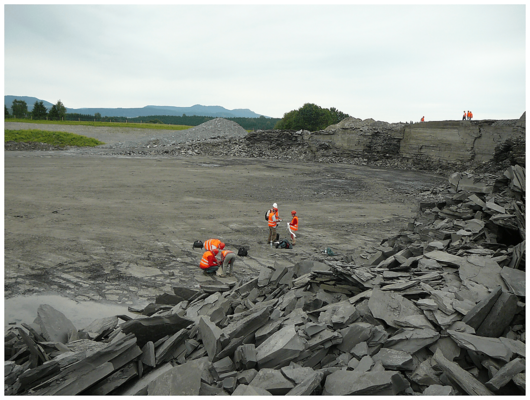
A view of one of the quarries in the Posidonia Shale of southern Germany.
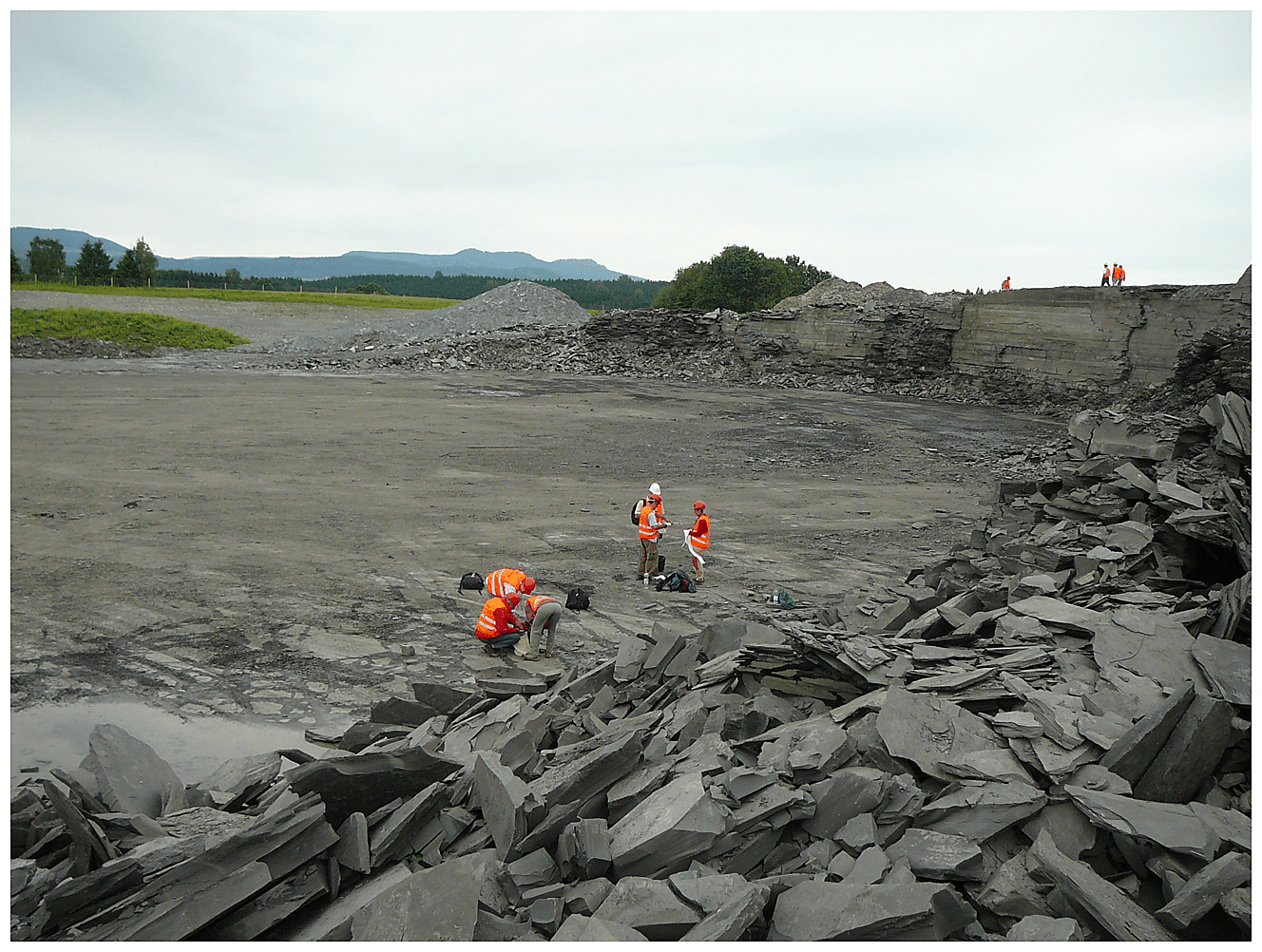
A view of one of the quarries in the Posidonia Shale of southern Germany.
$75,000
SPECIES
Seirocrinus subangularis

LOCATION
Holzmaden, Germany
FORMATION
Posidonia Shale
SIZE
Rock 60.7 x 35.3", Largest crown 10" wide
CATEGORY
SUB CATEGORY
ITEM
#380362
We guarantee the authenticity of all of our specimens.


