 Reviews

This Specimen has been sold.


2.1" Gemmy Dioptase Crystal Cluster - N'tola Mine, Congo
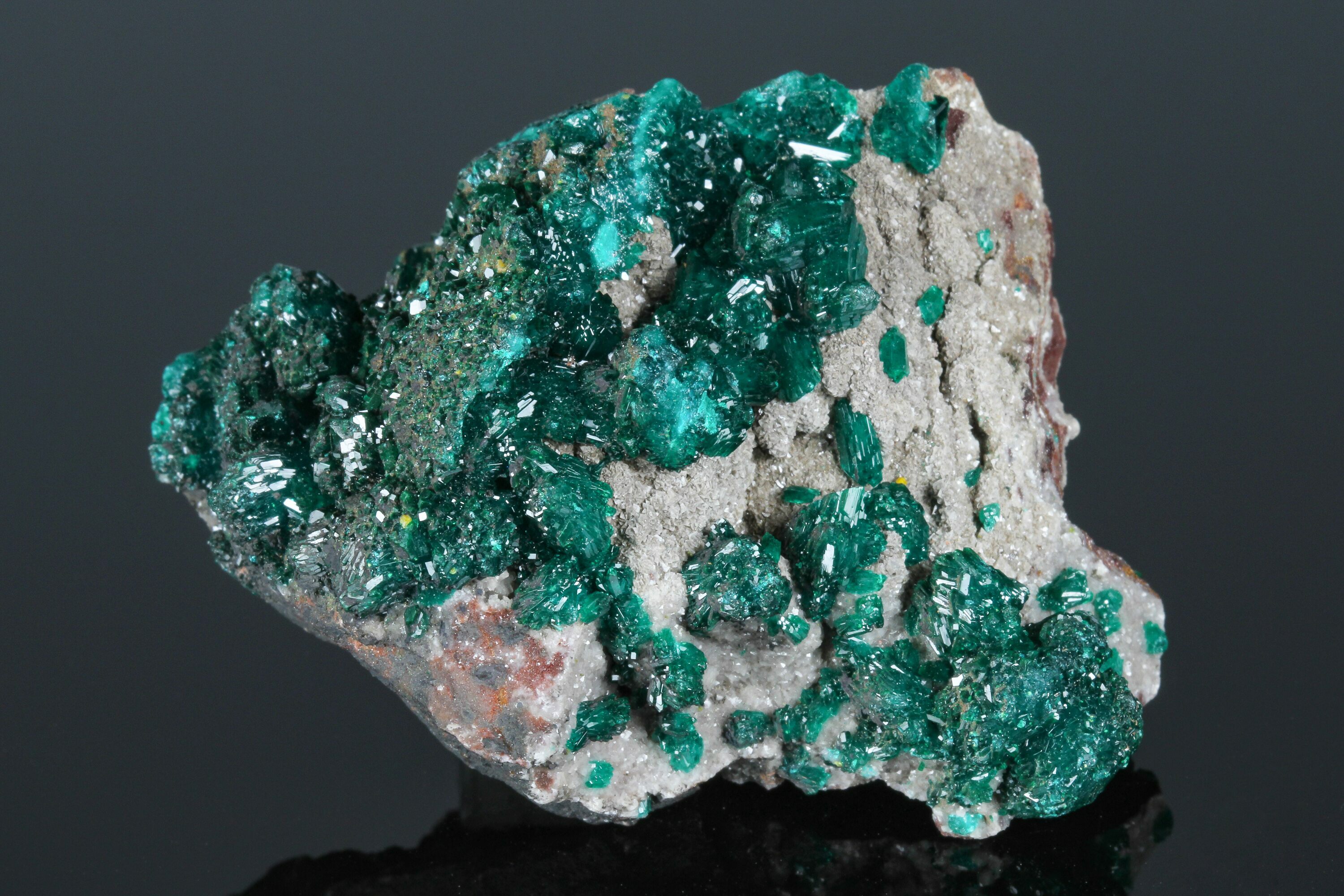
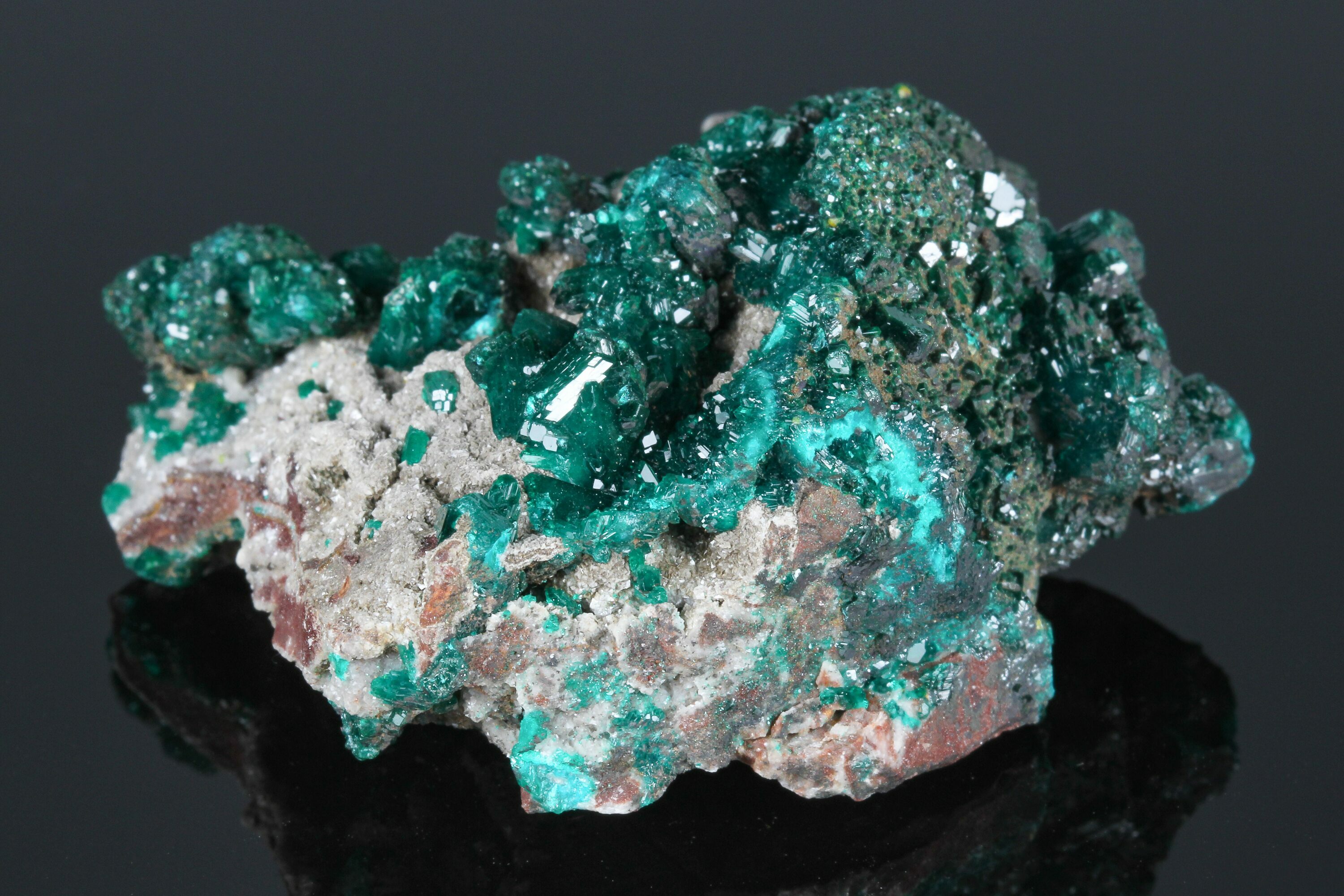
This is a beautiful cluster of sparkling dioptase crystals on dolomite that was collected from the N'tola Mine of the Republic of Congo. The entire specimen is 2.1" long and the dioptase is a lustrous, emerald-green color.
About Dioptase
Dioptase is a showstopper in the mineral world—an electrifying copper silicate known for its mesmerizing, emerald-green color that seems to glow from within. Its vivid hues rival even the finest emeralds, but it’s the crystal clarity and intense brilliance that make collectors’ hearts race. Found in arid, copper-rich environments like the deserts of Namibia and Kazakhstan, dioptase forms stunning prismatic crystals that sparkle like tiny green beacons against contrasting matrix rock. While too soft for most jewelry, it’s a favorite among mineral collectors and museums for its sheer visual impact. Dioptase isn’t just a mineral—it’s nature’s answer to green fire in crystal form.
Dioptase is a showstopper in the mineral world—an electrifying copper silicate known for its mesmerizing, emerald-green color that seems to glow from within. Its vivid hues rival even the finest emeralds, but it’s the crystal clarity and intense brilliance that make collectors’ hearts race. Found in arid, copper-rich environments like the deserts of Namibia and Kazakhstan, dioptase forms stunning prismatic crystals that sparkle like tiny green beacons against contrasting matrix rock. While too soft for most jewelry, it’s a favorite among mineral collectors and museums for its sheer visual impact. Dioptase isn’t just a mineral—it’s nature’s answer to green fire in crystal form.
Dolomite is an anhydrous carbonate mineral composed of calcium magnesium carbonate (CaMg(CO3)2).
The mineral dolomite crystallizes in the trigonal-rhombohedral system. It forms white, tan, gray, or pink crystals. Dolomite is a double carbonate, having an alternating structural arrangement of calcium and magnesium ions. It does not rapidly dissolve in dilute hydrochloric acid as calcite does. Crystal twinning is common.
Dolomite was first described by Carl Linnaeus in 1768, and in 1791 it was described as a rock by the French naturalist and geologist Déodat Gratet de Dolomieu. He first recognized the material in buildings of the old city of Rome, and later as samples collected in the mountains known as the Dolomite Alps of northern Italy.
The mineral dolomite crystallizes in the trigonal-rhombohedral system. It forms white, tan, gray, or pink crystals. Dolomite is a double carbonate, having an alternating structural arrangement of calcium and magnesium ions. It does not rapidly dissolve in dilute hydrochloric acid as calcite does. Crystal twinning is common.
Dolomite was first described by Carl Linnaeus in 1768, and in 1791 it was described as a rock by the French naturalist and geologist Déodat Gratet de Dolomieu. He first recognized the material in buildings of the old city of Rome, and later as samples collected in the mountains known as the Dolomite Alps of northern Italy.
SPECIES
Dioptase & Dolomite
LOCATION
N'tola Mine, Mindoili District, Republic of Congo
SIZE
2.1 x 1.6"
CATEGORY
ITEM
#175945


