 Reviews

This Specimen has been sold.


3.7" Purple Border Fluorite Crystals with Barite - Qinglong Mine
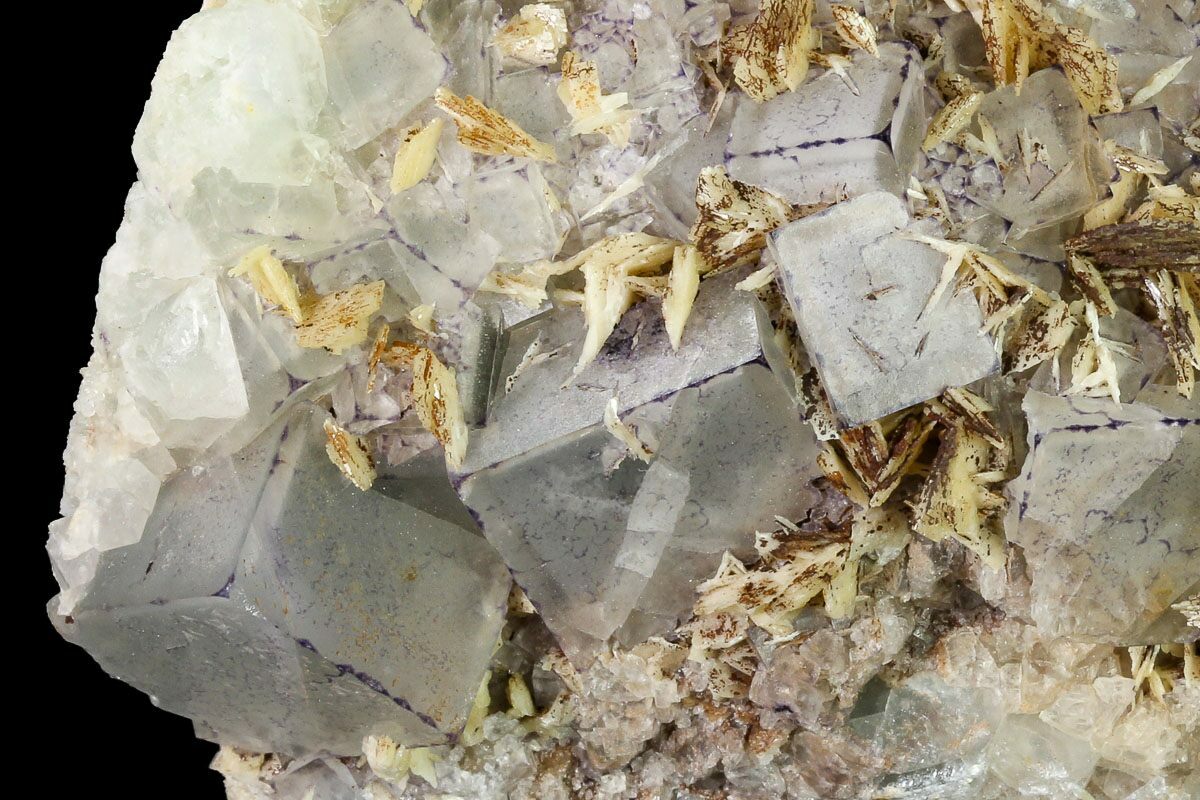
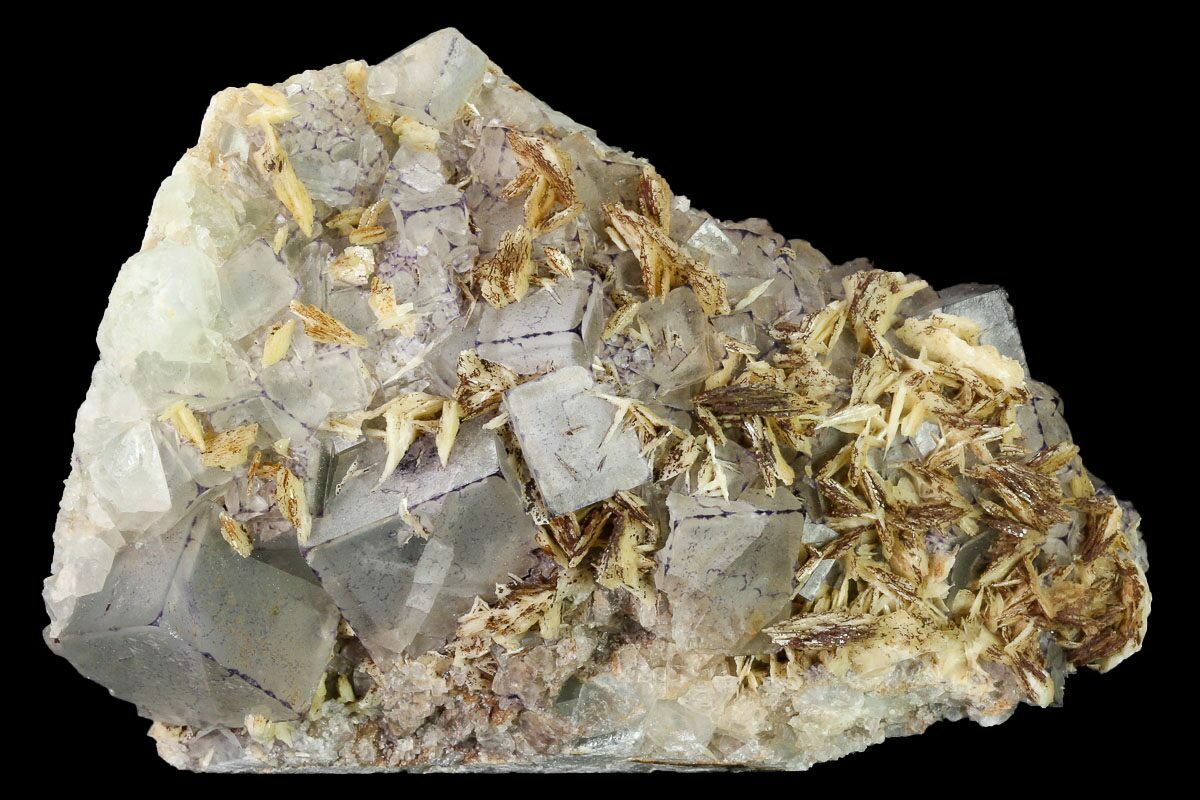
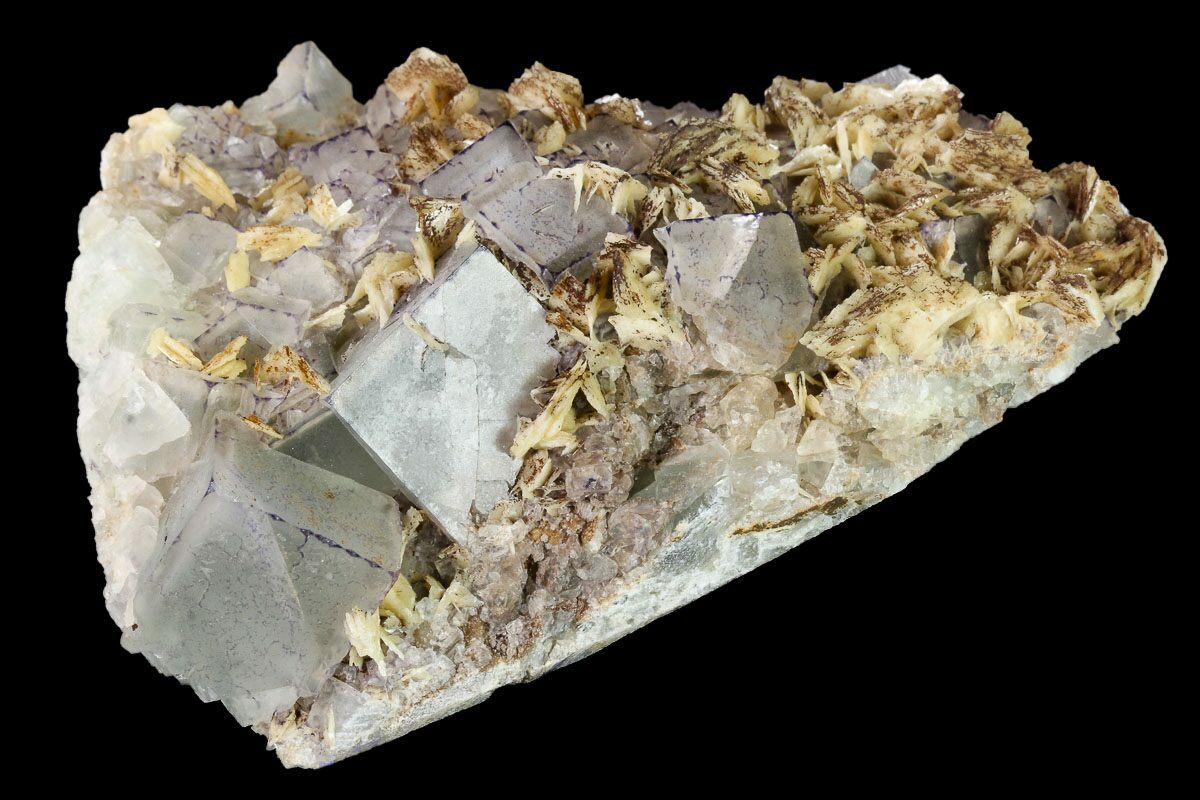
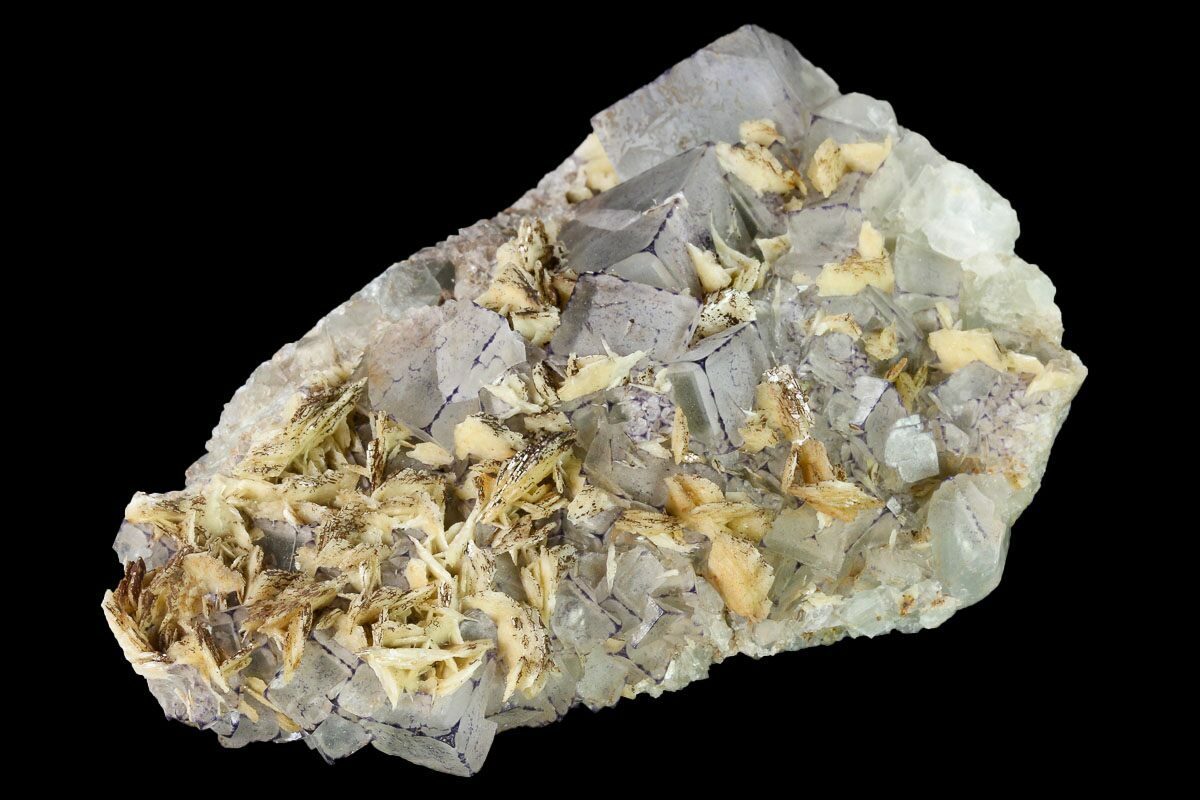
This is a 3.7" wide cluster of green cubic fluorite crystals and bladed barite that was collected from the Qinglong Mine in the Guizhou Province of China. The fluorite has purple coloration along the edges and formed over a bed of small quartz crystals.
It comes with an acrylic display stand.
It comes with an acrylic display stand.
About Fluorite
Fluorite is a halide mineral comprised of calcium and fluorine, CaF2. The word fluorite is from the Latin fluo-, which means "to flow". In 1852 fluorite gave its name to the phenomenon known as fluorescence, or the property of fluorite to glow a different color depending upon the bandwidth of the ultraviolet light it is exposed to. Fluorite occurs commonly in cubic, octahedral, and dodecahedral crystals in many different colors. These colors range from colorless and completely transparent to yellow, green, blue, purple, pink, or black. Purples and greens tend to be the most common colors seen, and colorless, pink, and black are the rarest.
Fluorite is a halide mineral comprised of calcium and fluorine, CaF2. The word fluorite is from the Latin fluo-, which means "to flow". In 1852 fluorite gave its name to the phenomenon known as fluorescence, or the property of fluorite to glow a different color depending upon the bandwidth of the ultraviolet light it is exposed to. Fluorite occurs commonly in cubic, octahedral, and dodecahedral crystals in many different colors. These colors range from colorless and completely transparent to yellow, green, blue, purple, pink, or black. Purples and greens tend to be the most common colors seen, and colorless, pink, and black are the rarest.
About Quartz
Quartz is the name given to silicon dioxide (SiO2) and is the second most abundant mineral in the Earth's crust. Quartz crystals generally grow in silica-rich environments--usually igneous rocks or hydrothermal environments like geothermal waters--at temperatures between 100°C and 450°C, and usually under very high pressure. In either case, crystals will precipitate as temperatures cool, just as ice gradually forms when water freezes. Quartz veins are formed when open fissures are filled with hot water during the closing stages of mountain formation: these veins can be hundreds of millions of years old.
Quartz is the name given to silicon dioxide (SiO2) and is the second most abundant mineral in the Earth's crust. Quartz crystals generally grow in silica-rich environments--usually igneous rocks or hydrothermal environments like geothermal waters--at temperatures between 100°C and 450°C, and usually under very high pressure. In either case, crystals will precipitate as temperatures cool, just as ice gradually forms when water freezes. Quartz veins are formed when open fissures are filled with hot water during the closing stages of mountain formation: these veins can be hundreds of millions of years old.
About Barite (Baryte)
Barite is a barium sulfate mineral (BaSO₄) known for its high specific gravity, which makes it unusually heavy for a non-metallic mineral. Typically forming in tabular or bladed crystals, barite can also appear in massive, fibrous, or nodular habits. Its colors range from colorless and white to shades of blue, yellow, gray, or brown, often influenced by trace impurities. Barite commonly forms in hydrothermal veins, sedimentary rocks, and as a gangue mineral in lead-zinc ore deposits. It is widely used in industrial applications, especially as a weighting agent in drilling muds for oil and gas exploration. Its striking crystal formations and vivid hues also make it a popular mineral for collectors.
Barite is a barium sulfate mineral (BaSO₄) known for its high specific gravity, which makes it unusually heavy for a non-metallic mineral. Typically forming in tabular or bladed crystals, barite can also appear in massive, fibrous, or nodular habits. Its colors range from colorless and white to shades of blue, yellow, gray, or brown, often influenced by trace impurities. Barite commonly forms in hydrothermal veins, sedimentary rocks, and as a gangue mineral in lead-zinc ore deposits. It is widely used in industrial applications, especially as a weighting agent in drilling muds for oil and gas exploration. Its striking crystal formations and vivid hues also make it a popular mineral for collectors.
SPECIES
Fluorite, Barite & Quartz
LOCATION
Qinglong Mine, Guizhou Province, China
SIZE
3.7 x 2.5"
CATEGORY
SUB CATEGORY
ITEM
#146995