 Reviews

This Specimen has been sold.


Small, Brilliant Blue Azurite Suns On Rock - Australia
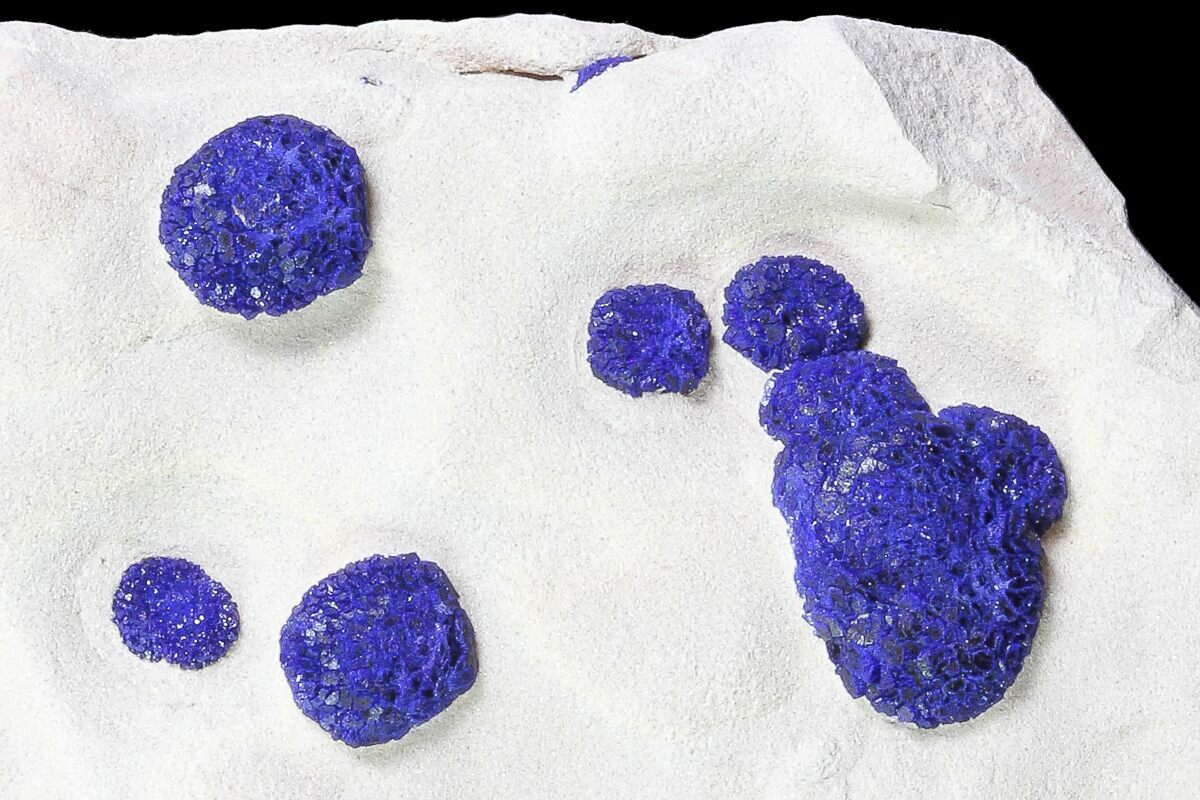
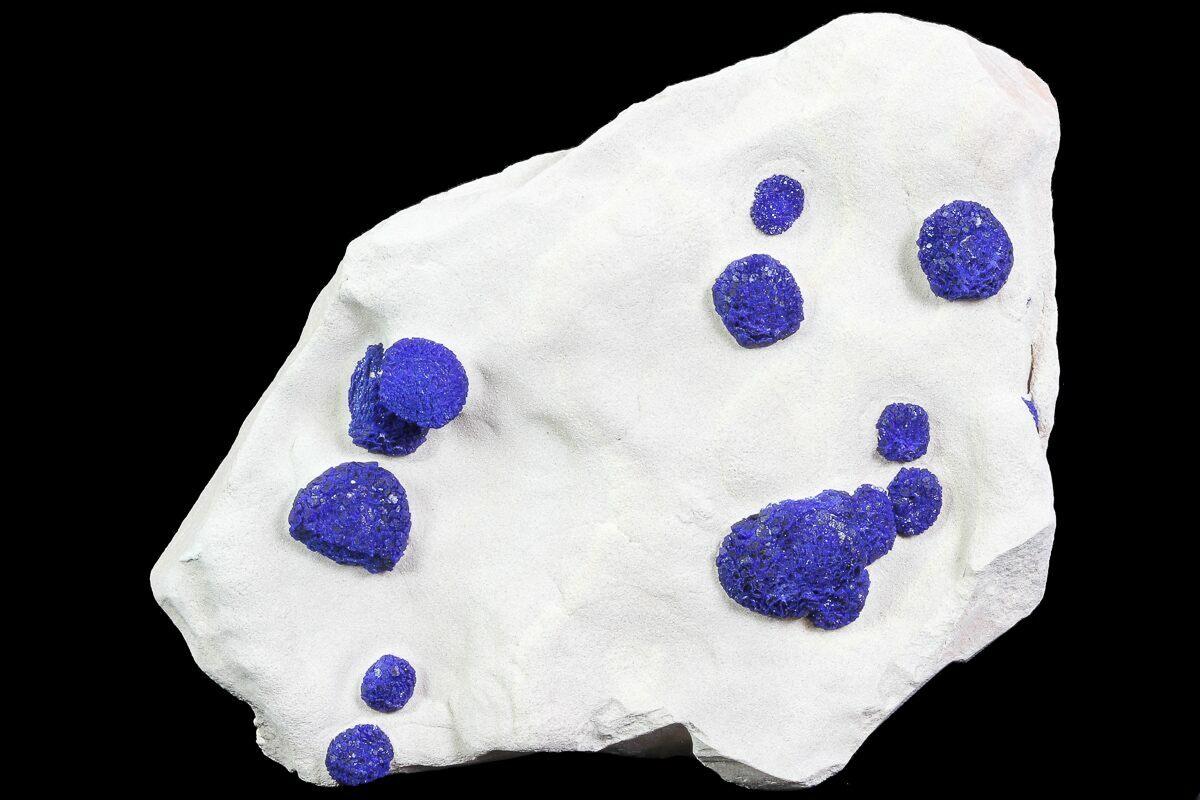
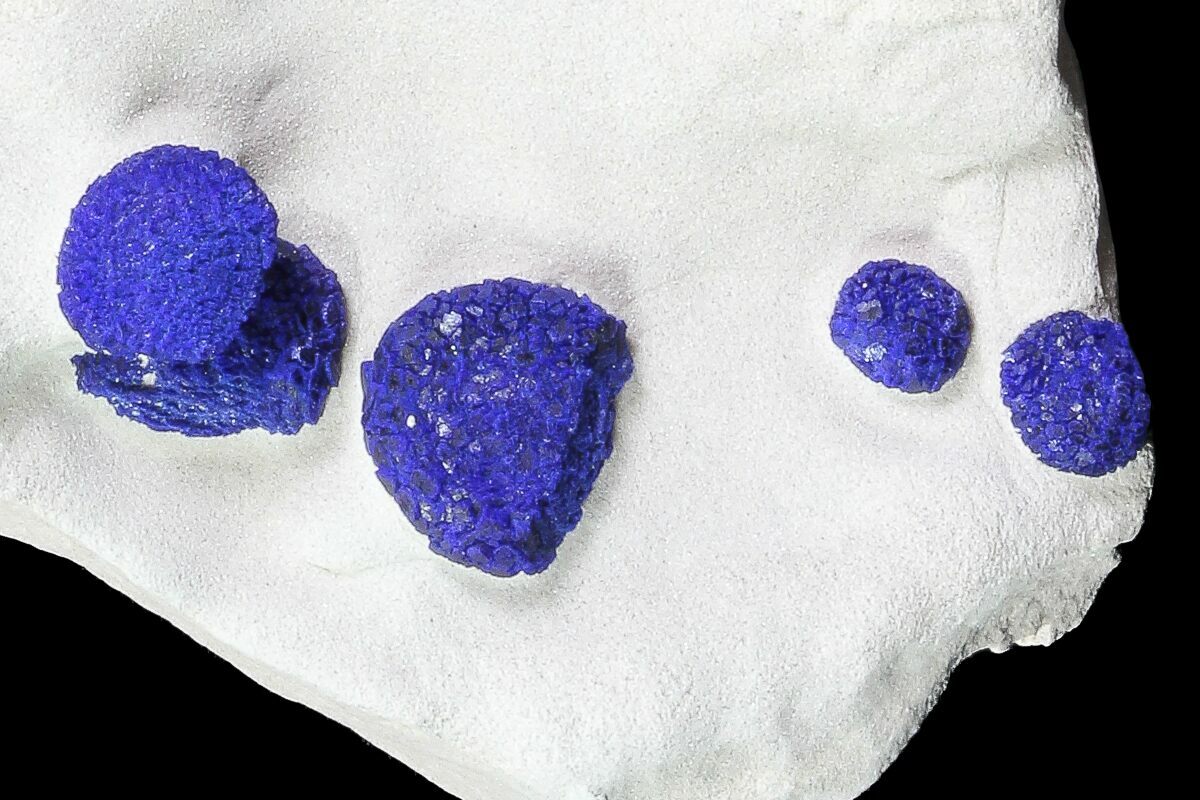

These are seferal brilliant blue azurite suns on a kaolinitic siltstone/sandstone matrix. They were collected from the Malbunka Copper Mine in the Northern Territory of Australia. The largest sun is .7" and the smallest is .2" wide.
About Azurite Suns
Azurite is a vivid, deep-blue copper carbonate mineral best known for forming in the oxidized zones of copper deposits. Among its rarest and most iconic occurrences are Azurite Suns—perfectly flat, radiating crystal discs found only at the Malbunka Copper Mine in Australia’s remote Northern Territory. These striking “suns” sit within chalk-white layers of kaolinite clay, creating a dramatic contrast that highlights their rich, midnight-blue color.
Their formation is as unusual as their appearance. Mineral-rich hydrothermal fluids once flowed through narrow bedding planes in the host rock, carrying dissolved copper ions. When these ions encountered carbonate-bearing groundwater within the compact kaolinite layers, azurite began to crystallize. Confined between the clay beds, the crystals had nowhere to grow but outward, spreading laterally in a flat, radiating pattern. Over time, this process produced the circular, sun-like shapes that make Malbunka azurite suns some of the most distinctive mineral specimens on Earth.
Azurite is a vivid, deep-blue copper carbonate mineral best known for forming in the oxidized zones of copper deposits. Among its rarest and most iconic occurrences are Azurite Suns—perfectly flat, radiating crystal discs found only at the Malbunka Copper Mine in Australia’s remote Northern Territory. These striking “suns” sit within chalk-white layers of kaolinite clay, creating a dramatic contrast that highlights their rich, midnight-blue color.
Their formation is as unusual as their appearance. Mineral-rich hydrothermal fluids once flowed through narrow bedding planes in the host rock, carrying dissolved copper ions. When these ions encountered carbonate-bearing groundwater within the compact kaolinite layers, azurite began to crystallize. Confined between the clay beds, the crystals had nowhere to grow but outward, spreading laterally in a flat, radiating pattern. Over time, this process produced the circular, sun-like shapes that make Malbunka azurite suns some of the most distinctive mineral specimens on Earth.
SPECIES
Azurite
LOCATION
Malbunka Copper Mine, Utju, Northern Territory, Australia
SIZE
Rock 3.7 x 2.5"
CATEGORY
SUB CATEGORY
ITEM
#77311


