 Reviews

Are Trilobites Still Alive?
If trilobites were still alive today, there would be no debate about it. They were abundant, diverse, and instantly recognizable, and for more than 270 million years they were among the most successful animals in Earth’s oceans. But trilobites are not hiding in deep water, nor did they quietly evolve into something else. The last of the trilobites went completely extinct about 252 million years ago during the mass extinction at the end of the Permian, the most catastrophic extinction event the planet has ever experienced. Nearly all marine life disappeared, and trilobites vanished with it, leaving behind only fossils.
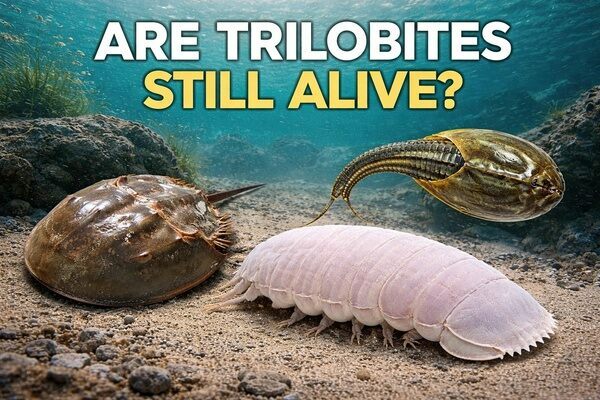
Yet the question persists. People continue to ask whether trilobites might still exist, or whether modern animals like horseshoe crabs or pillbugs are their descendants. The reason for this confusion lies not in survival, but in something far more fascinating: evolution’s tendency to repeat itself.
Trilobites belonged to the arthropods, the enormous group that today includes insects, crustaceans, spiders, and centipedes. They first appeared over 520 million years ago during the Cambrian explosion, when complex life rapidly diversified in the oceans. Trilobites thrived in nearly every marine environment imaginable. Some crawled across shallow sea floors, others burrowed, some swam freely, and a few even developed spines, horns, and elaborate eyes rivaling those of modern insects. Over time, more than twenty thousand species evolved.
Despite this extraordinary success, trilobites never escaped the oceans, and they never survived the global collapse at the end of the Permian. After that moment in deep time, the trilobite lineage simply ended. There are no younger fossils, no transitional descendants, and no living animals that can be traced directly back to them. Trilobites are a true evolutionary dead end—not a failure, but a finished chapter.
So why do some modern animals look so much like them?
The most famous of these so-called “living trilobites” is the horseshoe crab. At first glance, the comparison seems reasonable. Horseshoe crabs have a hard, armored body, a segmented appearance, and an ancient look that feels almost out of place in the modern world. They even predate dinosaurs by hundreds of millions of years. But horseshoe crabs are not crustaceans, and they are not related to trilobites in any close sense. They belong to a different arthropod lineage entirely, more closely related to spiders and scorpions than to anything trilobites ever were. Their similarity is visual, not ancestral.
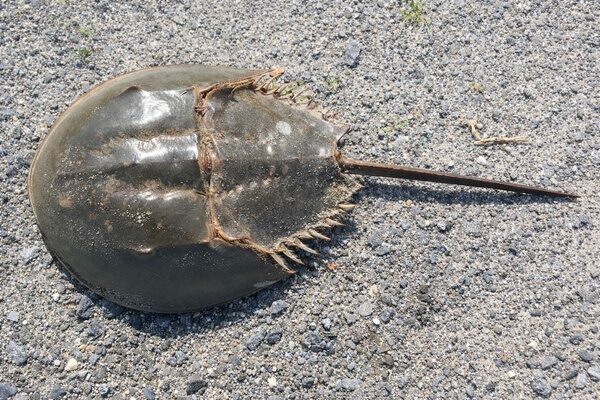
A horseshoe crab, a marine arthropod often mistaken for a trilobite despite only being distantly related.
The same is true of giant isopods, the massive deep-sea crustaceans that resemble oversized pillbugs. Their flattened, segmented bodies and slow, bottom-dwelling lifestyle evoke trilobites so strongly that they seem almost like a modern remake. But giant isopods are true crustaceans, closely related to shrimp and crabs, and their lineage arose long after trilobites had already diversified—and later, after trilobites were gone.
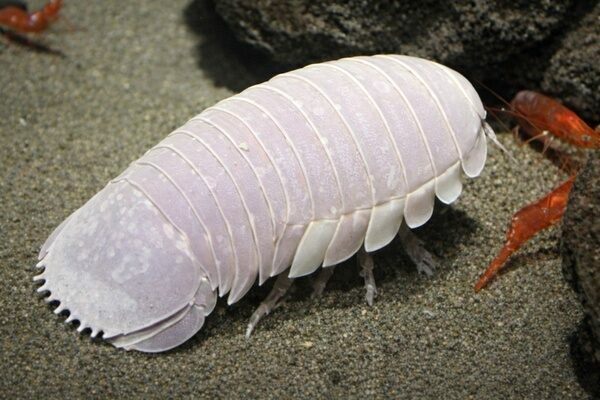
A giant isopod (Bathynomus), a deep-sea crustacean whose segmented, armored body gives it a striking resemblance to trilobites despite being only distantly related.
Pillbugs and roly-polies create a similar illusion. These small land-dwelling isopods can even roll themselves into a ball, much like some trilobites likely did for protection. But pillbugs descended from marine crustaceans that adapted to life on land. Trilobites never made that transition, and they were extinct long before pillbugs existed.
Even Triops, often sold in science kits as “living trilobites,” are imposters. Triops are branchiopod crustaceans with shield-like carapaces and long tails. Their resemblance to trilobites is superficial and misleading. They are not relics of the Cambrian seas but relatively modern survivors of a completely different evolutionary story.
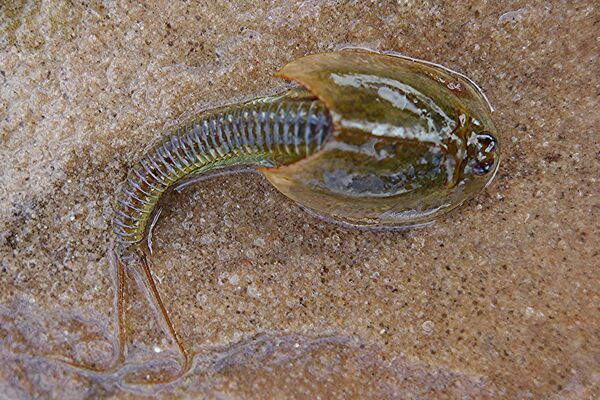
Triops are small freshwater crustaceans with a broad, shield-like carapace and segmented bodies that closely resemble trilobites, not because they are related, but because both evolved similar forms to thrive as bottom-dwelling arthropods.
What connects all of these animals to trilobites is not ancestry, but convergent evolution. When unrelated organisms face similar challenges—such as living on the sea floor, needing armor for protection, or requiring flexible movement—they often arrive at similar solutions. Segmented bodies, hardened exoskeletons, and flattened shapes are simply effective designs. Evolution does not invent endlessly new forms; it refines what works.
This is why dolphins resemble extinct ichthyosaurs, why bats resemble birds, and why modern arthropods sometimes resemble trilobites. The resemblance is functional, not familial.
Scientists know trilobites left no descendants because their fossil record is exceptionally complete. Trilobites molted frequently, leaving behind countless exoskeletons that fossilized in enormous numbers. Their rise, diversification, and extinction are clearly recorded in stone. When they disappear from the fossil record at the end of the Permian, they do not reappear. Modern genetic and anatomical studies of living arthropods also show no lineage that could plausibly descend from them. Trilobites share a distant common ancestor with modern arthropods, but they are evolutionary cousins, not grandparents.
In the end, trilobites are gone—but not replaced. Their success, their diversity, and their sudden extinction make them one of the most important fossil groups ever studied. The animals that resemble them today are not survivors, but echoes. They are reminders that evolution, given similar problems, often arrives at familiar answers.
Trilobites did not survive into the modern world. Instead, they left us something arguably more enduring: one of the richest fossil records on Earth, and a window into how life experiments, adapts, and sometimes ends—completely.
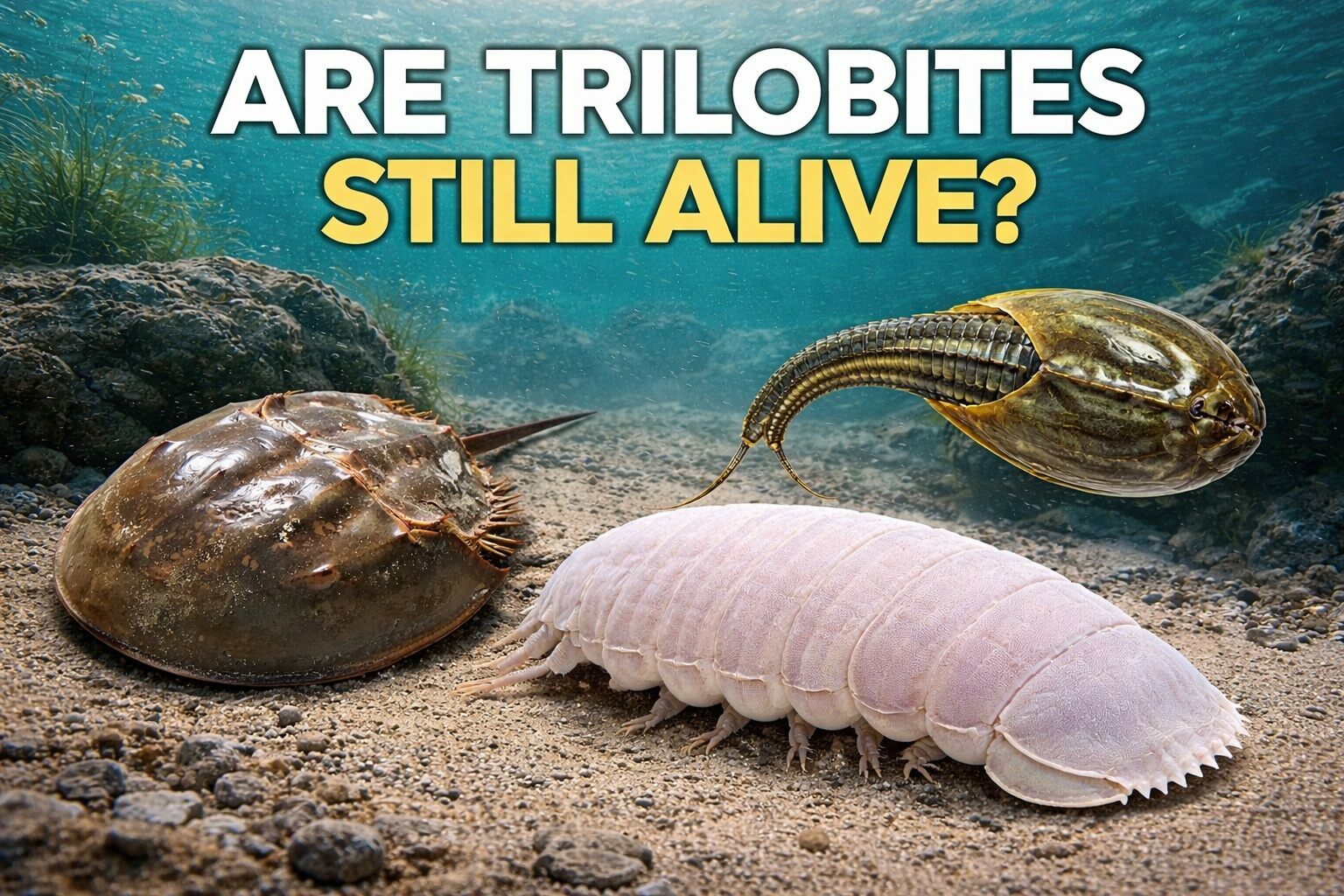
Yet the question persists. People continue to ask whether trilobites might still exist, or whether modern animals like horseshoe crabs or pillbugs are their descendants. The reason for this confusion lies not in survival, but in something far more fascinating: evolution’s tendency to repeat itself.
Trilobites belonged to the arthropods, the enormous group that today includes insects, crustaceans, spiders, and centipedes. They first appeared over 520 million years ago during the Cambrian explosion, when complex life rapidly diversified in the oceans. Trilobites thrived in nearly every marine environment imaginable. Some crawled across shallow sea floors, others burrowed, some swam freely, and a few even developed spines, horns, and elaborate eyes rivaling those of modern insects. Over time, more than twenty thousand species evolved.
Despite this extraordinary success, trilobites never escaped the oceans, and they never survived the global collapse at the end of the Permian. After that moment in deep time, the trilobite lineage simply ended. There are no younger fossils, no transitional descendants, and no living animals that can be traced directly back to them. Trilobites are a true evolutionary dead end—not a failure, but a finished chapter.

So why do some modern animals look so much like them?
The most famous of these so-called “living trilobites” is the horseshoe crab. At first glance, the comparison seems reasonable. Horseshoe crabs have a hard, armored body, a segmented appearance, and an ancient look that feels almost out of place in the modern world. They even predate dinosaurs by hundreds of millions of years. But horseshoe crabs are not crustaceans, and they are not related to trilobites in any close sense. They belong to a different arthropod lineage entirely, more closely related to spiders and scorpions than to anything trilobites ever were. Their similarity is visual, not ancestral.
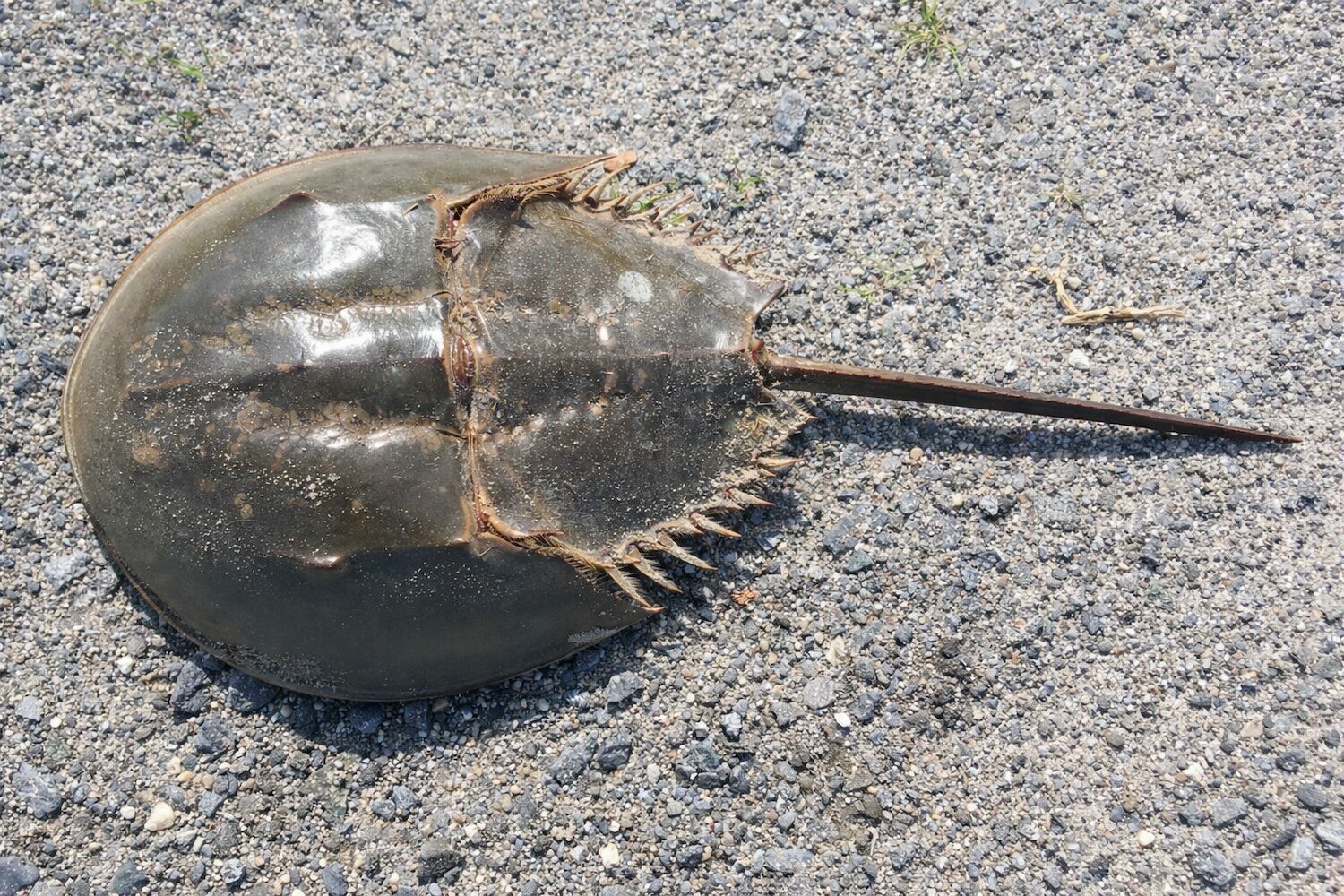
A horseshoe crab, a marine arthropod often mistaken for a trilobite despite only being distantly related.
The same is true of giant isopods, the massive deep-sea crustaceans that resemble oversized pillbugs. Their flattened, segmented bodies and slow, bottom-dwelling lifestyle evoke trilobites so strongly that they seem almost like a modern remake. But giant isopods are true crustaceans, closely related to shrimp and crabs, and their lineage arose long after trilobites had already diversified—and later, after trilobites were gone.
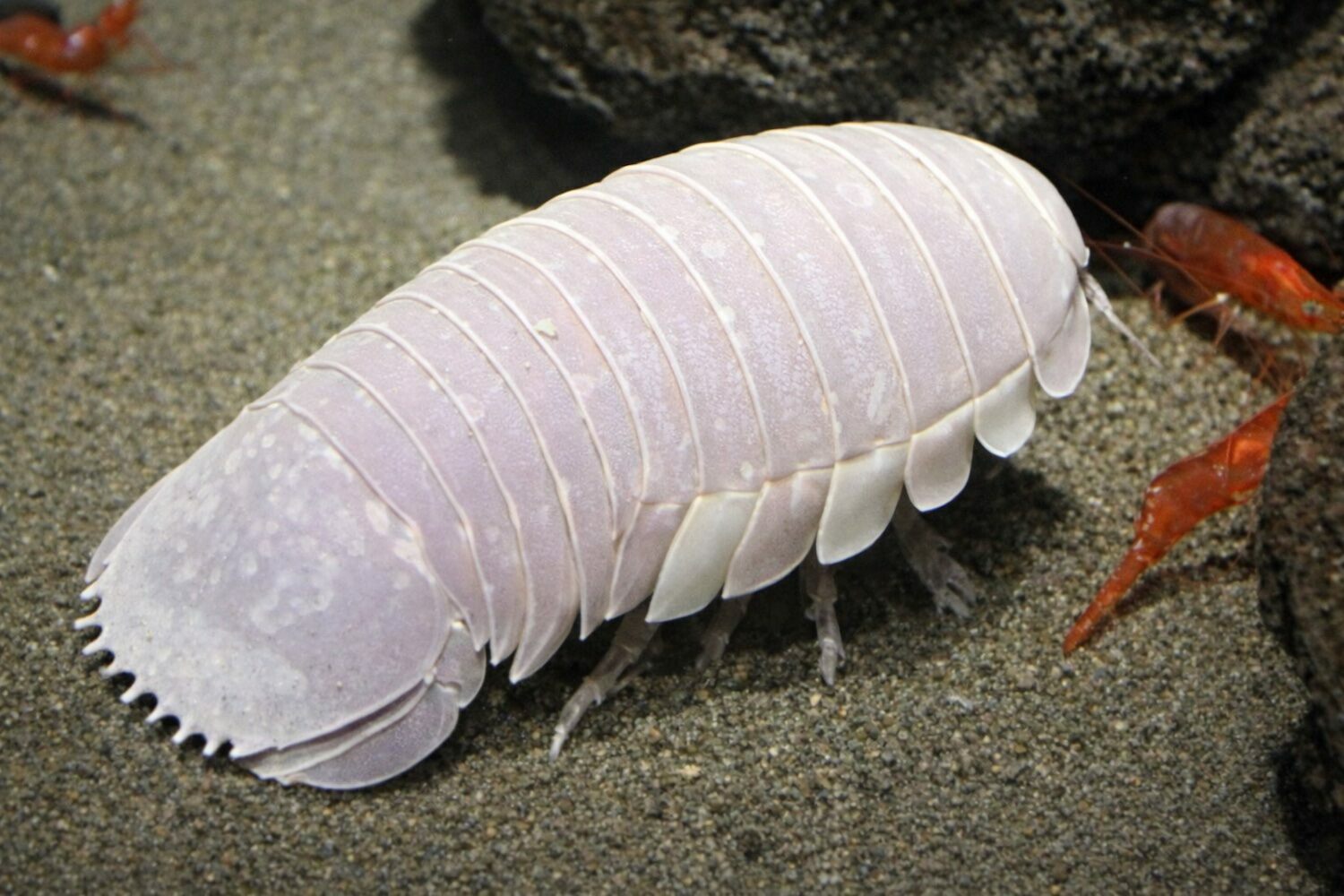
A giant isopod (Bathynomus), a deep-sea crustacean whose segmented, armored body gives it a striking resemblance to trilobites despite being only distantly related.
Pillbugs and roly-polies create a similar illusion. These small land-dwelling isopods can even roll themselves into a ball, much like some trilobites likely did for protection. But pillbugs descended from marine crustaceans that adapted to life on land. Trilobites never made that transition, and they were extinct long before pillbugs existed.
Even Triops, often sold in science kits as “living trilobites,” are imposters. Triops are branchiopod crustaceans with shield-like carapaces and long tails. Their resemblance to trilobites is superficial and misleading. They are not relics of the Cambrian seas but relatively modern survivors of a completely different evolutionary story.
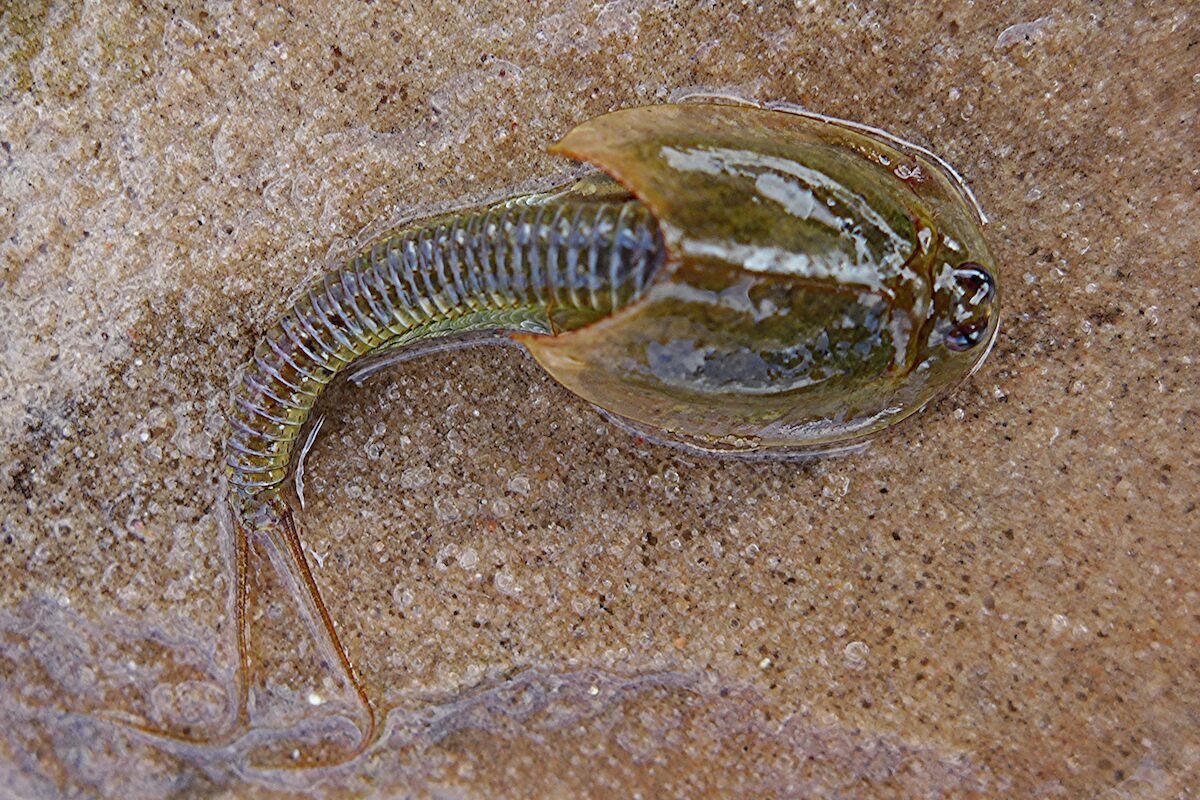
Triops are small freshwater crustaceans with a broad, shield-like carapace and segmented bodies that closely resemble trilobites, not because they are related, but because both evolved similar forms to thrive as bottom-dwelling arthropods.
What connects all of these animals to trilobites is not ancestry, but convergent evolution. When unrelated organisms face similar challenges—such as living on the sea floor, needing armor for protection, or requiring flexible movement—they often arrive at similar solutions. Segmented bodies, hardened exoskeletons, and flattened shapes are simply effective designs. Evolution does not invent endlessly new forms; it refines what works.
This is why dolphins resemble extinct ichthyosaurs, why bats resemble birds, and why modern arthropods sometimes resemble trilobites. The resemblance is functional, not familial.
Scientists know trilobites left no descendants because their fossil record is exceptionally complete. Trilobites molted frequently, leaving behind countless exoskeletons that fossilized in enormous numbers. Their rise, diversification, and extinction are clearly recorded in stone. When they disappear from the fossil record at the end of the Permian, they do not reappear. Modern genetic and anatomical studies of living arthropods also show no lineage that could plausibly descend from them. Trilobites share a distant common ancestor with modern arthropods, but they are evolutionary cousins, not grandparents.
In the end, trilobites are gone—but not replaced. Their success, their diversity, and their sudden extinction make them one of the most important fossil groups ever studied. The animals that resemble them today are not survivors, but echoes. They are reminders that evolution, given similar problems, often arrives at familiar answers.
Trilobites did not survive into the modern world. Instead, they left us something arguably more enduring: one of the richest fossil records on Earth, and a window into how life experiments, adapts, and sometimes ends—completely.


