 Reviews


3.1" Spiny "Trident" Walliserops Trilobite - Foum Zguid, Morocco


This is an exceptional, 3.1" long Walliserops trifurcatus trilobite from the Devonian deposits near Foum Zguid, Morocco. This spectacular specimen is beautifully arched, creating a dramatic, lifelike pose that showcases its intricate anatomy and elaborate spines.
Expertly prepared by one of the world's finest trilobite preparators, the specimen retains its delicate natural shell texture without air abrasion damage. Both eyes exhibit pristine, sharply defined individual facets, while the intricate spines have been meticulously exposed in stunning three-dimensional detail.
An outstanding collector-grade specimen with less than 1% restoration along repaired cracks.
About Walliserops
The trilobite genus Walliserops is one of the most visually striking and iconic trilobites known, famous for its elaborate cranidial (head) ornamentation. These Devonian-aged trilobites lived approximately 390 million years ago and are found exclusively in the marine limestones of the Anti-Atlas Mountains of Morocco, particularly near Foum Zguid,
Walliserops belongs to the order Phacopida and the family Acastidae. It is best known for the distinctive trident-like projection extending from the front of its glabella (the central lobe of the head), a feature unmatched in any other trilobite. The function of this bizarre structure is still debated; some paleontologists suggest it may have played a role in mate recognition, species display, or even combat, akin to a rhinoceros horn. In addition to the trident, Walliserops trilobites often display long, curved genal spines and elaborately spined thoraxes, enhancing their alien-like appearance.
There are several described species within the genus, including Walliserops trifurcatus, W. hammii, and W. tridens, which differ slightly in the length, curvature, and orientation of the trident and other spines. These trilobites are highly sought after by collectors and researchers alike, both for their aesthetic appeal and the evolutionary questions they raise about morphological development and behavior in ancient arthropods.
Due to the complexity of their anatomy and the challenges of preparing specimens from hard limestone matrix, well-preserved Walliserops fossils require meticulous preparation, and many of the finest examples are partially or fully freed from the rock to showcase their dramatic three-dimensional form.
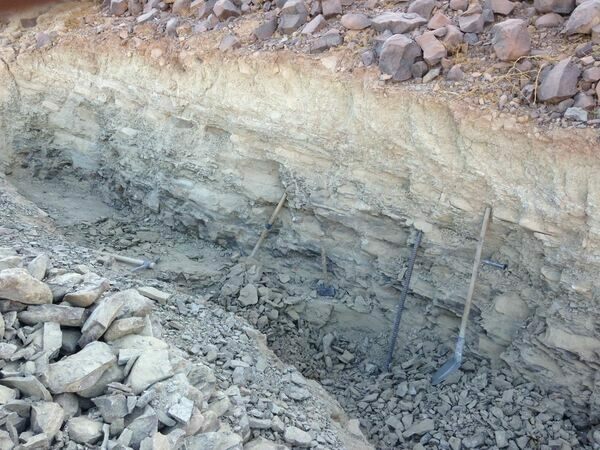
A photo of the quarry at Foum Zguid. The Walliserops come out of the very bottom layer, which requires 1-2 meters of limestone overburden to be removed.
The trilobite genus Walliserops is one of the most visually striking and iconic trilobites known, famous for its elaborate cranidial (head) ornamentation. These Devonian-aged trilobites lived approximately 390 million years ago and are found exclusively in the marine limestones of the Anti-Atlas Mountains of Morocco, particularly near Foum Zguid,
Walliserops belongs to the order Phacopida and the family Acastidae. It is best known for the distinctive trident-like projection extending from the front of its glabella (the central lobe of the head), a feature unmatched in any other trilobite. The function of this bizarre structure is still debated; some paleontologists suggest it may have played a role in mate recognition, species display, or even combat, akin to a rhinoceros horn. In addition to the trident, Walliserops trilobites often display long, curved genal spines and elaborately spined thoraxes, enhancing their alien-like appearance.
There are several described species within the genus, including Walliserops trifurcatus, W. hammii, and W. tridens, which differ slightly in the length, curvature, and orientation of the trident and other spines. These trilobites are highly sought after by collectors and researchers alike, both for their aesthetic appeal and the evolutionary questions they raise about morphological development and behavior in ancient arthropods.
Due to the complexity of their anatomy and the challenges of preparing specimens from hard limestone matrix, well-preserved Walliserops fossils require meticulous preparation, and many of the finest examples are partially or fully freed from the rock to showcase their dramatic three-dimensional form.
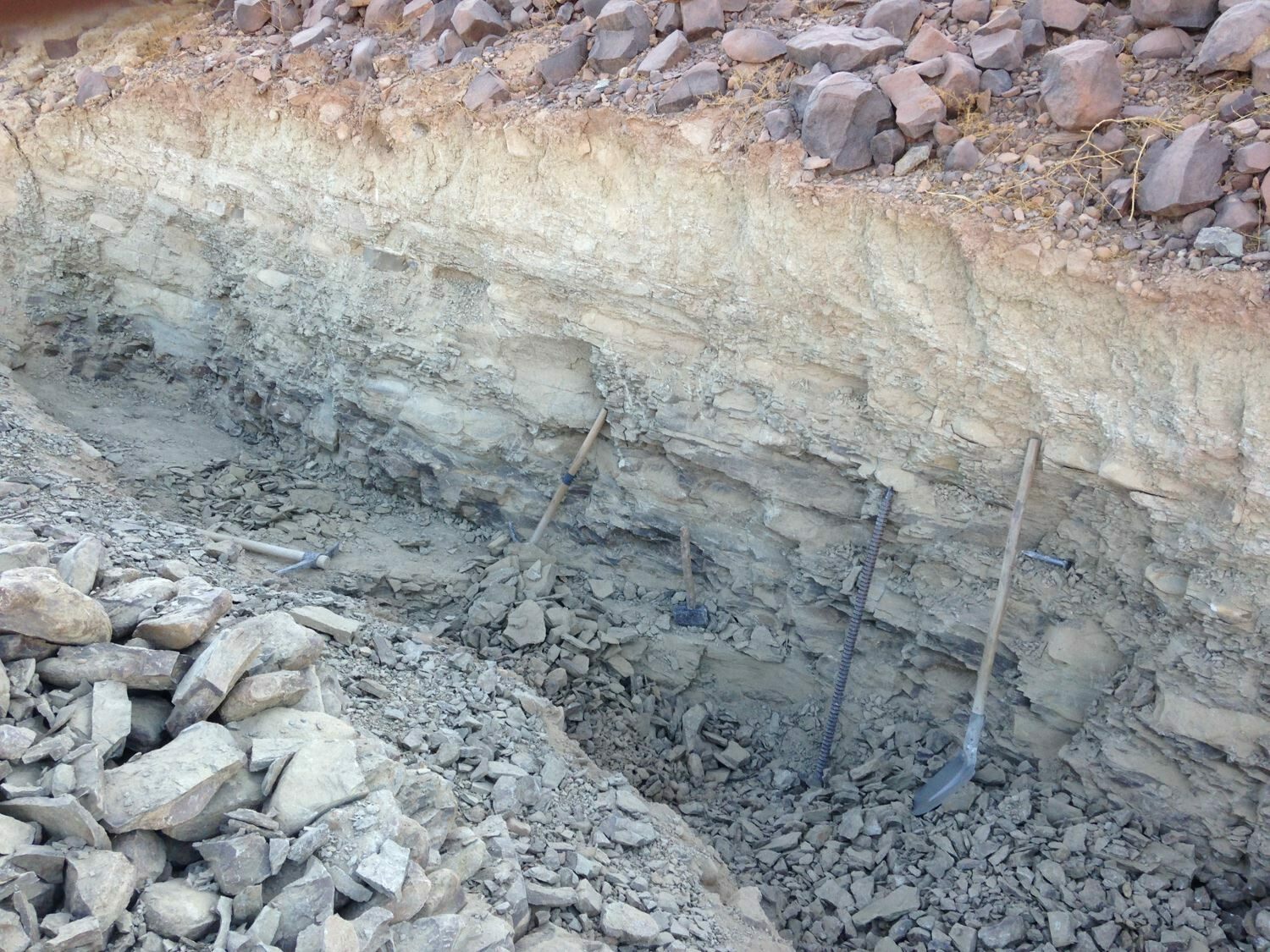
A photo of the quarry at Foum Zguid. The Walliserops come out of the very bottom layer, which requires 1-2 meters of limestone overburden to be removed.
About Trilobites
Trilobites were a very diverse group of extinct marine arthropods. They first appeared in the fossil record in the Early Cambrian (521 million years ago) and went extinct during the Permian mass extinction (250 million years ago). They were one of the most successful of the early animals on our planet: over 25,000 species have been described, filling nearly every evolutionary niche. Due in large part to their hard exoskeletons (shells), they left an excellent fossil record.
Trilobites were a very diverse group of extinct marine arthropods. They first appeared in the fossil record in the Early Cambrian (521 million years ago) and went extinct during the Permian mass extinction (250 million years ago). They were one of the most successful of the early animals on our planet: over 25,000 species have been described, filling nearly every evolutionary niche. Due in large part to their hard exoskeletons (shells), they left an excellent fossil record.
$995
SPECIES
Walliserops trifurcatus

LOCATION
Foum Zguid, Morocco
FORMATION
Timrhanrhart Formation
SIZE
3.1" long (if outstretched)
CATEGORY
SUB CATEGORY
ITEM
#384201
We guarantee the authenticity of all of our specimens.


