 Reviews


This Specimen has been sold.


13" Fossil Crinoid Plate With Ten Species - Crawfordsville, Indiana
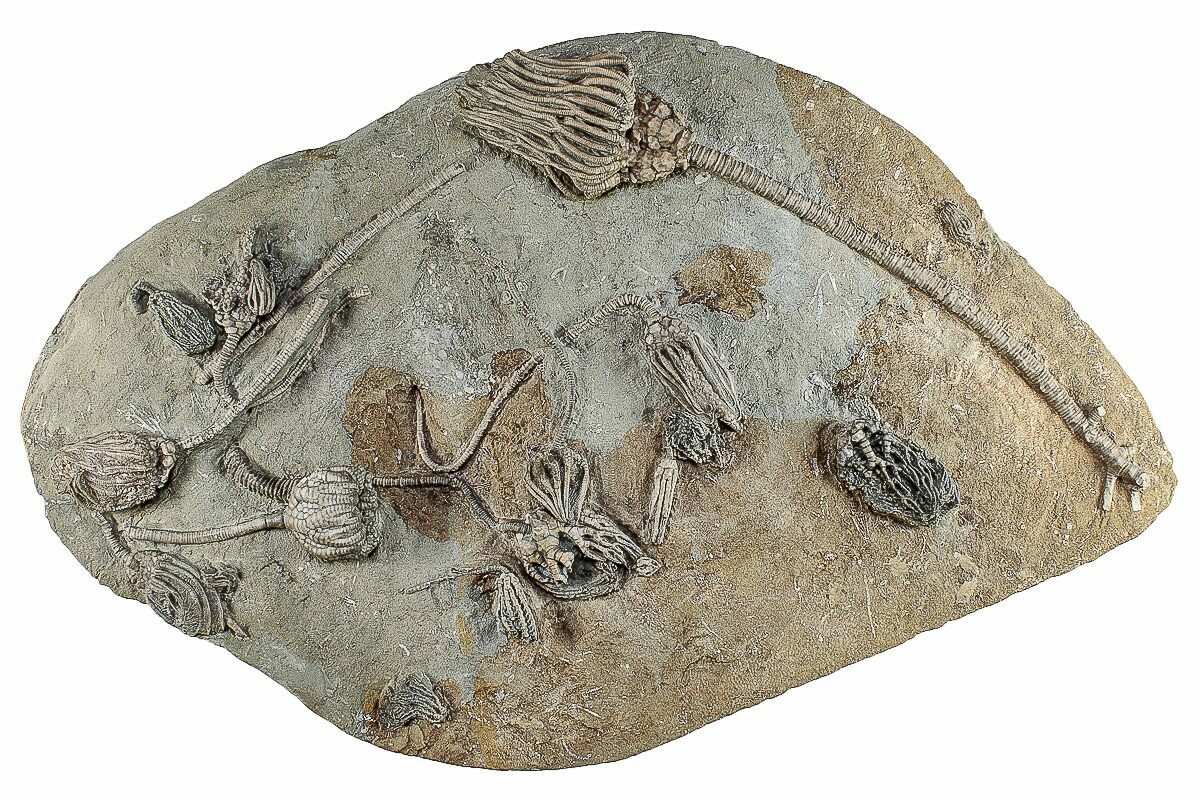
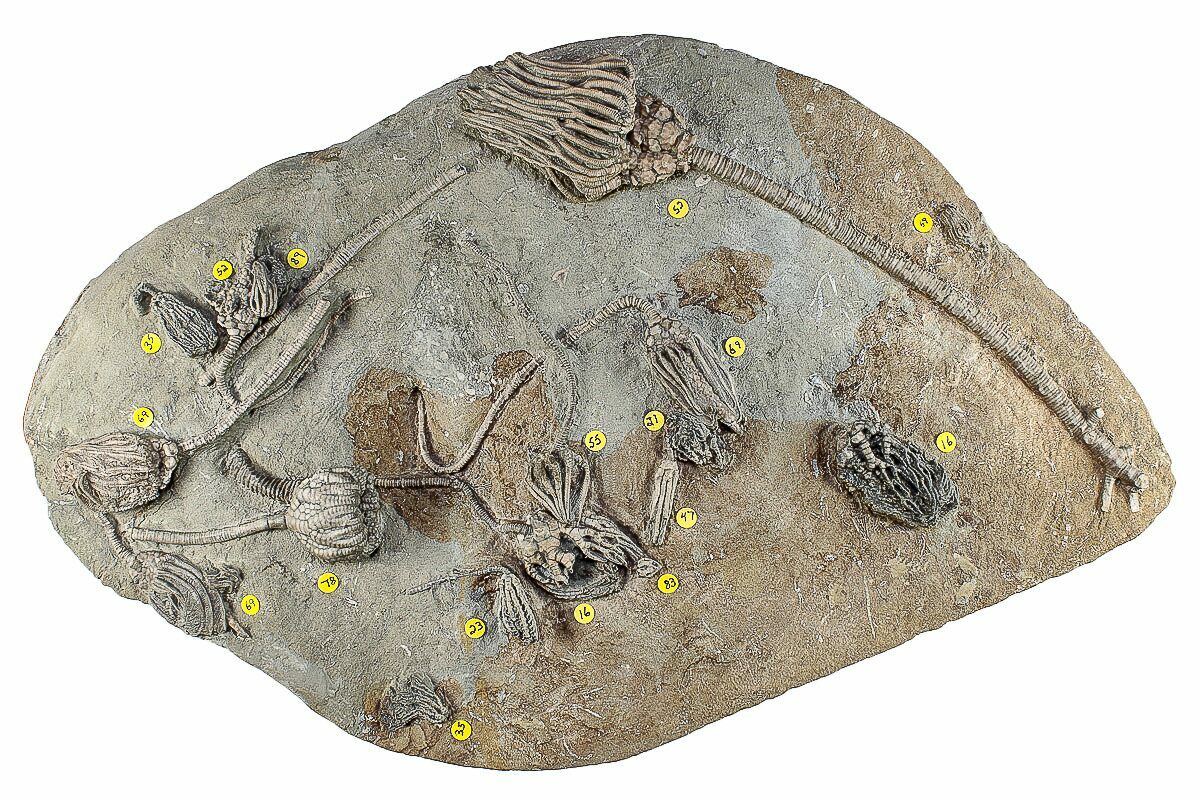
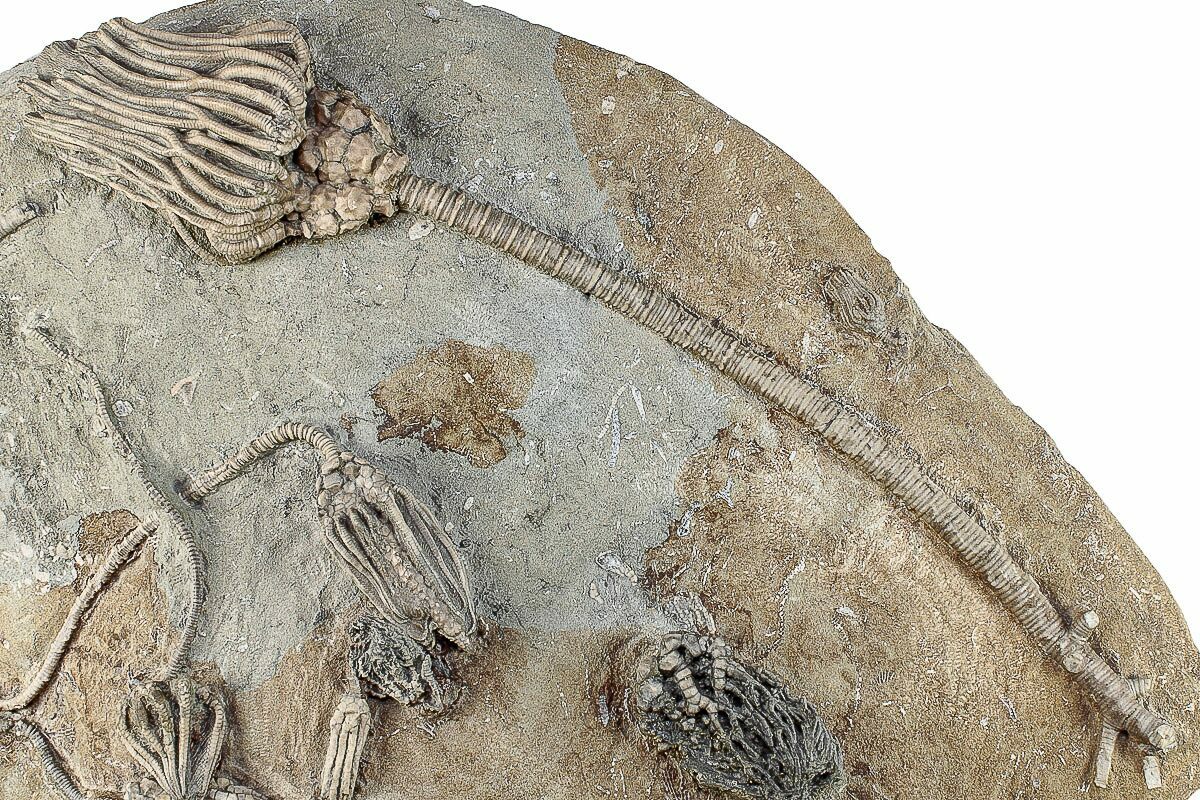
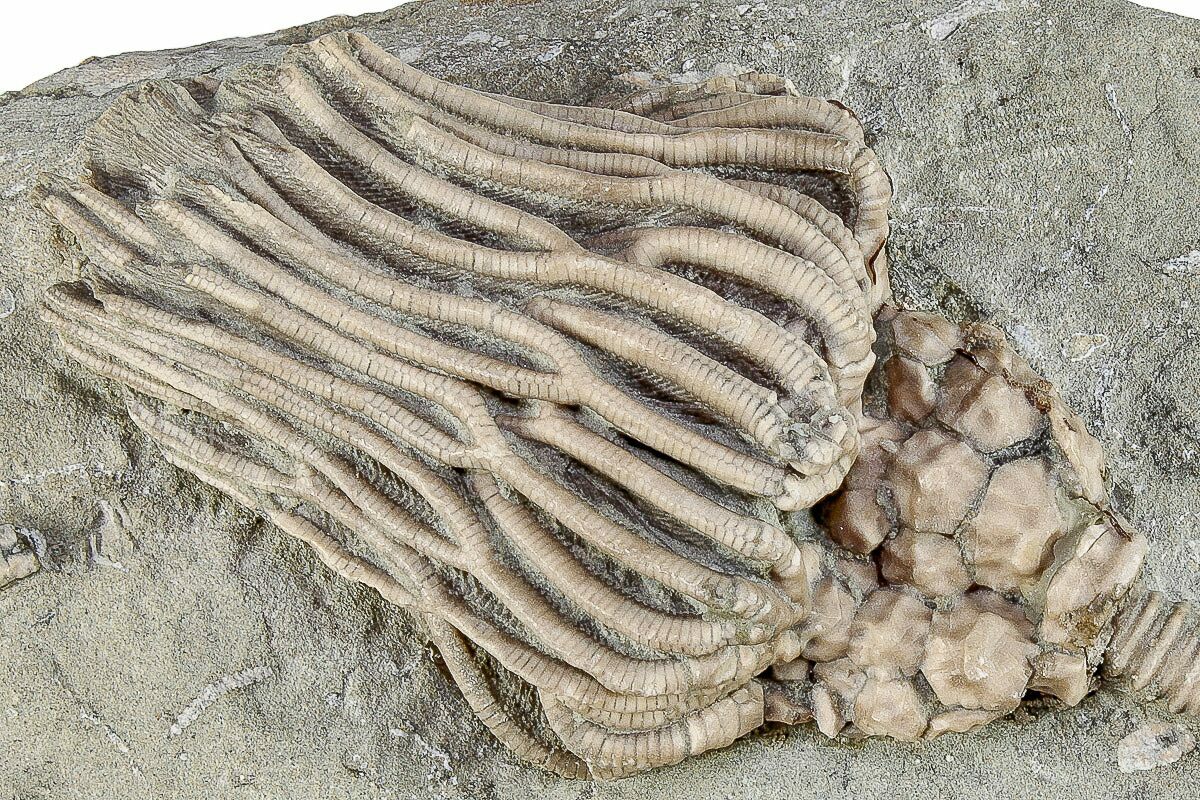
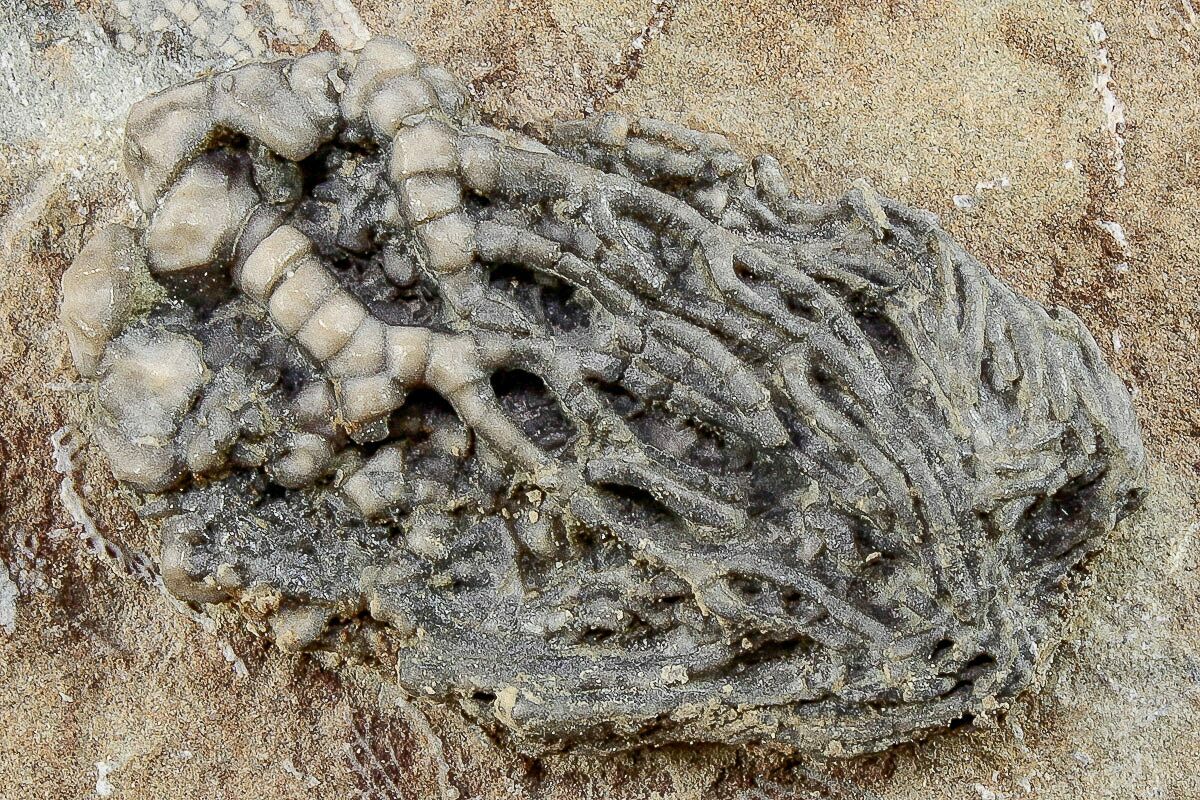
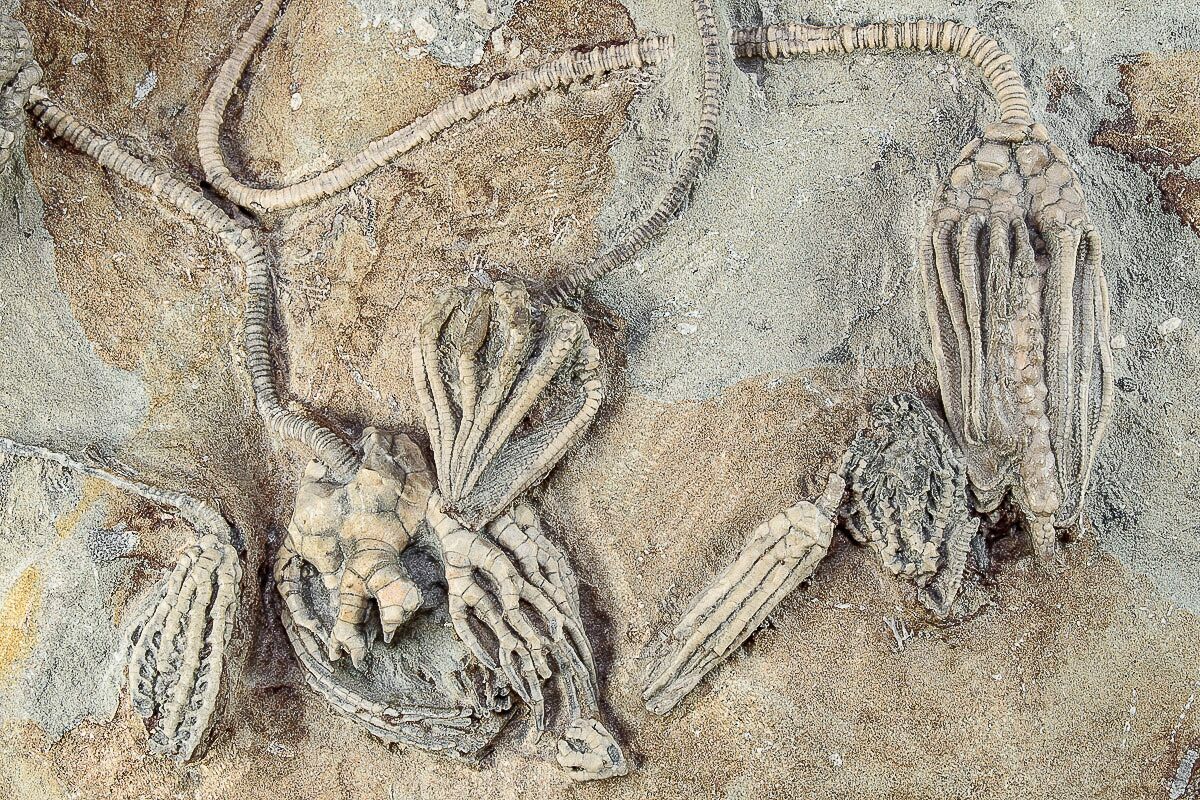
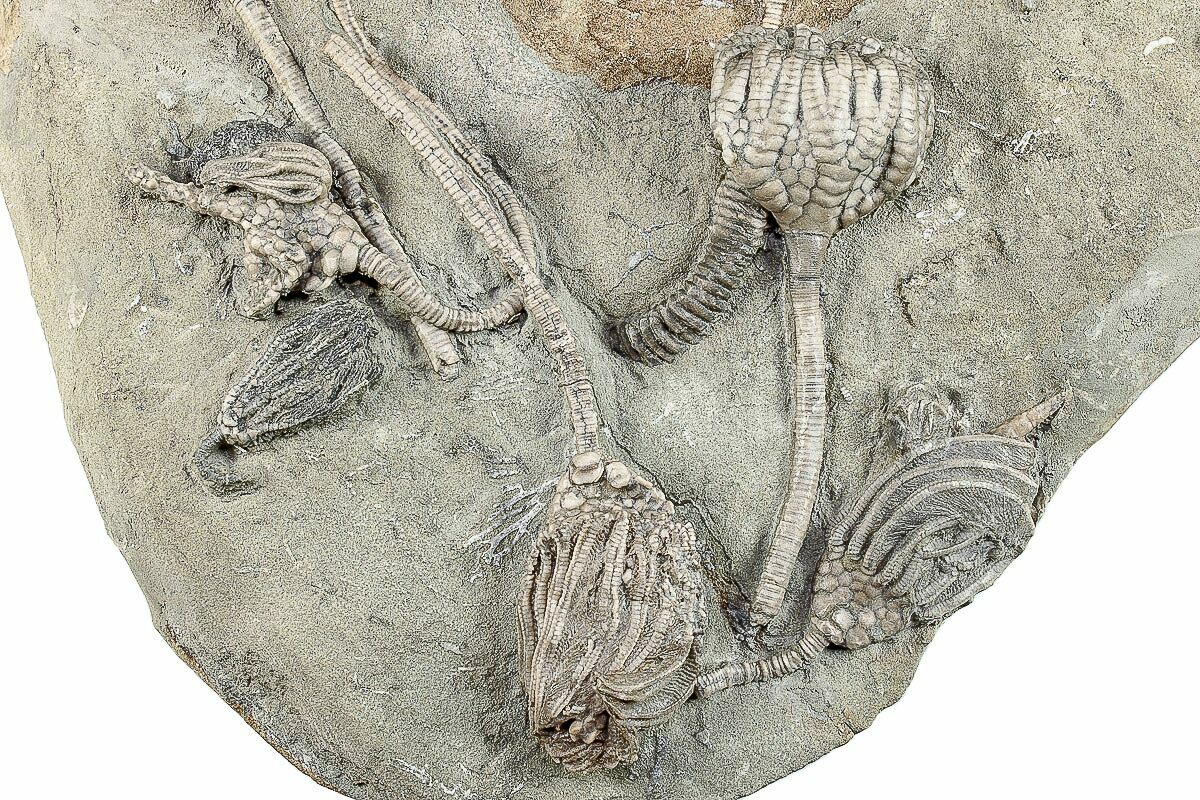
This is an incredible crinoid and starfish association plate that features ten separate species of crinoids (16 total crinoids), collected from the Edwardsville Formation of Crawfordsville, Indiana. The crinoids include two of the species Cyathocrinites harrodi, Lanecrinus depressus, Decadocrinus tumidulus, two of the species Pachylocrinus aequalis, Scytalocrinus decadactylus, two of the species Actinocrinites gibsoni, Agaricocrinus splendens, four Macrocrinus mundulus crinoids, Forbesiocrinus multibrachiatus, and Taxocrinus colletti. A starfish (Onychaster flexilis) can be seen partially exposed just beneath the Actinocrinites gibsoni crinoid towards the top left corner of the plate.
The preparation on these fossils is exquisite - using skillful air-abrasion techniques under a stereo microscope.
#16 - Cyathocrinites harrodi (x2)
#21 - Lanecrinus depressus
#23 - Decadocrinus tumidulus
#35 - Pachylocrinus aequalis (x2)
#47 - Scytalocrinus decadactylus
#52 - Actinocrinites gibsoni (x2)
#55 - Agaricocrinus splendens
#69 - Macrocrinus mundulus (x4)
#78 - Forbesiocrinus multibrachiatus
#83 - Taxocrinus colletti
#89 - Starfish Onychaster flexilis
The crown of the largest Actinocrinites gibsoni has been mounted to the rock, though the stem was already present within the rock. There is a repaired crack through the calyx of the Macrocrinus mundulus at the top left corner of the specimen, and some spots of restoration to the Agaricocrinus splendens crinoid and Cyathocrinites harrodi crinoid towards the bottom right corner of the plate.
The preparation on these fossils is exquisite - using skillful air-abrasion techniques under a stereo microscope.
#16 - Cyathocrinites harrodi (x2)
#21 - Lanecrinus depressus
#23 - Decadocrinus tumidulus
#35 - Pachylocrinus aequalis (x2)
#47 - Scytalocrinus decadactylus
#52 - Actinocrinites gibsoni (x2)
#55 - Agaricocrinus splendens
#69 - Macrocrinus mundulus (x4)
#78 - Forbesiocrinus multibrachiatus
#83 - Taxocrinus colletti
#89 - Starfish Onychaster flexilis
The crown of the largest Actinocrinites gibsoni has been mounted to the rock, though the stem was already present within the rock. There is a repaired crack through the calyx of the Macrocrinus mundulus at the top left corner of the specimen, and some spots of restoration to the Agaricocrinus splendens crinoid and Cyathocrinites harrodi crinoid towards the bottom right corner of the plate.
About Crawfordsville Crinoid Fossils
Crinoids from the Ramp Creek Limestone of Crawfordsville, Indiana are world-famous for their extraordinary preservation and diversity. During the Mississippian Period, sudden storm events likely swept fine sediment from nearby deltas across the seafloor, rapidly burying living crinoids where they stood. This quick entombment protected even the most delicate structures, resulting in soft siltstone that can be carefully prepared to reveal fossils in stunning, fully three-dimensional relief.
The Crawfordsville area preserves one of the most important crinoid assemblages ever discovered, with hundreds of described species ranging from common forms to bizarre and highly specialized morphologies. Many specimens retain complete crowns, arms, stems, and even fine pinnules—details that are rarely preserved elsewhere. Because of this exceptional quality, Crawfordsville crinoids have played a major role in the scientific study of crinoid anatomy, evolution, and paleoecology.
Crinoids, often called “sea lilies,” are animals rather than plants and belong to the echinoderms, a group that includes starfish, sea urchins, and brittle stars. Like their relatives, crinoids exhibit radial symmetry, tube feet, a water vascular system, and body parts arranged in multiples of five. Crinoids first appeared in the Ordovician Period, nearly 488 million years ago, and while most of the elaborate stalked forms seen at Crawfordsville are long extinct, a small number of crinoid species still inhabit modern oceans today.
Crinoids from the Ramp Creek Limestone of Crawfordsville, Indiana are world-famous for their extraordinary preservation and diversity. During the Mississippian Period, sudden storm events likely swept fine sediment from nearby deltas across the seafloor, rapidly burying living crinoids where they stood. This quick entombment protected even the most delicate structures, resulting in soft siltstone that can be carefully prepared to reveal fossils in stunning, fully three-dimensional relief.
The Crawfordsville area preserves one of the most important crinoid assemblages ever discovered, with hundreds of described species ranging from common forms to bizarre and highly specialized morphologies. Many specimens retain complete crowns, arms, stems, and even fine pinnules—details that are rarely preserved elsewhere. Because of this exceptional quality, Crawfordsville crinoids have played a major role in the scientific study of crinoid anatomy, evolution, and paleoecology.
Crinoids, often called “sea lilies,” are animals rather than plants and belong to the echinoderms, a group that includes starfish, sea urchins, and brittle stars. Like their relatives, crinoids exhibit radial symmetry, tube feet, a water vascular system, and body parts arranged in multiples of five. Crinoids first appeared in the Ordovician Period, nearly 488 million years ago, and while most of the elaborate stalked forms seen at Crawfordsville are long extinct, a small number of crinoid species still inhabit modern oceans today.
SPECIES
Various

LOCATION
Crawfordsville, Indiana
FORMATION
Edwardsville Formation
SIZE
Rock: 13 x 8.9"
CATEGORY
SUB CATEGORY
ITEM
#281493
We guarantee the authenticity of all of our specimens.


