 Reviews

Cambrian Period: When Life Learned to Experiment
538 to 486 Million Years Ago
If you could stand on the shores of Earth some 538 million years ago, you would not recognize the planet as your own. The continents were scattered fragments, low and eroded, drifting beneath a hazy sky with unfamiliar atmospheric chemistry. There were no forests to break the wind, no birds overhead, no insects humming in the air—only vast stretches of barren rock interrupted by shallow seas. And yet, beneath the quiet surface of those oceans, the most profound biological transformation in Earth’s history was already underway. The Cambrian Period marked the moment when life, long constrained by simplicity, began to experiment boldly with complexity.
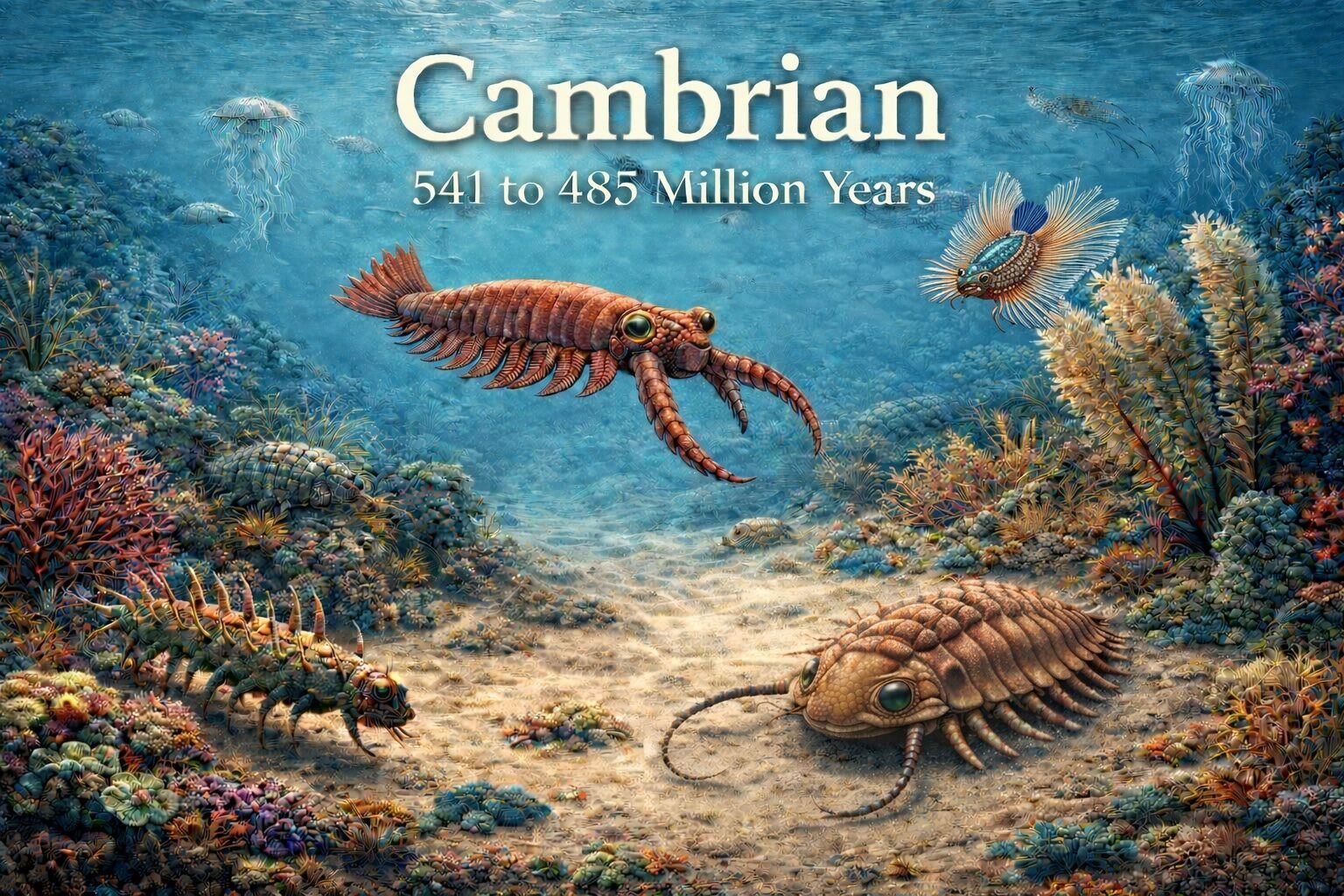
Cambrian seas come alive — A glimpse into Earth’s oceans when trilobites, early predators, and experimental life forms sparked the evolutionary explosion that shaped the animal world.
Spanning roughly from 538 to 486 million years ago, the Cambrian represents a turning point rather than a beginning. Life had existed for billions of years before it, but during the Cambrian it changed character. Evolution accelerated, producing a surge of new forms, behaviors, and ecological relationships unlike anything that had come before. It was during this time that most major animal groups first appeared in the fossil record, setting the structural blueprint for nearly all complex life that followed. In these ancient seas, evolution shifted from cautious steps to creative leaps.
A World Prepared for Change
The Cambrian did not emerge suddenly from biological darkness; it was the product of long, quiet preparation. In the late Precambrian, simple multicellular organisms—such as the enigmatic Ediacaran biota—had already begun exploring larger body sizes and cooperative living. These organisms helped stabilize ecosystems and alter ocean chemistry, gradually transforming the environment into one capable of supporting more demanding life forms. Meanwhile, microscopic algae and cyanobacteria continued to enrich the oceans with oxygen, pushing atmospheric levels closer to those required for active metabolisms and complex tissues.
Geological forces also played a crucial role in setting the stage. The breakup of the supercontinent Rodinia created long coastlines and vast continental shelves, flooding low-lying land beneath warm, nutrient-rich seas. These shallow marine environments provided sunlight, dissolved minerals, and stable conditions ideal for evolutionary experimentation. At the same time, increased erosion from newly exposed continents delivered phosphorus, calcium, and other key elements into the oceans. Together, biology and geology were conspiring to unlock a new evolutionary chapter.
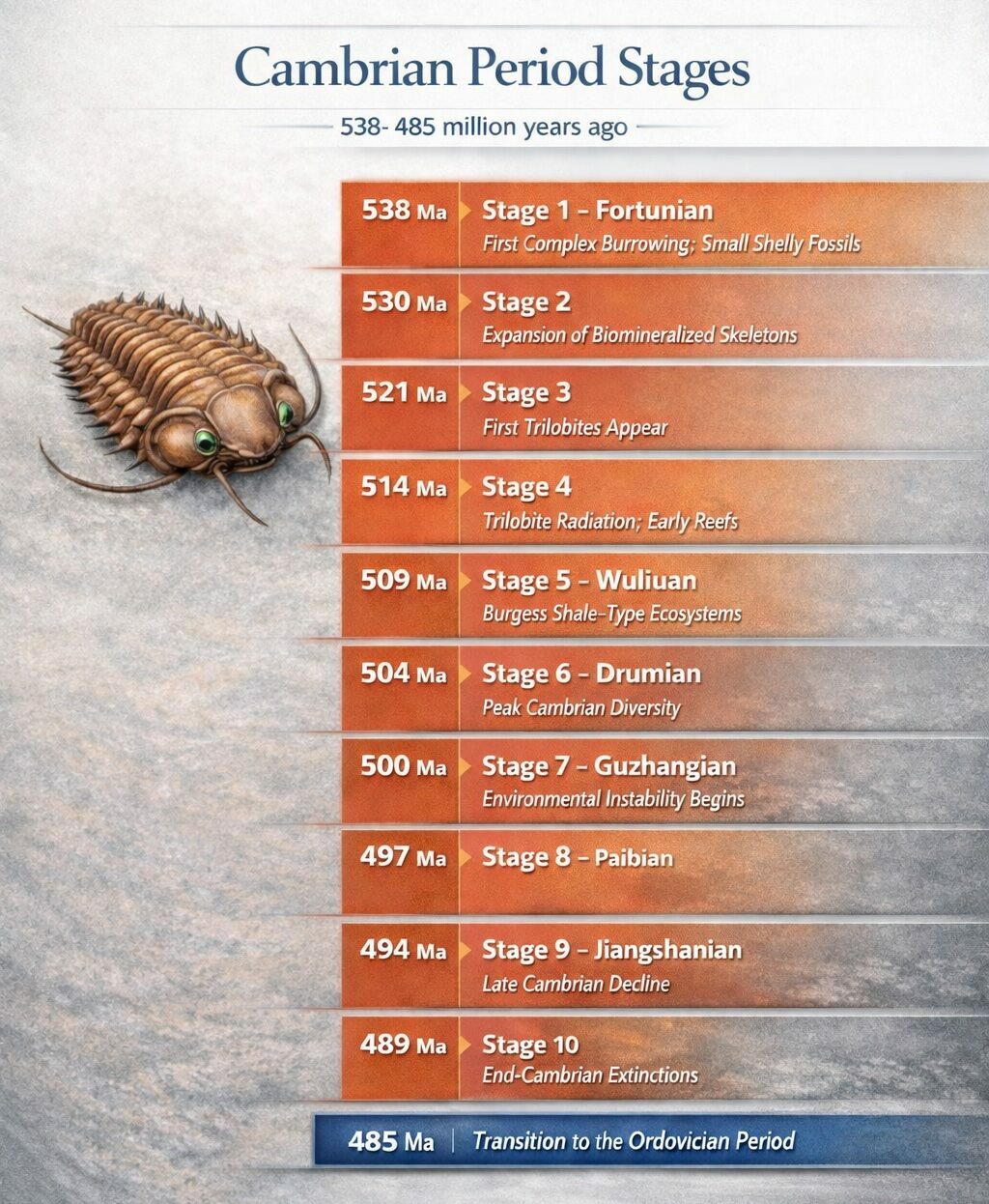
The Cambrian Period is broken up into 10 distinct geological stages.
The Explosion That Wasn’t a Bang
The phrase “Cambrian Explosion” evokes an image of sudden chaos, but the reality is more nuanced and far more interesting. Rather than a single moment of rapid creation, the Cambrian represents a relatively short interval—geologically speaking—during which evolutionary innovations became dramatically visible. What changed was not just life itself, but how life interacted with its environment and how well it could be preserved in the fossil record. Soft-bodied organisms gave way to creatures with shells, plates, and spines, leaving behind durable remains that recorded their existence in stone.
This widespread adoption of hard parts transformed ecosystems and evolutionary dynamics alike. Skeletons provided protection, structural support, and leverage for muscle attachment, enabling animals to grow larger and move more efficiently. Mineralized tissues also allowed organisms to exploit new ecological roles, from grazing to active predation. For paleontologists, these structures created a clearer evolutionary record, revealing lineages that had likely existed earlier but left no trace. The “explosion,” then, was as much about fossilization as it was about innovation.
The Birth of Modern Body Plans
Perhaps the most astonishing aspect of the Cambrian Period is how many fundamental animal designs appear within it. Body plans—basic structural layouts that define how organisms are built—emerged rapidly and with remarkable variety. Arthropods developed jointed limbs and segmented bodies; mollusks experimented with shells and muscular feet; annelid worms evolved efficient burrowing forms. Echinoderms introduced radial symmetry, while brachiopods and early reef builders anchored themselves to the seafloor, filtering nutrients from the water.
Trilobites stand as the most iconic representatives of this evolutionary burst. With their hard exoskeletons, articulated segments, and complex compound eyes, they exemplified Cambrian innovation. Trilobites diversified into thousands of species, filling ecological roles ranging from scavengers to active hunters. Their widespread distribution and rapid evolution make them invaluable tools for dating Cambrian rocks, turning them into both biological pioneers and geological timekeepers.

Strange Experiments and Evolutionary Dead Ends
Not all Cambrian creatures fit neatly into modern categories, and some seem almost fantastical by today’s standards. Fossil deposits such as the Burgess Shale in Canada and the Chengjiang formation in China have preserved soft-bodied organisms with extraordinary detail, revealing a parade of evolutionary experiments. Creatures like Anomalocaris, with its grasping limbs and powerful swimming ability, dominated as apex predators. Others, such as Opabinia and Hallucigenia, defy easy classification and appear to represent branches of life that ultimately went extinct.
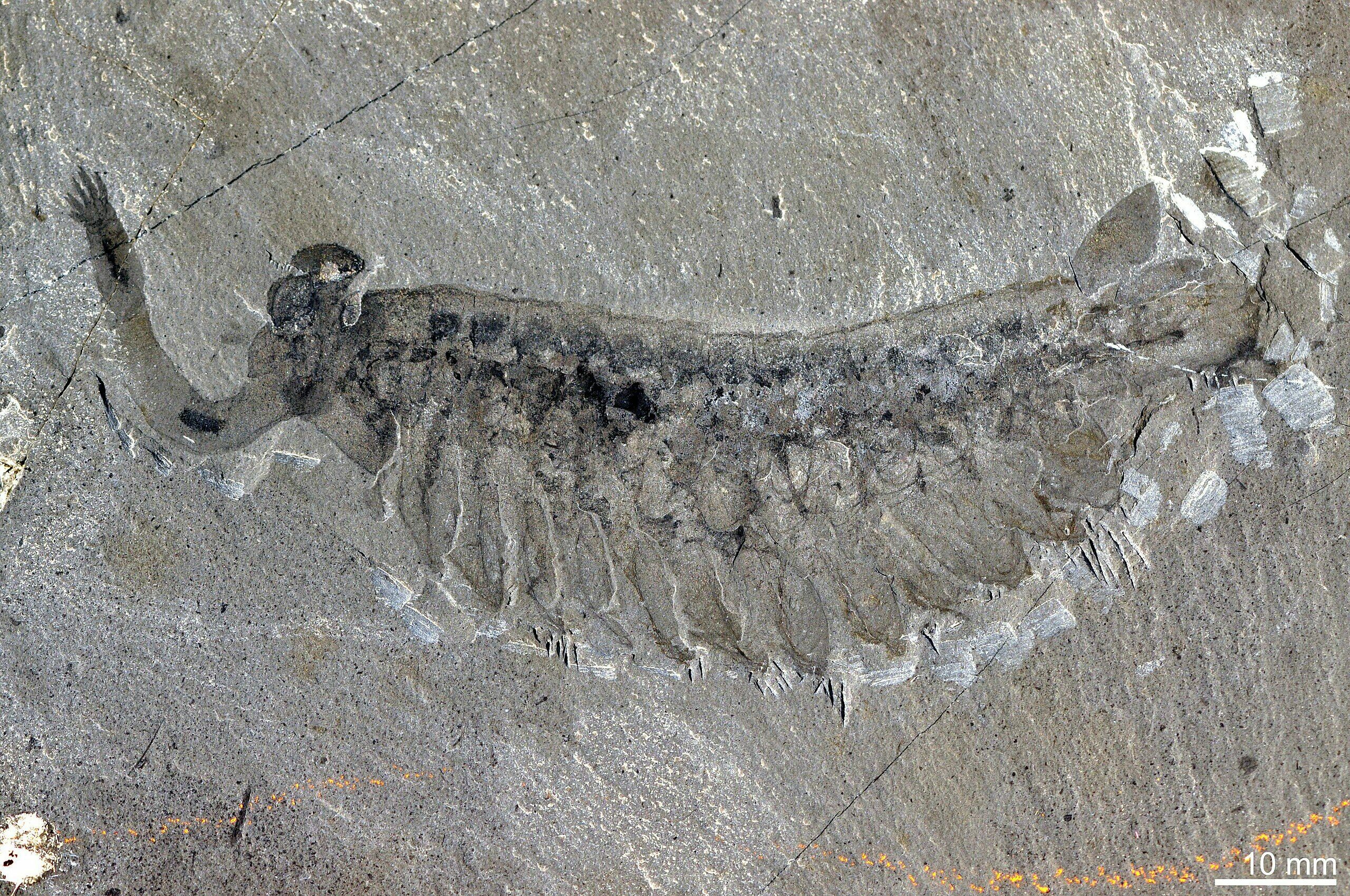
A fossil of Opabinia from the Burgess Shale.
These strange organisms are critical to understanding evolution’s creative process. They demonstrate that early animal life explored a far wider range of forms than those that survive today. Natural selection eventually favored certain designs—efficient, adaptable, and resilient—while others vanished entirely. The Cambrian seas were not just a birthplace of modern life, but also a testing ground littered with evolutionary failures.
Predators Change Everything
One of the most transformative developments of the Cambrian was the rise of active predation. Before this period, most organisms lived relatively passive lives—absorbing nutrients, grazing on microbial mats, or filtering particles from the water. The sudden appearance of mobile, visually guided hunters introduced urgency and danger into ecosystems that had never experienced it before, reshaping evolutionary priorities almost overnight.
Among the earliest and most iconic of these predators was Anomalocaris, a large, free-swimming hunter that could exceed a meter in length. Equipped with grasping frontal appendages, a circular mouth lined with hard plates, and large compound eyes, Anomalocaris was capable of actively pursuing and capturing prey such as trilobites and soft-bodied animals. Its existence marked a dramatic shift from static food webs to predator–prey interactions driven by speed, vision, and aggression.
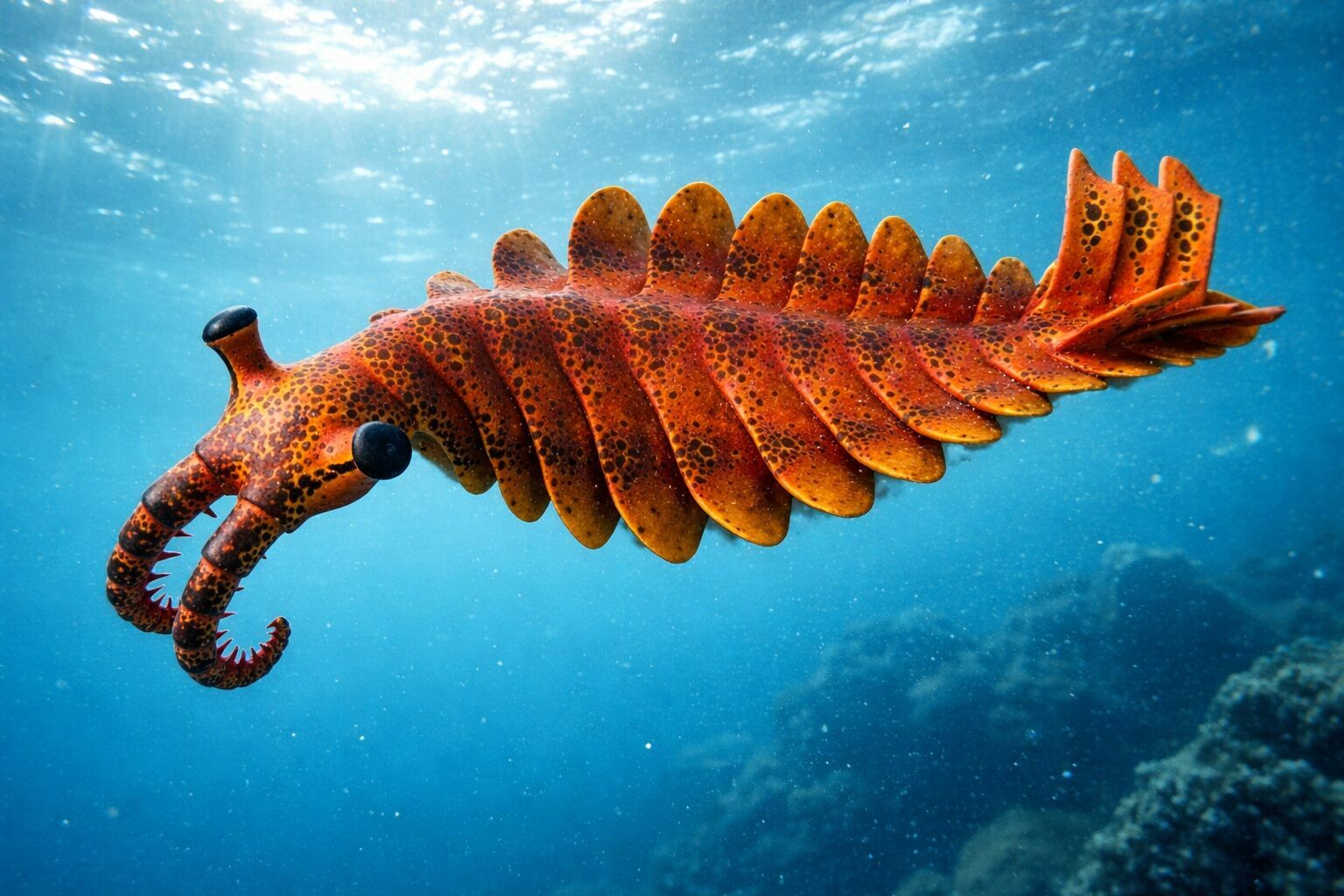
Anomalocaris was a large, agile Cambrian predator that cruised ancient oceans using its flapping side lobes, grasping prey with spiny front appendages and seeing with advanced compound eyes.
Other formidable hunters soon followed. Radiodonts, a broader group that includes Anomalocaris, Hurdia, and Peytoia, occupied different ecological roles ranging from apex predators to sediment sifters, demonstrating early specialization among carnivores. Meanwhile, early arthropods like Yohoia and Leanchoilia used clawed appendages and forward-facing eyes to seize smaller prey, showing that predation was spreading across multiple lineages.
As predators became more efficient, prey species responded in kind. Trilobites developed thicker exoskeletons, enrolled bodies, and defensive spines. Small shelly fossils—early mineralized shells and plates—proliferated as armor became a key survival strategy. Rapid reproduction and behavioral defenses also became more common, as survival increasingly depended on avoiding detection or escaping pursuit.
This evolutionary arms race drove diversification at an unprecedented pace. The need to detect predators favored the evolution of advanced sensory systems, including some of the earliest complex eyes, seen spectacularly in Cambrian arthropods with thousands of visual lenses. Burrowing emerged as a widespread survival strategy, allowing animals to hide from predators while exploiting new food sources beneath the seafloor.
These behaviors fundamentally reshaped marine environments. As animals churned through sediments to escape predators or hunt buried prey, they disrupted long-standing microbial mats and increased oxygen penetration into the seafloor. This transformation—known as the Cambrian substrate revolution—permanently altered ocean chemistry and habitat structure, paving the way for more complex ecosystems and setting the stage for the modern marine world.
The First Chordates: A Quiet Revolution in the Cambrian Seas
Amid the armored trilobites and alien predators of the Cambrian oceans lived creatures so small and unassuming that they were almost overlooked—yet they would become the ancestors of every vertebrate to follow. These were the earliest chordates, animals defined not by shells or claws, but by an internal architecture that would eventually give rise to backbones, brains, and complex nervous systems.
The first chordates did not resemble fish in the modern sense. Instead, they were slender, soft-bodied swimmers, often only a few centimeters long, drifting or darting through the water column just above the seafloor. Fossils from deposits like the Burgess Shale in Canada and the Chengjiang biota of China preserve these animals with remarkable clarity, revealing the hallmark traits of the chordate body plan: a notochord, a dorsal nerve cord, segmented muscles, and a post-anal tail.
One of the most iconic of these early forms is Pikaia gracilens. With its ribbon-like body and repeating muscle blocks, Pikaia likely swam in gentle undulations, feeding on suspended organic particles. It lacked jaws, hard parts, and armor, making it vulnerable in a sea increasingly dominated by predators. Yet its internal structure represented a radical evolutionary innovation—support and coordination from within, rather than protection from without.
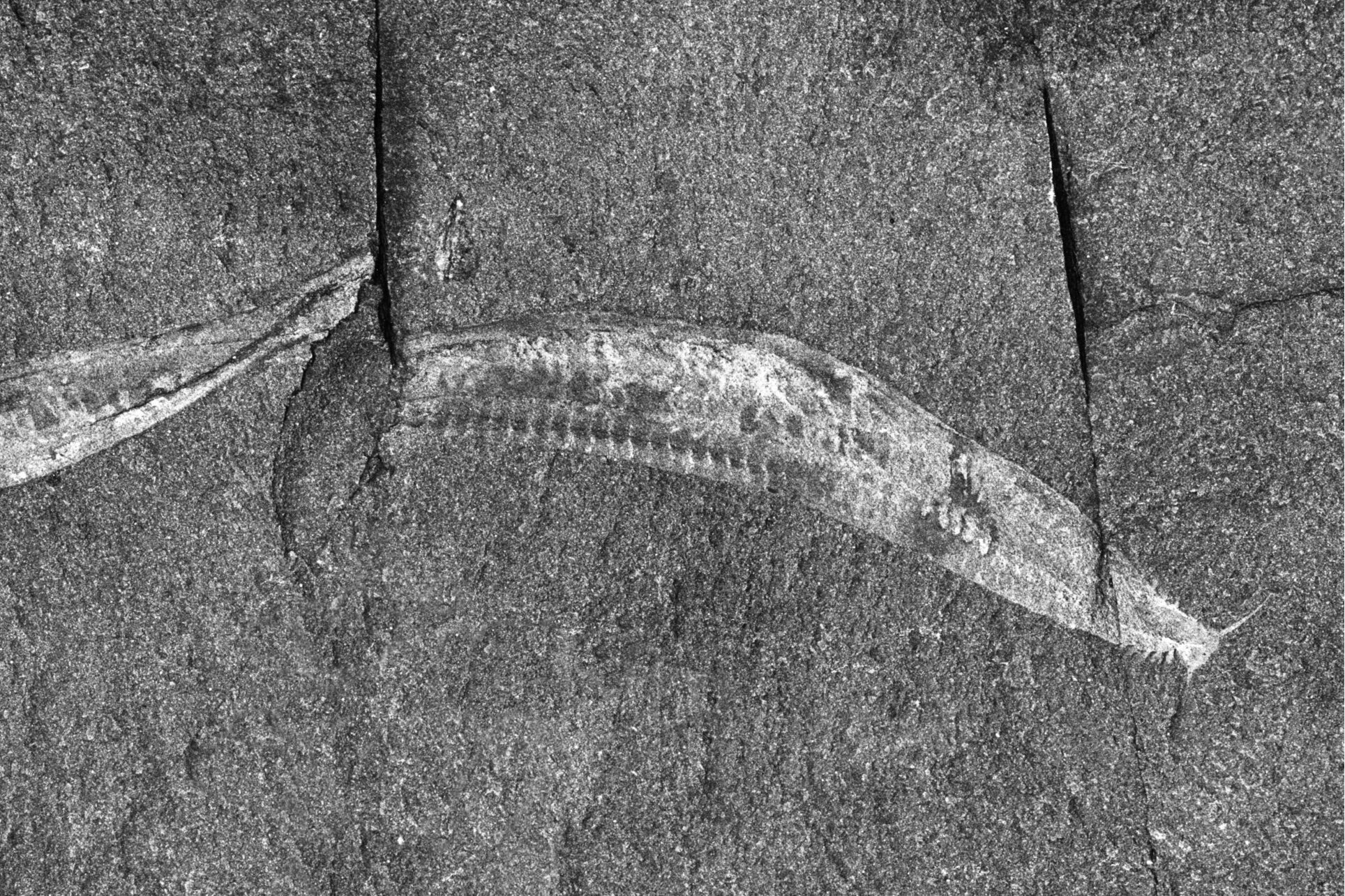
A fossil of Pikaia gracilens, one of the earliest Chordates from the Burgess Shale
Even more primitive, yet equally significant, were creatures like Haikouichthys and Myllokunmingia, which show early evidence of a defined head region, simple eyes, and possible gill structures. These animals mark the transition from basic chordates to the earliest vertebrate-like organisms, pushing the origins of our own lineage deep into the Cambrian.
The emergence of chordates reflects a broader shift in Cambrian ecosystems. Life was no longer limited to crawling, filtering, or hiding. Swimming became a viable strategy, opening the midwater realm as a new ecological frontier. Muscle-driven locomotion and centralized nerve control allowed chordates to respond quickly to their environment, an advantage that would prove decisive in the evolutionary long run.
Though they were minor players in Cambrian ecosystems, the first chordates carried a blueprint that evolution would refine again and again over hundreds of millions of years. From these fragile, translucent swimmers would eventually arise fish, amphibians, reptiles, mammals—and humans. In the chaos and experimentation of the Cambrian Explosion, the chordates represent one of evolution’s most consequential successes: the quiet beginning of the vertebrate story.
A Dynamic and Unstable World
Despite its creativity, the Cambrian was not a time of uninterrupted prosperity. Environmental conditions fluctuated, with changes in sea level, climate, and ocean chemistry periodically stressing ecosystems. Some groups thrived briefly before disappearing, while others weathered repeated disruptions and emerged stronger. Several extinction events toward the end of the Cambrian reduced biodiversity, particularly among trilobites and reef-building organisms.
These losses, however, did not erase the Cambrian’s achievements. Instead, they acted as evolutionary filters, refining the diversity that remained. By the close of the period, ecosystems had become more structured, with clear food webs and stable ecological roles. Life had learned not only how to diversify, but how to endure change.
The Enduring Legacy of the Cambrian
The true importance of the Cambrian Period lies in its permanence. The evolutionary strategies forged during this time—predation, mobility, sensory perception, and skeletal support—became foundational features of animal life. Later periods would expand upon these innovations, but rarely would evolution invent such fundamentally new architectures again. The Cambrian set the rules of the biological game.
Every complex organism alive today carries the imprint of this ancient experiment. From insects and mollusks to fish, reptiles, and mammals, the roots of modern life trace back to those shallow Cambrian seas. Preserved in layers of shale and limestone, the Cambrian fossil record captures the moment when life stopped merely surviving and began truly evolving. It is the story of when biology discovered possibility—and never looked back.


