Reviews

Mass Extinction Events - Earth’s Great Dying Times
Life on Earth has never had a smooth, uninterrupted journey. When most people think of mass extinction, they picture the dramatic event that wiped out the dinosaurs at the end of the Cretaceous Period. While that extinction was undeniably significant, it was neither the first nor the largest. Over the past ~540 million years, our planet has experienced several catastrophic biological crises—moments when vast portions of life were wiped out in geologically short spans of time. These events, known as mass extinctions, reshaped ecosystems, erased once-dominant groups, and opened evolutionary doors for entirely new forms of life.
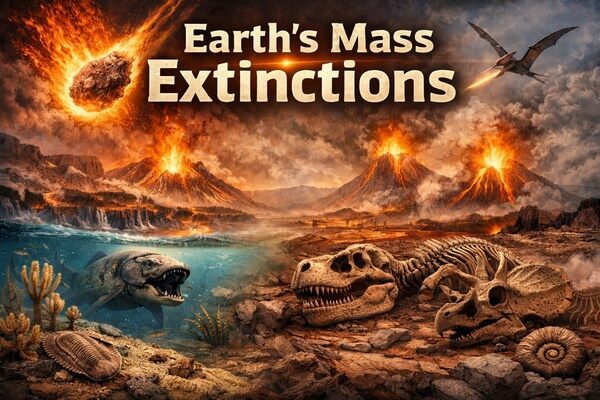
The Earth has undergone many mass extinction events including the "Big Five", each of which killed off over 75% of species.
Scientists typically recognize five major mass extinction events, often called the “Big Five.” Each one was driven by a unique combination of environmental upheavals, from runaway volcanism and climate collapse to asteroid impacts and ocean anoxia. While devastating, these events were also evolutionary reset buttons—clearing ecological space and allowing surviving lineages to radiate into new forms.
Below, we explore the major mass extinctions from oldest to youngest, examining their causes, victims, survival stories, and the profound ways they shaped the history of life on Earth.
The first of the Big Five struck at the end of the Ordovician Period, a time when life flourished primarily in the oceans. Shallow seas teemed with trilobites, brachiopods, bryozoans, corals, and early mollusks. Vertebrates existed only as primitive, jawless fish, and land was largely barren of complex life.
This extinction event is closely linked to dramatic climate change. A short but intense ice age developed when the supercontinent Gondwana drifted over the South Pole. Global temperatures dropped, sea levels fell by as much as 100 meters, and vast shallow marine habitats—the most biodiverse environments of the time—were destroyed. When the ice age ended, rapid warming and rising seas followed, likely causing oxygen-poor (anoxic) conditions in the oceans.
An estimated ~85% of marine species went extinct. Entire trilobite families disappeared, along with many brachiopods, graptolites, and reef-building organisms. Because life was almost entirely marine, the extinction’s effects were global and severe.
Despite the devastation, survivors diversified rapidly during the Silurian Period. Coral reefs re-established themselves, jawed fish began to evolve, and the first vascular plants started colonizing land. This extinction helped set the stage for the gradual movement of life onto continents.
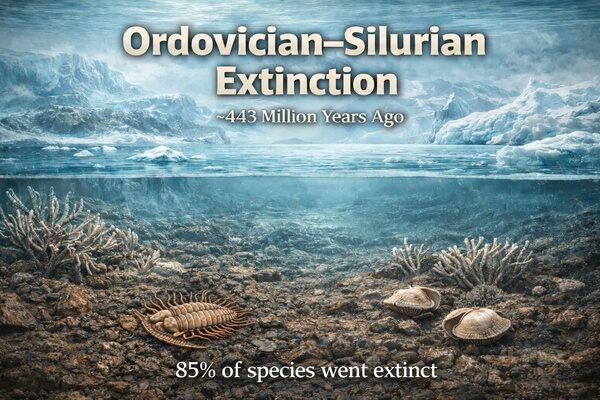
The first of the big five extinctions was caused by dropping temperatures and sea levels.
Unlike most mass extinctions, the Late Devonian event unfolded in a series of pulses over millions of years rather than a single catastrophic moment. The Devonian is often called the “Age of Fishes,” with oceans dominated by armored placoderms, early sharks, and lobe-finned fishes—the ancestors of tetrapods.
The leading hypotheses for this extinction involve widespread ocean anoxia, climate instability, and ecosystem disruption caused by the spread of early forests. As plants evolved deeper root systems, they accelerated chemical weathering, washing nutrients into the oceans. This likely triggered massive algal blooms, depleting oxygen and collapsing marine food webs. Some evidence also points to volcanic activity and possible asteroid impacts contributing to the crisis.
Roughly ~75% of species went extinct, with reef ecosystems hit especially hard. Many reef-building corals vanished, and once-dominant placoderm fishes declined dramatically. Trilobites suffered major losses, though some lineages persisted.
In the aftermath, marine ecosystems reorganized. Ray-finned fishes and sharks rose to prominence, while lobe-finned fishes made critical evolutionary advances toward life on land. This extinction indirectly paved the way for tetrapods, setting the foundation for amphibians, reptiles, mammals, and ultimately humans.
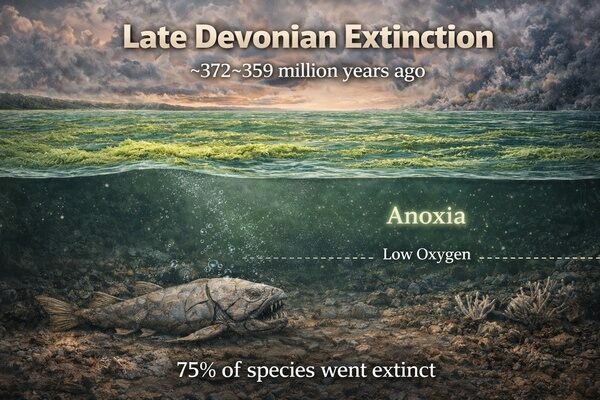
The Late Devonian extinction unfolded over millions of years due to depleted ocean oxygen levels that collapsed food chains.
The Permian–Triassic extinction, often called “The Great Dying” was the most catastrophic biological crisis in Earth’s history. At the end of the Permian Period, life was abundant and diverse both in the oceans and on land. Massive reefs, strange synapsids (mammal-like reptiles), amphibians, insects, and early reptiles dominated ecosystems.
This extinction is strongly linked to enormous volcanic eruptions in what is now Siberia, known as the Siberian Traps. The Siberian Traps are one of the largest volcanic provinces on Earth, consisting of vast layers of flood basalt formed by sustained eruptions over hundreds of thousands of years. These eruptions released immense quantities of greenhouse gases and toxic compounds into the atmosphere, driving extreme global warming, acid rain, and severe disruptions to ocean chemistry. These eruptions released vast quantities of carbon dioxide and methane, driving extreme global warming, acid rain, ocean acidification, and widespread anoxia. Some evidence suggests hydrogen sulfide poisoning and ozone layer damage may also have played roles.
The losses were staggering: ~90–96% of marine species and ~70% of terrestrial vertebrate species went extinct. Trilobites vanished entirely. Reef systems collapsed. On land, many synapsid lineages and large amphibians disappeared, leaving ecosystems eerily simplified.
Recovery was slow—taking millions of years. But the extinction cleared ecological space for new groups. During the Triassic, archosaurs (the group that includes dinosaurs, pterosaurs, and crocodilians) rose to dominance. This event fundamentally reshaped life on Earth and set the stage for the Age of Dinosaurs.
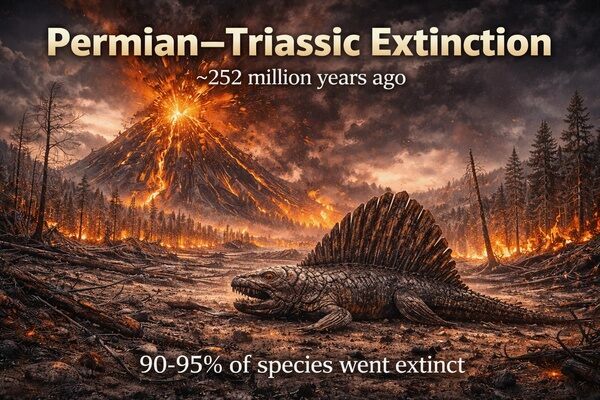
The extinction at the end of the Permian was the largest in history, killing an estimated 90-95% of species.
As the Triassic Period drew to a close, the supercontinent Pangaea began to rift apart. This tectonic upheaval coincided with another major extinction event that dramatically altered terrestrial and marine ecosystems.
The most likely cause was massive volcanic activity associated with the breakup of Pangaea, particularly the Central Atlantic Magmatic Province (CAMP). CAMP represents a vast system of flood basalt eruptions spread across what are now North America, South America, Africa, and Europe. These eruptions occurred over a relatively short geological interval and released large volumes of carbon dioxide and other gases, triggering rapid climate change, ocean acidification, and widespread ecological stress. These eruptions released huge amounts of greenhouse gases, triggering rapid climate change, ocean acidification, and ecological instability.
Approximately ~80% of species went extinct. Many large amphibians vanished, along with several reptile groups that had previously competed with early dinosaurs. In the oceans, conodonts (eel-like early vertebrates) disappeared completely.
Dinosaurs, which had already evolved but were relatively minor players, survived and rapidly diversified afterward. With competitors gone, they became the dominant terrestrial vertebrates for the next 135 million years. Marine reptiles and early mammals also began important evolutionary radiations during the Jurassic.
The most famous mass extinction marks the end of the Cretaceous Period and the end of the non-avian dinosaurs. At the time, dinosaurs dominated land ecosystems, while the oceans were filled with ammonites, mosasaurs, and plesiosaurs. Flowering plants had transformed terrestrial environments, and mammals were small but diverse.
The primary cause was a 6-mile-wide asteroid impact in what is now the Yucatán Peninsula, forming the Chicxulub crater. The impact triggered global wildfires, massive tsunamis, and a dust-and-aerosol cloud that blocked sunlight for months to years. Photosynthesis collapsed, food chains failed, and global temperatures plummeted. Volcanic activity from the Deccan Traps may have worsened environmental stress. The Deccan Traps are a vast region of flood basalt lava flows in present-day India, formed by prolonged and massive volcanic eruptions near the end of the Cretaceous. These eruptions released enormous amounts of carbon dioxide and sulfur gases, contributing to climate instability, acid rain, and ocean acidification, which likely compounded the ecological damage caused by the asteroid impact.
About ~75% of species went extinct. All non-avian dinosaurs vanished, along with ammonites, many marine reptiles, and numerous plant species. Birds (avian dinosaurs), mammals, crocodilians, turtles, and sharks survived.
The aftermath reshaped the world. Mammals rapidly diversified into newly vacant ecological roles, eventually giving rise to whales, bats, primates, and large terrestrial herbivores and predators. This extinction directly set the stage for the modern, mammal-dominated ecosystems—and ultimately, for humans.
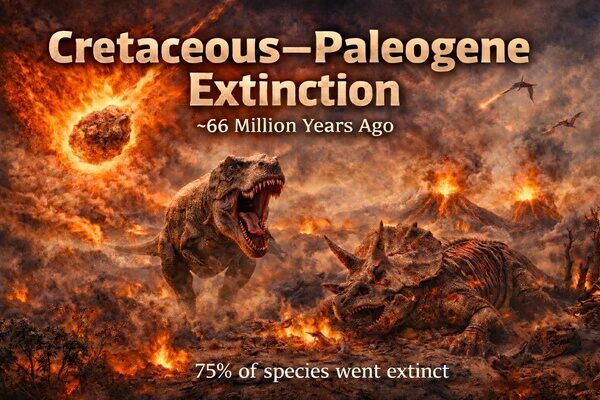
The mass extinction at the end of the Cretaceous killed off 75% of species including non-avian Dinosaurs.
Mass extinctions are stark reminders of life’s vulnerability to planetary change. Yet they also reveal evolution’s resilience. Each extinction pruned the tree of life, but the surviving branches grew in unexpected directions, producing new ecosystems and forms of life.
Understanding these events not only illuminates Earth’s past but also provides crucial insight into the present—especially as human-driven environmental changes raise questions about whether we are entering a sixth mass extinction of our own making.
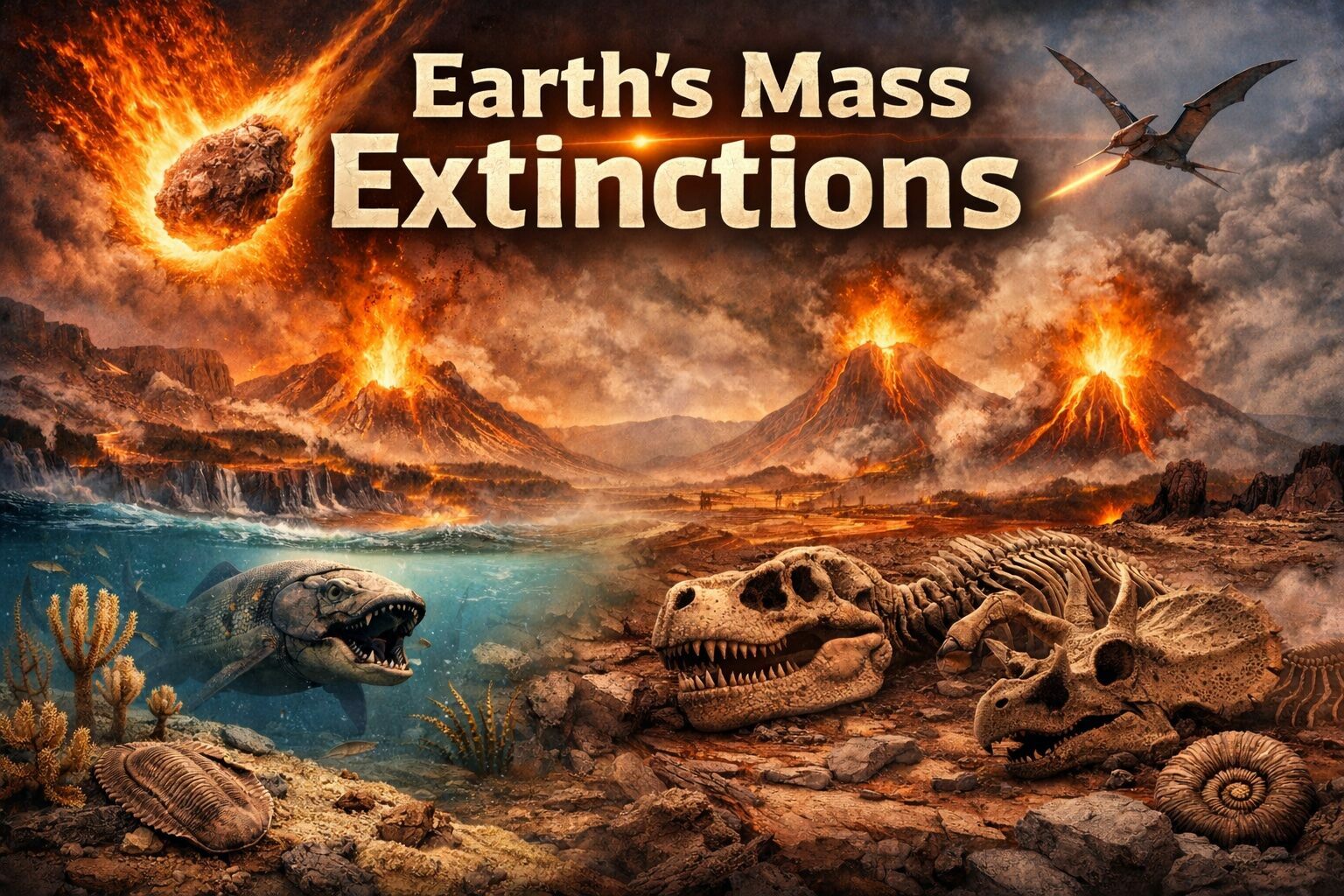
The Earth has undergone many mass extinction events including the "Big Five", each of which killed off over 75% of species.
Scientists typically recognize five major mass extinction events, often called the “Big Five.” Each one was driven by a unique combination of environmental upheavals, from runaway volcanism and climate collapse to asteroid impacts and ocean anoxia. While devastating, these events were also evolutionary reset buttons—clearing ecological space and allowing surviving lineages to radiate into new forms.
Below, we explore the major mass extinctions from oldest to youngest, examining their causes, victims, survival stories, and the profound ways they shaped the history of life on Earth.
1. The Ordovician–Silurian Extinction (≈443 million years ago)
The first of the Big Five struck at the end of the Ordovician Period, a time when life flourished primarily in the oceans. Shallow seas teemed with trilobites, brachiopods, bryozoans, corals, and early mollusks. Vertebrates existed only as primitive, jawless fish, and land was largely barren of complex life.
This extinction event is closely linked to dramatic climate change. A short but intense ice age developed when the supercontinent Gondwana drifted over the South Pole. Global temperatures dropped, sea levels fell by as much as 100 meters, and vast shallow marine habitats—the most biodiverse environments of the time—were destroyed. When the ice age ended, rapid warming and rising seas followed, likely causing oxygen-poor (anoxic) conditions in the oceans.
An estimated ~85% of marine species went extinct. Entire trilobite families disappeared, along with many brachiopods, graptolites, and reef-building organisms. Because life was almost entirely marine, the extinction’s effects were global and severe.
Despite the devastation, survivors diversified rapidly during the Silurian Period. Coral reefs re-established themselves, jawed fish began to evolve, and the first vascular plants started colonizing land. This extinction helped set the stage for the gradual movement of life onto continents.
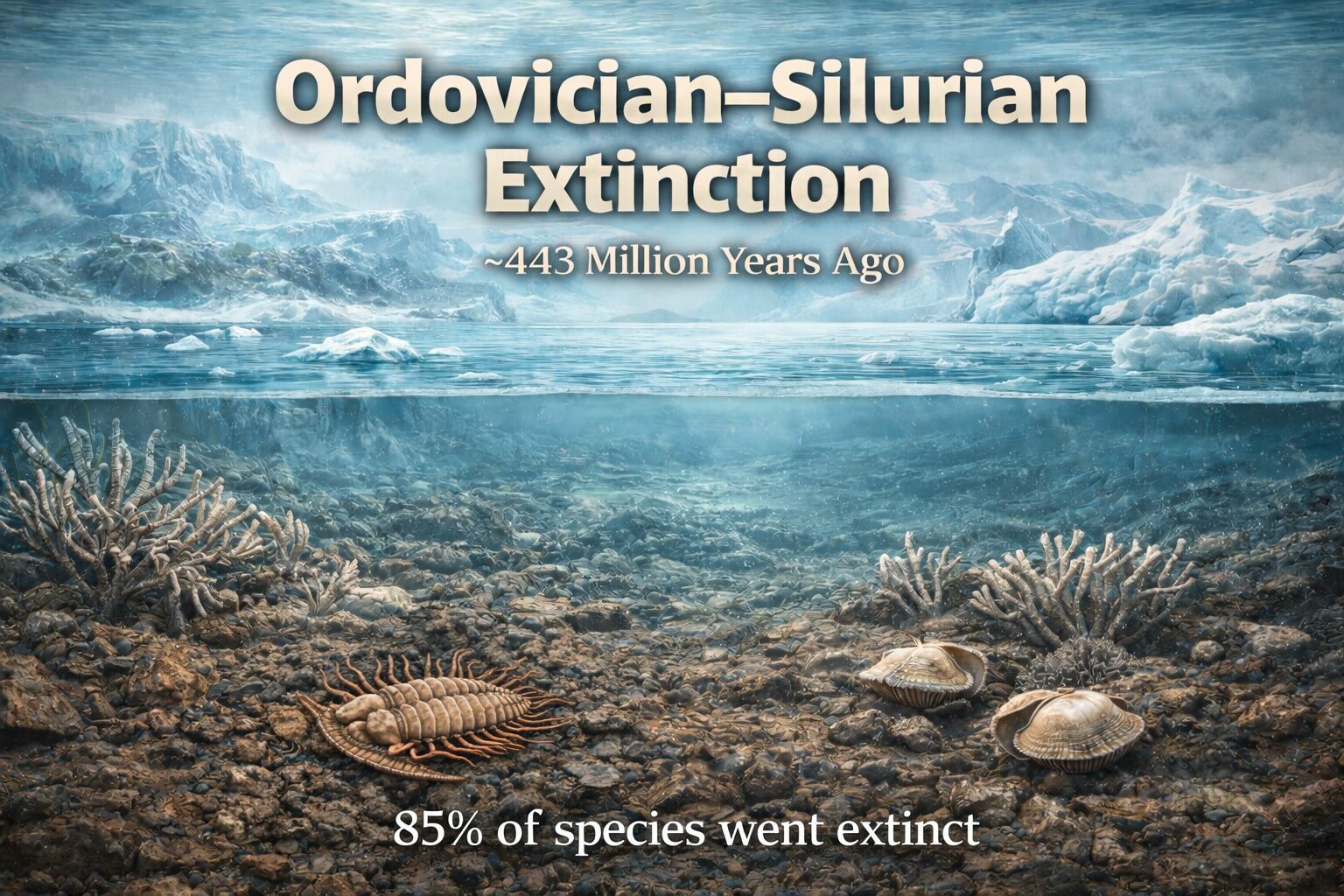
The first of the big five extinctions was caused by dropping temperatures and sea levels.
2. The Late Devonian Extinction (≈372–359 million years ago)
Unlike most mass extinctions, the Late Devonian event unfolded in a series of pulses over millions of years rather than a single catastrophic moment. The Devonian is often called the “Age of Fishes,” with oceans dominated by armored placoderms, early sharks, and lobe-finned fishes—the ancestors of tetrapods.
The leading hypotheses for this extinction involve widespread ocean anoxia, climate instability, and ecosystem disruption caused by the spread of early forests. As plants evolved deeper root systems, they accelerated chemical weathering, washing nutrients into the oceans. This likely triggered massive algal blooms, depleting oxygen and collapsing marine food webs. Some evidence also points to volcanic activity and possible asteroid impacts contributing to the crisis.
Roughly ~75% of species went extinct, with reef ecosystems hit especially hard. Many reef-building corals vanished, and once-dominant placoderm fishes declined dramatically. Trilobites suffered major losses, though some lineages persisted.
In the aftermath, marine ecosystems reorganized. Ray-finned fishes and sharks rose to prominence, while lobe-finned fishes made critical evolutionary advances toward life on land. This extinction indirectly paved the way for tetrapods, setting the foundation for amphibians, reptiles, mammals, and ultimately humans.
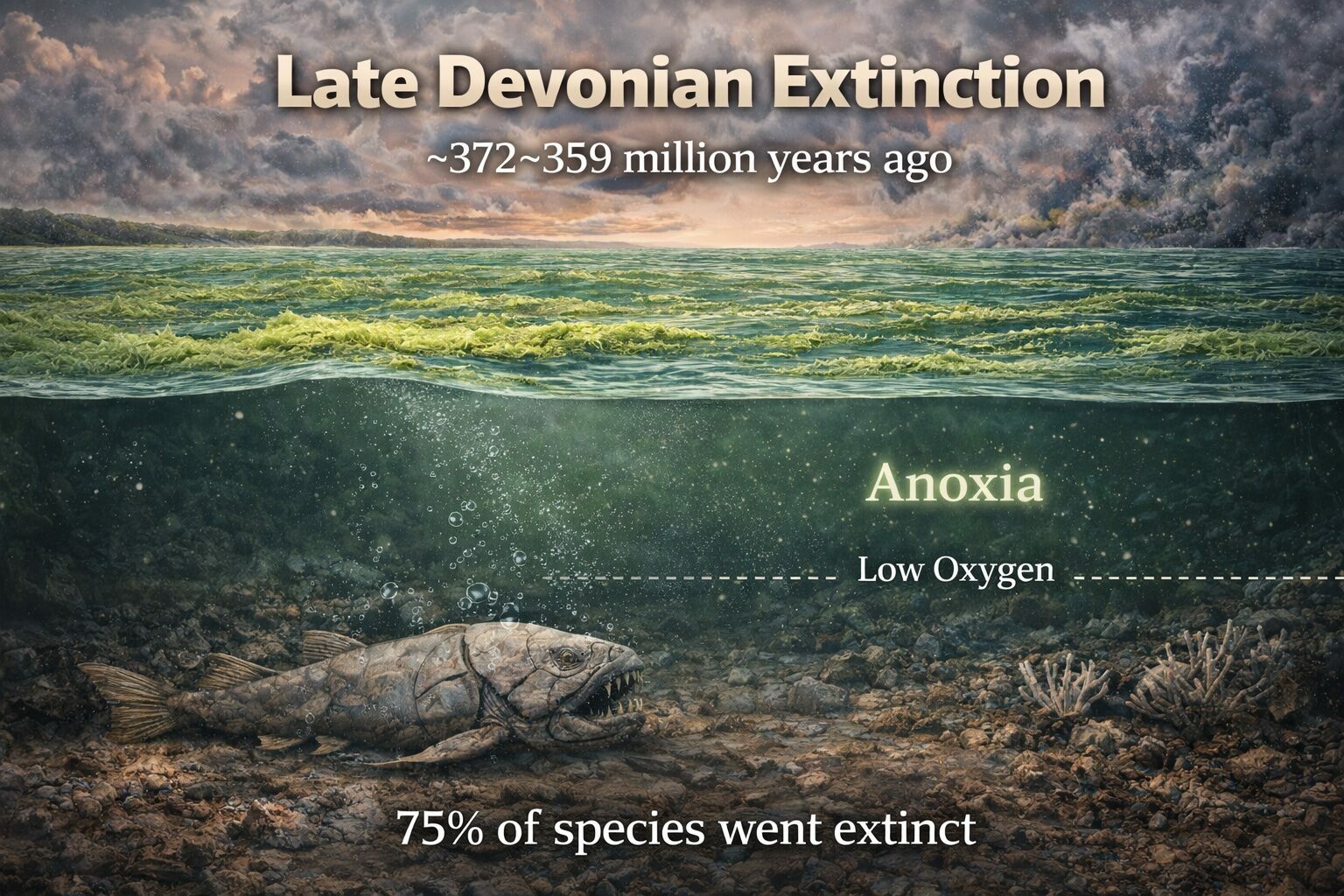
The Late Devonian extinction unfolded over millions of years due to depleted ocean oxygen levels that collapsed food chains.
3. The Permian–Triassic Extinction (≈252 million years ago)
The Permian–Triassic extinction, often called “The Great Dying” was the most catastrophic biological crisis in Earth’s history. At the end of the Permian Period, life was abundant and diverse both in the oceans and on land. Massive reefs, strange synapsids (mammal-like reptiles), amphibians, insects, and early reptiles dominated ecosystems.
This extinction is strongly linked to enormous volcanic eruptions in what is now Siberia, known as the Siberian Traps. The Siberian Traps are one of the largest volcanic provinces on Earth, consisting of vast layers of flood basalt formed by sustained eruptions over hundreds of thousands of years. These eruptions released immense quantities of greenhouse gases and toxic compounds into the atmosphere, driving extreme global warming, acid rain, and severe disruptions to ocean chemistry. These eruptions released vast quantities of carbon dioxide and methane, driving extreme global warming, acid rain, ocean acidification, and widespread anoxia. Some evidence suggests hydrogen sulfide poisoning and ozone layer damage may also have played roles.
The losses were staggering: ~90–96% of marine species and ~70% of terrestrial vertebrate species went extinct. Trilobites vanished entirely. Reef systems collapsed. On land, many synapsid lineages and large amphibians disappeared, leaving ecosystems eerily simplified.
Recovery was slow—taking millions of years. But the extinction cleared ecological space for new groups. During the Triassic, archosaurs (the group that includes dinosaurs, pterosaurs, and crocodilians) rose to dominance. This event fundamentally reshaped life on Earth and set the stage for the Age of Dinosaurs.
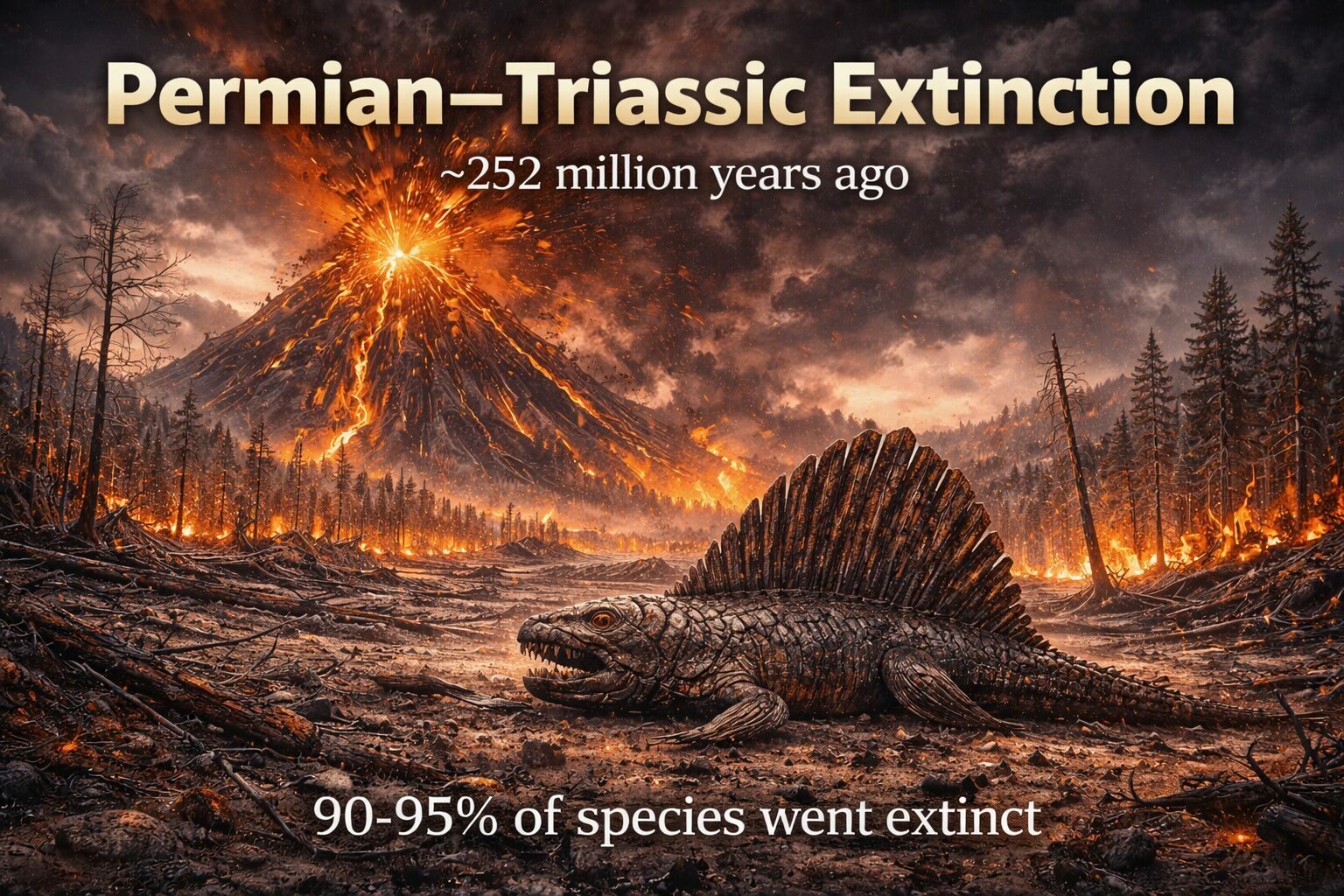
The extinction at the end of the Permian was the largest in history, killing an estimated 90-95% of species.
4. The Triassic–Jurassic Extinction (≈201 million years ago)
As the Triassic Period drew to a close, the supercontinent Pangaea began to rift apart. This tectonic upheaval coincided with another major extinction event that dramatically altered terrestrial and marine ecosystems.
The most likely cause was massive volcanic activity associated with the breakup of Pangaea, particularly the Central Atlantic Magmatic Province (CAMP). CAMP represents a vast system of flood basalt eruptions spread across what are now North America, South America, Africa, and Europe. These eruptions occurred over a relatively short geological interval and released large volumes of carbon dioxide and other gases, triggering rapid climate change, ocean acidification, and widespread ecological stress. These eruptions released huge amounts of greenhouse gases, triggering rapid climate change, ocean acidification, and ecological instability.
Approximately ~80% of species went extinct. Many large amphibians vanished, along with several reptile groups that had previously competed with early dinosaurs. In the oceans, conodonts (eel-like early vertebrates) disappeared completely.
Dinosaurs, which had already evolved but were relatively minor players, survived and rapidly diversified afterward. With competitors gone, they became the dominant terrestrial vertebrates for the next 135 million years. Marine reptiles and early mammals also began important evolutionary radiations during the Jurassic.
5. The Cretaceous–Paleogene Extinction (≈66 million years ago)
The most famous mass extinction marks the end of the Cretaceous Period and the end of the non-avian dinosaurs. At the time, dinosaurs dominated land ecosystems, while the oceans were filled with ammonites, mosasaurs, and plesiosaurs. Flowering plants had transformed terrestrial environments, and mammals were small but diverse.
The primary cause was a 6-mile-wide asteroid impact in what is now the Yucatán Peninsula, forming the Chicxulub crater. The impact triggered global wildfires, massive tsunamis, and a dust-and-aerosol cloud that blocked sunlight for months to years. Photosynthesis collapsed, food chains failed, and global temperatures plummeted. Volcanic activity from the Deccan Traps may have worsened environmental stress. The Deccan Traps are a vast region of flood basalt lava flows in present-day India, formed by prolonged and massive volcanic eruptions near the end of the Cretaceous. These eruptions released enormous amounts of carbon dioxide and sulfur gases, contributing to climate instability, acid rain, and ocean acidification, which likely compounded the ecological damage caused by the asteroid impact.
About ~75% of species went extinct. All non-avian dinosaurs vanished, along with ammonites, many marine reptiles, and numerous plant species. Birds (avian dinosaurs), mammals, crocodilians, turtles, and sharks survived.
The aftermath reshaped the world. Mammals rapidly diversified into newly vacant ecological roles, eventually giving rise to whales, bats, primates, and large terrestrial herbivores and predators. This extinction directly set the stage for the modern, mammal-dominated ecosystems—and ultimately, for humans.
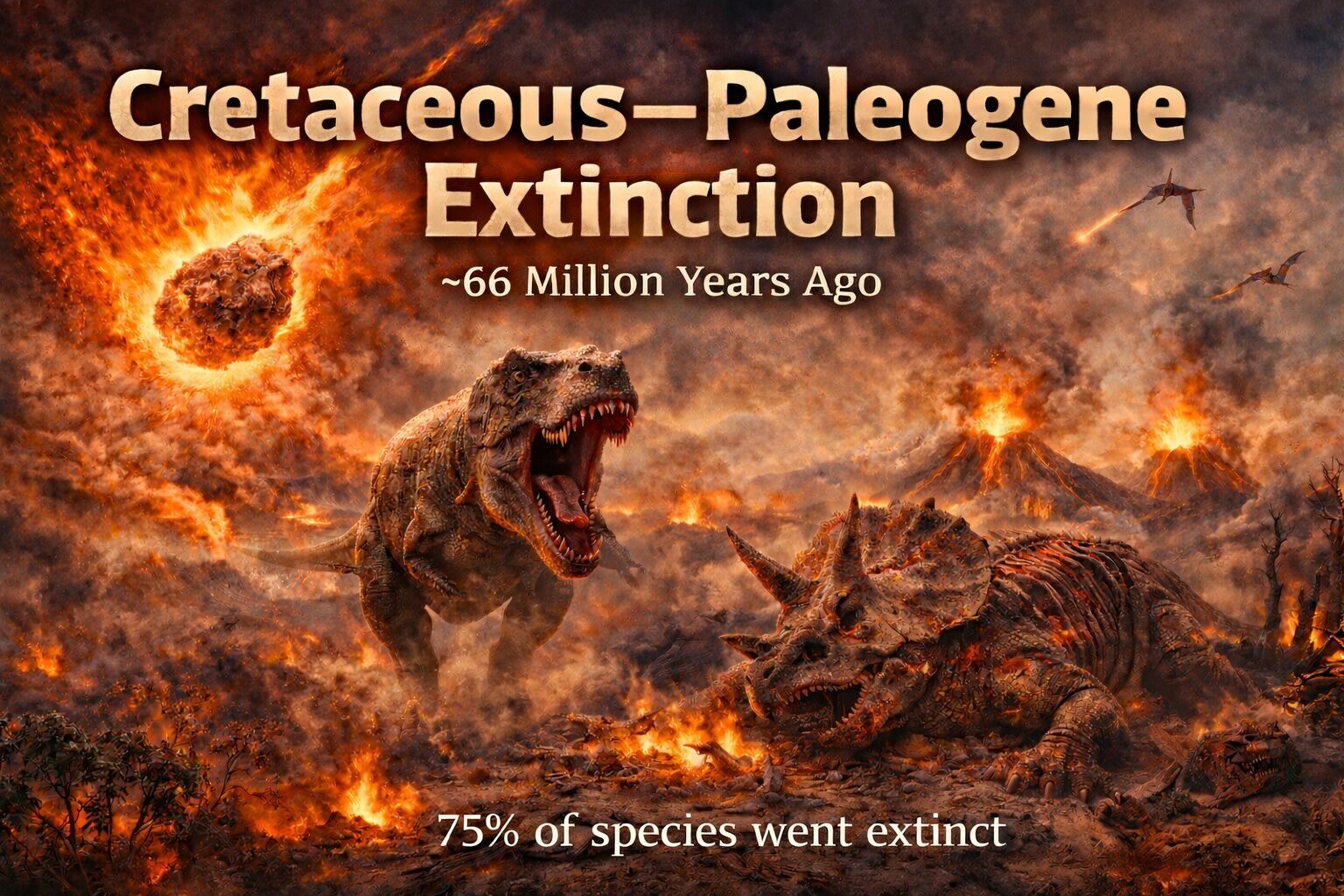
The mass extinction at the end of the Cretaceous killed off 75% of species including non-avian Dinosaurs.
Destruction as a Catalyst for Change
Mass extinctions are stark reminders of life’s vulnerability to planetary change. Yet they also reveal evolution’s resilience. Each extinction pruned the tree of life, but the surviving branches grew in unexpected directions, producing new ecosystems and forms of life.
Understanding these events not only illuminates Earth’s past but also provides crucial insight into the present—especially as human-driven environmental changes raise questions about whether we are entering a sixth mass extinction of our own making.