 Reviews

Andradite: The Garnet Family’s Colorful Chameleon
Few minerals in the garnet family offer the visual drama, scientific intrigue, and collector appeal of andradite—a calcium-iron garnet known for producing some of the most spectacular gemstones and mineral specimens on Earth. While garnets as a whole are famous for their deep reds, andradite breaks that stereotype entirely. It forms in brilliant chartreuse greens, glossy jet blacks, warm golden hues, fiery reds, and even shimmering iridescent sheens. Some crystals are so lustrous that collectors describe them as “polished by nature,” their faces reflecting light like tiny mirrors fresh from a jeweler’s bench.
What makes andradite especially fascinating is its unusual range of appearances and environments. It occurs in volcanic skarns, serpentinite deposits, hydrothermal veins, and contact-metamorphosed limestones—each setting imparting its own personality to the mineral. In one locality it may grow into perfectly geometric dodecahedra; in another, into sharp, twinned trapezohedra coated in metallic iridescence. It is also one of the few garnet species capable of producing a true gem-quality green, earning its variety demantoid a reputation as one of the most valuable colored gemstones in the world—rarer than emerald and capable of outshining diamond.
Beyond its beauty, andradite offers a window into Earth’s geologic processes. Tiny inclusions within demantoid garnets once helped paleontologists confirm that some dinosaur fossils from Mongolia belonged to a new species. Radiating “horsetail inclusions,” meanwhile, have become famous markers of Russian gems and can identify the specific metamorphic conditions under which they formed. Even its name—honoring Portuguese naturalist José Bonifácio de Andrada e Silva—reflects a long history of scientific curiosity.
Andradite is a member of the garnet group, crystallizing in the isometric system and typically forming dodecahedral or trapezohedral crystals. It belongs to the calcium-rich garnet series, where Ca occupies the X site while iron (Fe³⁺) fills the Y site. This gives andradite its signature range of colors and optical properties—including an exceptionally high dispersion index in some varieties, exceeding even that of diamond.
General physical characteristics include:
Hardness: ~6.5–7 on the Mohs scale
Luster: Vitreous to adamantine
Density: Relatively high due to iron content
Transparency: Transparent in gem-quality demantoid to opaque in melanite and topazolite
Colors: Green, Yellow, Orange, Brown, Red, Black, Iridescent
Its chemical versatility makes andradite one of the most variable and expressive garnet species known.
Demantoid – The Legendary Green Garnet
Demantoid is the most celebrated variety of andradite, famed for its brilliant green color that ranges from soft, yellowish tones to deep emerald hues. Its name derives from the Dutch demant, meaning “diamond-like,” a reference to the extraordinary fire and dispersion that can exceed even that of diamond. Many demantoids from the classic Russian deposits contain delicate radiating “horsetail” inclusions of byssolite, a hallmark sought after by gem collectors. First discovered in the Ural Mountains, demantoid is now also mined in Namibia, Madagascar, Iran, and Italy, yet fine stones remain exceptionally rare. When expertly cut, these gems can out-sparkle most other colored gemstones, making them one of the most coveted garnets in the world.
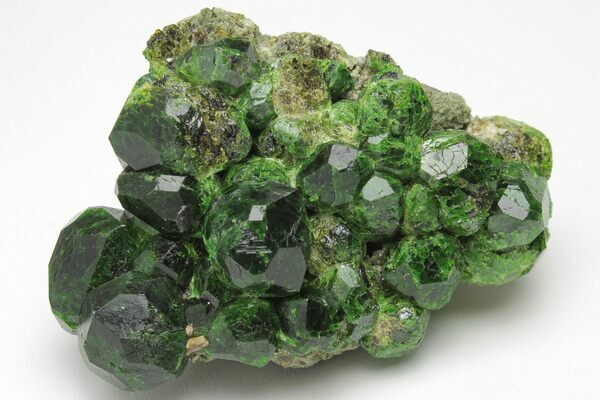
An amazing cluster of dark-green demantoid garnets from Iran.
Melanite – The Jet-Black Titanium Garnet
Melanite is the striking, jet-black variety of andradite, its color produced by titanium and other trace elements. It often forms sharp, lustrous crystals with a mirror-like sheen, giving it a bold, dramatic presence. In the Victorian era it was widely used as a mourning gemstone, valued for its deep, somber tones, and it continues to be a favorite among collectors today. Melanite typically forms in volcanic environments and skarn deposits, where its glossy trapezohedral or dodecahedral crystals can develop to impressive size and symmetry.
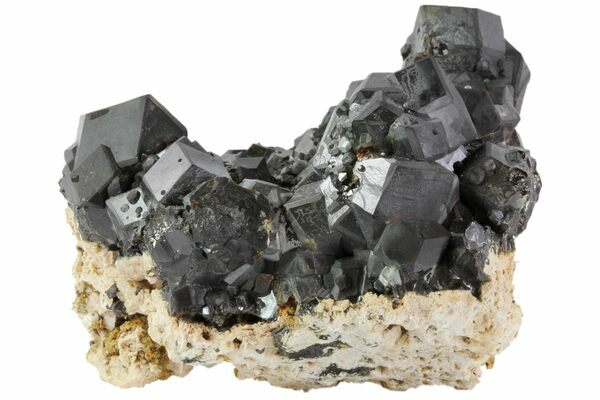
Jet black Melanite garnets from Imilchil, Morocco.
Topazolite – The Honey-Golden Gem
Topazolite represents the warm, yellow to rich honey-colored variety of andradite, cherished for its clarity and vibrant, sunny luster. Though not as widely recognized as demantoid, topazolite of fine quality is significantly rarer, and well-formed crystals can be breathtaking. It is most famously found in Italy’s historic deposits, as well as in Mexico and Namibia, where transparent crystals may closely resemble yellow topaz—an association that inspired the variety’s name.
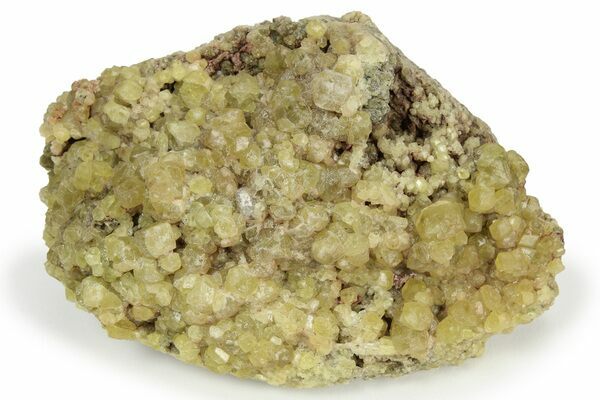
Yellow Topazolite garnets from Mexico.
Rainbow Garnets - Nature’s Prism in Garnet Form
Rainbow andradite garnets are a rare and visually striking variety of andradite prized for their metallic luster and vivid, shifting flashes of color that shimmer across the crystal surfaces. Unlike typical garnets whose color is inherent to the crystal itself, the rainbow effect in these specimens is caused by an extremely thin, naturally formed surface layer—often composed of microscopic crystal growth patterns and oxide films—that creates light interference. As light reflects and refracts across this ultra-thin layer, it splits into spectral colors, producing intense iridescence that can display greens, blues, purples, golds, and reds depending on viewing angle. This phenomenon is similar to the physics behind oil slicks or butterfly wings, but in rainbow andradite it occurs entirely through natural geological processes.
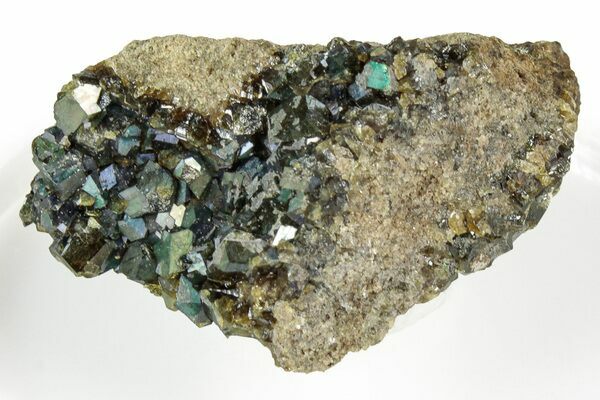
Iridescent, rainbow Andradite garnets from Drammen, Norway.
Andradite develops in a range of high-temperature geological settings, most notably skarns—metamorphic zones formed when magma intrudes into carbonate-rich rock and drives intense chemical alteration. It also occurs in serpentinites, basalts, and contact-altered limestones, making it one of the more environmentally diverse garnet species. These varied conditions contribute to the remarkable differences in color, crystal habit, and inclusions seen from one locality to another.
Some of the world’s most significant sources include:
Russia – Ural Mountains
The birthplace of classic demantoid, famed for producing crystals with the iconic “horsetail” inclusions that have become synonymous with the variety. Russian stones remain highly prized for their historic significance and distinctive internal features.
Namibia
A major modern producer of demantoid, known for exceptionally bright, vivid greens and excellent clarity. Many gems from these deposits rival or surpass their Russian counterparts in brilliance.
Italy – Val Malenco & Val d’Ala
These Alpine localities have long yielded superb demantoid and topazolite. Val Malenco in particular is celebrated for producing vividly colored, remarkably transparent crystals.
Mexico – San Luis Potosí
Renowned for its striking topazolite and yellow-green andradite clusters, often forming intricate, highly lustrous aggregates.
United States
California is a classic source of glossy black melanite from its volcanic fields, while Arizona and Utah host green andradite in skarn deposits associated with diopside and other metamorphic minerals.
Japan
Home to the spectacular iridescent andradite—often called “rainbow garnet”—where extremely thin layered structures diffract light into vivid flashes of color.
Pakistan & Afghanistan
These regions produce sharp, lustrous crystals that frequently occur alongside minerals such as epidote, clinozoisite, and diopside, creating visually appealing and scientifically interesting associations.
Andradite develops under high-temperature, chemically reactive conditions, most often during contact metamorphism—a process that occurs when hot magma intrudes into surrounding rock and bakes it from the outside in. When the host rock is carbonate-rich, such as limestone or dolostone, the intruding magma releases silica-rich, iron-bearing hydrothermal fluids that permeate fractures and pore spaces. As these fluids mix with the calcium-rich carbonates, dramatic chemical exchanges take place. The original minerals begin to dissolve, new ones precipitate, and entirely new rock types—known as skarns—are created.
In this environment, the essential ingredients for andradite converge:
Calcium supplied by the carbonate host rock
Iron (Fe³⁺) carried in the hot, oxidizing fluids
Silica released as the original rock partially dissolves and re-crystallizes
Under temperatures often exceeding 500–700°C, these components react to form andradite, crystallizing along fractures, within metamorphic reaction zones, or in cavities formed during the alteration process. The pace of cooling, fluid chemistry, and pressure conditions all influence the final size, color, and clarity of the crystals. That’s why skarn deposits can yield everything from glossy black melanite to transparent honey-yellow topazolite and vivid green demantoid.
Andradite can also form in serpentinite environments, where ultramafic rocks rich in magnesium and iron undergo hydration and alteration. These settings are particularly important for the growth of demantoid. Here, subtle variations in trace elements—especially chromium and iron—govern the gem’s color, with chromium producing the deepest greens. The growth environment in serpentinites often involves rapid shifts in pressure and localized fracturing, conditions that allow fibrous amphibole minerals such as byssolite to grow alongside or inside the developing garnet. These fibrous inclusions may radiate outward from a central point, forming the famous “horsetail” patterns seen in classic Russian demantoids.
The interplay of heat, fluid flow, chemistry, and deformation makes andradite a mineral that captures a moment in geological time. Each crystal is a record of the conditions under which it grew—whether in the violent boundary zone of a magma chamber or deep within altered mantle rocks transformed by serpentinization. That complexity is part of what makes andradite so varied and visually distinctive across its many localities.
Andradite often occurs alongside: Diopside, Epidote, Clinozoisite, Serpentine, Magnetite, Calcite, Wollastonite, Chlorite, Fluorite (in some skarn systems)
These minerals reflect the typical high-temperature, calcium-rich, metamorphic conditions necessary for andradite formation. Its presence is often used as an indicator of skarn mineralization in economic geology.
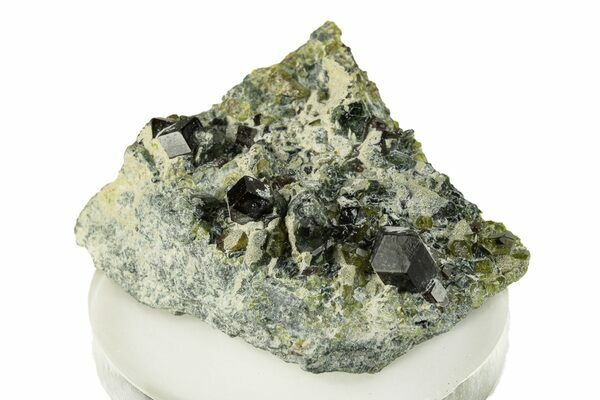
Andradite Garnets with Epidote and Diopside from Afghanistan.
Andradite holds a unique place in the story of mineralogy and gem culture, bridging scientific discovery, imperial artistry, and centuries of human fascination with garnets. Although garnets have been used as gemstones since antiquity, andradite itself was not formally recognized as a distinct species until 1868, when it was named in honor of José Bonifácio de Andrada e Silva—a pioneering Brazilian naturalist and mineralogist who also identified several other important minerals. His investigations into crystal chemistry and mineral classification helped lay the foundation for the modern understanding of the garnet group.
The variety that would bring andradite global attention—demantoid—was discovered in the Ural Mountains during the mid-19th century. Word spread quickly among European gem cutters and jewelers, who were astonished by its fiery brilliance and rich green hues. By the late 1800s, demantoid had become one of the most fashionable gemstones in Russia and Western Europe. Its exceptional dispersion made it sparkle even more intensely than diamonds in candlelight, a lighting environment in which much jewelry of the era was worn.
The gemstone reached its artistic peak under the hand of Peter Carl Fabergé, the famed imperial jeweler. Fabergé incorporated demantoid into many of his creations—brooches, tiaras, and even the legendary Fabergé eggs—helping solidify its status as one of the most prestigious colored gemstones available at the time. Because production from the Urals was limited, fine demantoid became both a luxury and a symbol of refined taste among European aristocracy.
Other varieties of andradite also found cultural significance. Melanite, with its deep, opaque black coloration, became a favored stone in the Victorian era when mourning jewelry was a major cultural trend. Its somber beauty fit the aesthetic ideals of the time, and its natural luster made it an appealing alternative to onyx or jet.
Long before andradite was scientifically distinguished, dark garnets of various types were used by ancient civilizations as protective talismans, symbols of vitality, or amulets believed to guard against injury. While demantoid itself was unknown outside Russia until the 19th century, the garnet family as a whole carried deep symbolic meaning. Warriors in ancient Asia, the Mediterranean, and the Middle East are said to have worn garnets into battle, believing the stones possessed protective or life-affirming powers.
In the modern era, andradite continues to hold both scientific and aesthetic value. Mineralogists study it for insights into skarn formation, metamorphic processes, and pressure-temperature histories recorded within inclusions. Gemologists prize demantoid and topazolite for their exceptional brilliance, while collectors appreciate the dramatic variety of colors, habits, and localities—ranging from the iridescent plates of Japan to the mirror-bright crystals of Mexico and the luminous greens of Namibia.
Today, andradite occupies a dual role: it is a window into Earth’s geologic transformations and a jewel of enduring global appeal. Its beauty, rarity, and scientific richness ensure that it remains one of the most captivating members of the garnet family—admired by collectors, revered by jewelers, and studied by researchers worldwide.
What makes andradite especially fascinating is its unusual range of appearances and environments. It occurs in volcanic skarns, serpentinite deposits, hydrothermal veins, and contact-metamorphosed limestones—each setting imparting its own personality to the mineral. In one locality it may grow into perfectly geometric dodecahedra; in another, into sharp, twinned trapezohedra coated in metallic iridescence. It is also one of the few garnet species capable of producing a true gem-quality green, earning its variety demantoid a reputation as one of the most valuable colored gemstones in the world—rarer than emerald and capable of outshining diamond.

Beyond its beauty, andradite offers a window into Earth’s geologic processes. Tiny inclusions within demantoid garnets once helped paleontologists confirm that some dinosaur fossils from Mongolia belonged to a new species. Radiating “horsetail inclusions,” meanwhile, have become famous markers of Russian gems and can identify the specific metamorphic conditions under which they formed. Even its name—honoring Portuguese naturalist José Bonifácio de Andrada e Silva—reflects a long history of scientific curiosity.
What Is Andradite?
Andradite is a member of the garnet group, crystallizing in the isometric system and typically forming dodecahedral or trapezohedral crystals. It belongs to the calcium-rich garnet series, where Ca occupies the X site while iron (Fe³⁺) fills the Y site. This gives andradite its signature range of colors and optical properties—including an exceptionally high dispersion index in some varieties, exceeding even that of diamond.
General physical characteristics include:
Its chemical versatility makes andradite one of the most variable and expressive garnet species known.
The Three Major Varieties of Andradite
Demantoid – The Legendary Green Garnet
Demantoid is the most celebrated variety of andradite, famed for its brilliant green color that ranges from soft, yellowish tones to deep emerald hues. Its name derives from the Dutch demant, meaning “diamond-like,” a reference to the extraordinary fire and dispersion that can exceed even that of diamond. Many demantoids from the classic Russian deposits contain delicate radiating “horsetail” inclusions of byssolite, a hallmark sought after by gem collectors. First discovered in the Ural Mountains, demantoid is now also mined in Namibia, Madagascar, Iran, and Italy, yet fine stones remain exceptionally rare. When expertly cut, these gems can out-sparkle most other colored gemstones, making them one of the most coveted garnets in the world.
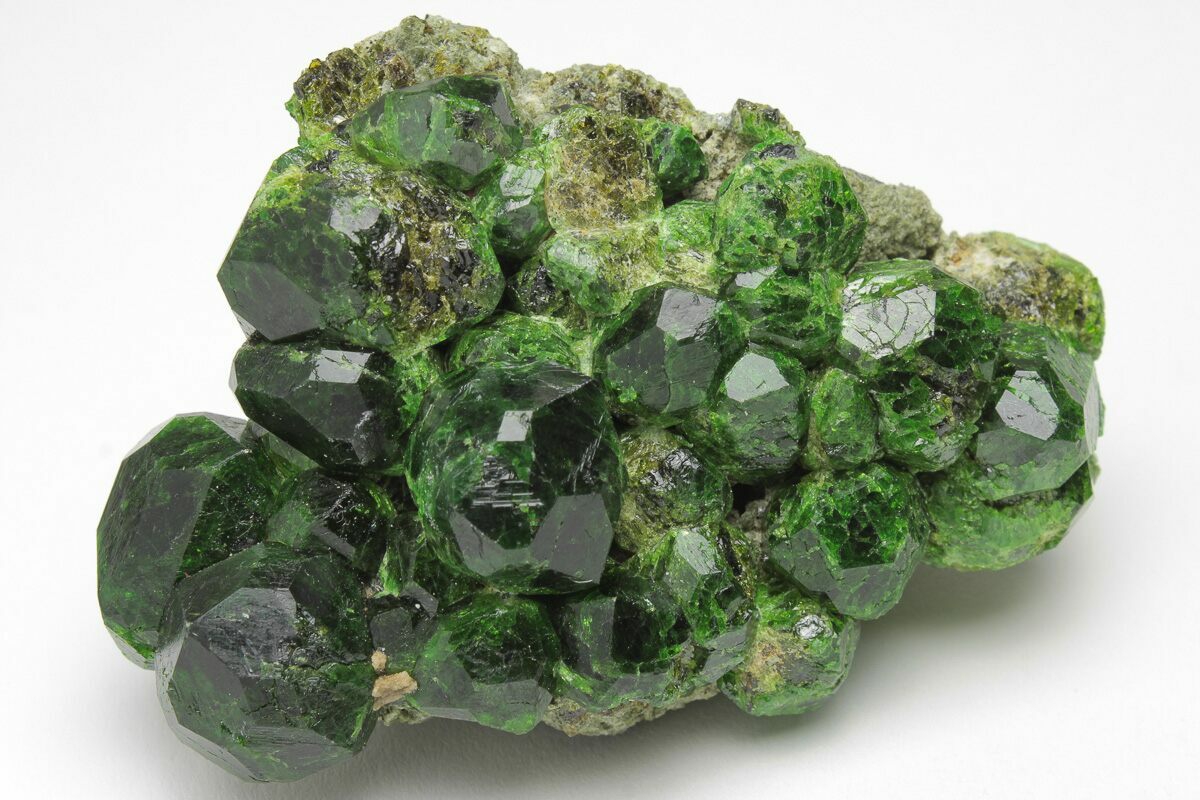
An amazing cluster of dark-green demantoid garnets from Iran.
Melanite – The Jet-Black Titanium Garnet
Melanite is the striking, jet-black variety of andradite, its color produced by titanium and other trace elements. It often forms sharp, lustrous crystals with a mirror-like sheen, giving it a bold, dramatic presence. In the Victorian era it was widely used as a mourning gemstone, valued for its deep, somber tones, and it continues to be a favorite among collectors today. Melanite typically forms in volcanic environments and skarn deposits, where its glossy trapezohedral or dodecahedral crystals can develop to impressive size and symmetry.
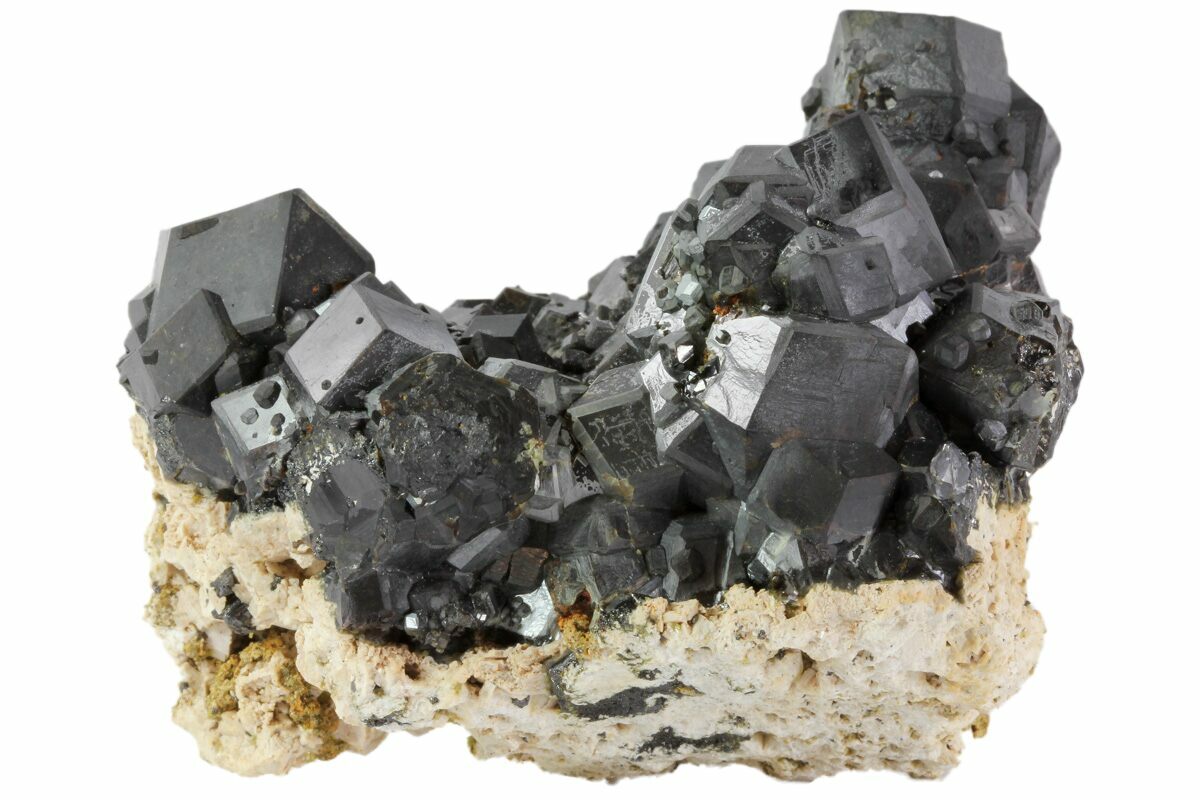
Jet black Melanite garnets from Imilchil, Morocco.
Topazolite – The Honey-Golden Gem
Topazolite represents the warm, yellow to rich honey-colored variety of andradite, cherished for its clarity and vibrant, sunny luster. Though not as widely recognized as demantoid, topazolite of fine quality is significantly rarer, and well-formed crystals can be breathtaking. It is most famously found in Italy’s historic deposits, as well as in Mexico and Namibia, where transparent crystals may closely resemble yellow topaz—an association that inspired the variety’s name.
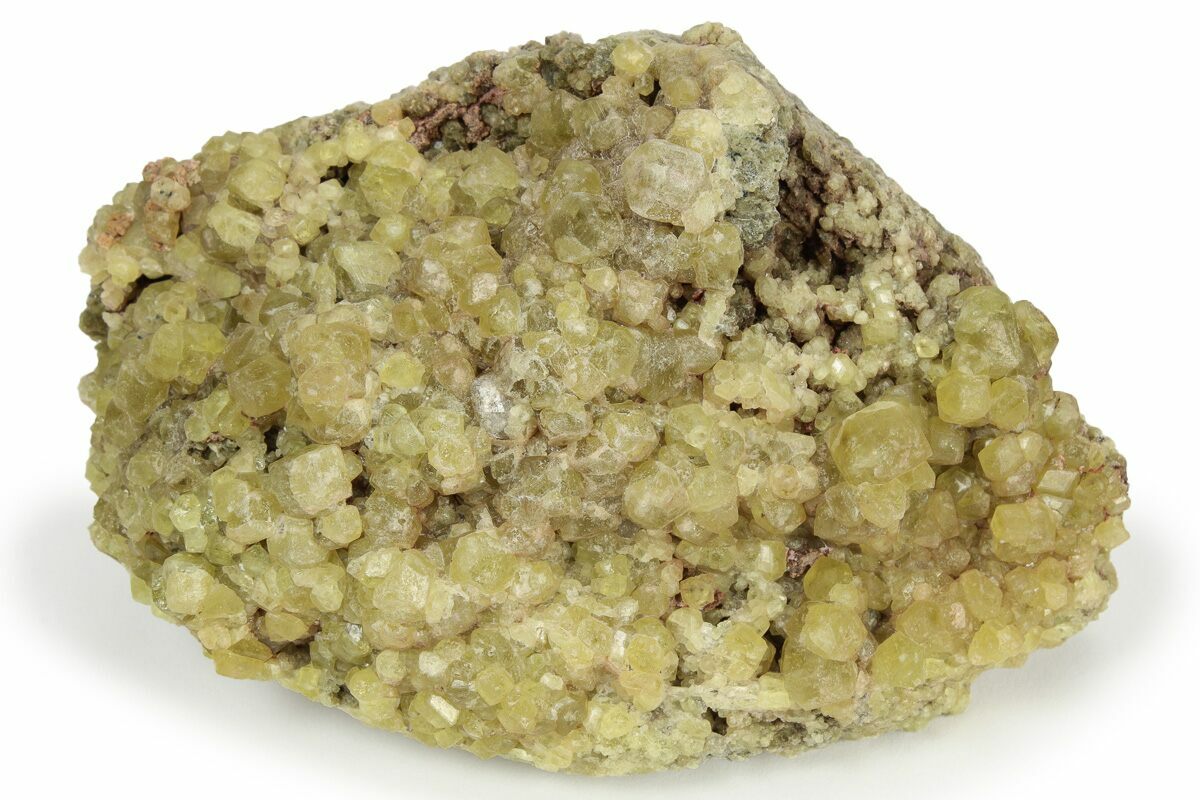
Yellow Topazolite garnets from Mexico.
Rainbow Garnets - Nature’s Prism in Garnet Form
Rainbow andradite garnets are a rare and visually striking variety of andradite prized for their metallic luster and vivid, shifting flashes of color that shimmer across the crystal surfaces. Unlike typical garnets whose color is inherent to the crystal itself, the rainbow effect in these specimens is caused by an extremely thin, naturally formed surface layer—often composed of microscopic crystal growth patterns and oxide films—that creates light interference. As light reflects and refracts across this ultra-thin layer, it splits into spectral colors, producing intense iridescence that can display greens, blues, purples, golds, and reds depending on viewing angle. This phenomenon is similar to the physics behind oil slicks or butterfly wings, but in rainbow andradite it occurs entirely through natural geological processes.
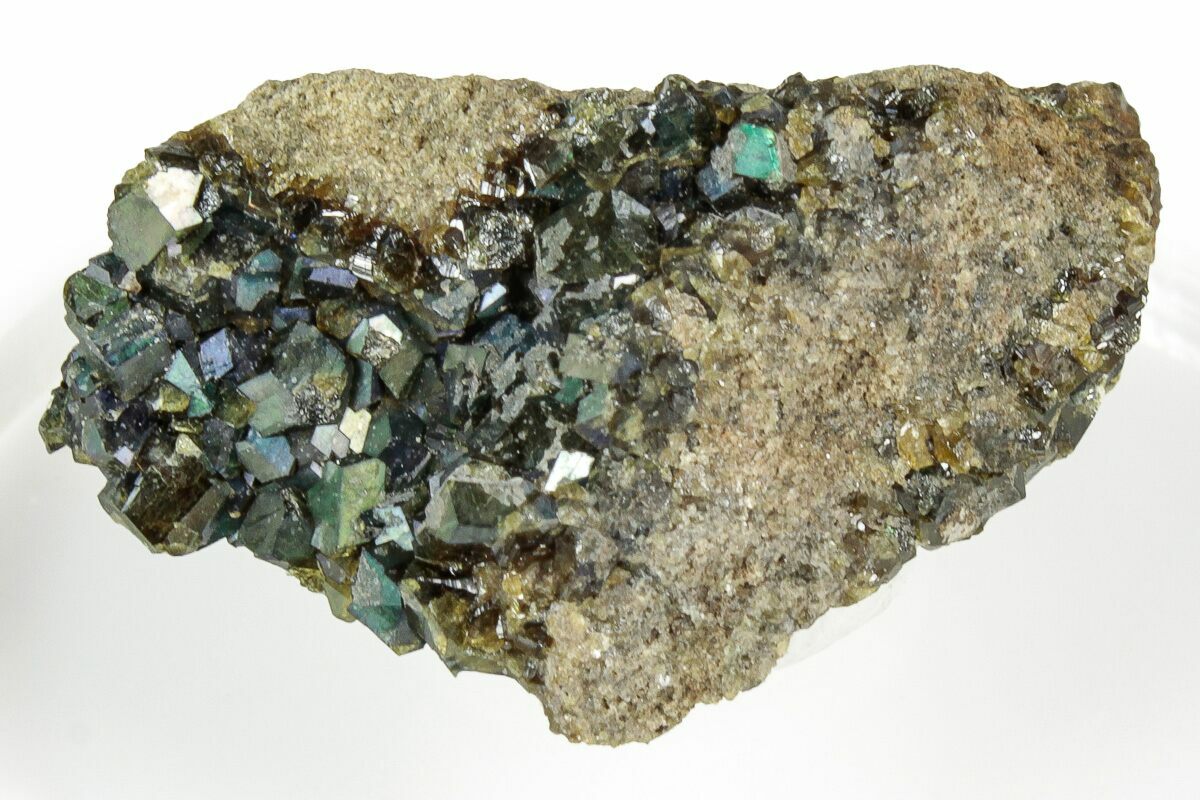
Iridescent, rainbow Andradite garnets from Drammen, Norway.
Where Andradite Is Found
Andradite develops in a range of high-temperature geological settings, most notably skarns—metamorphic zones formed when magma intrudes into carbonate-rich rock and drives intense chemical alteration. It also occurs in serpentinites, basalts, and contact-altered limestones, making it one of the more environmentally diverse garnet species. These varied conditions contribute to the remarkable differences in color, crystal habit, and inclusions seen from one locality to another.
Some of the world’s most significant sources include:
Russia – Ural Mountains
The birthplace of classic demantoid, famed for producing crystals with the iconic “horsetail” inclusions that have become synonymous with the variety. Russian stones remain highly prized for their historic significance and distinctive internal features.
Namibia
A major modern producer of demantoid, known for exceptionally bright, vivid greens and excellent clarity. Many gems from these deposits rival or surpass their Russian counterparts in brilliance.
Italy – Val Malenco & Val d’Ala
These Alpine localities have long yielded superb demantoid and topazolite. Val Malenco in particular is celebrated for producing vividly colored, remarkably transparent crystals.
Mexico – San Luis Potosí
Renowned for its striking topazolite and yellow-green andradite clusters, often forming intricate, highly lustrous aggregates.
United States
California is a classic source of glossy black melanite from its volcanic fields, while Arizona and Utah host green andradite in skarn deposits associated with diopside and other metamorphic minerals.
Japan
Home to the spectacular iridescent andradite—often called “rainbow garnet”—where extremely thin layered structures diffract light into vivid flashes of color.
Pakistan & Afghanistan
These regions produce sharp, lustrous crystals that frequently occur alongside minerals such as epidote, clinozoisite, and diopside, creating visually appealing and scientifically interesting associations.
How Andradite Forms
Andradite develops under high-temperature, chemically reactive conditions, most often during contact metamorphism—a process that occurs when hot magma intrudes into surrounding rock and bakes it from the outside in. When the host rock is carbonate-rich, such as limestone or dolostone, the intruding magma releases silica-rich, iron-bearing hydrothermal fluids that permeate fractures and pore spaces. As these fluids mix with the calcium-rich carbonates, dramatic chemical exchanges take place. The original minerals begin to dissolve, new ones precipitate, and entirely new rock types—known as skarns—are created.
In this environment, the essential ingredients for andradite converge:
Under temperatures often exceeding 500–700°C, these components react to form andradite, crystallizing along fractures, within metamorphic reaction zones, or in cavities formed during the alteration process. The pace of cooling, fluid chemistry, and pressure conditions all influence the final size, color, and clarity of the crystals. That’s why skarn deposits can yield everything from glossy black melanite to transparent honey-yellow topazolite and vivid green demantoid.
Andradite can also form in serpentinite environments, where ultramafic rocks rich in magnesium and iron undergo hydration and alteration. These settings are particularly important for the growth of demantoid. Here, subtle variations in trace elements—especially chromium and iron—govern the gem’s color, with chromium producing the deepest greens. The growth environment in serpentinites often involves rapid shifts in pressure and localized fracturing, conditions that allow fibrous amphibole minerals such as byssolite to grow alongside or inside the developing garnet. These fibrous inclusions may radiate outward from a central point, forming the famous “horsetail” patterns seen in classic Russian demantoids.
The interplay of heat, fluid flow, chemistry, and deformation makes andradite a mineral that captures a moment in geological time. Each crystal is a record of the conditions under which it grew—whether in the violent boundary zone of a magma chamber or deep within altered mantle rocks transformed by serpentinization. That complexity is part of what makes andradite so varied and visually distinctive across its many localities.
Mineral Associations
Andradite often occurs alongside: Diopside, Epidote, Clinozoisite, Serpentine, Magnetite, Calcite, Wollastonite, Chlorite, Fluorite (in some skarn systems)
These minerals reflect the typical high-temperature, calcium-rich, metamorphic conditions necessary for andradite formation. Its presence is often used as an indicator of skarn mineralization in economic geology.
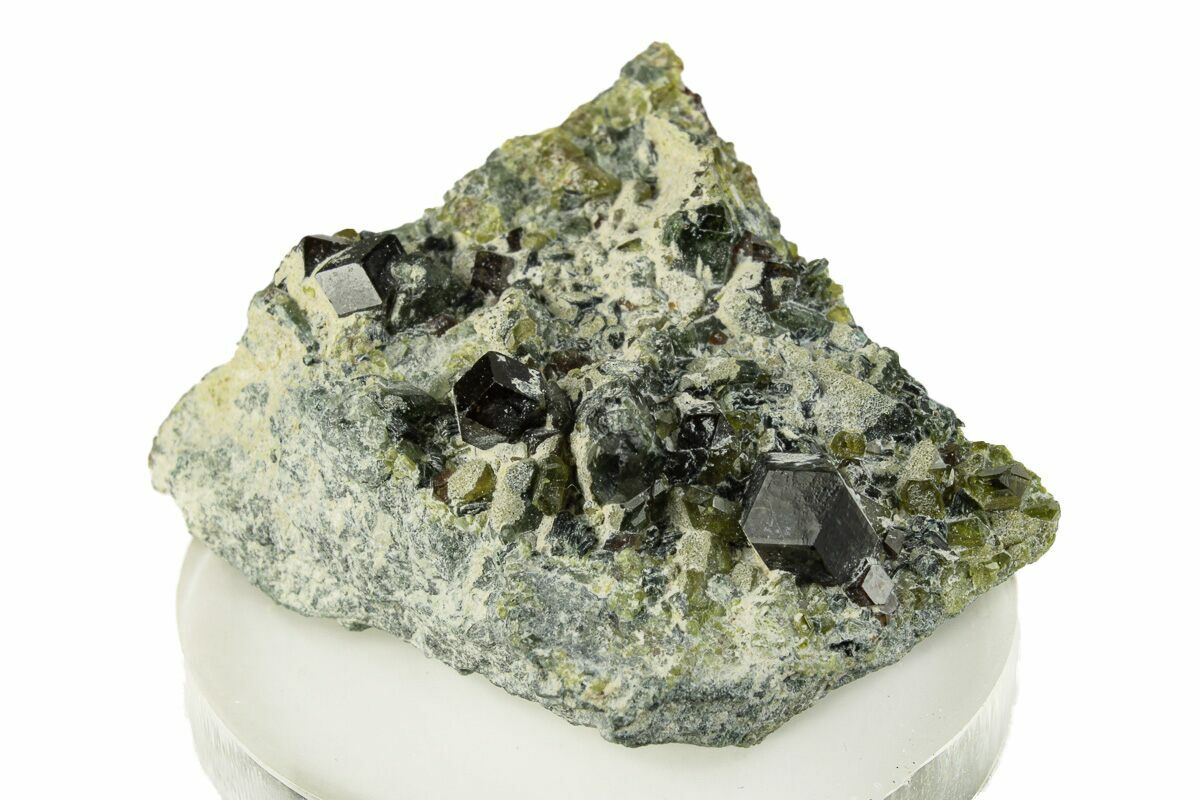
Andradite Garnets with Epidote and Diopside from Afghanistan.
Historical and Cultural Significance
Andradite holds a unique place in the story of mineralogy and gem culture, bridging scientific discovery, imperial artistry, and centuries of human fascination with garnets. Although garnets have been used as gemstones since antiquity, andradite itself was not formally recognized as a distinct species until 1868, when it was named in honor of José Bonifácio de Andrada e Silva—a pioneering Brazilian naturalist and mineralogist who also identified several other important minerals. His investigations into crystal chemistry and mineral classification helped lay the foundation for the modern understanding of the garnet group.
The variety that would bring andradite global attention—demantoid—was discovered in the Ural Mountains during the mid-19th century. Word spread quickly among European gem cutters and jewelers, who were astonished by its fiery brilliance and rich green hues. By the late 1800s, demantoid had become one of the most fashionable gemstones in Russia and Western Europe. Its exceptional dispersion made it sparkle even more intensely than diamonds in candlelight, a lighting environment in which much jewelry of the era was worn.
The gemstone reached its artistic peak under the hand of Peter Carl Fabergé, the famed imperial jeweler. Fabergé incorporated demantoid into many of his creations—brooches, tiaras, and even the legendary Fabergé eggs—helping solidify its status as one of the most prestigious colored gemstones available at the time. Because production from the Urals was limited, fine demantoid became both a luxury and a symbol of refined taste among European aristocracy.
Other varieties of andradite also found cultural significance. Melanite, with its deep, opaque black coloration, became a favored stone in the Victorian era when mourning jewelry was a major cultural trend. Its somber beauty fit the aesthetic ideals of the time, and its natural luster made it an appealing alternative to onyx or jet.
Long before andradite was scientifically distinguished, dark garnets of various types were used by ancient civilizations as protective talismans, symbols of vitality, or amulets believed to guard against injury. While demantoid itself was unknown outside Russia until the 19th century, the garnet family as a whole carried deep symbolic meaning. Warriors in ancient Asia, the Mediterranean, and the Middle East are said to have worn garnets into battle, believing the stones possessed protective or life-affirming powers.
In the modern era, andradite continues to hold both scientific and aesthetic value. Mineralogists study it for insights into skarn formation, metamorphic processes, and pressure-temperature histories recorded within inclusions. Gemologists prize demantoid and topazolite for their exceptional brilliance, while collectors appreciate the dramatic variety of colors, habits, and localities—ranging from the iridescent plates of Japan to the mirror-bright crystals of Mexico and the luminous greens of Namibia.
Today, andradite occupies a dual role: it is a window into Earth’s geologic transformations and a jewel of enduring global appeal. Its beauty, rarity, and scientific richness ensure that it remains one of the most captivating members of the garnet family—admired by collectors, revered by jewelers, and studied by researchers worldwide.


