 Reviews

Demantoid Garnet: Mineral & Crystal Guide
In the world of gemstones, few names spark as much excitement among collectors and jewelers as demantoid garnet. It’s a gem that combines rarity, color, brilliance, and history into one unforgettable package. Though it belongs to the garnet family—a group often associated with deep reds—demantoid shatters expectations with its vibrant green hues and dazzling fire. In fact, demantoid has a higher dispersion (the splitting of white light into spectral colors) than diamond itself. When properly cut, it can flash with rainbow brilliance that rivals the world’s most famous gemstone.
The name “demantoid” comes from the Dutch word demant, meaning diamond—a nod to its exceptional sparkle. But its beauty goes beyond optics. Some demantoids contain delicate, feathery golden inclusions known as “horsetails,” radiating in curved sprays from tiny chromite crystals. Rather than diminishing the gem’s value, these inclusions can actually increase it, serving as a fingerprint of origin—especially in the most coveted stones from Russia’s Ural Mountains.
Discovered in the 19th century and quickly embraced by Russian aristocracy and the famed jeweler Carl Fabergé, demantoid has long been associated with refinement and exclusivity. Production has always been limited, and high-quality stones above two carats are exceptionally rare. For collectors, demantoid represents a perfect convergence of science, history, and natural artistry.
Mineral Group: Garnet (Andradite variety)
Chemical Formula: Ca₃Fe₂(SiO₄)₃
Color: Yellow-green to deep emerald-green
Cause of Color: Trace chromium and/or iron
Crystal System: Cubic (Isometric)
Hardness: 6.5–7 on the Mohs scale
Specific Gravity: ~3.8–3.9
Refractive Index: 1.88–1.94
Dispersion: 0.057 (higher than diamond’s 0.044)
Cleavage: None
Fracture: Conchoidal to uneven
Transparency: Transparent to translucent
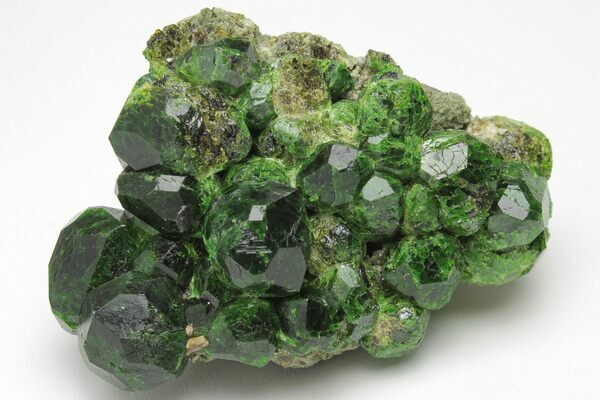
Dark-Green Demantoid Garnets from the Belqeys Mountain in Iran.
Demantoid garnets are a variety of andradite garnet, forming in calcium-rich environments typically associated with metamorphic and hydrothermal processes. Most classic demantoids form in serpentinite-hosted deposits, where ultramafic rocks (rich in magnesium and iron) undergo metamorphism. During this transformation, fluids circulating through the rocks introduce calcium and silica, which react with iron-bearing minerals to form andradite garnet crystals. When trace amounts of chromium are present, the resulting garnet takes on its prized green coloration.
The famous Russian demantoids from the Ural Mountains formed in this type of geologic setting. Their distinctive horsetail inclusions are typically composed of fibrous byssolite (a form of amphibole) radiating outward from chromite crystals—minerals commonly found in ultramafic rocks. In other regions, such as Namibia and Madagascar, demantoids may form in slightly different geological contexts, including skarn deposits—metamorphic rocks formed at the contact between igneous intrusions and carbonate rocks. The exact chemistry of each locality subtly influences the gem’s color tone, inclusion patterns, and crystal habit.
Crystals are usually small, often under one carat when cut. Large, clean crystals are geologically rare, which adds to their desirability and value.
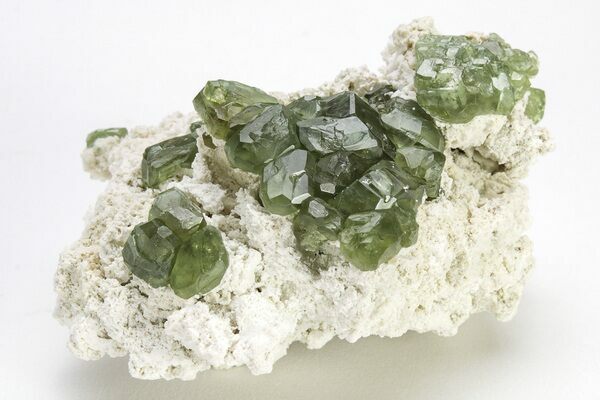
Demantoid garnet cluster from Antetezambato Demantoid-Topazolite Mine, Ambanja, Diana, Madagascar
Demantoid was first discovered in the mid-1800s in Russia’s Ural Mountains, near the Bobrovka River. At first, miners believed they had found emeralds due to the vivid green color. Mineralogical analysis revealed they were instead a green variety of andradite garnet—a variety previously known but not appreciated in gem form. The gem was named “demantoid” because of its diamond-like brilliance and fire. By the late 19th century, it had become one of the most fashionable gemstones in Russia and Europe.
Demantoid reached its peak popularity during the late 1800s and early 1900s. The legendary Russian jeweler Carl Fabergé incorporated demantoids into elaborate pieces, including imperial jewelry and decorative objets d’art. The gem’s vibrant color complemented gold and enamel beautifully, and it became a hallmark of refined taste among Russian nobility. Following the Russian Revolution in 1917, mining largely ceased, and demantoid became scarce on the international market. For decades, it was considered one of the rarest and most mysterious green gems.
Today, demantoid is prized primarily for fine jewelry such as rings, earrings, pendants, and brooches, as well as by collectors seeking gemstones with classic Russian horsetail inclusions. It is also highly valued as an investment gem, particularly stones over 1–2 carats with rich green color. Because of its moderate hardness (6.5–7), demantoid is best suited for jewelry that receives moderate wear or is set in protective settings, though antique pieces have survived beautifully for over a century.
Demantoid has been discovered in only a handful of significant localities worldwide, each producing material with its own distinctive characteristics. Differences in color, clarity, crystal size, and inclusions — particularly the famous “horsetail” inclusions — often reflect the geological conditions of each source. Below are the most important demantoid-producing regions and what makes them unique.
The Ural Mountains remain the most famous and historically significant source of demantoid. First discovered in the 1850s, these deposits produced stones of extraordinary color—often a rich, slightly yellowish emerald green—and the classic horsetail inclusions that collectors prize.
Russian demantoids are typically small but highly saturated in color. Stones with visible horsetail inclusions are often more valuable than eye-clean stones, as they confirm origin and authenticity. Mining has occurred intermittently since the 19th century, with renewed production in the 1990s. However, supply remains limited, and fine Russian stones command premium prices.
Namibia emerged as a major demantoid source in the late 20th century. The Green Dragon Mine and other deposits have produced stones that are often cleaner and sometimes larger than Russian material. Namibian demantoids typically display a bright, vivid green color, though they may lack the classic horsetail inclusions. Their clarity and slightly different color tone—sometimes more purely green and less yellowish—make them popular in modern jewelry. Stones over two carats, while still rare, are more frequently encountered from Namibia than from Russia.
Madagascar has become an increasingly important source of demantoid in recent decades. The stones from this island nation can range from yellow-green to deep green and often occur in association with other garnet varieties. Some Malagasy demantoids show inclusion patterns reminiscent of Russian stones, though classic horsetails are less common. Production can be sporadic, but Madagascar has contributed significantly to global supply, offering collectors and jewelers an alternative to traditional Russian sources.
Northern Italy, particularly the Val Malenco region in the Alps, has produced demantoid garnets since the late 19th century. Italian stones are often lighter in color, sometimes leaning toward yellow-green. Though generally smaller and less saturated than Russian gems, Italian demantoids are historically important and valued by mineral collectors. Crystals from this region are often preserved in matrix, making them attractive specimens rather than cut gemstones.
Additional occurrences of demantoid have been reported in:
Iran
Pakistan
Afghanistan
United States (Arizona and California)
These deposits tend to produce limited quantities and are less commercially significant, but they add to the global story of this fascinating gem.
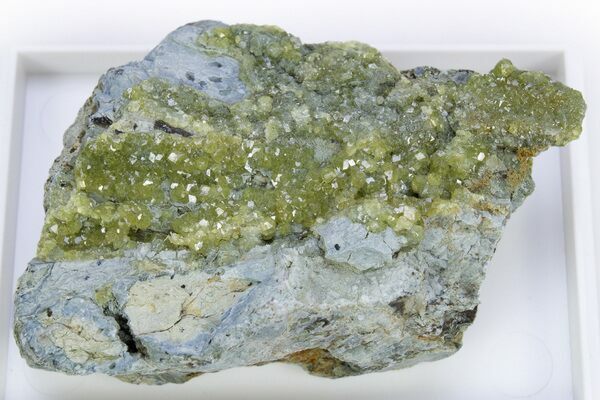
Small demantoid garnets from Green Fire Mine, Santa Rita Peak, San Benito County, California

The name “demantoid” comes from the Dutch word demant, meaning diamond—a nod to its exceptional sparkle. But its beauty goes beyond optics. Some demantoids contain delicate, feathery golden inclusions known as “horsetails,” radiating in curved sprays from tiny chromite crystals. Rather than diminishing the gem’s value, these inclusions can actually increase it, serving as a fingerprint of origin—especially in the most coveted stones from Russia’s Ural Mountains.
Discovered in the 19th century and quickly embraced by Russian aristocracy and the famed jeweler Carl Fabergé, demantoid has long been associated with refinement and exclusivity. Production has always been limited, and high-quality stones above two carats are exceptionally rare. For collectors, demantoid represents a perfect convergence of science, history, and natural artistry.
Physical Properties
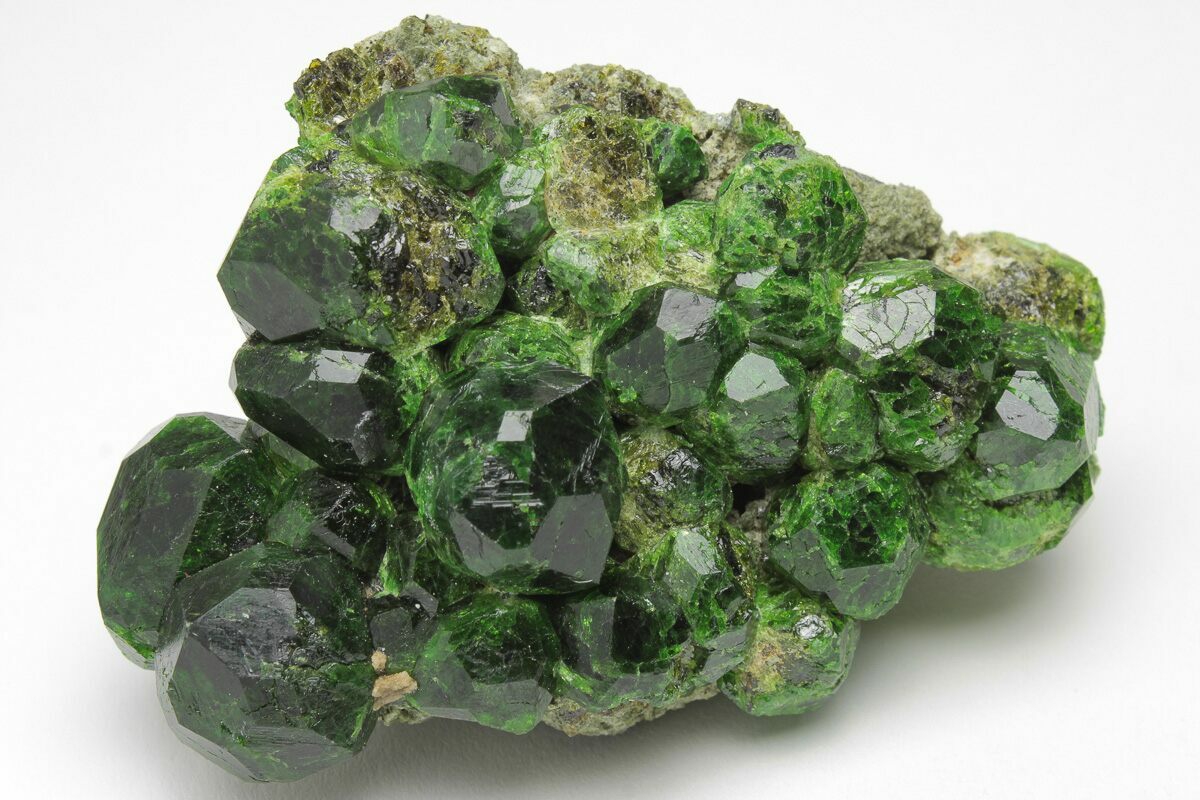
Dark-Green Demantoid Garnets from the Belqeys Mountain in Iran.
How Demantoid Garnets Form
Demantoid garnets are a variety of andradite garnet, forming in calcium-rich environments typically associated with metamorphic and hydrothermal processes. Most classic demantoids form in serpentinite-hosted deposits, where ultramafic rocks (rich in magnesium and iron) undergo metamorphism. During this transformation, fluids circulating through the rocks introduce calcium and silica, which react with iron-bearing minerals to form andradite garnet crystals. When trace amounts of chromium are present, the resulting garnet takes on its prized green coloration.
The famous Russian demantoids from the Ural Mountains formed in this type of geologic setting. Their distinctive horsetail inclusions are typically composed of fibrous byssolite (a form of amphibole) radiating outward from chromite crystals—minerals commonly found in ultramafic rocks. In other regions, such as Namibia and Madagascar, demantoids may form in slightly different geological contexts, including skarn deposits—metamorphic rocks formed at the contact between igneous intrusions and carbonate rocks. The exact chemistry of each locality subtly influences the gem’s color tone, inclusion patterns, and crystal habit.
Crystals are usually small, often under one carat when cut. Large, clean crystals are geologically rare, which adds to their desirability and value.
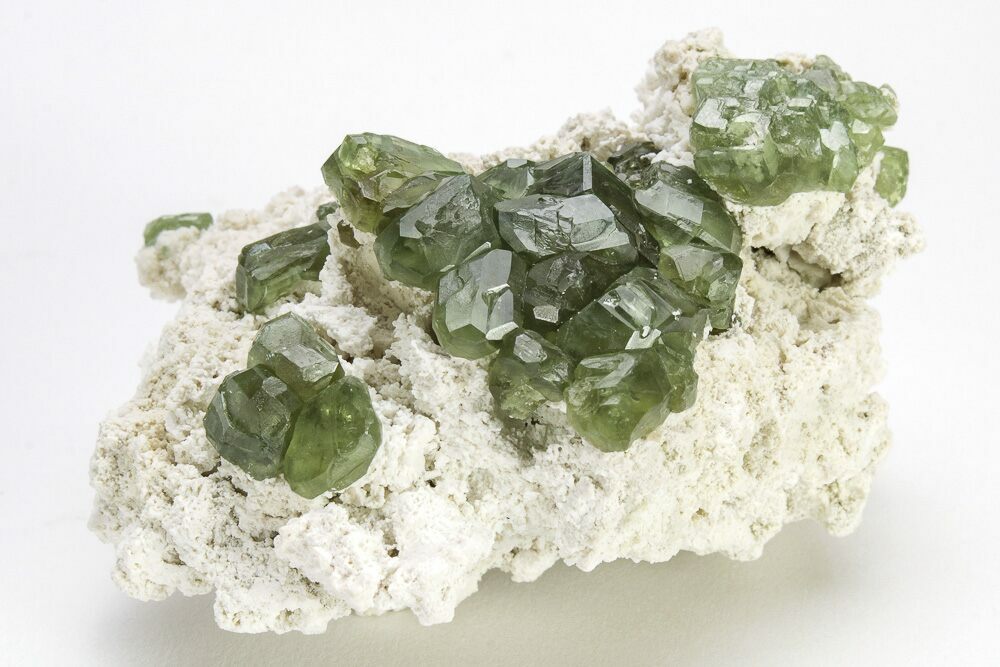
Demantoid garnet cluster from Antetezambato Demantoid-Topazolite Mine, Ambanja, Diana, Madagascar
History, Discovery, and Uses
Demantoid was first discovered in the mid-1800s in Russia’s Ural Mountains, near the Bobrovka River. At first, miners believed they had found emeralds due to the vivid green color. Mineralogical analysis revealed they were instead a green variety of andradite garnet—a variety previously known but not appreciated in gem form. The gem was named “demantoid” because of its diamond-like brilliance and fire. By the late 19th century, it had become one of the most fashionable gemstones in Russia and Europe.
Demantoid reached its peak popularity during the late 1800s and early 1900s. The legendary Russian jeweler Carl Fabergé incorporated demantoids into elaborate pieces, including imperial jewelry and decorative objets d’art. The gem’s vibrant color complemented gold and enamel beautifully, and it became a hallmark of refined taste among Russian nobility. Following the Russian Revolution in 1917, mining largely ceased, and demantoid became scarce on the international market. For decades, it was considered one of the rarest and most mysterious green gems.
Today, demantoid is prized primarily for fine jewelry such as rings, earrings, pendants, and brooches, as well as by collectors seeking gemstones with classic Russian horsetail inclusions. It is also highly valued as an investment gem, particularly stones over 1–2 carats with rich green color. Because of its moderate hardness (6.5–7), demantoid is best suited for jewelry that receives moderate wear or is set in protective settings, though antique pieces have survived beautifully for over a century.
Key Collecting Localities
Demantoid has been discovered in only a handful of significant localities worldwide, each producing material with its own distinctive characteristics. Differences in color, clarity, crystal size, and inclusions — particularly the famous “horsetail” inclusions — often reflect the geological conditions of each source. Below are the most important demantoid-producing regions and what makes them unique.
Ural Mountains, Russia
The Ural Mountains remain the most famous and historically significant source of demantoid. First discovered in the 1850s, these deposits produced stones of extraordinary color—often a rich, slightly yellowish emerald green—and the classic horsetail inclusions that collectors prize.
Russian demantoids are typically small but highly saturated in color. Stones with visible horsetail inclusions are often more valuable than eye-clean stones, as they confirm origin and authenticity. Mining has occurred intermittently since the 19th century, with renewed production in the 1990s. However, supply remains limited, and fine Russian stones command premium prices.
Namibia
Namibia emerged as a major demantoid source in the late 20th century. The Green Dragon Mine and other deposits have produced stones that are often cleaner and sometimes larger than Russian material. Namibian demantoids typically display a bright, vivid green color, though they may lack the classic horsetail inclusions. Their clarity and slightly different color tone—sometimes more purely green and less yellowish—make them popular in modern jewelry. Stones over two carats, while still rare, are more frequently encountered from Namibia than from Russia.
Madagascar
Madagascar has become an increasingly important source of demantoid in recent decades. The stones from this island nation can range from yellow-green to deep green and often occur in association with other garnet varieties. Some Malagasy demantoids show inclusion patterns reminiscent of Russian stones, though classic horsetails are less common. Production can be sporadic, but Madagascar has contributed significantly to global supply, offering collectors and jewelers an alternative to traditional Russian sources.
Italy (Val Malenco)
Northern Italy, particularly the Val Malenco region in the Alps, has produced demantoid garnets since the late 19th century. Italian stones are often lighter in color, sometimes leaning toward yellow-green. Though generally smaller and less saturated than Russian gems, Italian demantoids are historically important and valued by mineral collectors. Crystals from this region are often preserved in matrix, making them attractive specimens rather than cut gemstones.
Other Notable Sources
Additional occurrences of demantoid have been reported in:
These deposits tend to produce limited quantities and are less commercially significant, but they add to the global story of this fascinating gem.
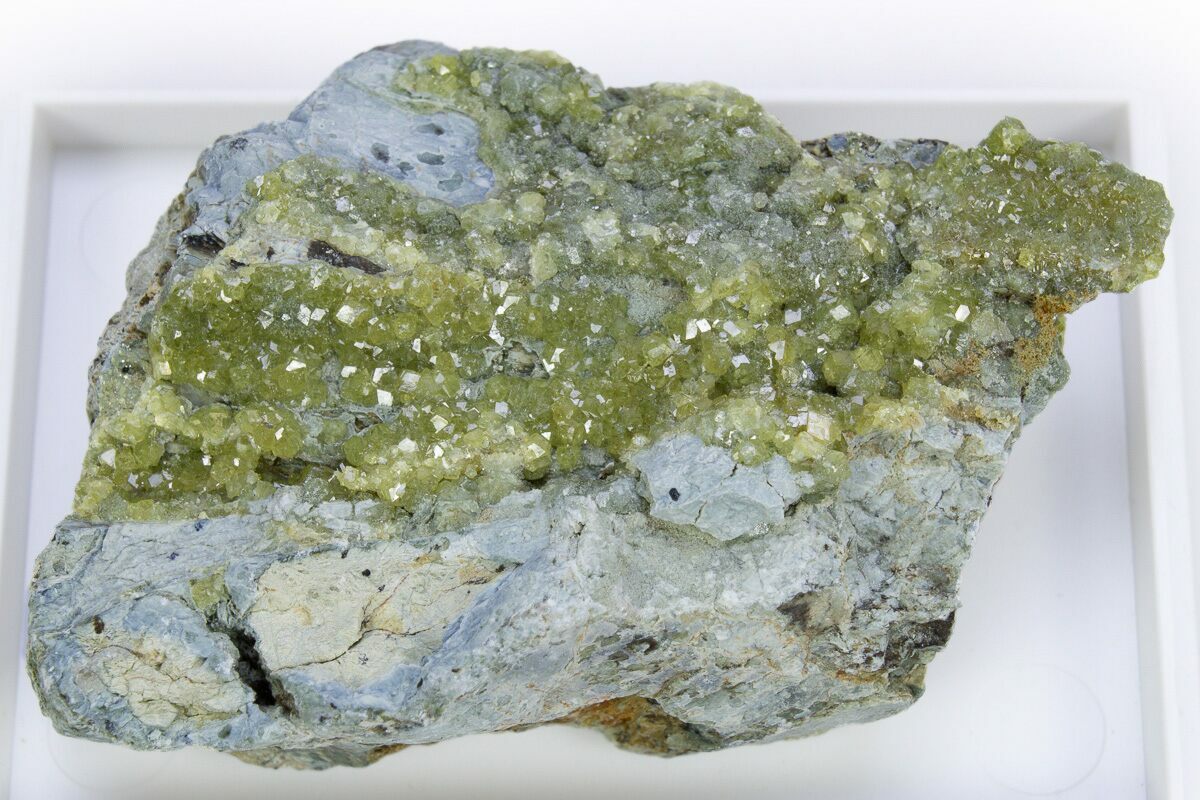
Small demantoid garnets from Green Fire Mine, Santa Rita Peak, San Benito County, California


