 Reviews

Lapis Lazuli: The Legendary Blue Stone of Kings & Gods
Few stones in human history are as instantly recognizable—or as culturally significant—as lapis lazuli. With its deep ultramarine blue color flecked by golden pyrite and often veined with white calcite, lapis lazuli has captivated civilizations for over 6,000 years. Long before diamonds were cut or emeralds prized, lapis lazuli was regarded as one of the most precious materials on Earth, symbolizing the heavens, divine power, wisdom, and immortality.
Ancient cultures believed lapis lazuli contained the very essence of the night sky. Its intense blue was associated with the cosmos, water, and the divine realm, while shimmering pyrite inclusions were thought to represent stars. This celestial appearance made lapis lazuli a favored material for sacred objects, royal regalia, amulets, and burial goods. Remarkably, many of the world’s earliest trade routes existed largely to transport lapis lazuli from remote mountain mines to the great civilizations of Mesopotamia, Egypt, and the Indus Valley.
Even today, lapis lazuli holds a unique position among stones. Unlike most gemstones, it is not a single mineral, but a rock composed of multiple minerals working together to create one of nature’s most iconic colors.
Lapis lazuli is a metamorphic rock, not a mineral species. Its dominant component is lazurite, a blue feldspathoid mineral responsible for the stone’s rich color. The best-quality lapis lazuli contains a high percentage of lazurite, giving it a deep, uniform blue.
In addition to lazurite, lapis lazuli commonly contains:
Pyrite, which appears as brassy gold flecks or grains
Calcite, forming white or gray veins and patches
Minor amounts of diopside, sodalite, augite, and mica
The balance of these minerals determines the stone’s appearance, quality, and value. While small pyrite inclusions are considered desirable and even iconic, excessive calcite generally lowers the stone’s grade. Because of its moderate hardness, lapis lazuli is best suited for cabochons, beads, carvings, and inlay work rather than faceted gemstones.
Lapis lazuli forms through contact metamorphism, a geological process that occurs when limestone or marble is altered by intense heat and chemically active fluids from nearby magma intrusions. This process typically takes place deep within mountainous regions where tectonic forces bring magma into contact with carbonate rocks.
During metamorphism:
Sodium-rich fluids react with limestone
Lazurite crystallizes under high temperatures and moderate pressures
Pyrite forms from iron and sulfur present in the surrounding rocks
Calcite remnants persist from the original limestone
This unique set of conditions is rare, which is why true lapis lazuli occurs in relatively few locations worldwide.
Afghanistan – The Legendary Source
The most famous and historically important lapis lazuli deposits lie in Badakhshan, northeastern Afghanistan, particularly the Sar-e-Sang mines. These mines have been worked continuously for over 6,000 years, making them among the oldest known mining sites on Earth.
Afghan lapis lazuli is especially prized for its deep, saturated ultramarine blue coloration, often accompanied by minimal visible calcite and finely dispersed pyrite inclusions. When present, the pyrite typically appears as small, evenly distributed golden flecks rather than large or clustered patches, enhancing the stone’s visual depth without overwhelming its rich blue body color. Much of the lapis used in ancient Egyptian artifacts, Mesopotamian seals, and Renaissance pigments originated from these mountains.
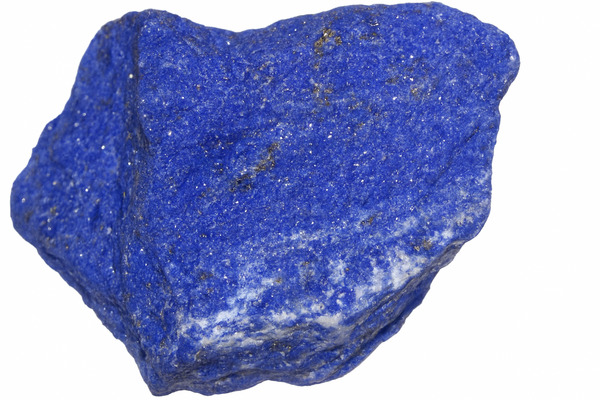
Raw Lapis mined in Afghanistan
Chile - Chile produces lapis lazuli with a lighter blue color and more visible calcite. Chilean lapis is often used for carvings, tiles, and decorative objects rather than fine jewelry.
Russia - Deposits near Lake Baikal in Siberia yield lapis lazuli similar in appearance to Afghan material, though generally with more calcite.
Other Localities - Smaller deposits exist in Pakistan, Myanmar, and the United States, though they are far less historically significant.
Mesopotamia: The Stone of the Gods
Among the earliest civilizations of Mesopotamia, lapis lazuli held a status beyond mere ornament—it was a material of divine power. In ancient Sumer, lapis lazuli was often considered more valuable than gold, a testament to both its rarity and its striking celestial blue color. The stone was imported over vast distances from the mountains of present-day Afghanistan, making it a symbol of wealth, authority, and cosmic significance.
Mesopotamian artisans carved lapis lazuli into cylinder seals used by kings, priests, and administrators, as well as beads, amulets, and inlays for ceremonial weapons and royal objects. The stone appears frequently in Sumerian mythology and literature, most famously in The Epic of Gilgamesh, where lapis lazuli is repeatedly referenced as a sacred and exalted substance associated with the gods, the heavens, and immortality. To the people of Mesopotamia, lapis lazuli was not simply decorative—it was a tangible link between the human and divine realms.
Ancient Egypt: Symbol of the Night Sky and the Afterlife
No civilization embraced lapis lazuli more fully—or more symbolically—than ancient Egypt. For the Egyptians, the deep blue of lapis lazuli represented the night sky, the primordial waters, and the realm of the gods. It was closely associated with rebirth, protection, and divine authority, making it a favored material for both the living and the dead.
Lapis lazuli was widely used in jewelry, amulets, and ceremonial objects worn by royalty and elites. Scarabs carved from lapis were believed to offer protection and spiritual renewal, while inlays of lapis adorned statues, coffins, and sacred objects. One of its most famous appearances is in the funerary mask of Pharaoh Tutankhamun, where lapis lazuli accents emphasize divine kingship and eternal life.
Beyond ornamentation, lapis lazuli was also ground into a fine powder and used as a cosmetic, particularly for eye paint. This practice was both aesthetic and symbolic, as blue eye makeup was believed to invoke the protective power of the gods—especially Isis—and guard against illness and evil. To the Egyptians, lapis lazuli was not just beautiful; it was imbued with spiritual force.
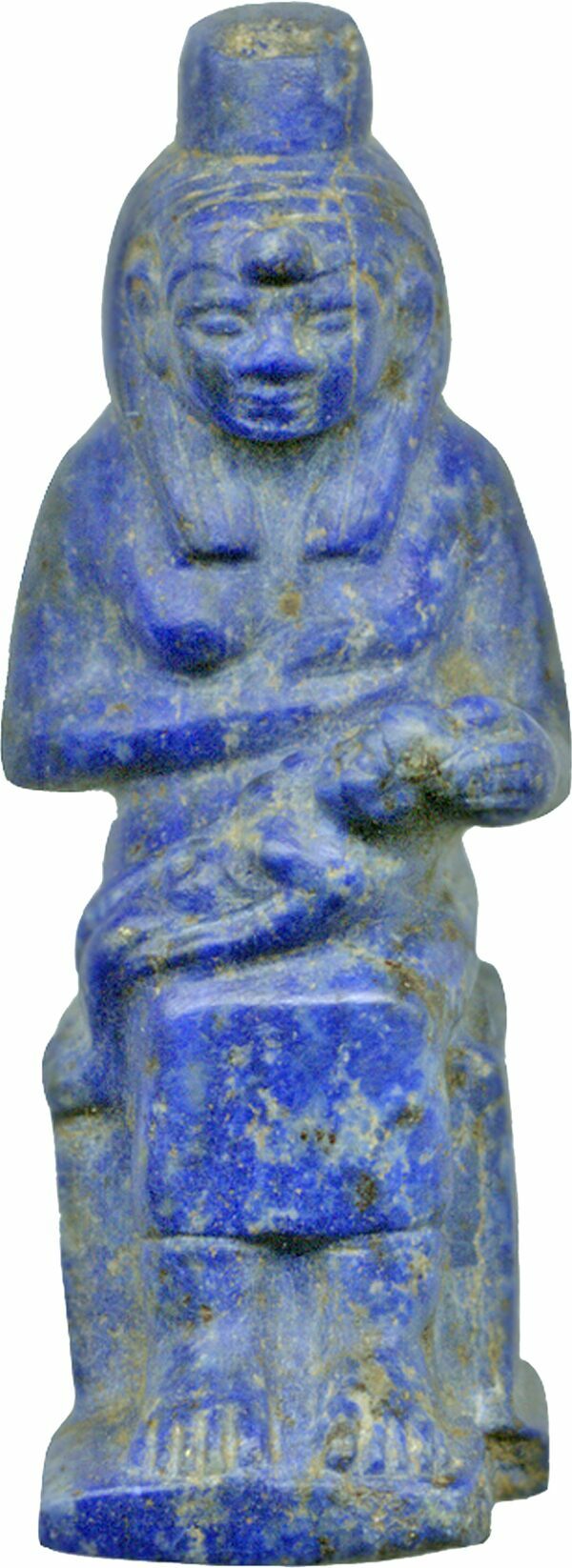
An Egyptian lapis lazuli amulet representing the goddess Isis seated on a throne
The Indus Valley and Ancient China: A Stone of Trade and Ritual
Through early long-distance trade networks, lapis lazuli traveled far beyond the Near East. In the Indus Valley Civilization, lapis lazuli was fashioned into beads, seals, and decorative items, reflecting both its prestige and its role in regional commerce. Archaeological finds show that lapis was highly valued among Indus elites, serving as a marker of status and cultural connection to distant lands.
In ancient China, lapis lazuli was prized for its rich color and symbolic associations with the heavens and immortality. Though less commonly used than jade, lapis lazuli was carved into ornaments and ritual objects and later became associated with Buddhist art and iconography. Its presence in East Asia underscores the extraordinary reach of lapis lazuli trade, linking distant civilizations through a shared reverence for this remarkable blue stone.
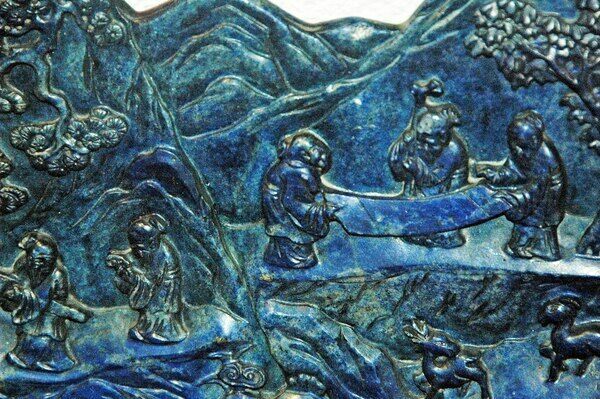
Chinese carved lapis on display at the Cleveland Museum of Natural History
Lapis Lazuli and Ultramarine: The Blue That Changed Art
One of the most extraordinary chapters in the history of lapis lazuli lies not in jewelry or sculpture, but in art. During the Middle Ages and Renaissance, lapis lazuli was painstakingly processed to produce natural ultramarine pigment, the most prized blue ever used by painters. Creating ultramarine was an arduous task, requiring the grinding of lapis lazuli and the careful separation of pure blue lazurite particles from unwanted minerals.
The resulting pigment was so rare and costly that it was often more expensive than gold. Patrons frequently specified its use in contracts, and artists reserved it for the most sacred and important subjects. Ultramarine was most famously used to paint the robes of the Virgin Mary, a visual expression of purity, reverence, and divine grace.
Master artists such as Michelangelo, Vermeer, and Titian relied on lapis-derived ultramarine to achieve luminous blues unmatched by any other pigment of the time. Remarkably, these blues have retained their intensity for centuries, a testament to both the durability of lapis lazuli and its unparalleled beauty.
Across continents and millennia, lapis lazuli has remained a stone of extraordinary cultural importance—uniting ancient trade routes, religious symbolism, royal power, and artistic achievement into a single, unforgettable shade of blue.
Jewelry and Decorative Arts
Lapis lazuli continues to be widely used in jewelry and decorative objects, valued for its rich blue color, natural gold pyrite inclusions, and strong historical identity. Because lapis lazuli is opaque and relatively soft compared to many gemstones, it is typically shaped into cabochons, beads, and polished slabs rather than faceted stones. These forms best showcase its deep color and characteristic patterns.
Modern lapis lazuli jewelry commonly includes pendants, earrings, rings, and bead necklaces, often set in silver or gold to complement the stone’s bold blue tones. Beyond jewelry, lapis lazuli is also carved into figurines, animal sculptures, small boxes, and ornamental objects. Its long tradition as an inlay material continues today, appearing in decorative furniture, mosaic work, architectural accents, and fine art pieces where its vivid color creates striking contrast.
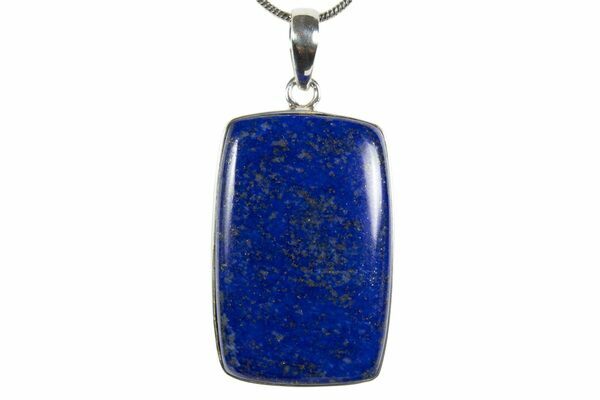
A pendant crafted from Lapis Lazuili
Collecting and Mineral Specimens
High-quality lapis lazuli remains highly sought after by mineral and rock collectors, particularly specimens that exhibit a deep, uniform ultramarine blue with minimal calcite and well-distributed pyrite. Collector-grade lapis often appears as rough blocks, polished faces, or natural specimens that highlight the stone’s mineral composition and geological origins.
Specimens from historic localities—especially Afghanistan—are especially prized due to their exceptional color and long mining history. Some collectors also seek lapis lazuli for its educational value, as it provides a clear example of a metamorphic rock composed of multiple minerals working together to create a single iconic appearance.
Symbolic, Cultural, and Metaphysical Significance
Despite its ancient roots, lapis lazuli continues to carry strong symbolic meaning in modern culture. For thousands of years, it has been associated with wisdom, truth, and intellectual insight, a legacy that persists today. The stone is often linked to clarity of thought, effective communication, and self-expression, echoing its historical role as a material of scholars, rulers, and spiritual leaders.
Lapis lazuli also remains a symbol of royalty, authority, and power, reflecting its long-standing use by kings, pharaohs, and religious elites. In contemporary spiritual and cultural practices, it is frequently viewed as a stone of inner truth and awareness, representing a connection between knowledge, creativity, and the pursuit of higher understanding.
Today, lapis lazuli continues to bridge the ancient and modern worlds—serving as a striking decorative stone, a valued collector’s material, and a timeless symbol of knowledge, beauty, and human fascination with the color blue.
Because of its long history and enduring popularity, lapis lazuli is frequently imitated or enhanced using a variety of substitute materials. Common imitations include dyed stones such as howlite or jasper, synthetic composite materials made from powdered stone and resin, and blue-colored glass designed to mimic lapis’ rich hue. These substitutes can appear convincing at first glance, especially when polished, but they lack the complex natural characteristics of genuine lapis lazuli.
Authentic lapis lazuli displays a combination of features that are difficult to replicate artificially. Natural specimens typically contain uneven, organically distributed pyrite inclusions that appear as small brassy gold flecks rather than uniform or glitter-like particles. Irregular white or gray veins of calcite are also common, reflecting the stone’s metamorphic origin. In terms of color and surface appearance, genuine lapis lazuli tends to have a more subtle, matte blue in its raw or lightly polished state, developing depth and richness as it is polished rather than an overly glossy or plastic-like shine.
When examined closely, these natural variations—rather than perfect uniformity—are often the strongest indicators of authentic lapis lazuli, making each genuine piece visually unique and geologically honest.
Ancient cultures believed lapis lazuli contained the very essence of the night sky. Its intense blue was associated with the cosmos, water, and the divine realm, while shimmering pyrite inclusions were thought to represent stars. This celestial appearance made lapis lazuli a favored material for sacred objects, royal regalia, amulets, and burial goods. Remarkably, many of the world’s earliest trade routes existed largely to transport lapis lazuli from remote mountain mines to the great civilizations of Mesopotamia, Egypt, and the Indus Valley.

Even today, lapis lazuli holds a unique position among stones. Unlike most gemstones, it is not a single mineral, but a rock composed of multiple minerals working together to create one of nature’s most iconic colors.
What Is Lapis Lazuli?
Lapis lazuli is a metamorphic rock, not a mineral species. Its dominant component is lazurite, a blue feldspathoid mineral responsible for the stone’s rich color. The best-quality lapis lazuli contains a high percentage of lazurite, giving it a deep, uniform blue.
In addition to lazurite, lapis lazuli commonly contains:
The balance of these minerals determines the stone’s appearance, quality, and value. While small pyrite inclusions are considered desirable and even iconic, excessive calcite generally lowers the stone’s grade. Because of its moderate hardness, lapis lazuli is best suited for cabochons, beads, carvings, and inlay work rather than faceted gemstones.
How Lapis Lazuli Forms
Lapis lazuli forms through contact metamorphism, a geological process that occurs when limestone or marble is altered by intense heat and chemically active fluids from nearby magma intrusions. This process typically takes place deep within mountainous regions where tectonic forces bring magma into contact with carbonate rocks.
During metamorphism:
This unique set of conditions is rare, which is why true lapis lazuli occurs in relatively few locations worldwide.
Major Lapis Lazuli Mining Localities
Afghanistan – The Legendary Source
The most famous and historically important lapis lazuli deposits lie in Badakhshan, northeastern Afghanistan, particularly the Sar-e-Sang mines. These mines have been worked continuously for over 6,000 years, making them among the oldest known mining sites on Earth.
Afghan lapis lazuli is especially prized for its deep, saturated ultramarine blue coloration, often accompanied by minimal visible calcite and finely dispersed pyrite inclusions. When present, the pyrite typically appears as small, evenly distributed golden flecks rather than large or clustered patches, enhancing the stone’s visual depth without overwhelming its rich blue body color. Much of the lapis used in ancient Egyptian artifacts, Mesopotamian seals, and Renaissance pigments originated from these mountains.
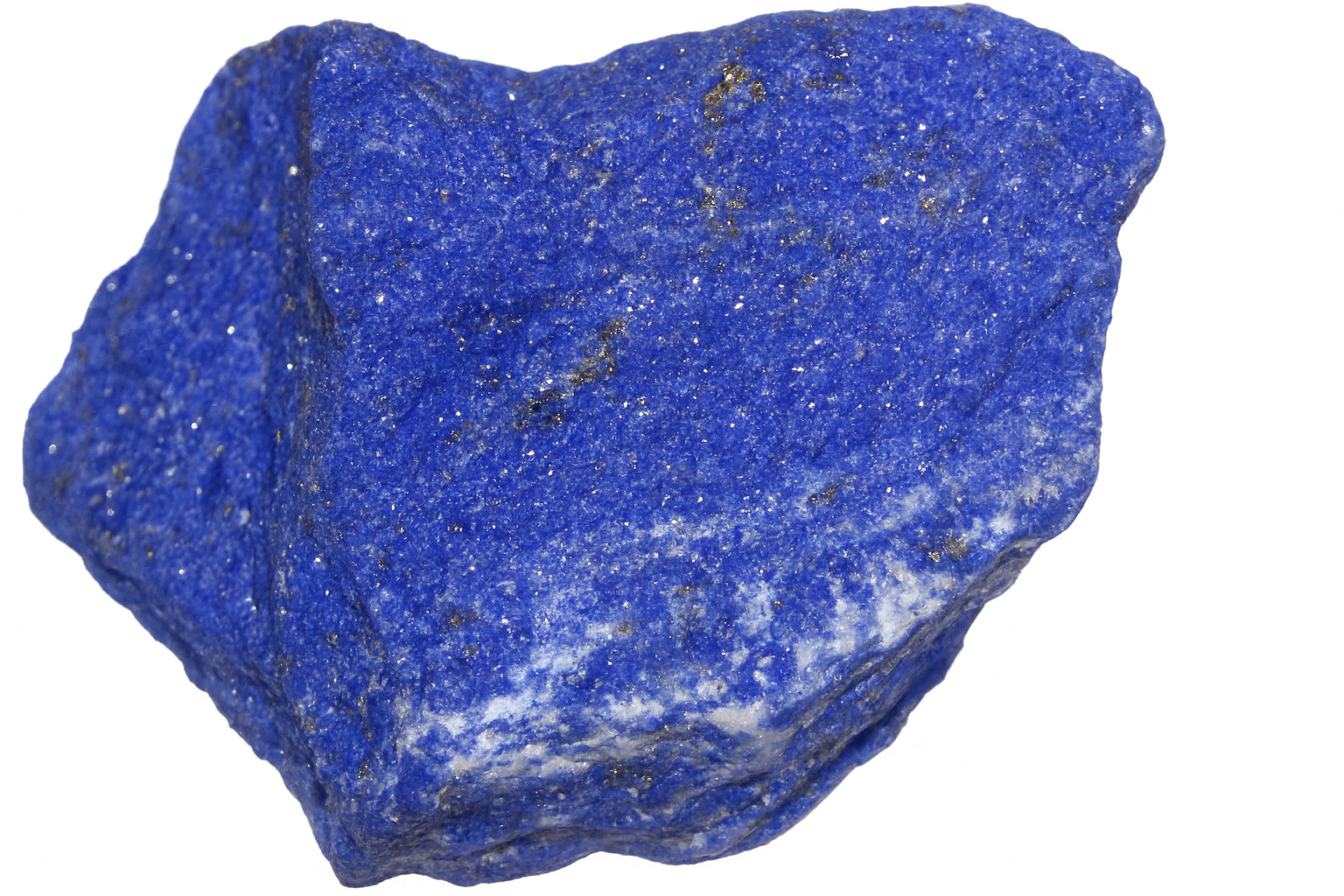
Raw Lapis mined in Afghanistan
Chile - Chile produces lapis lazuli with a lighter blue color and more visible calcite. Chilean lapis is often used for carvings, tiles, and decorative objects rather than fine jewelry.
Russia - Deposits near Lake Baikal in Siberia yield lapis lazuli similar in appearance to Afghan material, though generally with more calcite.
Other Localities - Smaller deposits exist in Pakistan, Myanmar, and the United States, though they are far less historically significant.
Lapis Lazuli Throughout History
Mesopotamia: The Stone of the Gods
Among the earliest civilizations of Mesopotamia, lapis lazuli held a status beyond mere ornament—it was a material of divine power. In ancient Sumer, lapis lazuli was often considered more valuable than gold, a testament to both its rarity and its striking celestial blue color. The stone was imported over vast distances from the mountains of present-day Afghanistan, making it a symbol of wealth, authority, and cosmic significance.
Mesopotamian artisans carved lapis lazuli into cylinder seals used by kings, priests, and administrators, as well as beads, amulets, and inlays for ceremonial weapons and royal objects. The stone appears frequently in Sumerian mythology and literature, most famously in The Epic of Gilgamesh, where lapis lazuli is repeatedly referenced as a sacred and exalted substance associated with the gods, the heavens, and immortality. To the people of Mesopotamia, lapis lazuli was not simply decorative—it was a tangible link between the human and divine realms.
Ancient Egypt: Symbol of the Night Sky and the Afterlife
No civilization embraced lapis lazuli more fully—or more symbolically—than ancient Egypt. For the Egyptians, the deep blue of lapis lazuli represented the night sky, the primordial waters, and the realm of the gods. It was closely associated with rebirth, protection, and divine authority, making it a favored material for both the living and the dead.
Lapis lazuli was widely used in jewelry, amulets, and ceremonial objects worn by royalty and elites. Scarabs carved from lapis were believed to offer protection and spiritual renewal, while inlays of lapis adorned statues, coffins, and sacred objects. One of its most famous appearances is in the funerary mask of Pharaoh Tutankhamun, where lapis lazuli accents emphasize divine kingship and eternal life.
Beyond ornamentation, lapis lazuli was also ground into a fine powder and used as a cosmetic, particularly for eye paint. This practice was both aesthetic and symbolic, as blue eye makeup was believed to invoke the protective power of the gods—especially Isis—and guard against illness and evil. To the Egyptians, lapis lazuli was not just beautiful; it was imbued with spiritual force.

An Egyptian lapis lazuli amulet representing the goddess Isis seated on a throne
The Indus Valley and Ancient China: A Stone of Trade and Ritual
Through early long-distance trade networks, lapis lazuli traveled far beyond the Near East. In the Indus Valley Civilization, lapis lazuli was fashioned into beads, seals, and decorative items, reflecting both its prestige and its role in regional commerce. Archaeological finds show that lapis was highly valued among Indus elites, serving as a marker of status and cultural connection to distant lands.
In ancient China, lapis lazuli was prized for its rich color and symbolic associations with the heavens and immortality. Though less commonly used than jade, lapis lazuli was carved into ornaments and ritual objects and later became associated with Buddhist art and iconography. Its presence in East Asia underscores the extraordinary reach of lapis lazuli trade, linking distant civilizations through a shared reverence for this remarkable blue stone.
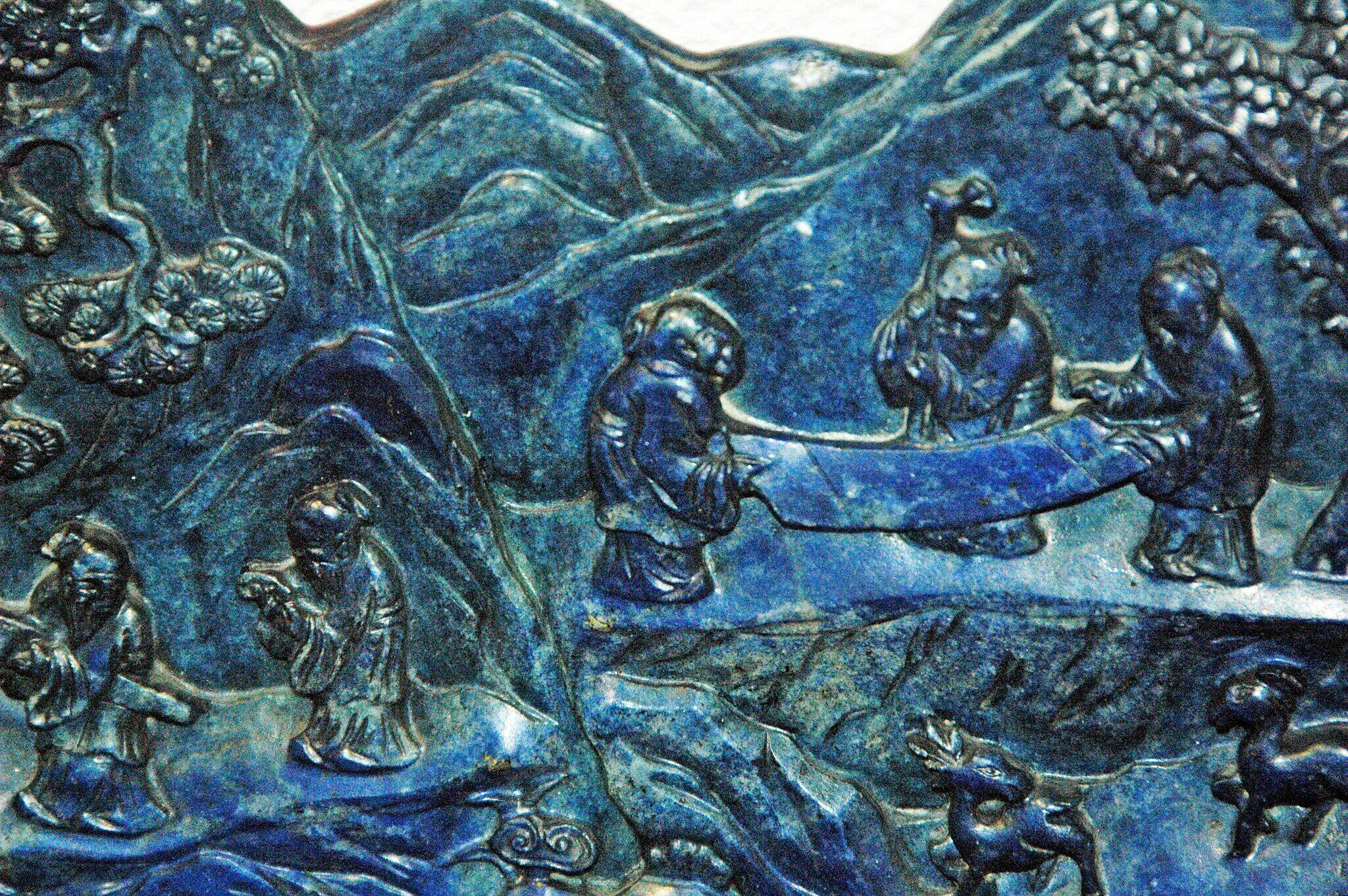
Chinese carved lapis on display at the Cleveland Museum of Natural History
Lapis Lazuli and Ultramarine: The Blue That Changed Art
One of the most extraordinary chapters in the history of lapis lazuli lies not in jewelry or sculpture, but in art. During the Middle Ages and Renaissance, lapis lazuli was painstakingly processed to produce natural ultramarine pigment, the most prized blue ever used by painters. Creating ultramarine was an arduous task, requiring the grinding of lapis lazuli and the careful separation of pure blue lazurite particles from unwanted minerals.
The resulting pigment was so rare and costly that it was often more expensive than gold. Patrons frequently specified its use in contracts, and artists reserved it for the most sacred and important subjects. Ultramarine was most famously used to paint the robes of the Virgin Mary, a visual expression of purity, reverence, and divine grace.
Master artists such as Michelangelo, Vermeer, and Titian relied on lapis-derived ultramarine to achieve luminous blues unmatched by any other pigment of the time. Remarkably, these blues have retained their intensity for centuries, a testament to both the durability of lapis lazuli and its unparalleled beauty.
Across continents and millennia, lapis lazuli has remained a stone of extraordinary cultural importance—uniting ancient trade routes, religious symbolism, royal power, and artistic achievement into a single, unforgettable shade of blue.
Uses of Lapis Lazuli Today
Jewelry and Decorative Arts
Lapis lazuli continues to be widely used in jewelry and decorative objects, valued for its rich blue color, natural gold pyrite inclusions, and strong historical identity. Because lapis lazuli is opaque and relatively soft compared to many gemstones, it is typically shaped into cabochons, beads, and polished slabs rather than faceted stones. These forms best showcase its deep color and characteristic patterns.
Modern lapis lazuli jewelry commonly includes pendants, earrings, rings, and bead necklaces, often set in silver or gold to complement the stone’s bold blue tones. Beyond jewelry, lapis lazuli is also carved into figurines, animal sculptures, small boxes, and ornamental objects. Its long tradition as an inlay material continues today, appearing in decorative furniture, mosaic work, architectural accents, and fine art pieces where its vivid color creates striking contrast.
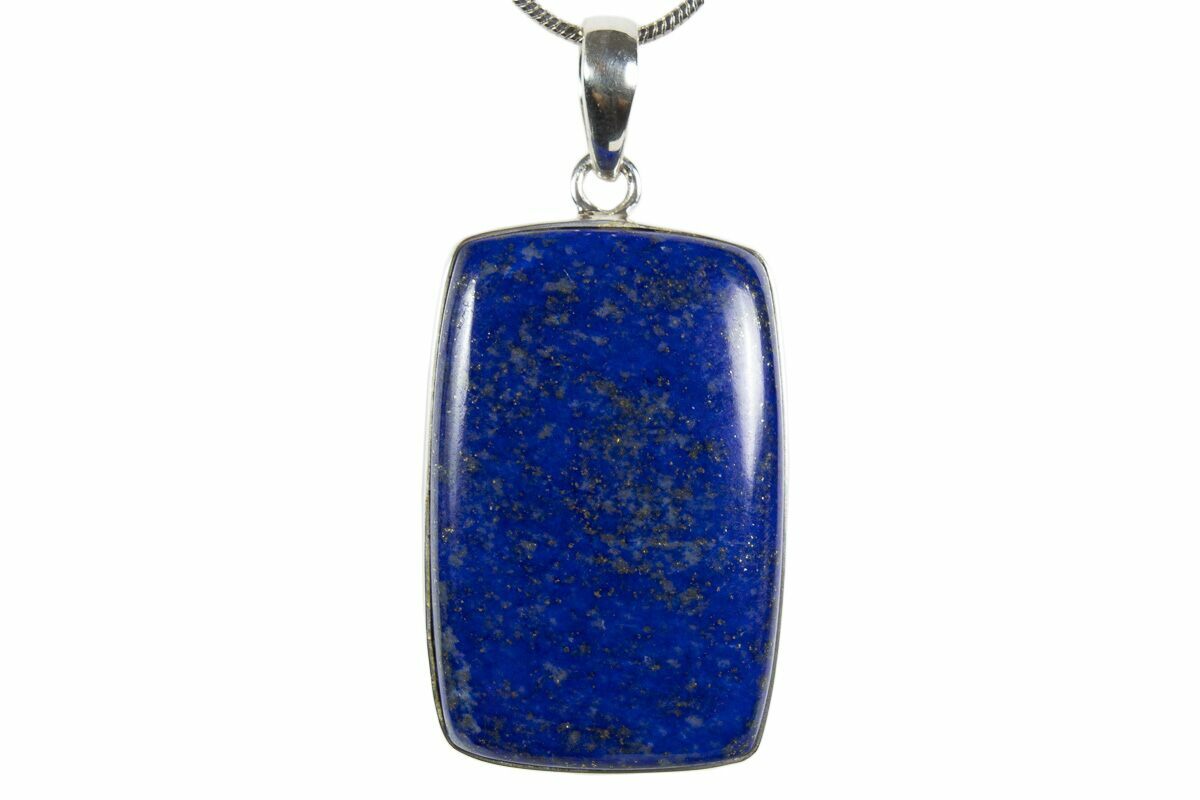
A pendant crafted from Lapis Lazuili
Collecting and Mineral Specimens
High-quality lapis lazuli remains highly sought after by mineral and rock collectors, particularly specimens that exhibit a deep, uniform ultramarine blue with minimal calcite and well-distributed pyrite. Collector-grade lapis often appears as rough blocks, polished faces, or natural specimens that highlight the stone’s mineral composition and geological origins.
Specimens from historic localities—especially Afghanistan—are especially prized due to their exceptional color and long mining history. Some collectors also seek lapis lazuli for its educational value, as it provides a clear example of a metamorphic rock composed of multiple minerals working together to create a single iconic appearance.
Symbolic, Cultural, and Metaphysical Significance
Despite its ancient roots, lapis lazuli continues to carry strong symbolic meaning in modern culture. For thousands of years, it has been associated with wisdom, truth, and intellectual insight, a legacy that persists today. The stone is often linked to clarity of thought, effective communication, and self-expression, echoing its historical role as a material of scholars, rulers, and spiritual leaders.
Lapis lazuli also remains a symbol of royalty, authority, and power, reflecting its long-standing use by kings, pharaohs, and religious elites. In contemporary spiritual and cultural practices, it is frequently viewed as a stone of inner truth and awareness, representing a connection between knowledge, creativity, and the pursuit of higher understanding.
Today, lapis lazuli continues to bridge the ancient and modern worlds—serving as a striking decorative stone, a valued collector’s material, and a timeless symbol of knowledge, beauty, and human fascination with the color blue.
Identifying Real vs. Imitation Lapis Lazuli
Because of its long history and enduring popularity, lapis lazuli is frequently imitated or enhanced using a variety of substitute materials. Common imitations include dyed stones such as howlite or jasper, synthetic composite materials made from powdered stone and resin, and blue-colored glass designed to mimic lapis’ rich hue. These substitutes can appear convincing at first glance, especially when polished, but they lack the complex natural characteristics of genuine lapis lazuli.
Authentic lapis lazuli displays a combination of features that are difficult to replicate artificially. Natural specimens typically contain uneven, organically distributed pyrite inclusions that appear as small brassy gold flecks rather than uniform or glitter-like particles. Irregular white or gray veins of calcite are also common, reflecting the stone’s metamorphic origin. In terms of color and surface appearance, genuine lapis lazuli tends to have a more subtle, matte blue in its raw or lightly polished state, developing depth and richness as it is polished rather than an overly glossy or plastic-like shine.
When examined closely, these natural variations—rather than perfect uniformity—are often the strongest indicators of authentic lapis lazuli, making each genuine piece visually unique and geologically honest.


