 Reviews

Stibnite: Mineral & Crystal Guide
Few minerals combine striking appearance, fascinating chemistry, and deep historical significance quite like stibnite. With its brilliant silver-gray metallic luster and dramatic, sword-like crystal clusters, stibnite often looks more like a piece of modern sculpture than a naturally occurring mineral. Yet this striking sulfide has been known to humanity for thousands of years and has quietly influenced everything from ancient cosmetics to modern industry.
Stibnite is the primary ore of antimony, a semi-metal element whose name traces back to antiquity. Long before the science of mineralogy existed, powdered stibnite was used as kohl, an eye cosmetic applied in ancient Egypt, Mesopotamia, and Rome. Ironically, the same mineral once used to enhance beauty would later become critical in medicine, metallurgy, flame retardants, and military alloys. Its dual identity—both ornamental and industrial—has made stibnite one of the most historically important sulfide minerals ever discovered.
From a collector’s standpoint, stibnite is equally captivating. Large, well-formed crystals can reach astonishing sizes, sometimes growing into radiating sprays or parallel blades over a foot long. Despite this bold appearance, stibnite is surprisingly soft, fragile, and low-density, capable of bending slightly under pressure—a rare trait among metallic minerals. This combination of dramatic form and delicate nature gives stibnite an almost paradoxical character that fascinates mineral enthusiasts around the world.
Stibnite is an antimony sulfide mineral with the chemical formula Sb₂S₃. It crystallizes in the orthorhombic system, forming elongated prismatic crystals that commonly grow in parallel clusters or radiating sprays. Its metallic sheen and lead-gray to silver coloration make it instantly recognizable, even to those new to mineral collecting.
Despite its metallic appearance, stibnite is notably soft, ranking only 2 on the Mohs hardness scale. It also has a relatively low specific gravity compared to other metallic minerals and is distinctly brittle. When scratched, it produces a dark gray streak, and fresh crystal faces often show a bright, mirror-like luster.
Stibnite’s visual appeal is largely due to its crystal habit and surface reflectivity. Key physical characteristics include:
Color: Lead-gray to silver, sometimes with bluish or rainbow tarnish
Luster: Bright metallic
Hardness: ~2 (very soft)
Crystal Habit: Elongated prismatic crystals, often in sprays or bundles
Cleavage: Perfect in one direction
Streak: Dark gray
Transparency: Opaque
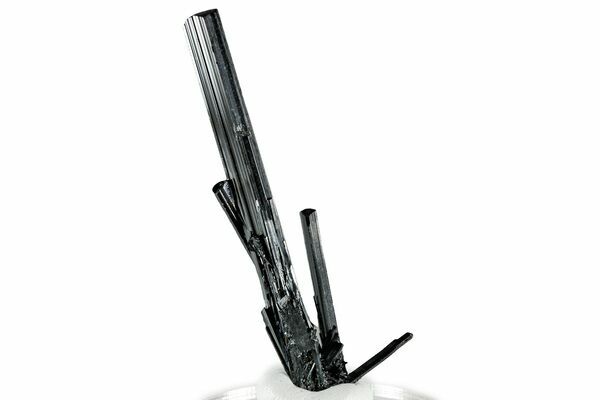
Very lustrous stibnite crystals from Jiangxi Province in China.
One unusual property of stibnite is its slight flexibility. Thin crystals may bend slightly before breaking—an uncommon feature among metallic sulfide minerals and one that adds to its curiosity.
Stibnite most often forms in hydrothermal environments, where hot, mineral-rich fluids move through cracks and fractures in the Earth’s crust. These fluids carry dissolved antimony and sulfur, which crystallize as stibnite when conditions change—such as cooling temperatures, reduced pressure, or shifts in the surrounding rock chemistry.
The mineral typically grows in veins, either filling fractures or replacing parts of the host rock. When stibnite crystallizes into open spaces within these veins, it can form the long, blade-like crystals and radiating sprays that make it so visually striking. This type of open-space growth is what produces many of the large, well-formed specimens prized by collectors.
Stibnite is commonly found alongside other minerals that form from the same hydrothermal fluids. These include quartz and calcite, which often make up the bulk of the vein material, as well as sulfide minerals like pyrite. In lower-temperature, sulfur-rich settings, it may also occur with cinnabar, realgar, or orpiment, and barite is another frequent associate.
While stibnite can occur in sedimentary, metamorphic, and igneous rocks, hydrothermal veins are by far the most important source of collectible specimens. These settings provide the right balance of chemistry and open space needed to grow the dramatic crystals that stibnite is known for.
Exceptional stibnite specimens are found in only a handful of locations, and many of the world’s finest pieces come from classic localities that have become legendary among collectors.
China, is the dominant source of modern stibnite specimens, particularly from Hunan Province. Chinese crystals are famous for their large size, sharp definition, and dramatic radiating clusters.
Japan, especially the Ichinokawa Mine, has produced some of the finest historic stibnite specimens ever found. These crystals are often long, slender, and perfectly formed, and museum-quality examples are highly prized.
Other notable localities include:
Romania
Bolivia
Peru
Italy
Russia
Nevada and Idaho (USA)
Each locality tends to produce subtly different crystal habits, making stibnite an appealing mineral for systematic collectors.
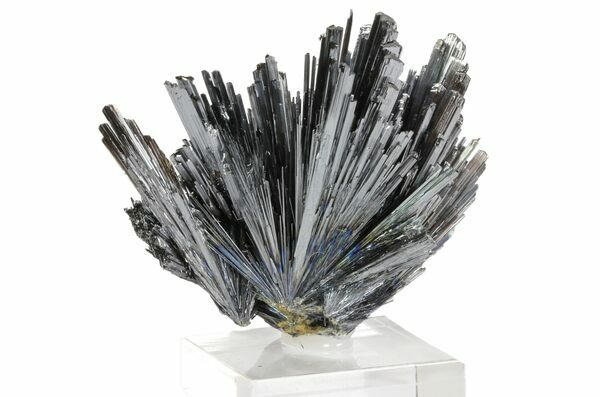
A spray of needle-like stibnite crystals from the Herja Mine in Romania.
Stibnite’s legacy reaches back thousands of years, making it one of the earliest minerals intentionally mined and processed by humans. In ancient civilizations, finely ground stibnite was used to produce kohl, a dark cosmetic applied around the eyes. In ancient Egypt, this practice was both aesthetic and spiritual. Kohl was believed to invoke the protection of the gods, particularly Horus and Ra, and was thought to shield the wearer from the sun’s glare, windblown sand, and eye infections. Archaeological evidence shows that stibnite-based cosmetics were used by people of all social classes, from royalty to laborers.
The use of stibnite as an eye cosmetic spread widely across the ancient world, including Mesopotamia, Greece, Rome, and the Islamic world. Beyond its visual appeal, many cultures believed stibnite had protective or healing properties, capable of warding off illness and evil spirits. While modern science recognizes the toxicity of antimony compounds, trace antimicrobial effects may help explain why these practices persisted for so long.
During the Middle Ages and early modern period, stibnite took on a new role as the primary source of antimony for alchemy and early medicine. Alchemists were fascinated by antimony’s unusual properties, viewing it as a substance that blurred the line between metal and mineral. Antimony compounds were prescribed to treat a wide range of ailments, including parasitic infections, fevers, and digestive disorders. These treatments were controversial, sometimes dangerous, and frequently debated within medical circles.
Antimony became so closely associated with monastic medicine that it earned the nickname “the monk’s metal.” Monks and apothecaries experimented with antimony-based remedies, believing that its powerful effects—both beneficial and harmful—reflected its ability to purify the body. One infamous example was the use of antimony cups, from which wine was drunk to induce vomiting or purging, a practice intended to cleanse the body of illness.
By the 17th and 18th centuries, growing scientific understanding led to more cautious use of antimony, and its role gradually shifted from medicine toward metallurgy and industry. Even so, the long and sometimes perilous history of stibnite in cosmetics and medicine underscores its profound influence on human culture. Few minerals can claim such a direct connection to daily life, spirituality, healing, and experimentation across so many civilizations and centuries.
Today, stibnite’s importance lies primarily in its role as the chief ore of antimony, which is extracted and refined for modern applications. Antimony is used in:
Flame retardants
Lead-antimony alloys for batteries
Semiconductors and electronics
Pigments and glass production
Ammunition and military applications
Although collectors prize intact crystals, most stibnite mined worldwide is processed for its antimony content rather than preserved as specimens.
Stibnite occupies a special place in mineral collecting. Its dramatic crystals, high reflectivity, and historical significance make it a centerpiece specimen in many collections. However, its softness and fragility mean it requires careful handling and display—preferably in stable conditions where vibration and pressure are minimized. Well-preserved stibnite crystals with sharp terminations, minimal damage, and strong luster are highly sought after, particularly large clusters from classic localities.
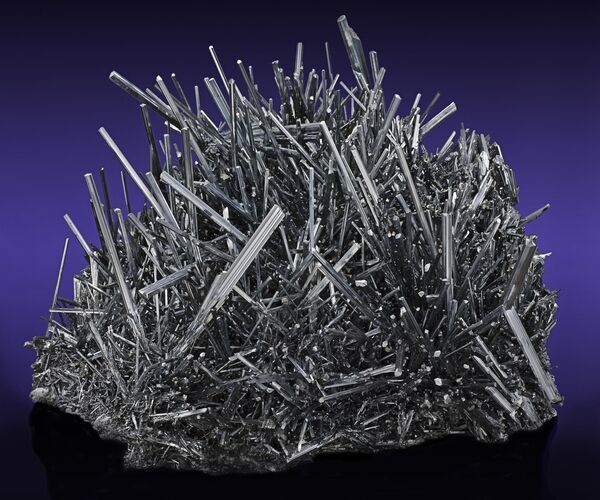
A massive cluster of metallic stibnite crystals from the Wuning Mine in China. Photo Credit: Robert M. Lavinsky
Toxicity and Handling Considerations
Like many sulfide minerals, stibnite contains a potentially toxic element and should be handled with basic care. Solid stibnite specimens are generally safe to touch, but it is best to avoid inhaling any dust or powder, wash your hands after handling, and never ingest or grind the material. As with many mineral specimens, stibnite should also be kept out of reach of children and pets.

Stibnite is the primary ore of antimony, a semi-metal element whose name traces back to antiquity. Long before the science of mineralogy existed, powdered stibnite was used as kohl, an eye cosmetic applied in ancient Egypt, Mesopotamia, and Rome. Ironically, the same mineral once used to enhance beauty would later become critical in medicine, metallurgy, flame retardants, and military alloys. Its dual identity—both ornamental and industrial—has made stibnite one of the most historically important sulfide minerals ever discovered.
From a collector’s standpoint, stibnite is equally captivating. Large, well-formed crystals can reach astonishing sizes, sometimes growing into radiating sprays or parallel blades over a foot long. Despite this bold appearance, stibnite is surprisingly soft, fragile, and low-density, capable of bending slightly under pressure—a rare trait among metallic minerals. This combination of dramatic form and delicate nature gives stibnite an almost paradoxical character that fascinates mineral enthusiasts around the world.
What Is Stibnite?
Stibnite is an antimony sulfide mineral with the chemical formula Sb₂S₃. It crystallizes in the orthorhombic system, forming elongated prismatic crystals that commonly grow in parallel clusters or radiating sprays. Its metallic sheen and lead-gray to silver coloration make it instantly recognizable, even to those new to mineral collecting.
Despite its metallic appearance, stibnite is notably soft, ranking only 2 on the Mohs hardness scale. It also has a relatively low specific gravity compared to other metallic minerals and is distinctly brittle. When scratched, it produces a dark gray streak, and fresh crystal faces often show a bright, mirror-like luster.
Stibnite’s visual appeal is largely due to its crystal habit and surface reflectivity. Key physical characteristics include:
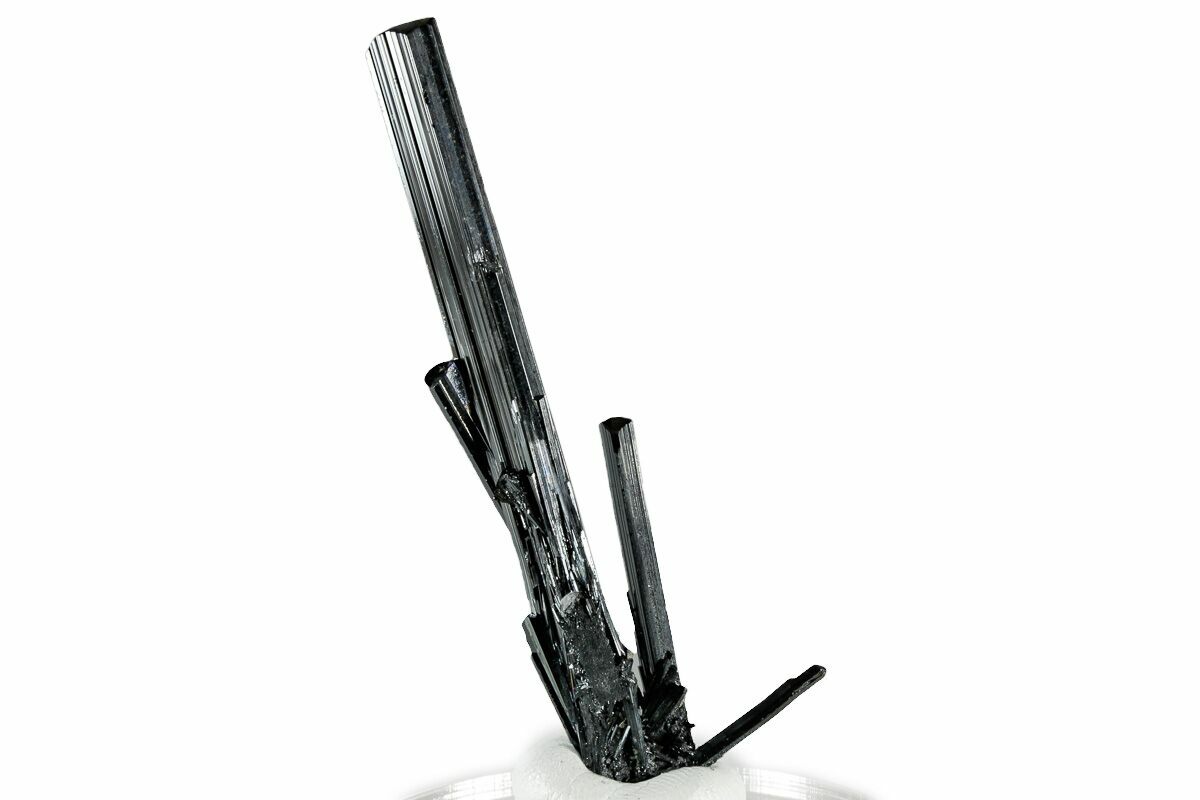
Very lustrous stibnite crystals from Jiangxi Province in China.
One unusual property of stibnite is its slight flexibility. Thin crystals may bend slightly before breaking—an uncommon feature among metallic sulfide minerals and one that adds to its curiosity.
Formation and Geological Occurrence
Stibnite most often forms in hydrothermal environments, where hot, mineral-rich fluids move through cracks and fractures in the Earth’s crust. These fluids carry dissolved antimony and sulfur, which crystallize as stibnite when conditions change—such as cooling temperatures, reduced pressure, or shifts in the surrounding rock chemistry.
The mineral typically grows in veins, either filling fractures or replacing parts of the host rock. When stibnite crystallizes into open spaces within these veins, it can form the long, blade-like crystals and radiating sprays that make it so visually striking. This type of open-space growth is what produces many of the large, well-formed specimens prized by collectors.
Stibnite is commonly found alongside other minerals that form from the same hydrothermal fluids. These include quartz and calcite, which often make up the bulk of the vein material, as well as sulfide minerals like pyrite. In lower-temperature, sulfur-rich settings, it may also occur with cinnabar, realgar, or orpiment, and barite is another frequent associate.
While stibnite can occur in sedimentary, metamorphic, and igneous rocks, hydrothermal veins are by far the most important source of collectible specimens. These settings provide the right balance of chemistry and open space needed to grow the dramatic crystals that stibnite is known for.
Major Localities Around the World
Exceptional stibnite specimens are found in only a handful of locations, and many of the world’s finest pieces come from classic localities that have become legendary among collectors.
China, is the dominant source of modern stibnite specimens, particularly from Hunan Province. Chinese crystals are famous for their large size, sharp definition, and dramatic radiating clusters.
Japan, especially the Ichinokawa Mine, has produced some of the finest historic stibnite specimens ever found. These crystals are often long, slender, and perfectly formed, and museum-quality examples are highly prized.
Other notable localities include:
Each locality tends to produce subtly different crystal habits, making stibnite an appealing mineral for systematic collectors.
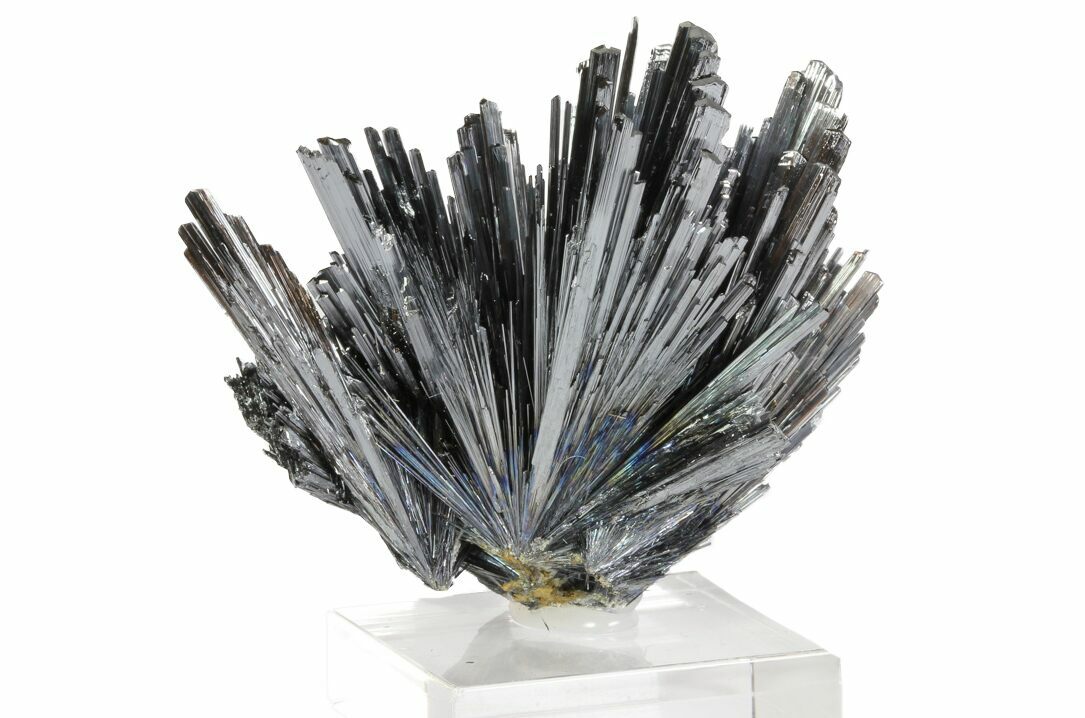
A spray of needle-like stibnite crystals from the Herja Mine in Romania.
Historical and Cultural Significance
Stibnite’s legacy reaches back thousands of years, making it one of the earliest minerals intentionally mined and processed by humans. In ancient civilizations, finely ground stibnite was used to produce kohl, a dark cosmetic applied around the eyes. In ancient Egypt, this practice was both aesthetic and spiritual. Kohl was believed to invoke the protection of the gods, particularly Horus and Ra, and was thought to shield the wearer from the sun’s glare, windblown sand, and eye infections. Archaeological evidence shows that stibnite-based cosmetics were used by people of all social classes, from royalty to laborers.
The use of stibnite as an eye cosmetic spread widely across the ancient world, including Mesopotamia, Greece, Rome, and the Islamic world. Beyond its visual appeal, many cultures believed stibnite had protective or healing properties, capable of warding off illness and evil spirits. While modern science recognizes the toxicity of antimony compounds, trace antimicrobial effects may help explain why these practices persisted for so long.
During the Middle Ages and early modern period, stibnite took on a new role as the primary source of antimony for alchemy and early medicine. Alchemists were fascinated by antimony’s unusual properties, viewing it as a substance that blurred the line between metal and mineral. Antimony compounds were prescribed to treat a wide range of ailments, including parasitic infections, fevers, and digestive disorders. These treatments were controversial, sometimes dangerous, and frequently debated within medical circles.
Antimony became so closely associated with monastic medicine that it earned the nickname “the monk’s metal.” Monks and apothecaries experimented with antimony-based remedies, believing that its powerful effects—both beneficial and harmful—reflected its ability to purify the body. One infamous example was the use of antimony cups, from which wine was drunk to induce vomiting or purging, a practice intended to cleanse the body of illness.
By the 17th and 18th centuries, growing scientific understanding led to more cautious use of antimony, and its role gradually shifted from medicine toward metallurgy and industry. Even so, the long and sometimes perilous history of stibnite in cosmetics and medicine underscores its profound influence on human culture. Few minerals can claim such a direct connection to daily life, spirituality, healing, and experimentation across so many civilizations and centuries.
Today, stibnite’s importance lies primarily in its role as the chief ore of antimony, which is extracted and refined for modern applications. Antimony is used in:
Although collectors prize intact crystals, most stibnite mined worldwide is processed for its antimony content rather than preserved as specimens.
Stibnite as a Collector’s Mineral
Stibnite occupies a special place in mineral collecting. Its dramatic crystals, high reflectivity, and historical significance make it a centerpiece specimen in many collections. However, its softness and fragility mean it requires careful handling and display—preferably in stable conditions where vibration and pressure are minimized. Well-preserved stibnite crystals with sharp terminations, minimal damage, and strong luster are highly sought after, particularly large clusters from classic localities.
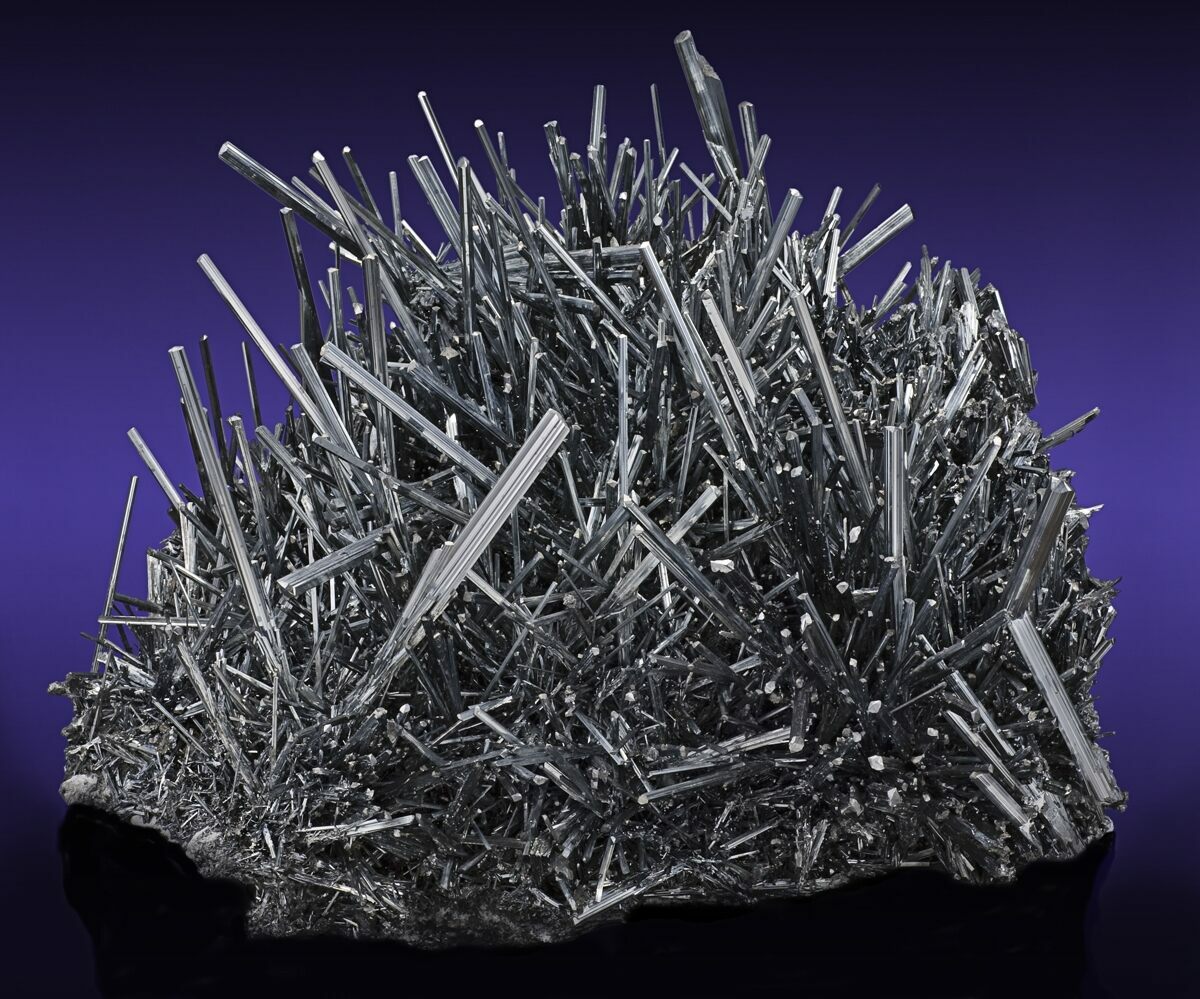
A massive cluster of metallic stibnite crystals from the Wuning Mine in China. Photo Credit: Robert M. Lavinsky
Toxicity and Handling Considerations
Like many sulfide minerals, stibnite contains a potentially toxic element and should be handled with basic care. Solid stibnite specimens are generally safe to touch, but it is best to avoid inhaling any dust or powder, wash your hands after handling, and never ingest or grind the material. As with many mineral specimens, stibnite should also be kept out of reach of children and pets.


