 Reviews

Zircon: The Oldest Crystal On Earth
Zircon is not merely a mineral—it is a survivor from a world that no longer exists. Long before continents drifted into their modern shapes, before the first oceans teemed with life, and before Earth’s surface had fully cooled from its fiery beginnings, zircon crystals were already forming. Some of these crystals have endured for more than 4.4 billion years, making them the oldest known solid materials ever discovered on our planet. To hold a zircon is to hold a fragment of Earth’s infancy, preserved with astonishing fidelity.
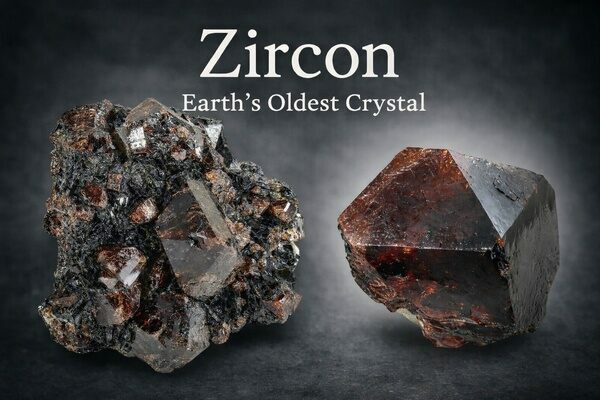
Some Zircon crystals date to 4.4 billion years old making them the oldest solid materials on the planet.
What makes zircon truly remarkable is not just its age, but its memory. Locked within its crystal lattice are chemical records of the conditions under which it formed—temperature, pressure, and even clues about the presence of ancient water. While most rocks are erased and rewritten by Earth’s restless geology, zircon resists that fate. It survives melting events, mountain-building, erosion, burial, and rebirth, often outlasting the very rocks in which it first crystallized. Entire continents may rise and fall, yet zircon grains persist, quietly carrying their stories forward through deep time.
Despite this extraordinary significance, zircon often lives in the shadow of more famous minerals. Its brilliance and fire can rival that of diamond, yet it is frequently misunderstood or dismissed due to confusion with synthetic cubic zirconia. In truth, natural zircon is a gemstone of exceptional beauty and complexity, displaying a wide range of colors—from fiery reds and warm golds to icy blues and colorless crystals that shimmer with intense light.
To geologists, zircon is indispensable. It is the mineral that anchors Earth’s timeline, the benchmark by which the ages of rocks, mountain belts, and even entire continents are measured. Without zircon, much of our understanding of Earth’s early history would be speculation rather than evidence. It is no exaggeration to say that zircon underpins modern geology itself.
At the same time, zircon bridges worlds rarely connected. It belongs equally to the realms of science, industry, and art. It has been worn as a protective talisman, traded along ancient routes, cut into dazzling gemstones, studied under electron microscopes, and engineered into materials capable of withstanding extreme heat and radiation. Few minerals can claim such a broad and enduring role in human history.
Quiet, resilient, and profoundly ancient, zircon stands as one of nature’s most unassuming marvels. It does not demand attention with size or spectacle. Instead, it rewards curiosity—revealing that within even the smallest crystal can lie the story of a planet’s beginning.
Chemical formula: ZrSiO₄ (zirconium silicate)
Crystal system: Tetragonal
Hardness: 6.5–7.5 on the Mohs scale
Luster: Adamantine to vitreous
Color: Colorless, brown, yellow, red, blue, green, and black
Transparency: Transparent to opaque
Specific gravity: High (typically 4.6–4.7)
Diagnostic feature: Often contains radioactive elements (uranium and thorium)
Commonly associated minerals: Quartz, feldspar, biotite, hornblende, apatite, monazite
Zircon primarily forms in igneous rocks, crystallizing early from cooling magma. Because zirconium readily enters zircon’s crystal structure but rarely fits well into other minerals, zircon tends to form even when present in trace amounts. This makes it widespread—but often in small crystals.
What makes zircon extraordinary is its ability to incorporate uranium atoms into its structure while strongly excluding lead. Over time, uranium slowly decays into lead at a precisely known rate. Because zircon is so resistant to heat and alteration, this radioactive “clock” is rarely reset, allowing scientists to determine crystal ages with remarkable precision through uranium–lead dating.
Some zircons from Western Australia have been dated to over 4.4 billion years old, making them the oldest known solid material from Earth. These ancient crystals suggest that continental crust and liquid water existed far earlier than once believed, reshaping our understanding of Earth’s earliest environment.
Zircon can also survive erosion and be redeposited in sedimentary rocks, where it may be billions of years older than the rock containing it. In metamorphic environments, zircon can grow new rims around older cores, preserving multiple chapters of geological history within a single crystal.
Zircon’s relationship with humanity stretches back far longer than its scientific recognition. Long before the mineral had a name or a chemical formula, it was already being admired, traded, and imbued with meaning. Ancient peoples encountered zircon not as a “mineral,” but as a mysterious and beautiful stone—often glowing with warm golden, reddish, or honeyed tones—and it quickly found a place among treasured gems.
In antiquity, zircon varieties were known under names such as jacinth, hyacinth, and jargoon, terms that appear in ancient Greek, Roman, and Middle Eastern texts. These stones were prized not only for their beauty, but for their perceived metaphysical properties. Medieval writings describe zircon as a stone that could induce sleep, ward off evil spirits, protect travelers from harm, and bring wisdom and prosperity to its wearer. While these beliefs were symbolic rather than scientific, they speak to zircon’s long-standing presence in human culture.
The word “zircon” itself is believed to derive from the Persian zargun, meaning “gold-colored,” a reference to the mineral’s common yellow and brown hues. This linguistic root hints at zircon’s prominence along ancient trade routes linking South Asia, the Middle East, and Europe—particularly through Sri Lanka, which for centuries was one of the world’s most important sources of gem-quality zircon.
Despite its long use as a gemstone, zircon remained poorly understood until the scientific revolution of the 18th century. That changed in 1789, when German chemist Martin Heinrich Klaproth analyzed a zircon crystal from Sri Lanka and identified a previously unknown element within it. He named this new element zirconium, marking the moment when zircon crossed from the realm of folklore and adornment into modern chemistry and mineralogy.
Throughout the 19th century, zircon became increasingly important to science. Mineralogists refined its classification, and gemologists began to distinguish zircon from similar-looking stones. Notably, zircon was often confused with diamond due to its brilliance—sometimes intentionally so—earning it an undeserved reputation as a “diamond imitation.” In reality, zircon is a distinct and naturally occurring mineral with optical properties impressive enough to stand on its own.
The 20th century revealed zircon’s greatest significance yet. Geologists discovered that zircon crystals frequently contain trace amounts of uranium and thorium, while strongly excluding lead. This made zircon uniquely suited for radiometric dating, allowing scientists to determine the ages of rocks with extraordinary precision. As analytical techniques improved, zircon became the cornerstone of uranium–lead dating, transforming our understanding of Earth’s geological history.
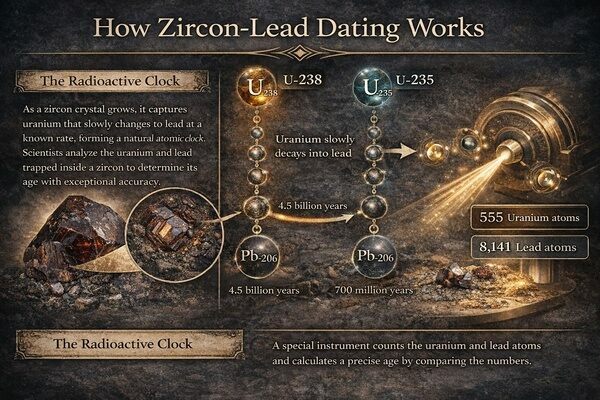
Infographic: Zircon-Lead dating is extremely accurate.
The true magnitude of zircon’s importance became clear when scientists began studying ancient zircon grains from Western Australia. Some were dated to over 4.4 billion years old, making them the oldest known solid materials from Earth. These tiny crystals preserved chemical evidence suggesting the presence of liquid water and continental crust far earlier than previously believed, reshaping theories about the early Earth and the conditions under which life might arise.
In the modern world, zircon serves both beauty and industry. Gem-quality zircon remains highly valued, especially colorless and blue varieties known for exceptional fire and dispersion. Industrially, zircon is indispensable: it is used in ceramics, refractory materials, foundry molds, and the nuclear industry, where zirconium metal—derived from zircon—is used to sheath nuclear fuel rods due to its resistance to corrosion and low neutron absorption.
Few minerals can claim such a wide-ranging legacy. Zircon has been worn as a talisman, cut as a gemstone, analyzed as scientific evidence, and utilized as a critical industrial material. Across centuries and disciplines, it has quietly endured—unchanged, resilient, and faithful in recording the passage of time. In many ways, zircon is not just a mineral of history; it is history itself, crystallized.
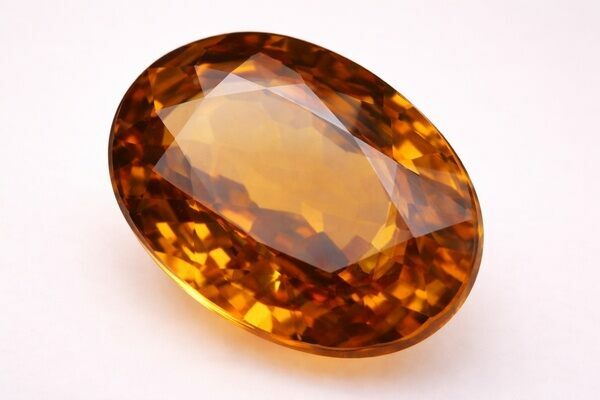
A amber-colored, faceted Zircon gemstone from Tanzania.
Zircon is found on every continent, but certain localities are especially famous for crystal quality, size, or scientific importance:
Western Australia: Source of Earth’s oldest known zircon crystals
Sri Lanka: Renowned for gem-quality zircon in many colors
Cambodia: Famous for heat-treated blue zircon
Myanmar (Burma): Produces fine gem crystals
Thailand: Important source of gem zircon from alluvial deposits
Madagascar: Large, well-formed crystals in a range of colors
Norway: Classic locality for large crystals in syenites and pegmatites
United States: Notable occurrences in North Carolina, Colorado, Utah, and Wyoming
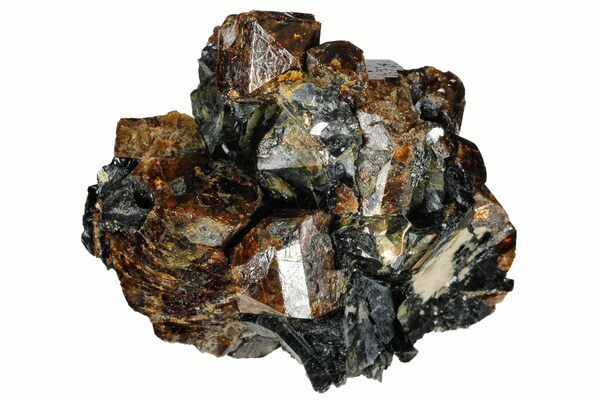
Fluorescent zircon crystals in a biotite schist from Norway.
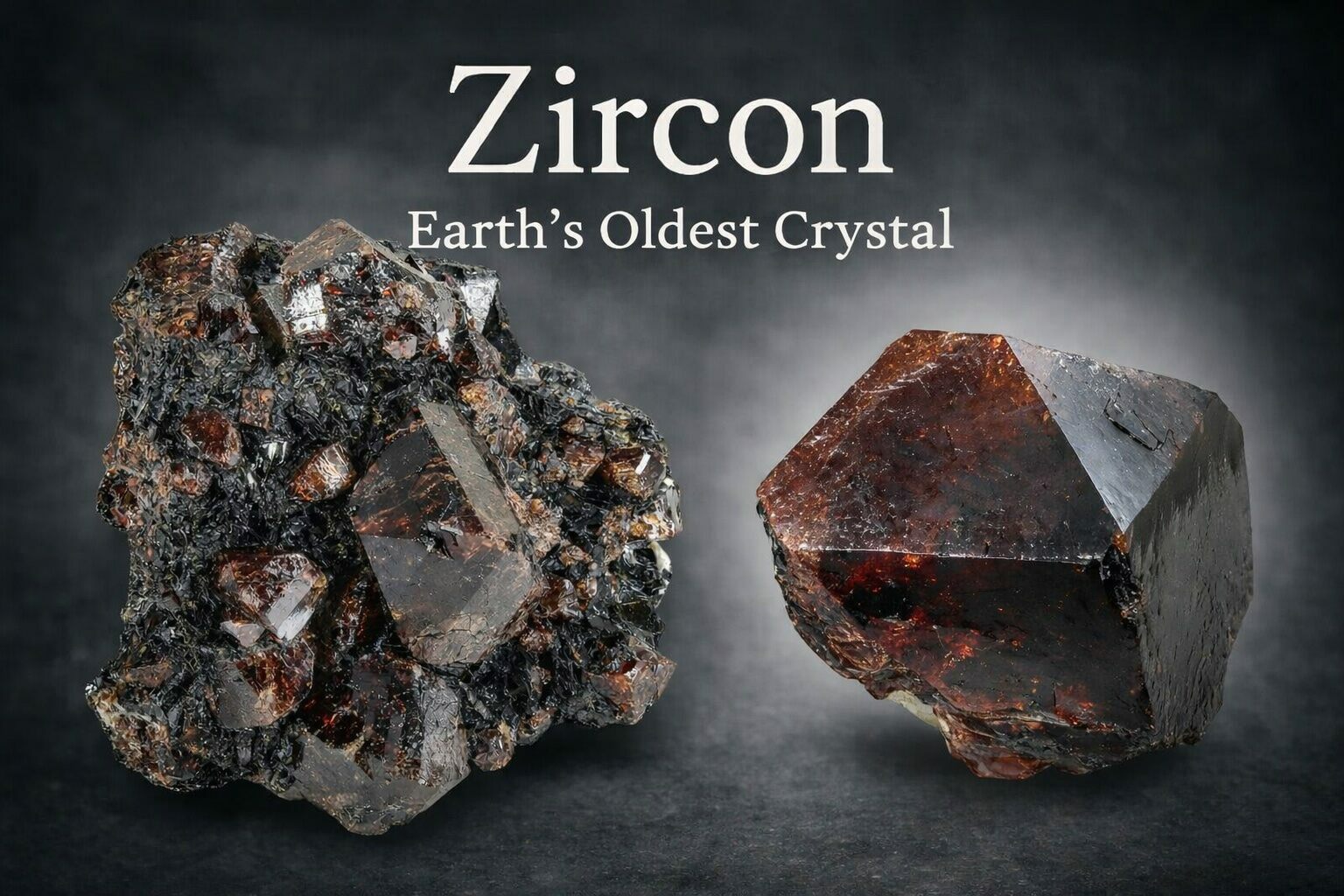
Some Zircon crystals date to 4.4 billion years old making them the oldest solid materials on the planet.
What makes zircon truly remarkable is not just its age, but its memory. Locked within its crystal lattice are chemical records of the conditions under which it formed—temperature, pressure, and even clues about the presence of ancient water. While most rocks are erased and rewritten by Earth’s restless geology, zircon resists that fate. It survives melting events, mountain-building, erosion, burial, and rebirth, often outlasting the very rocks in which it first crystallized. Entire continents may rise and fall, yet zircon grains persist, quietly carrying their stories forward through deep time.
Despite this extraordinary significance, zircon often lives in the shadow of more famous minerals. Its brilliance and fire can rival that of diamond, yet it is frequently misunderstood or dismissed due to confusion with synthetic cubic zirconia. In truth, natural zircon is a gemstone of exceptional beauty and complexity, displaying a wide range of colors—from fiery reds and warm golds to icy blues and colorless crystals that shimmer with intense light.
To geologists, zircon is indispensable. It is the mineral that anchors Earth’s timeline, the benchmark by which the ages of rocks, mountain belts, and even entire continents are measured. Without zircon, much of our understanding of Earth’s early history would be speculation rather than evidence. It is no exaggeration to say that zircon underpins modern geology itself.
At the same time, zircon bridges worlds rarely connected. It belongs equally to the realms of science, industry, and art. It has been worn as a protective talisman, traded along ancient routes, cut into dazzling gemstones, studied under electron microscopes, and engineered into materials capable of withstanding extreme heat and radiation. Few minerals can claim such a broad and enduring role in human history.
Quiet, resilient, and profoundly ancient, zircon stands as one of nature’s most unassuming marvels. It does not demand attention with size or spectacle. Instead, it rewards curiosity—revealing that within even the smallest crystal can lie the story of a planet’s beginning.
Key Properties of Zircon

How Zircon Forms: A Mineral Measured in Eons
Zircon primarily forms in igneous rocks, crystallizing early from cooling magma. Because zirconium readily enters zircon’s crystal structure but rarely fits well into other minerals, zircon tends to form even when present in trace amounts. This makes it widespread—but often in small crystals.
What makes zircon extraordinary is its ability to incorporate uranium atoms into its structure while strongly excluding lead. Over time, uranium slowly decays into lead at a precisely known rate. Because zircon is so resistant to heat and alteration, this radioactive “clock” is rarely reset, allowing scientists to determine crystal ages with remarkable precision through uranium–lead dating.
Some zircons from Western Australia have been dated to over 4.4 billion years old, making them the oldest known solid material from Earth. These ancient crystals suggest that continental crust and liquid water existed far earlier than once believed, reshaping our understanding of Earth’s earliest environment.
Zircon can also survive erosion and be redeposited in sedimentary rocks, where it may be billions of years older than the rock containing it. In metamorphic environments, zircon can grow new rims around older cores, preserving multiple chapters of geological history within a single crystal.
History, Discovery, and Human Use
Zircon’s relationship with humanity stretches back far longer than its scientific recognition. Long before the mineral had a name or a chemical formula, it was already being admired, traded, and imbued with meaning. Ancient peoples encountered zircon not as a “mineral,” but as a mysterious and beautiful stone—often glowing with warm golden, reddish, or honeyed tones—and it quickly found a place among treasured gems.
In antiquity, zircon varieties were known under names such as jacinth, hyacinth, and jargoon, terms that appear in ancient Greek, Roman, and Middle Eastern texts. These stones were prized not only for their beauty, but for their perceived metaphysical properties. Medieval writings describe zircon as a stone that could induce sleep, ward off evil spirits, protect travelers from harm, and bring wisdom and prosperity to its wearer. While these beliefs were symbolic rather than scientific, they speak to zircon’s long-standing presence in human culture.
The word “zircon” itself is believed to derive from the Persian zargun, meaning “gold-colored,” a reference to the mineral’s common yellow and brown hues. This linguistic root hints at zircon’s prominence along ancient trade routes linking South Asia, the Middle East, and Europe—particularly through Sri Lanka, which for centuries was one of the world’s most important sources of gem-quality zircon.
Despite its long use as a gemstone, zircon remained poorly understood until the scientific revolution of the 18th century. That changed in 1789, when German chemist Martin Heinrich Klaproth analyzed a zircon crystal from Sri Lanka and identified a previously unknown element within it. He named this new element zirconium, marking the moment when zircon crossed from the realm of folklore and adornment into modern chemistry and mineralogy.
Throughout the 19th century, zircon became increasingly important to science. Mineralogists refined its classification, and gemologists began to distinguish zircon from similar-looking stones. Notably, zircon was often confused with diamond due to its brilliance—sometimes intentionally so—earning it an undeserved reputation as a “diamond imitation.” In reality, zircon is a distinct and naturally occurring mineral with optical properties impressive enough to stand on its own.
The 20th century revealed zircon’s greatest significance yet. Geologists discovered that zircon crystals frequently contain trace amounts of uranium and thorium, while strongly excluding lead. This made zircon uniquely suited for radiometric dating, allowing scientists to determine the ages of rocks with extraordinary precision. As analytical techniques improved, zircon became the cornerstone of uranium–lead dating, transforming our understanding of Earth’s geological history.
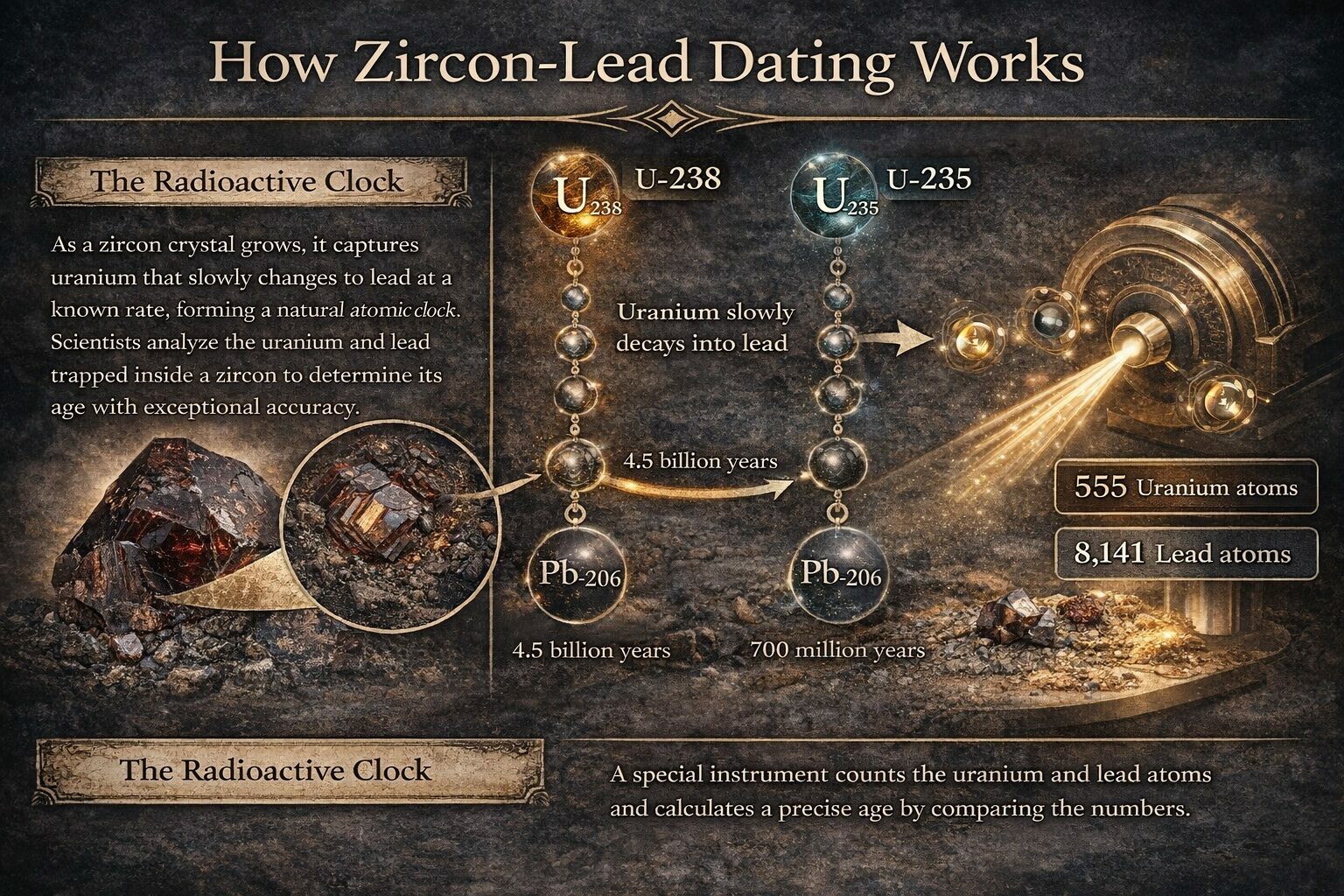
Infographic: Zircon-Lead dating is extremely accurate.
The true magnitude of zircon’s importance became clear when scientists began studying ancient zircon grains from Western Australia. Some were dated to over 4.4 billion years old, making them the oldest known solid materials from Earth. These tiny crystals preserved chemical evidence suggesting the presence of liquid water and continental crust far earlier than previously believed, reshaping theories about the early Earth and the conditions under which life might arise.
In the modern world, zircon serves both beauty and industry. Gem-quality zircon remains highly valued, especially colorless and blue varieties known for exceptional fire and dispersion. Industrially, zircon is indispensable: it is used in ceramics, refractory materials, foundry molds, and the nuclear industry, where zirconium metal—derived from zircon—is used to sheath nuclear fuel rods due to its resistance to corrosion and low neutron absorption.
Few minerals can claim such a wide-ranging legacy. Zircon has been worn as a talisman, cut as a gemstone, analyzed as scientific evidence, and utilized as a critical industrial material. Across centuries and disciplines, it has quietly endured—unchanged, resilient, and faithful in recording the passage of time. In many ways, zircon is not just a mineral of history; it is history itself, crystallized.
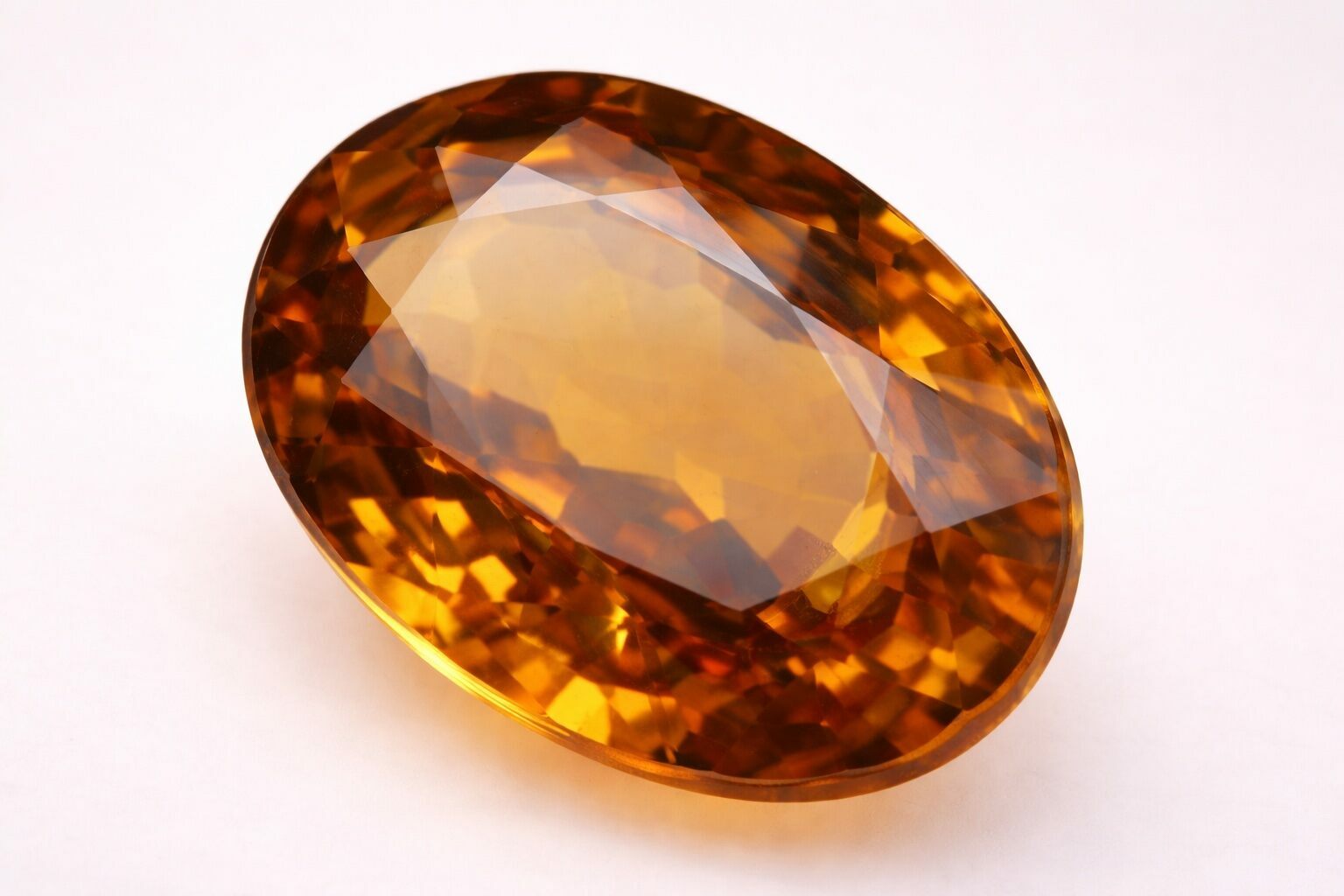
A amber-colored, faceted Zircon gemstone from Tanzania.
Key Localities Around the World
Zircon is found on every continent, but certain localities are especially famous for crystal quality, size, or scientific importance:
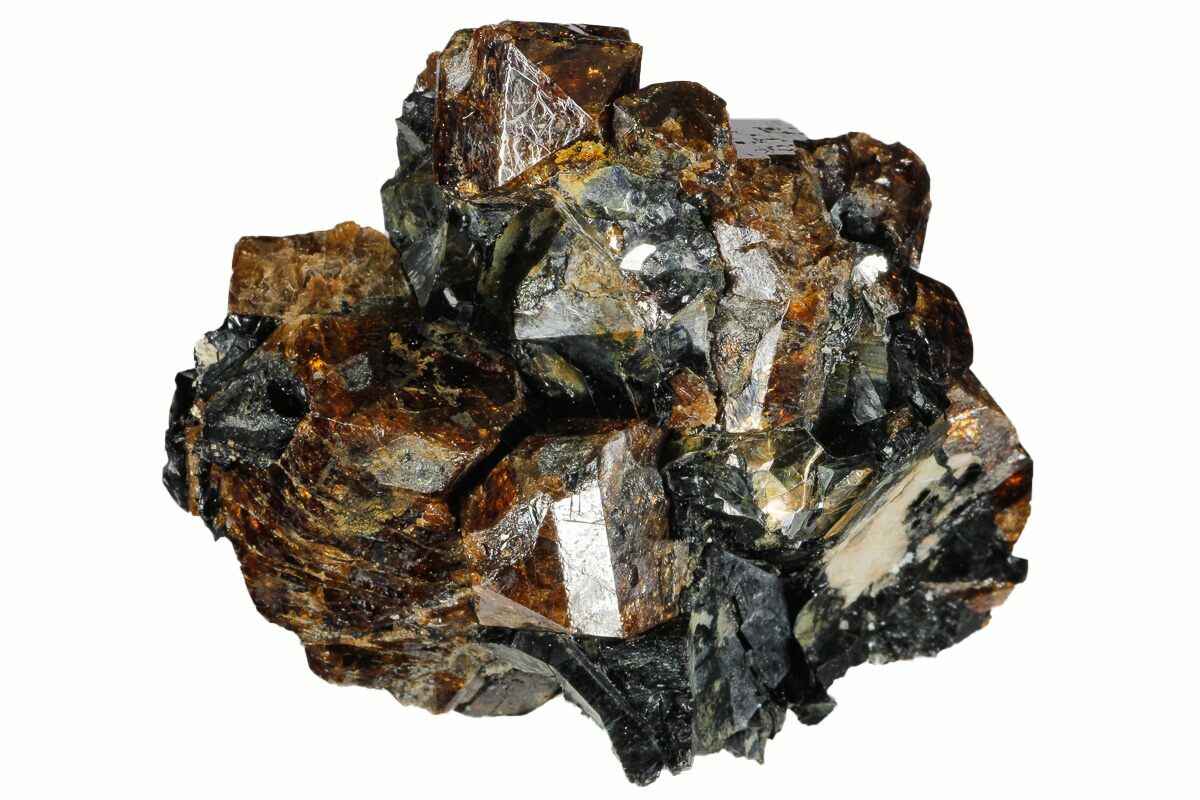
Fluorescent zircon crystals in a biotite schist from Norway.


