Reviews

Aragonite - Mineral & Crystal Guide
At first glance, aragonite can feel almost theatrical. It grows in radiating starbursts, twisting sprays, coral-like branches, and pseudo-hexagonal prisms that seem to defy the rigid rules we expect from minerals. These dramatic forms aren’t decorative accidents—they’re the result of aragonite’s orthorhombic crystal structure, which encourages rapid, directional growth and creates shapes that appear almost organic. In some specimens, crystals fan outward like frozen fireworks; in others, they knit together into dense, sculptural masses that look more grown than formed.
Look closer, and the surprises keep coming. Aragonite shares the exact same chemical formula as calcite—calcium carbonate (CaCO₃)—yet it crystallizes in an entirely different arrangement at the atomic level. This subtle shift in structure changes everything: hardness, density, crystal habit, and even how the mineral interacts with light and water. It’s a reminder that in geology, chemistry is only half the story; structure is destiny.
Aragonite’s reach extends far beyond the mineral cabinet. It forms lustrous gemstones and delicate cave formations, but it also plays a foundational role in Earth’s living systems. It is the primary building material of coral skeletons, mollusk shells, and many marine organisms, chosen by biology for its strength and versatility. Entire reefs—some of the largest biological structures on the planet—are cemented together by aragonite, quietly shaping coastlines and marine ecosystems.
Even more intriguing, aragonite is something of a geological rebel. Under normal surface conditions, it is technically unstable. Over long timescales, it wants to rearrange itself into the more stable calcite structure. And yet, aragonite persists—preserved in fossils hundreds of millions of years old, growing actively in caves, hot springs, and oceans today. This tension between impermanence and endurance gives aragonite a rare scientific significance. Its presence records specific environmental conditions: water chemistry, temperature, pressure, and even shifts in ocean acidity.
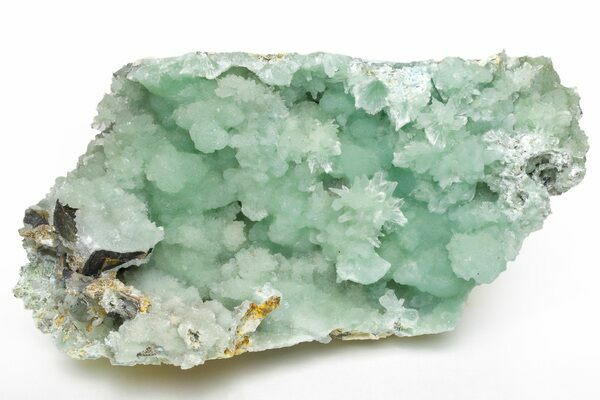
A sparkly blue-green aragonite crystal aggregation from the Wenshan Mine, China
Chemical formula: Calcium carbonate (CaCO₃)
Mineral class: Carbonate
Crystal system: Orthorhombic
Typical crystal habits: Prismatic, acicular (needle-like), fibrous, radiating sprays, pseudo-hexagonal twins
Hardness: 3.5–4 on the Mohs scale
Luster: Vitreous to resinous; silky in fibrous forms
Color: Colorless, white, yellow, blue, green, brown, red, violet, and gray
Streak: White
Polymorphism: Dimorph of calcite (and trimorph with vaterite)
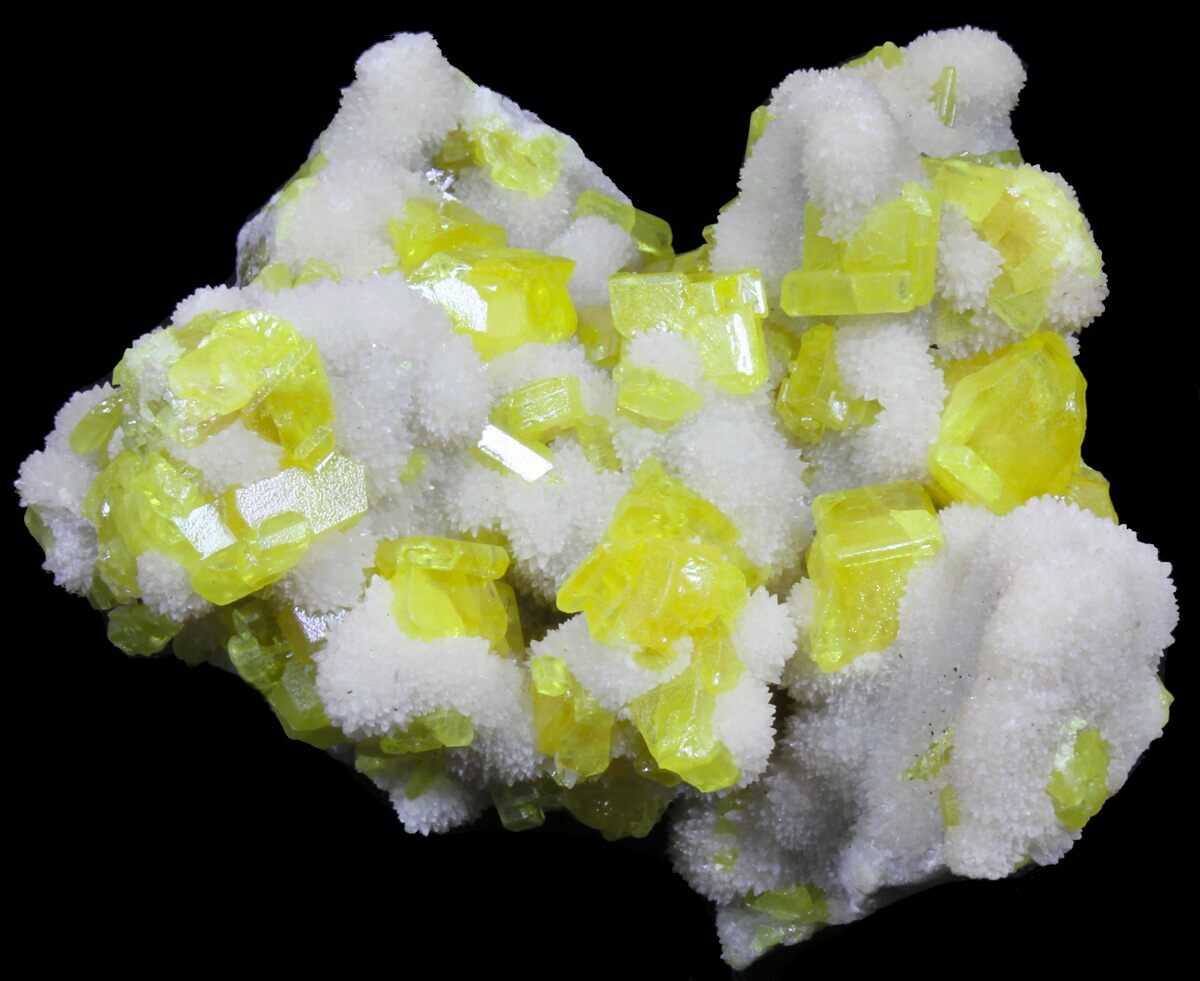
Commonly associated minerals: Calcite, gypsum, halite, fluorite, sulfur, barite, celestine, quartz
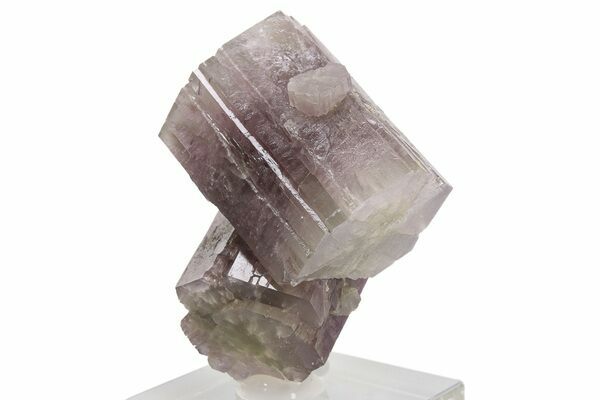
Purple twinned aragonite crystals from Spain
Aragonite forms in a surprisingly wide range of environments, but certain conditions favor its creation over its more stable sibling, calcite. One of the most important factors is chemistry. Waters rich in magnesium, sulfate, or strontium tend to promote aragonite crystallization. Temperature and pressure also play a role; aragonite is the stable form of calcium carbonate at higher pressures, which is why it can form deep within the Earth’s crust.
Common formation environments include:
Marine settings, where aragonite precipitates directly from seawater or is produced biologically by organisms
Caves, where dripping water deposits aragonite as delicate helictites and needle clusters rather than typical calcite stalactites
Hydrothermal veins and hot springs, where rapid precipitation favors aragonite’s structure
Evaporite deposits, especially in saline lakes and coastal lagoons
Metamorphic environments, where aragonite can form from calcite under increased pressure
Aragonite often forms quickly, locking in shapes that slower-growing minerals cannot. This rapid growth contributes to its dramatic crystal habits—and to its long-term instability.
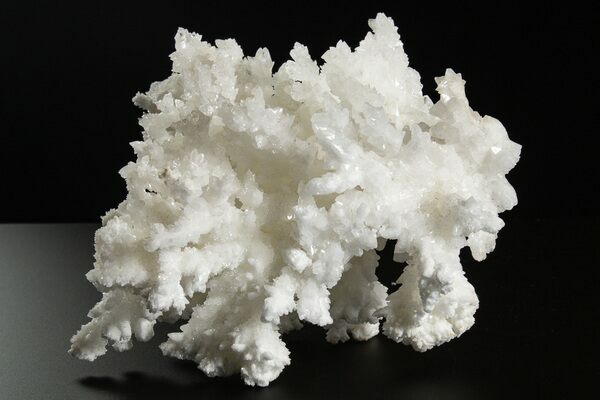
An aragonite cave formation from the Potosi Mine in Mexico.
Aragonite is not just a mineral that supports life—it is one that life has actively chosen, refined, and relied upon for hundreds of millions of years. Its role in biological systems is both ancient and ongoing, shaping ecosystems, preserving fossils, and recording the changing chemistry of Earth’s oceans.
Many marine organisms secrete aragonite to build shells and skeletal structures, including corals, mollusks, gastropods, bivalves, and planktonic organisms such as pteropods. Aragonite’s crystal structure allows it to form thin, interlocking plates that provide exceptional strength relative to weight, making it ideal for protective shells in dynamic marine environments.
Among the most famous aragonite-based organisms are ammonites, the extinct cephalopods that thrived in the world’s oceans from the Devonian Period until their extinction at the end of the Cretaceous. Ammonite shells were originally composed of aragonite, arranged in finely layered nacre. While aragonite is often unstable over geologic time and commonly recrystallizes into calcite, rare conditions can preserve the original aragonite structure.
In exceptional fossil deposits, this preservation gives rise to ammolite, one of the few organic-derived gemstones recognized in the world. Ammolite forms when the original aragonitic nacre of ammonite shells is preserved and mineralized without recrystallization. Its vivid flashes of red, green, blue, and violet result from microscopic layering within the aragonite that causes light interference, much like opal or mother-of-pearl. Ammolite is both a biological artifact and a mineralogical rarity—a direct link between ancient life and modern gemology.
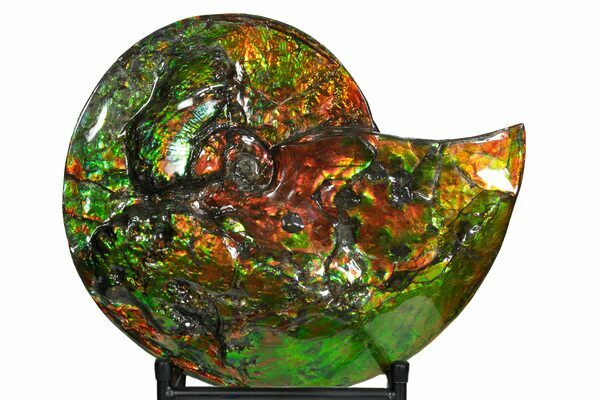
Aragonite is the original mineral that makes up ammonite shells; over time, its thin aragonite layers are preserved and altered under pressure to produce the iridescent gemstone known as ammolite.
Beyond ammonites, aragonite plays a crucial role in reef-building corals, which secrete massive aragonitic skeletons that form the structural foundation of coral reefs. These reefs act as biodiversity hotspots, coastal buffers against erosion, and long-term carbon sinks. The precipitation of aragonite by corals directly influences global carbon cycling by locking atmospheric carbon dioxide into solid mineral form.
Aragonite is also central to paleoenvironmental and climate research. Because it incorporates trace elements and oxygen isotopes during growth, aragonite shells preserve detailed records of seawater temperature, salinity, and chemistry at the time they formed. Fossil aragonite—when preserved—allows scientists to reconstruct ancient oceans and track shifts in climate over millions of years.
In modern oceans, aragonite has become a key indicator of ocean acidification. As seawater becomes more acidic due to rising atmospheric CO₂, aragonite becomes harder for organisms to produce and easier to dissolve. This makes aragonite-based organisms among the most vulnerable to environmental change, placing coral reefs, plankton populations, and shellfish at risk.
Aragonite is renowned for having some of the most diverse and visually dramatic crystal forms in the mineral world. Although it crystallizes in the orthorhombic system, aragonite frequently appears to break those rules, forming shapes that look hexagonal, coral-like, or even organic in appearance.
One of the most common habits is prismatic crystals, often elongated and vertically striated. These crystals frequently form pseudo-hexagonal twins, where multiple orthorhombic crystals intergrow in a way that mimics a hexagonal outline. This visual trickery led early mineralogists to confuse aragonite with hexagonal minerals long before crystallography was fully understood.
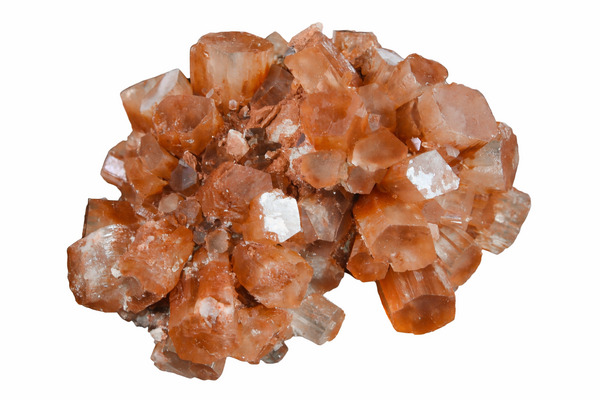
A classic aragonite crystal formation of pseudo-hexagonal twins from Morocco.
Perhaps the most iconic aragonite form is the radiating or spray-like cluster. In these specimens, slender needle crystals fan outward from a central point, creating starbursts, hemispheres, or spherical aggregates. These forms are especially common in hydrothermal and sedimentary environments where rapid crystallization occurs.
Aragonite also commonly grows in acicular (needle-like) and fibrous habits. In caves, this can produce delicate formations such as aragonite frostwork, anthodites, and helictites, where gravity-defying sprays of crystals extend in all directions due to capillary forces and airflow rather than simple dripping water.
Some varieties develop branching or coral-like structures, closely resembling biological growth. These forms blur the visual line between mineral and organism and are a major reason aragonite specimens are so sought after by collectors.
Massive aragonite also occurs, often banded or botryoidal, and is sometimes cut and polished for ornamental use. These massive forms can resemble calcite or marble but typically show finer banding and a slightly higher density.
Together, these crystal habits make aragonite one of the most morphologically expressive minerals known—capable of forming everything from precise geometric twins to wild, organic sprays that seem almost alive.
Although aragonite has existed for as long as calcium carbonate has crystallized on Earth, it was only relatively late in the history of mineralogy that it was recognized as a distinct mineral species. For centuries, aragonite specimens were commonly grouped with calcite due to their identical chemical composition. It wasn’t until advances in crystallography that scientists began to understand that minerals could share chemistry yet differ fundamentally in structure.
Aragonite was formally described in 1797 by the influential German mineralogist Abraham Gottlob Werner, one of the founding figures of modern geology. He named the mineral after the region of Molina de Aragón in Spain, where well-developed crystals were found. This naming marked an important conceptual breakthrough: aragonite became one of the earliest well-documented examples of polymorphism, helping establish the idea that internal atomic structure—not just chemistry—defines a mineral.
Throughout the 19th century, aragonite played a significant role in the development of crystallography and mineral classification. Its pseudo-hexagonal twinning patterns challenged early scientists and pushed the refinement of crystallographic measurement techniques. In many ways, aragonite helped expose the hidden complexity of crystal growth and atomic arrangement.
Human use of aragonite, however, predates its scientific naming by thousands of years. Massive and banded aragonite has long been quarried as a decorative stone, particularly in the Mediterranean region. These materials were carved into columns, tiles, beads, and ornamental objects, sometimes mistaken for marble or alabaster. In parts of the ancient Roman world, aragonite was prized for its polish and warm coloration.
In more recent history, aragonite has found widespread industrial and practical applications. Because it is a naturally occurring source of calcium carbonate, it has been used as a soil conditioner and agricultural lime, particularly where rapid calcium availability is desired. Its slightly higher solubility compared to calcite makes it effective in adjusting soil chemistry.
One of aragonite’s most specialized modern uses is in marine aquariums and reef systems. Crushed aragonite sand is commonly used as substrate in saltwater tanks because it buffers pH, stabilizes alkalinity, and closely mimics natural reef environments. This application reflects a deeper understanding of aragonite’s role in ocean chemistry and biological processes.
Aragonite also occupies a unique place in gemology and the specimen market. Transparent crystals and vibrant radiating clusters are highly sought after by collectors, while polished aragonite is used in beads, carvings, and cabochons. The gemstone ammolite, derived from fossil ammonite shells composed of aragonite, represents one of the most extraordinary intersections of mineralogy, paleontology, and jewelry.
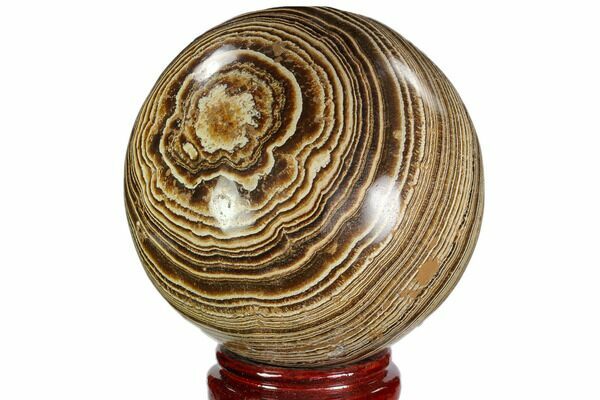
A polished sphere of banded aragonite from Morocco. The bands are caused by layered mineral growth over time.
In the modern scientific world, aragonite continues to be invaluable. It is widely studied in climate science, marine biology, and geochemistry, where its formation and dissolution provide insight into ocean acidification, reef health, and long-term carbon cycling. Synthetic aragonite is also researched for use in biomaterials, including bone graft substitutes and medical implants, due to its biocompatibility and structural similarity to natural bone minerals.
Aragonite is found worldwide, but certain localities are famous for producing exceptional specimens:
Spain – Classic crystals from Molina de Aragón and Campoo de Enmedio
Morocco – Colorful sprays, spherules, and cobalt-rich blue specimens
Namibia – Large, dramatic crystal clusters from Tsumeb
Austria – Elegant needle crystals from Erzberg and surrounding Alpine localities
Czech Republic – Pseudomorphs and cave formations
Italy – Sulfur-associated aragonite from Sicily
Mexico – Radiating crystal clusters and cave deposits
United States – Notable finds in Arizona, New Mexico, Utah, and Nevada
England – Historic cave and vein material
Each locality tells a slightly different geological story, making aragonite a favorite among collectors who appreciate both beauty and context.

Look closer, and the surprises keep coming. Aragonite shares the exact same chemical formula as calcite—calcium carbonate (CaCO₃)—yet it crystallizes in an entirely different arrangement at the atomic level. This subtle shift in structure changes everything: hardness, density, crystal habit, and even how the mineral interacts with light and water. It’s a reminder that in geology, chemistry is only half the story; structure is destiny.
Aragonite’s reach extends far beyond the mineral cabinet. It forms lustrous gemstones and delicate cave formations, but it also plays a foundational role in Earth’s living systems. It is the primary building material of coral skeletons, mollusk shells, and many marine organisms, chosen by biology for its strength and versatility. Entire reefs—some of the largest biological structures on the planet—are cemented together by aragonite, quietly shaping coastlines and marine ecosystems.
Even more intriguing, aragonite is something of a geological rebel. Under normal surface conditions, it is technically unstable. Over long timescales, it wants to rearrange itself into the more stable calcite structure. And yet, aragonite persists—preserved in fossils hundreds of millions of years old, growing actively in caves, hot springs, and oceans today. This tension between impermanence and endurance gives aragonite a rare scientific significance. Its presence records specific environmental conditions: water chemistry, temperature, pressure, and even shifts in ocean acidity.
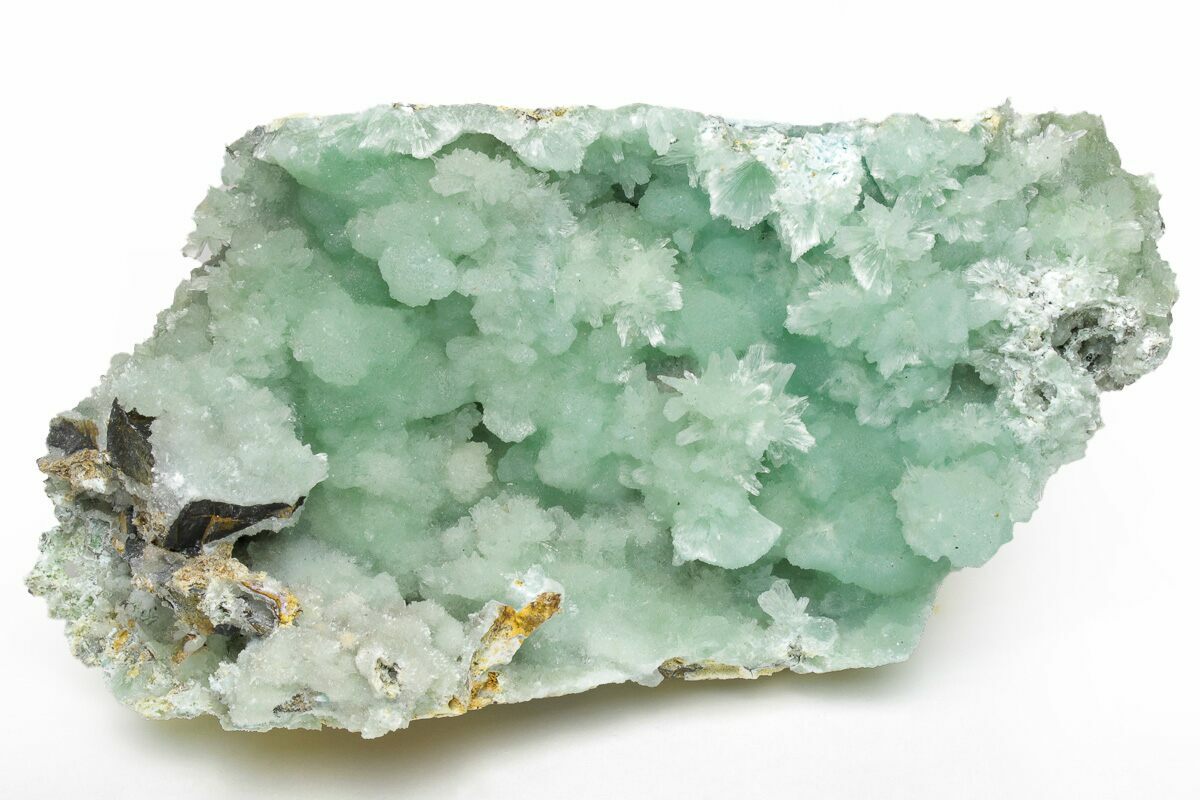
A sparkly blue-green aragonite crystal aggregation from the Wenshan Mine, China
Key Properties
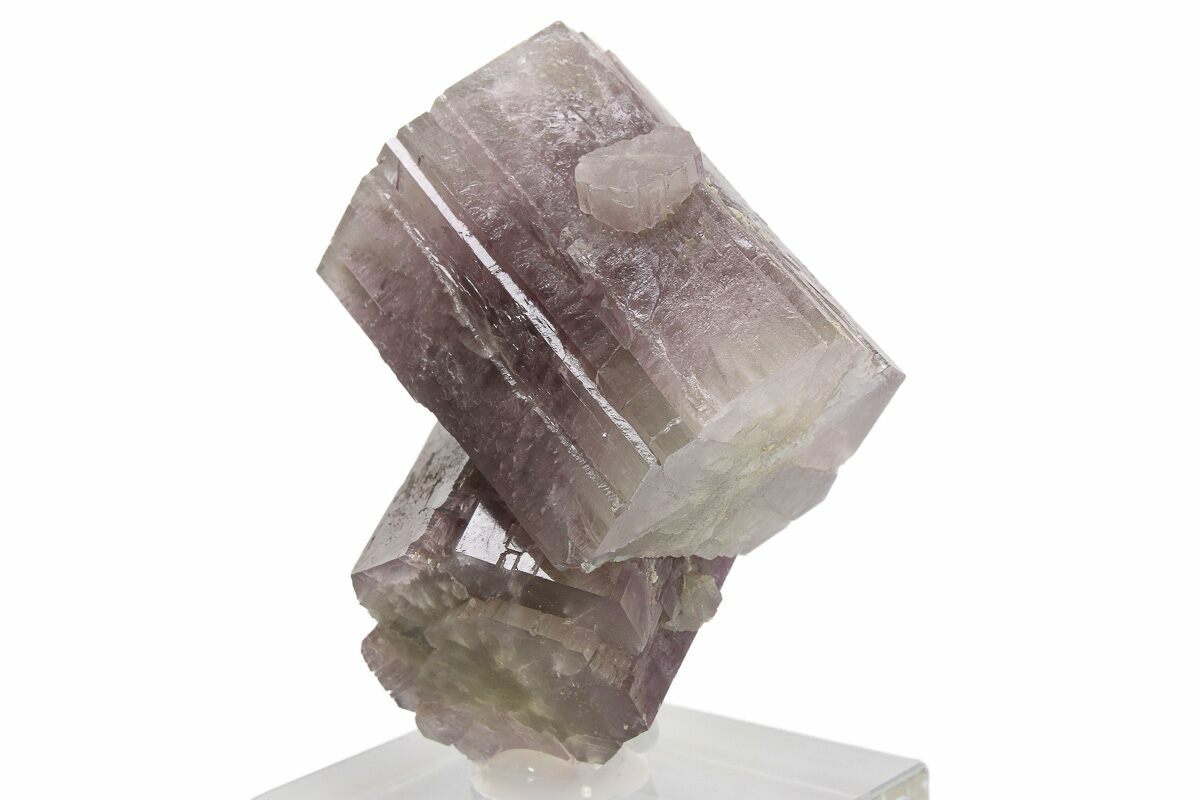
Purple twinned aragonite crystals from Spain
How Aragonite Forms
Aragonite forms in a surprisingly wide range of environments, but certain conditions favor its creation over its more stable sibling, calcite. One of the most important factors is chemistry. Waters rich in magnesium, sulfate, or strontium tend to promote aragonite crystallization. Temperature and pressure also play a role; aragonite is the stable form of calcium carbonate at higher pressures, which is why it can form deep within the Earth’s crust.
Common formation environments include:
Aragonite often forms quickly, locking in shapes that slower-growing minerals cannot. This rapid growth contributes to its dramatic crystal habits—and to its long-term instability.
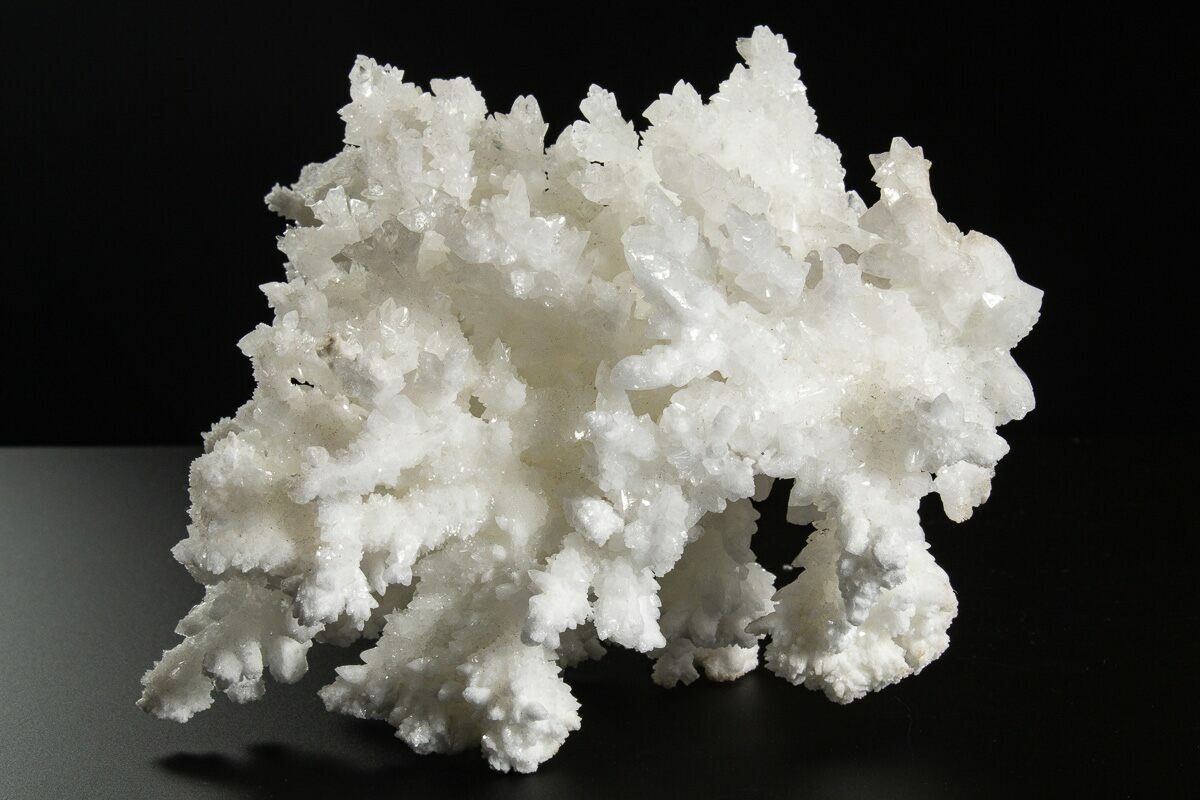
An aragonite cave formation from the Potosi Mine in Mexico.
Importance in Biological and Physical Processes
Aragonite is not just a mineral that supports life—it is one that life has actively chosen, refined, and relied upon for hundreds of millions of years. Its role in biological systems is both ancient and ongoing, shaping ecosystems, preserving fossils, and recording the changing chemistry of Earth’s oceans.
Many marine organisms secrete aragonite to build shells and skeletal structures, including corals, mollusks, gastropods, bivalves, and planktonic organisms such as pteropods. Aragonite’s crystal structure allows it to form thin, interlocking plates that provide exceptional strength relative to weight, making it ideal for protective shells in dynamic marine environments.
Among the most famous aragonite-based organisms are ammonites, the extinct cephalopods that thrived in the world’s oceans from the Devonian Period until their extinction at the end of the Cretaceous. Ammonite shells were originally composed of aragonite, arranged in finely layered nacre. While aragonite is often unstable over geologic time and commonly recrystallizes into calcite, rare conditions can preserve the original aragonite structure.
In exceptional fossil deposits, this preservation gives rise to ammolite, one of the few organic-derived gemstones recognized in the world. Ammolite forms when the original aragonitic nacre of ammonite shells is preserved and mineralized without recrystallization. Its vivid flashes of red, green, blue, and violet result from microscopic layering within the aragonite that causes light interference, much like opal or mother-of-pearl. Ammolite is both a biological artifact and a mineralogical rarity—a direct link between ancient life and modern gemology.
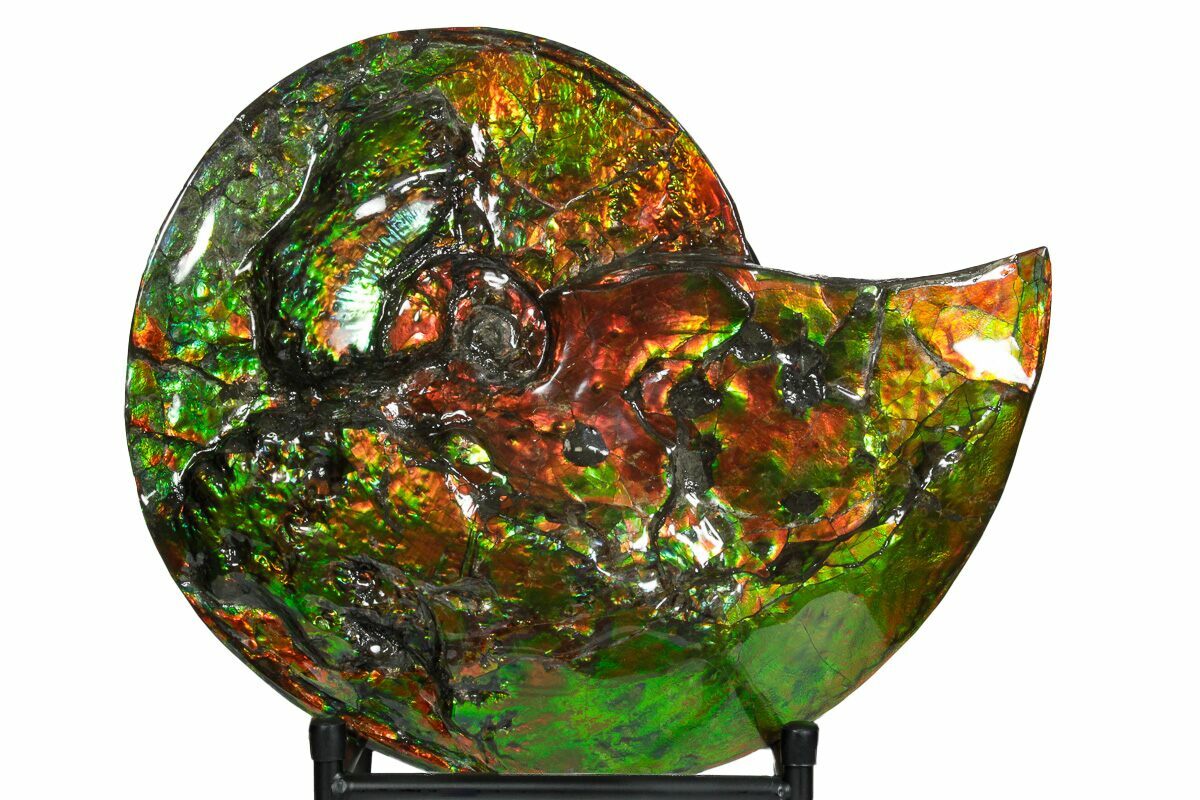
Aragonite is the original mineral that makes up ammonite shells; over time, its thin aragonite layers are preserved and altered under pressure to produce the iridescent gemstone known as ammolite.
Beyond ammonites, aragonite plays a crucial role in reef-building corals, which secrete massive aragonitic skeletons that form the structural foundation of coral reefs. These reefs act as biodiversity hotspots, coastal buffers against erosion, and long-term carbon sinks. The precipitation of aragonite by corals directly influences global carbon cycling by locking atmospheric carbon dioxide into solid mineral form.
Aragonite is also central to paleoenvironmental and climate research. Because it incorporates trace elements and oxygen isotopes during growth, aragonite shells preserve detailed records of seawater temperature, salinity, and chemistry at the time they formed. Fossil aragonite—when preserved—allows scientists to reconstruct ancient oceans and track shifts in climate over millions of years.
In modern oceans, aragonite has become a key indicator of ocean acidification. As seawater becomes more acidic due to rising atmospheric CO₂, aragonite becomes harder for organisms to produce and easier to dissolve. This makes aragonite-based organisms among the most vulnerable to environmental change, placing coral reefs, plankton populations, and shellfish at risk.
Crystal Forms and Growth Habits
Aragonite is renowned for having some of the most diverse and visually dramatic crystal forms in the mineral world. Although it crystallizes in the orthorhombic system, aragonite frequently appears to break those rules, forming shapes that look hexagonal, coral-like, or even organic in appearance.
One of the most common habits is prismatic crystals, often elongated and vertically striated. These crystals frequently form pseudo-hexagonal twins, where multiple orthorhombic crystals intergrow in a way that mimics a hexagonal outline. This visual trickery led early mineralogists to confuse aragonite with hexagonal minerals long before crystallography was fully understood.
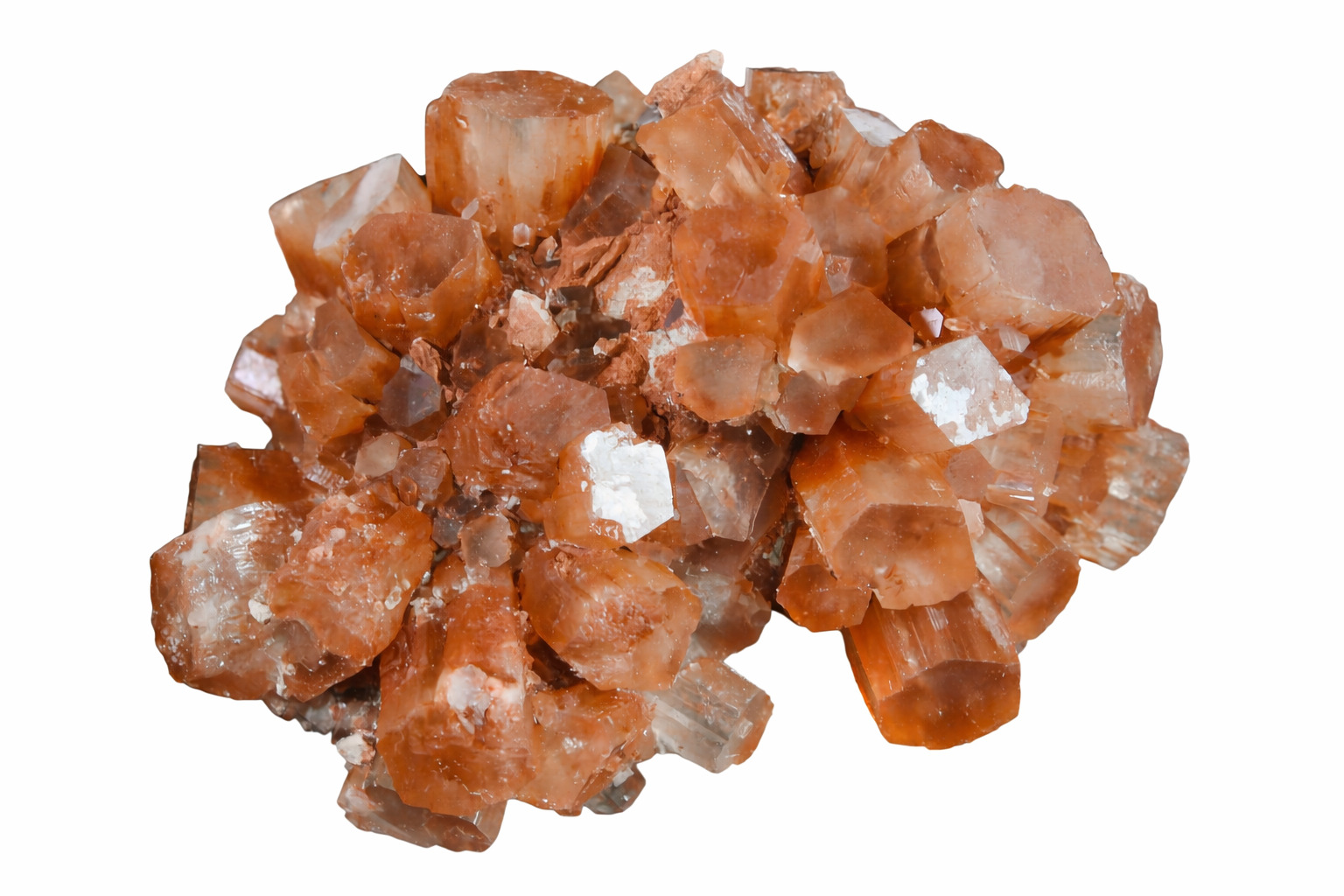
A classic aragonite crystal formation of pseudo-hexagonal twins from Morocco.
Perhaps the most iconic aragonite form is the radiating or spray-like cluster. In these specimens, slender needle crystals fan outward from a central point, creating starbursts, hemispheres, or spherical aggregates. These forms are especially common in hydrothermal and sedimentary environments where rapid crystallization occurs.
Aragonite also commonly grows in acicular (needle-like) and fibrous habits. In caves, this can produce delicate formations such as aragonite frostwork, anthodites, and helictites, where gravity-defying sprays of crystals extend in all directions due to capillary forces and airflow rather than simple dripping water.
Some varieties develop branching or coral-like structures, closely resembling biological growth. These forms blur the visual line between mineral and organism and are a major reason aragonite specimens are so sought after by collectors.
Massive aragonite also occurs, often banded or botryoidal, and is sometimes cut and polished for ornamental use. These massive forms can resemble calcite or marble but typically show finer banding and a slightly higher density.
Together, these crystal habits make aragonite one of the most morphologically expressive minerals known—capable of forming everything from precise geometric twins to wild, organic sprays that seem almost alive.
History, Discovery, and Uses
Although aragonite has existed for as long as calcium carbonate has crystallized on Earth, it was only relatively late in the history of mineralogy that it was recognized as a distinct mineral species. For centuries, aragonite specimens were commonly grouped with calcite due to their identical chemical composition. It wasn’t until advances in crystallography that scientists began to understand that minerals could share chemistry yet differ fundamentally in structure.
Aragonite was formally described in 1797 by the influential German mineralogist Abraham Gottlob Werner, one of the founding figures of modern geology. He named the mineral after the region of Molina de Aragón in Spain, where well-developed crystals were found. This naming marked an important conceptual breakthrough: aragonite became one of the earliest well-documented examples of polymorphism, helping establish the idea that internal atomic structure—not just chemistry—defines a mineral.
Throughout the 19th century, aragonite played a significant role in the development of crystallography and mineral classification. Its pseudo-hexagonal twinning patterns challenged early scientists and pushed the refinement of crystallographic measurement techniques. In many ways, aragonite helped expose the hidden complexity of crystal growth and atomic arrangement.
Human use of aragonite, however, predates its scientific naming by thousands of years. Massive and banded aragonite has long been quarried as a decorative stone, particularly in the Mediterranean region. These materials were carved into columns, tiles, beads, and ornamental objects, sometimes mistaken for marble or alabaster. In parts of the ancient Roman world, aragonite was prized for its polish and warm coloration.
In more recent history, aragonite has found widespread industrial and practical applications. Because it is a naturally occurring source of calcium carbonate, it has been used as a soil conditioner and agricultural lime, particularly where rapid calcium availability is desired. Its slightly higher solubility compared to calcite makes it effective in adjusting soil chemistry.
One of aragonite’s most specialized modern uses is in marine aquariums and reef systems. Crushed aragonite sand is commonly used as substrate in saltwater tanks because it buffers pH, stabilizes alkalinity, and closely mimics natural reef environments. This application reflects a deeper understanding of aragonite’s role in ocean chemistry and biological processes.
Aragonite also occupies a unique place in gemology and the specimen market. Transparent crystals and vibrant radiating clusters are highly sought after by collectors, while polished aragonite is used in beads, carvings, and cabochons. The gemstone ammolite, derived from fossil ammonite shells composed of aragonite, represents one of the most extraordinary intersections of mineralogy, paleontology, and jewelry.
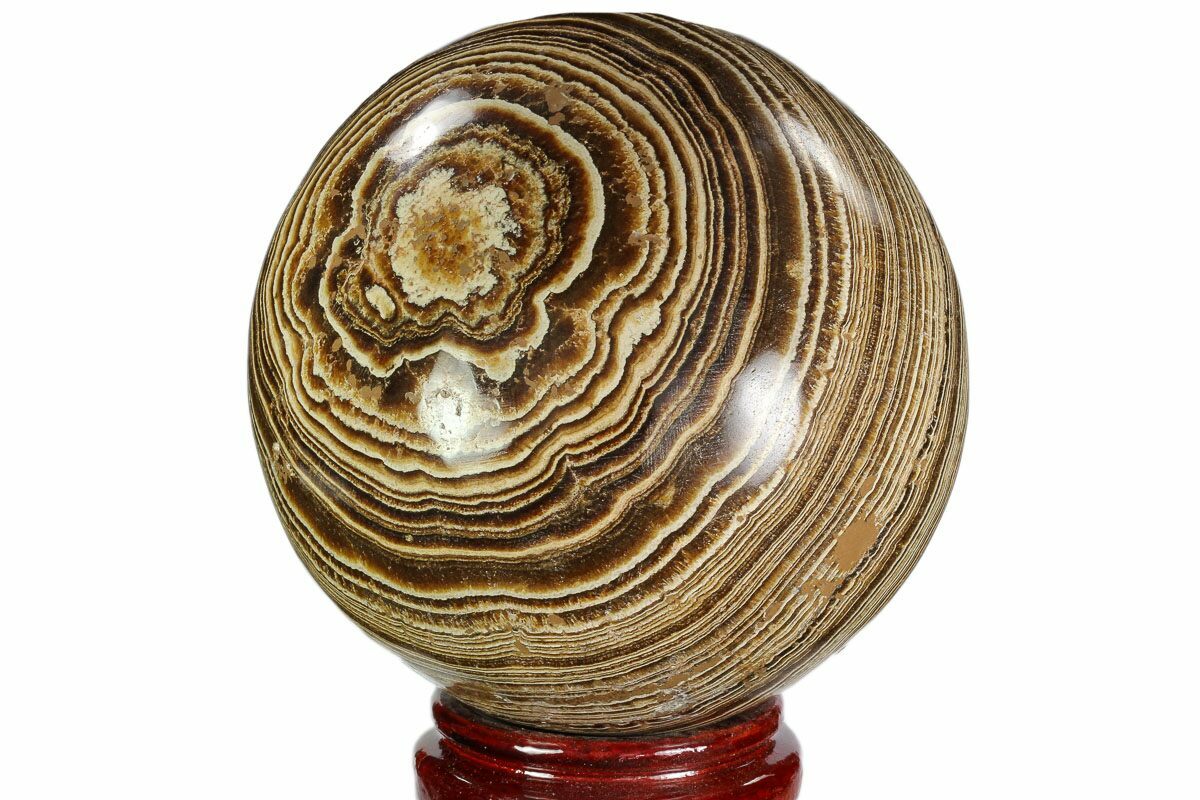
A polished sphere of banded aragonite from Morocco. The bands are caused by layered mineral growth over time.
In the modern scientific world, aragonite continues to be invaluable. It is widely studied in climate science, marine biology, and geochemistry, where its formation and dissolution provide insight into ocean acidification, reef health, and long-term carbon cycling. Synthetic aragonite is also researched for use in biomaterials, including bone graft substitutes and medical implants, due to its biocompatibility and structural similarity to natural bone minerals.
Key Collecting Localities
Aragonite is found worldwide, but certain localities are famous for producing exceptional specimens:
Each locality tells a slightly different geological story, making aragonite a favorite among collectors who appreciate both beauty and context.