 Reviews


This Specimen has been sold.


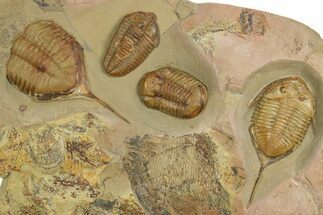
Bristolia Insolens and Olenellus Fremonti Trilobite Association

This is an incredible association of two classic American trilobites, Bristolia insolens and Olenellus fremonti from the Lower Cambrian Latham Shale of Southern California.
The O. fremonti is 4.03" long, while the B.insolens measures 1.07", and the shale host rock is 12.25 x 8".
The prep work is old and imperfect, showing restoration in some places.
Complete trilobites from this locality are exceptionally rare and a natural association like this one is almost unheard of.
The O. fremonti is 4.03" long, while the B.insolens measures 1.07", and the shale host rock is 12.25 x 8".
The prep work is old and imperfect, showing restoration in some places.
Complete trilobites from this locality are exceptionally rare and a natural association like this one is almost unheard of.
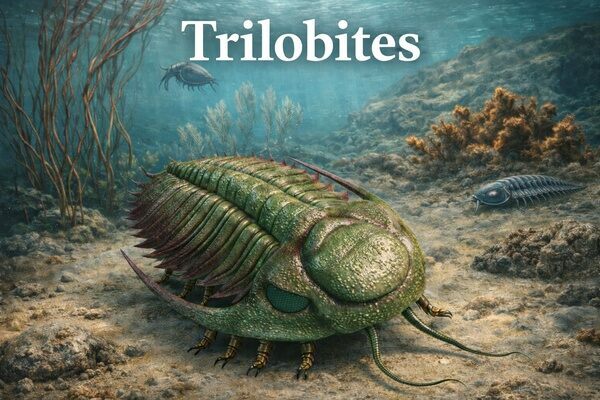
About Trilobites
Trilobites were a very diverse group of extinct marine arthropods. They first appeared in the fossil record in the Early Cambrian (521 million years ago) and went extinct during the Permian mass extinction (250 million years ago). They were one of the most successful of the early animals on our planet: over 25,000 species have been described, filling nearly every evolutionary niche. Due in large part to their hard exoskeletons (shells), they left an excellent fossil record.
Trilobites were a very diverse group of extinct marine arthropods. They first appeared in the fossil record in the Early Cambrian (521 million years ago) and went extinct during the Permian mass extinction (250 million years ago). They were one of the most successful of the early animals on our planet: over 25,000 species have been described, filling nearly every evolutionary niche. Due in large part to their hard exoskeletons (shells), they left an excellent fossil record.
SPECIES
Olenellus fremonti & Bristolia insolens
AGE

LOCATION
Marble Mountains, San Bernardino County, California
FORMATION
Latham Shale
SIZE
Plate 12.25 x 8"
CATEGORY
ITEM
#372539
We guarantee the authenticity of all of our specimens.