 Reviews

Striped Flint: A Polish Geological Teasure
Striped flint (aka Banded Flint, Polish Flint) is one of the most visually captivating and culturally significant varieties of flint in the world. Instantly recognizable by its swirling bands of dark and light hues—often resembling wood grain, smoke plumes, or flowing water—it is a stone that seems almost designed for artistry. What makes it even more fascinating is its remarkable combination of rarity, geological antiquity, and deep human history. Unlike common flint nodules found throughout Europe, Polish striped flint occurs in only a few small regions and displays patterns so dramatic that it has sometimes been mistaken for petrified wood or agate. It is also one of the few flints historically prized as a luxury material: Neolithic peoples carved tools and ceremonial objects from it more than 6,000 years ago, and today it continues to appear in fine jewelry and artisan crafts.
Beyond its beauty and cultural relevance, striped flint holds scientific intrigue. The alternating bands record ancient environmental conditions in a shallow Jurassic sea that covered what is now southeastern Poland. Each layer reflects subtle changes in silica deposition, making every specimen a miniature archive of geological processes occurring around 160 million years ago. Because of its rarity and unique formation, high-quality striped flint is collected worldwide and prominently featured in museums, lapidary collections, and archaeological exhibits.
Striped flint formed during the Upper Jurassic (Oxfordian) period, roughly 160 million years ago, when large portions of present-day Poland were submerged beneath warm, shallow seas. These waters were rich in dissolved silica, which gradually precipitated from seawater and concentrated within soft limestone sediments. Over long spans of time, the silica accumulated into rounded concretions—roughly spherical masses that hardened separately from the surrounding rock.
The stone’s iconic banding comes from rhythmic changes in the chemistry, mineral content, and organic matter present during formation. Alternating layers of lighter and darker silica-built material were deposited in concentric zones, producing the dramatic “striped” appearance. The center of each concretion typically shows the highest crystallinity, while the outer layers grade into the surrounding limestone.
Although flint is widespread globally, striped flint with this distinctive banding pattern is exceptionally rare and currently known only from a handful of localities within Poland. The finest striped flint occurs in southeastern Poland, primarily near the cities of:
Sandomierz
Ostrowiec Świętokrzyski
Iłża
These areas host Jurassic limestone formations rich in flint nodules, but only a small percentage contain the dramatic banding that makes striped flint so desirable. The deposits are limited in size, and most occur within protected or managed regions, making production relatively small and controlled.
Striped flint has an unusually long and well-documented human history. Neolithic peoples began mining it around 4000 BC, establishing some of Europe’s earliest known underground mining operations. These prehistoric flint miners dug shafts and galleries to extract high-quality nodules, which they shaped into axes, knives, and ceremonial objects. Artifacts made from striped flint have been found across Central Europe, indicating wide-ranging trade networks and cultural importance.
During the Bronze Age and beyond, its use declined as metal tools became common, but its aesthetic appeal ensured that it remained valued. In modern times, striped flint experienced a resurgence as artisans and jewelers rediscovered its beauty. Today it is considered a semi-precious ornamental stone and is often polished into cabochons, beads, sculptures, and decorative carvings.
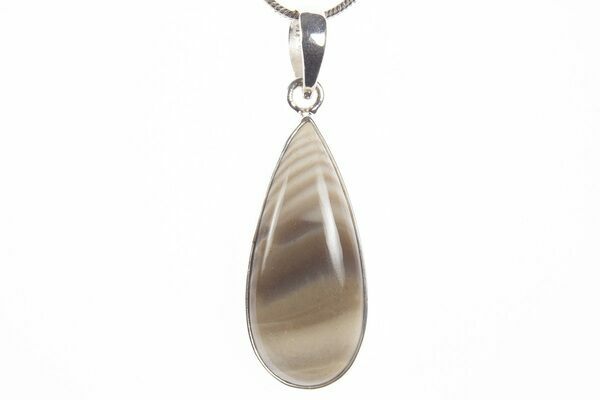
A striped flint pendant showing its use in modern jewelry
Mining today is small-scale and carefully managed, with most material collected from limited quarries or discovered during limestone extraction. Because the deposits are geographically restricted and not abundant, high-grade striped flint remains relatively rare on the market. It is more than just a mineral—it is a geological curiosity, an archaeological treasure, and a beautiful natural material with thousands of years of human connection. Whether admired for its craftsmanship potential, collected for its rarity, or studied for its geological story, striped flint stands out as one of Europe’s most extraordinary natural resources.

Beyond its beauty and cultural relevance, striped flint holds scientific intrigue. The alternating bands record ancient environmental conditions in a shallow Jurassic sea that covered what is now southeastern Poland. Each layer reflects subtle changes in silica deposition, making every specimen a miniature archive of geological processes occurring around 160 million years ago. Because of its rarity and unique formation, high-quality striped flint is collected worldwide and prominently featured in museums, lapidary collections, and archaeological exhibits.
Striped flint formed during the Upper Jurassic (Oxfordian) period, roughly 160 million years ago, when large portions of present-day Poland were submerged beneath warm, shallow seas. These waters were rich in dissolved silica, which gradually precipitated from seawater and concentrated within soft limestone sediments. Over long spans of time, the silica accumulated into rounded concretions—roughly spherical masses that hardened separately from the surrounding rock.
The stone’s iconic banding comes from rhythmic changes in the chemistry, mineral content, and organic matter present during formation. Alternating layers of lighter and darker silica-built material were deposited in concentric zones, producing the dramatic “striped” appearance. The center of each concretion typically shows the highest crystallinity, while the outer layers grade into the surrounding limestone.
Although flint is widespread globally, striped flint with this distinctive banding pattern is exceptionally rare and currently known only from a handful of localities within Poland. The finest striped flint occurs in southeastern Poland, primarily near the cities of:
These areas host Jurassic limestone formations rich in flint nodules, but only a small percentage contain the dramatic banding that makes striped flint so desirable. The deposits are limited in size, and most occur within protected or managed regions, making production relatively small and controlled.
Mining and Use Through History
Striped flint has an unusually long and well-documented human history. Neolithic peoples began mining it around 4000 BC, establishing some of Europe’s earliest known underground mining operations. These prehistoric flint miners dug shafts and galleries to extract high-quality nodules, which they shaped into axes, knives, and ceremonial objects. Artifacts made from striped flint have been found across Central Europe, indicating wide-ranging trade networks and cultural importance.
During the Bronze Age and beyond, its use declined as metal tools became common, but its aesthetic appeal ensured that it remained valued. In modern times, striped flint experienced a resurgence as artisans and jewelers rediscovered its beauty. Today it is considered a semi-precious ornamental stone and is often polished into cabochons, beads, sculptures, and decorative carvings.
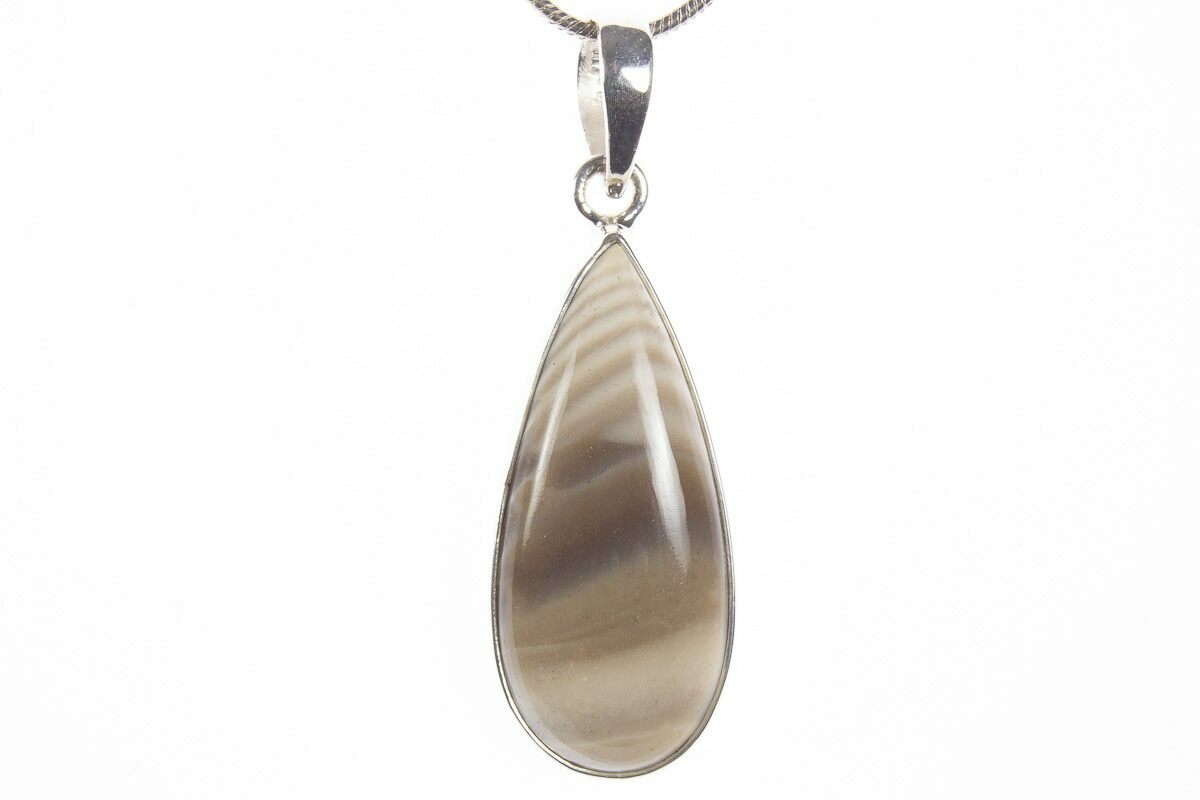
A striped flint pendant showing its use in modern jewelry
Mining today is small-scale and carefully managed, with most material collected from limited quarries or discovered during limestone extraction. Because the deposits are geographically restricted and not abundant, high-grade striped flint remains relatively rare on the market. It is more than just a mineral—it is a geological curiosity, an archaeological treasure, and a beautiful natural material with thousands of years of human connection. Whether admired for its craftsmanship potential, collected for its rarity, or studied for its geological story, striped flint stands out as one of Europe’s most extraordinary natural resources.


